
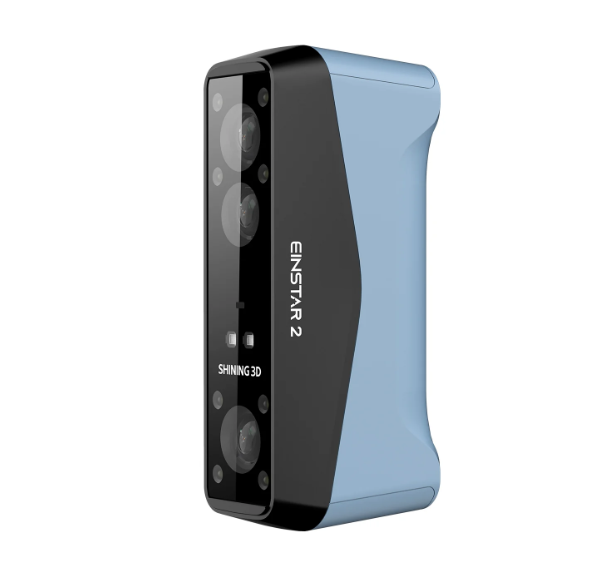
Nowadays, engineering work isn’t exclusively limited to designing in a virtual environment. Sometimes the journey toward a new design begins with a real-world part or artifact. A company may possess an element from an older design, a working prototype, a custom fabricated part, or a product without original design files. In order to capture the design of these artifacts, a 3D scanner proves to be an efficient tool for capturing the artifact’s design and integrating it into the digital workflow. The data can be reused many times to assist different design, inspection, manufacturing, and repair activities.
Why Recreating Parts Is So Difficult
Creating a prototype of a physical artifact manually can take a long time. An engineer would have to manage a large number of dimensions, note curve positions, check angles, and estimate the shape of areas that are difficult to access. This is even more difficult with artifacts that have complex or irregular geometric surfaces. A scanner can help capture a large amount of surface information, and can provide the design team with a wealth of information beyond measurements that can be taken manually.
How Modern 3D Scanning Works
Optical or laser scanners collect information about an object by taking successive measurements of its surface. This can be done by either moving the scanner around the object or placing the object in different orientations so that the scanner views it from different angles. All the individual measurements (or ‘points’) that the scanner takes get processed by software to construct a digital version of the object. Although the techniques used to gather distance data and convert physical geometry to digital representations vary, the goal is always the same: collect relevant distance data.
Capturing the Complete Shape
Many objects require multiple scans. It is possible that one scan captures the front but may miss the back, bottom, or recessed areas. An operators can collect multiple scans, and those scans can be merged using specialized software. There are alignment tools which assist the operator in merging the various sections. It is important that the scans are overlapped sufficiently in order to eliminate gaps in the data. Gaps may create issues when the data is being used to create a model later on.
The Importance of CAD Conversion
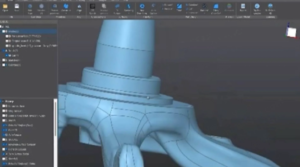
There are a variety of uses for scanned meshes and CAD models. Scanned meshes show the captured geometry. However, the CAD model is more appropriate for engineering modifications and manufacturing. When users scan, they are often required to build curves and create holes or other features. Once this is complete, users find the digital model is easier to modify. This is why scanning and CAD are complementary.
Supporting Custom Manufacturing
There is more to manufacturing than mass production. Personalized manufacturing serves individual customers and, in turn, meets the needs of an ever-growing marketplace. Building electronics for a specialized production run (or) designing custom machines may call for custom manufacturing, and in those cases, there is no ready-made digital design to help. Fortunately, scanning an existing design can act as a digital design for a custom model. For businesses that engage in repair, fabrication, or manufacturing, this technique may also be of use.
Checking a Product Against Its Design
Scanning is helpful even after the production process has been completed. The physical component can be scanned for comparison to the original digital model. Lack of alignment may indicate a disparity between design and production. This technique is beneficial for quality assurance and process assessment in production.
Using Scanning in Automotive Work
Many details on automotive parts are curved or come in complex surfaces. While some surfaces can be technically described by a series of measurements, 3D scanning is the best way to capture the information for engineers and designers. This technology helps in the inspection of prototypes, recreation of parts, customization of parts, restorations, and the development of new designs. It is also useful for working on older vehicle parts, as they do not come with sufficient digital documentation.
Applications in Industrial Engineering
Scan to cad: Machines and equipment in industry can be large or complex, but may still require replacement or modification. When this is necessary, industrial engineers need to have detailed information on the existing part. Scanning in this case, provides a fast way to collect the necessary information without having to fully assemble the part by hand. The data can be used to support the design of a replacement, the inspection of the part, and the documentation of the part.
Modeling Tools for Product Documentation
Businesses can model their products using digital technology and keep a record in the process. Tools, components, and all manner of large, complex electronic machinery and prototypes can be modeled. Digital data is useful when a physical object is either inaccessible or has a short lifespan.
Fabricating Models Using 3D Printing
There are many procedures for scanning and 3D printing geometries. Physical objects can be scanned, the digital information can be processed and then printed. Modifications can also be made to the digital information and printed. This is a good way to fabricate replacement parts and prototypes.
Conclusion
Data capture makes it possible to digitally design and manufacture physical products. A physical component can be digitally designed and manufactured without being physically included in the process. It is much easier to capture and convert a physical component to digital design information using a scanning workflow, as opposed to manually digitizing it. When coupled with scanning, CAD allows designing with scanned data that can be easily converted into digital manufacturing information and a digital design for many downstream uses including product design, inspection, reverse engineering, 3D printing, and manufacturing.
FAQs
Is scanning old goods useful?
Yes, scanning can be useful for making digital copies of old goods that do not have a CAD file, or even older technical drawings.
Does scanned data allow for 3D printing?
Yes, the data from a scanner can definitely be converted for printing through the correct data processing. Additionally, changes to the model can easily be made to fit your new printing requirements.
How does one factor affect the quality of a 3D scan?
A variety of factors such as the surface preparation of the object, characteristics of the surface, capabilities of the scanner, technique of scanning, and the software used for processing scanned data can affect the end result.
 Admin
Admin