

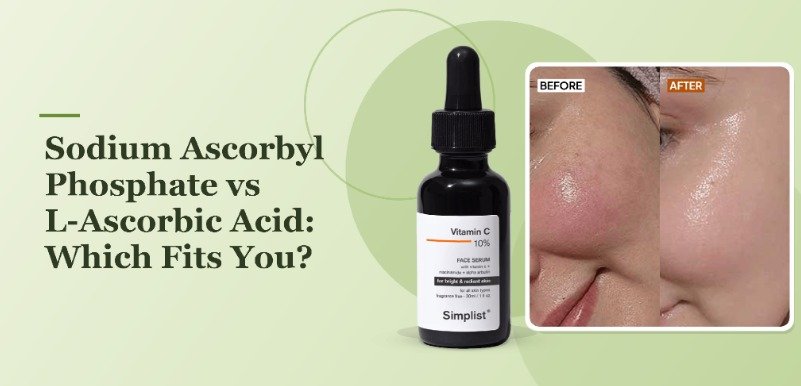
Both are vitamin C, but they behave very differently on your skin. Sodium ascorbyl phosphate is a stable form that works at a skin-friendly pH. L-ascorbic acid is the classic pure form, and it needs an acidic formula, which is why it can sting. This guide compares the two side by side and uses the details that a real product page discloses. Use it to pick the form that fits your skin and your routine.
The Short Answer
If your skin is sensitive, or you are new to vitamin C, sodium ascorbyl phosphate is usually the easier place to start. If your skin handles acids well and you want the most direct form, L-ascorbic acid may suit you. Neither one is a miracle, and results vary from person to person.
| Feature | Sodium ascorbyl phosphate | L-ascorbic acid |
| What it is | A stable vitamin C derivative | Pure vitamin C |
| Formula pH | Near neutral (6.5 to 7.5 in the Simplist serum) | Acidic |
| In the skin | Converts to ascorbic acid | Acts directly |
| Comfort | Usually no sting | Can tingle or sting |
| Stability | Resists oxidizing | Oxidizes more easily |
How Each Form Works
L-ascorbic acid is vitamin C in its pure form. Your skin can use it right away. The catch is that it is fragile. It reacts with air and light, so it can oxidize and lose strength, and it usually needs an acidic formula to work well.
Sodium ascorbyl phosphate is a derivative. It is vitamin C with a phosphate group attached, which keeps it steady. Once it reaches the skin, it converts to ascorbic acid. Because it does not need an acidic formula, it is generally easier on the skin.
A real example is the Vitamin C Serum from Simplist. Its formula is built on 10% sodium ascorbyl phosphate in a water-based base. The product page lists a pH of 6.5 to 7.5. It also says the form does not oxidize or sting the way L-ascorbic acid can. That is the brand’s claim, but it matches how this form is usually described.
pH and Comfort: Why Sodium Ascorbyl Phosphate Is Gentler
pH is where the two forms split the most. A formula near neutral sits much closer to your skin’s comfort zone than a strongly acidic one. That is why the product page calls the serum beginner friendly and suitable for sensitive skin, and lists it for ages 16 and up. According to the page, the aloe vera juice and glycerine in the base help soften the feel.
Gentle is not the same as risk-free. The brand still says to go slow if your skin is sensitive or reactive. Start once a day for the first week and watch for redness or tingling. Only then build up to twice a day.
What Else Is in the Bottle
Vitamin C rarely works alone. This serum pairs it with two partners.
- Niacinamide (vitamin B3): the page says it supports the skin barrier, regulates oil and refines pores.
- Alpha arbutin: the page describes it as a gentle ingredient aimed at dark spots and uneven tone.
The full list also includes hyaluronic acid, glycerine and licorice extract. The formula is free from fragrance, paraben, SLS and alcohol. Some people worry that vitamin C and niacinamide cancel each other out. The product page calls that a myth and points out that this serum already contains both.
Who Each Form Suits
Sodium ascorbyl phosphate may suit you if:
- Your skin is sensitive or flushes easily
- You are new to vitamin C
- You want a lightweight, water-based serum for morning or night
- You want a formula that stays stable and does not oxidize easily
L-ascorbic acid may suit you if:
- Your skin is resilient and tolerates acids well
- You want the most direct form of vitamin C
- You are comfortable with a brief tingle and careful storage
Heat, Light and Storage
Oxidized vitamin C loses strength, and heat and light speed that up. Keep any vitamin C serum out of direct sun and away from a hot, steamy bathroom shelf. Close the cap after each use. The Simplist page says its stable derivative resists oxidation better than plain L-ascorbic acid, even in hot weather. Still, good storage helps both forms last longer.
Using Either Form Well
Whichever form you choose, a few habits matter more than the label. These steps follow the directions on the Simplist page.
- Cleanse your face and pat it dry.
- Put two to three drops on your fingertips and pat them over your face and neck.
- Let the serum absorb fully, then apply your moisturizer.
- In the morning, finish with sunscreen. The page recommends SPF 50.
Because this serum is water-based, it goes on before any oil-based serum or cream. The brand says it can be used morning and night, with morning use mattering most. Keep it away from retinol in the same routine. Use vitamin C in the morning and retinol at night, and keep strong AHA or BHA toners in a separate routine.
Be patient too. Give any C serum a few weeks of steady use before you judge it. The brand’s own timeline expects a brighter look around weeks two to three, and fading dark spots from around weeks four to six. That is the brand’s estimate, and skin differs. Daily sunscreen matters most for results.
Conclusion
Pick sodium ascorbyl phosphate if you want a gentle, stable vitamin C that fits easily into a daily routine. Pick L-ascorbic acid if your skin handles acids well and you accept a more delicate formula. If you are unsure, start with the gentler form once a day for a week, add sunscreen every morning, and build from there. If you are pregnant or breastfeeding, check with your doctor first.
 ENGR NEWSWIRE
 Qamer Javed