

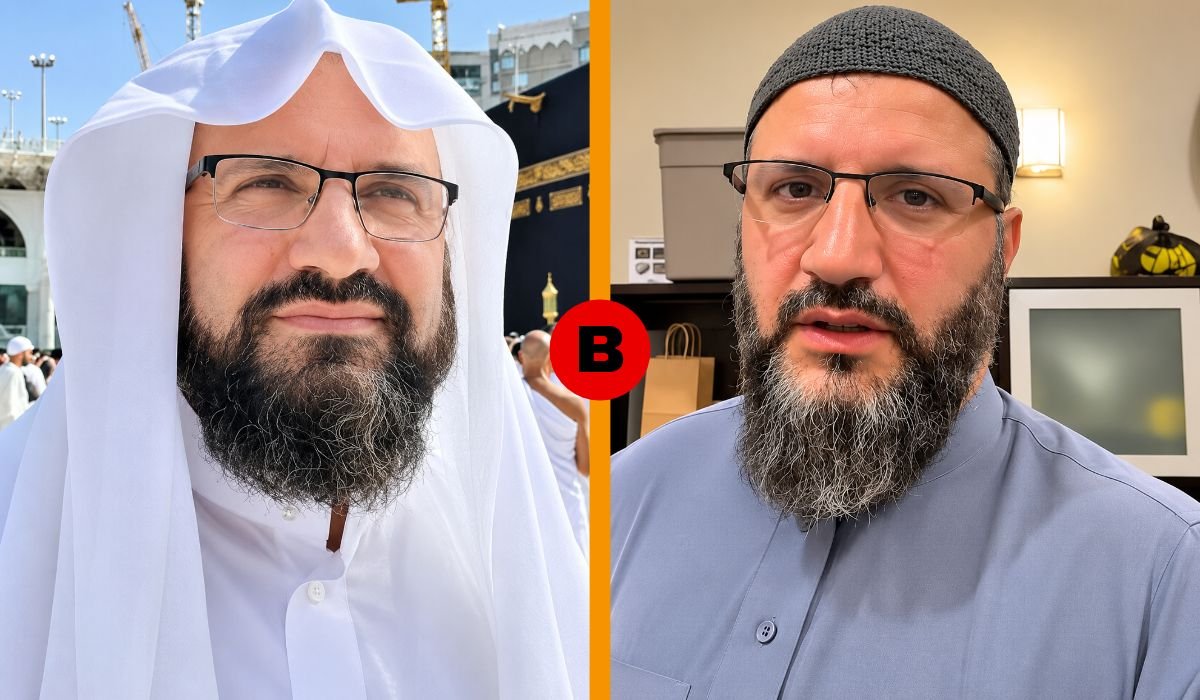
Great educators do more than share knowledge. They help people discover their potential, understand their values, and develop the confidence to make meaningful contributions to society. For Shaykh Rasoul, education has remained at the heart of a career that brings together Islamic scholarship, academic learning, and community leadership.
Known formally as Shaykh AbdulAziz Salar Rasoul, he is an Imam, Islamic educator, public speaker, and community leader with more than two decades of experience serving Muslim communities. His professional journey is distinctive because it combines traditional religious education with university qualifications in engineering and education.
From memorizing the Qur’an during his youth to leading ISNA High School in Canada, Shaykh Rasoul has built a career around teaching, learning, and helping others grow. His involvement with Islamic educational organizations and humanitarian initiatives adds another dimension to his work.
What makes his story particularly interesting is the way these different experiences connect. His religious upbringing introduced him to Islamic scholarship, his university studies broadened his academic knowledge, and his professional responsibilities brought both areas together.
This article takes a closer look at Shaykh Rasoul’s early life, family background, education, professional career, religious leadership, and contributions to Muslim communities.
Shaykh Rasoul Quick Bio Information
| Category | Information |
|---|---|
| Full Name | Shaykh AbdulAziz Salar Rasoul |
| Common Name | Shaykh Rasoul |
| Profession | Imam and Islamic Educator |
| Additional Roles | Public Speaker and Community Leader |
| Professional Experience | More Than Two Decades |
| Father | Shaykh Sebghatollah Rasoul |
| Early Islamic Education | Qur’an Memorization |
| First Religious Teacher | His Father |
| Father’s Education | Islamic University of Madinah |
| Advanced Islamic Studies | Mishkah University |
| Engineering Degree | Toronto Metropolitan University |
| Bachelor of Education | University of Toronto |
| Master of Education | Brock University |
| Former School | ISNA High School |
| School Leadership | Principal, Reportedly 2008–2023 |
| Former Religious Position | Director of Religious Affairs |
| Educational Affiliation | I3 Institute |
| Reported Current Affiliation | Misbah Institute |
| Reported Humanitarian Role | Global Ambassador, Human Concern International |
The information above reflects the supplied biography and previously identified professional profiles. Some appointment dates and current affiliations require updated confirmation for 2026.
Who Is Shaykh Rasoul?
Shaykh AbdulAziz Salar Rasoul is an Islamic scholar and educator whose professional experience spans religious instruction, school administration, public speaking, and community development.
Over the years, he has worked in educational environments where academic achievement and Islamic values are both important. His career includes teaching, serving in school leadership, and taking on responsibilities related to religious education.
Unlike professionals who follow a single academic discipline, Shaykh Rasoul has developed expertise across several fields. His qualifications include electrical engineering, teacher education, graduate studies in education, and advanced Islamic learning.
This combination has helped shape his professional identity as someone who understands the importance of both traditional scholarship and contemporary education.
He is particularly associated with ISNA High School in Mississauga, Ontario, where he held a leadership position for many years. His professional biography also identifies connections with Misbah Institute, the I3 Institute, and Human Concern International.
Together, these roles illustrate a career centered on education, religious understanding, and service to the wider community.
Early Life and Family Background
Long before Shaykh Rasoul became involved in educational leadership, his introduction to Islamic learning began at home. His family environment placed considerable importance on religious education, and his father played a central role in guiding his early studies.
Growing up with access to an experienced Islamic scholar gave him an opportunity to become familiar with religious teachings from a young age. That early exposure would eventually influence the direction of his academic and professional life.
His father, Shaykh Sebghatollah Rasoul, introduced him to formal Islamic studies and helped establish the foundation for his understanding of the Qur’an.
Although his professional biography provides useful information about his education and career, it reveals relatively little about his childhood. Details such as his exact birthplace, date of birth, and early schooling have not been established in the available material.
What is known, however, is that religious learning became an important part of his development.
His early experiences offer a useful reminder that education often begins long before students enter formal institutions. Family encouragement, consistent guidance, and access to knowledgeable teachers can influence a person’s interests for years to come.
For Shaykh Rasoul, that early foundation eventually developed into a professional commitment to Islamic education.
Shaykh Sebghatollah Rasoul and His Influence
Behind Shaykh Rasoul’s early religious education was an important teacher: his father, Shaykh Sebghatollah Rasoul.
According to the supplied biography, Shaykh Sebghatollah holds bachelor’s and master’s degrees in Qur’anic Sciences from the Islamic University of Madinah.
His academic background provided him with formal training in a field closely connected to the study and understanding of the Qur’an.
For his son, having a father with this educational experience meant that religious learning could begin within a familiar family setting.
Under his guidance, Shaykh Rasoul began studying Islam through established scholarly traditions.
The relationship between teacher and student is especially important in Islamic education, where knowledge has historically been transmitted through study, discussion, memorization, and direct instruction.
In Shaykh Rasoul’s case, his father’s mentorship marked the beginning of an educational journey that would later include university studies, professional teaching, and institutional leadership.
While the available biography does not describe every stage of their educational relationship, it clearly identifies his father as a major influence on his early Islamic studies.
Memorizing the Qur’an and Beginning Islamic Studies
One of the earliest achievements mentioned in Shaykh Rasoul’s biography is his memorization of the Qur’an at a young age.
Within Islamic educational traditions, memorizing the Qur’an is known as Hifz. It is a demanding process that involves learning the Qur’anic text by heart through regular study, careful repetition, and sustained concentration.
For many students, Qur’an memorization is an important starting point for deeper religious learning.
It can provide a foundation for studying Qur’anic interpretation, Arabic, Hadith, Islamic jurisprudence, and other areas of Islamic scholarship.
Shaykh Rasoul’s early memorization reflects his involvement in structured religious education during his youth.
After this stage, he continued his formal Islamic studies under the guidance of his father.
The available information does not specify the exact age at which he completed memorization or describe the methods used during his training.
Even without those details, this achievement remains an important part of his educational background.
It also helps explain why Qur’anic learning and Islamic instruction continued to feature prominently throughout his professional life.
Shaykh Rasoul’s Academic Qualifications
While Shaykh Rasoul’s religious education began early, his academic journey eventually extended into fields beyond traditional Islamic studies.
He pursued university education in engineering and teaching, developing qualifications that would later provide valuable context for his professional responsibilities.
His academic background includes a degree in Electrical Engineering from Toronto Metropolitan University, a Bachelor of Education from the University of Toronto, and a Master of Education from Brock University.
Each qualification represents a different area of learning.
Electrical engineering emphasizes technical knowledge, analytical reasoning, and structured problem-solving. Teacher education, meanwhile, focuses on how people learn, how classrooms function, and how educators can support student development.
Graduate studies in education can also deepen an educator’s understanding of educational systems, leadership, and institutional improvement.
Taken together, these qualifications show that Shaykh Rasoul pursued a broad academic path rather than concentrating exclusively on religious scholarship.
That breadth is particularly relevant when considering his later work in school administration.
A school principal must understand much more than the subjects taught in classrooms. Leadership also involves communication, organization, decision-making, and the ability to support both students and teachers.
Although his biography does not explain how he applied each academic qualification in specific situations, his educational background provides a meaningful foundation for understanding his professional career.
Advanced Islamic Studies at Mishkah University
Despite his involvement in engineering and formal education, Shaykh Rasoul continued developing his knowledge of Islamic scholarship.
His supplied professional biography states that he was completing an advanced degree in Islamic Studies through Mishkah University.
This detail reflects an important feature of his educational journey: religious learning remained part of his development even as his professional responsibilities expanded.
Advanced Islamic studies may include subjects such as Qur’anic interpretation, Hadith, Islamic jurisprudence, theology, and the history of Islamic thought.
However, the available information does not identify the exact curriculum or qualification associated with Shaykh Rasoul’s program.
His continued interest in Islamic education also reflects the broader importance of lifelong learning within religious scholarship.
For educators, professional experience and continued study can complement one another. Practical responsibilities create new questions, while further education offers opportunities to develop deeper understanding.
Shaykh Rasoul’s academic journey demonstrates this relationship between learning and professional service.
As of 2026, the completion status of his advanced degree should be confirmed through updated institutional information before it is described as a finished qualification.
Professional Career in Islamic Education
Shaykh Rasoul’s professional career began in education and gradually expanded into administration and religious leadership.
Previously identified professional biographies describe his early teaching experience at Olive Grove School before his involvement with ISNA High School in Mississauga, Ontario.
Teaching provides a perspective that can be difficult to gain through administration alone.
Working directly with students exposes educators to different learning needs, classroom challenges, and the importance of building relationships based on trust and understanding.
These experiences often become valuable when teachers move into leadership positions.
As Shaykh Rasoul’s career developed, his responsibilities extended beyond classroom instruction into school administration.
Educational leaders must support teachers, maintain academic expectations, communicate with families, and help create environments where students can learn effectively.
In Islamic schools, those responsibilities also involve supporting the institution’s religious and ethical educational goals.
His qualifications in education, combined with his background in Islamic scholarship, provided a relevant foundation for working in such environments.
Over time, his career became increasingly connected with educational leadership and community development.
Leadership at ISNA High School
One of the most significant periods in Shaykh Rasoul’s career was his service as Principal of ISNA High School in Mississauga, Ontario.
The supplied biography identifies his principalship as lasting from 2008 to 2023. Other published professional profiles have reported slightly different starting years, so the precise beginning of his tenure requires confirmation.
Nevertheless, the available information consistently establishes that he spent many years in educational leadership at the institution.
ISNA High School operates within a faith-based educational environment where academic learning and Islamic identity are important parts of the school’s mission.
Leading such an institution involves balancing several responsibilities.
Students need academic preparation, but they also benefit from guidance that encourages personal development, responsible behavior, and an understanding of their values.
Teachers require administrative support, while families expect clear communication and a positive educational environment.
Shaykh Rasoul’s long association with ISNA High School placed him within this broader educational setting.
His leadership experience is especially relevant to understanding his later responsibilities in religious affairs.
Rather than treating academic achievement and Islamic education as unrelated priorities, his career developed within institutions where both were part of the educational experience.
Experience as Director of Religious Affairs
After his years in school leadership, Shaykh Rasoul took on responsibilities connected with religious affairs.
His supplied biography describes a two-year period serving as Director of Religious Affairs. Another professional profile associates this position with ISNA Schools.
This stage represented a transition from the administration of a school toward responsibilities more directly focused on religious education.
Within an educational institution, religious affairs leadership may involve supporting Islamic curriculum, coordinating faith-based learning activities, and helping maintain the institution’s religious mission.
These responsibilities require more than subject knowledge.
They also demand an understanding of educational methods, institutional needs, and the different ways students engage with religious learning.
Shaykh Rasoul’s experience as a teacher and principal provided a relevant background for this work.
His professional journey therefore shows a natural connection between classroom teaching, school administration, and religious educational leadership.
Shaykh Rasoul’s Role at Misbah Institute
Shaykh Rasoul’s supplied biography identifies him as Co-Founder and Director of Religious Affairs at Misbah Institute.
This reported appointment represents another chapter in his involvement with Islamic educational organizations.
Institutes devoted to religious education can serve important functions within Muslim communities. They may provide structured courses, learning programs, and opportunities for individuals to deepen their understanding of Islamic teachings.
Such organizations can also create spaces where students and community members explore questions about faith, personal development, and contemporary life.
Shaykh Rasoul’s professional background is relevant to this type of work.
His experience includes religious studies, classroom teaching, school leadership, and religious affairs administration.
Together, these areas provide a broad educational perspective.
However, detailed information about Misbah Institute’s founding history, programs, and his specific initiatives has not been independently established in the material reviewed.
For that reason, his reported affiliation can be discussed, but individual achievements at the institute should not be attributed to him without supporting evidence.
Public Speaking and Community Engagement
Education doesn’t always take place in classrooms.
For Shaykh Rasoul, public speaking and community-based religious learning have also been important parts of his professional activities.
A previously identified Islamic Relief Canada biography describes his involvement in delivering Friday sermons, known as Khutbahs, and participating in Islamic study gatherings, commonly called Halaqas, across the Greater Toronto Area.
These activities provide opportunities for religious educators to connect directly with community members.
Friday sermons often address spiritual responsibilities, ethical conduct, and issues affecting everyday life.
Study gatherings offer a different setting, allowing participants to explore religious subjects in greater detail.
Shaykh Rasoul’s publicly discussed topics have included Muslim youth, social media, Ramadan, marriage, and religious reflection.
These subjects reflect questions that many Muslim individuals and families encounter.
Technology, for example, has changed how young people communicate, learn, and develop their understanding of the world.
Religious educators who address such issues can help audiences consider how traditional teachings relate to contemporary circumstances.
Shaykh Rasoul’s speaking activities therefore complement his experience in formal educational institutions.
They also demonstrate the broader role community learning can play in making religious education accessible beyond schools and universities.
Humanitarian Work With Human Concern International
Shaykh Rasoul’s professional biography also identifies him as a Global Ambassador for Human Concern International.
This reported association connects his religious and educational background with humanitarian engagement.
Within Islamic ethical teachings, charity, compassion, and concern for people facing hardship are important responsibilities.
Humanitarian organizations provide opportunities for individuals and communities to respond to these needs through organized assistance.
Religious educators can contribute to this work by encouraging awareness, generosity, and a sense of social responsibility.
Shaykh Rasoul’s reported ambassadorial role adds another dimension to his community profile.
However, the supplied biography does not identify particular humanitarian projects, fundraising campaigns, or international initiatives involving him.
Without additional documentation, it would be inaccurate to describe specific achievements or outcomes.
What can be said is that his reported connection with Human Concern International reflects the broader relationship between religious leadership and humanitarian service.
Contributions to Muslim Youth and Islamic Education
A consistent theme throughout Shaykh Rasoul’s professional journey has been his involvement in educating younger generations.
His career includes teaching, school administration, religious instruction, and community discussions addressing issues relevant to Muslim youth.
Young people today encounter questions that extend beyond traditional classroom subjects.
They must navigate technology, social expectations, personal identity, relationships, and decisions about education and future careers.
For Muslim students, these experiences may also involve understanding how religious beliefs relate to everyday responsibilities.
Educational institutions that encourage thoughtful learning can help students approach these questions with greater confidence.
Shaykh Rasoul’s academic background and professional experience are relevant to this work.
His involvement in discussions about young people and social media provides a clear example of engagement with contemporary concerns.
Another previously identified professional biography associates him with the I3 Institute as a Co-Founder and Instructor, adding to his record of involvement in Islamic educational initiatives.
Although specific student achievements or measurable outcomes have not been established in the available material, his professional history demonstrates sustained participation in education and community development.
What Makes Shaykh Rasoul’s Journey Inspiring?
Shaykh Rasoul’s career is notable for the different educational experiences that have shaped it.
His journey began with Qur’anic memorization and traditional Islamic studies. He later pursued university qualifications in engineering and education before taking on professional responsibilities in teaching, school administration, and religious leadership.
These experiences may appear quite different at first.
Engineering focuses on technical knowledge, while education explores how people learn. Islamic scholarship brings another dimension through religious texts, ethical teachings, and established scholarly traditions.
Yet each field can contribute something valuable to an educator’s development.
Analytical thinking, communication, subject knowledge, and practical experience all matter in educational leadership.
Shaykh Rasoul’s professional background brings these areas together.
His story also emphasizes the value of continued learning.
Professional responsibilities change over time, and educators must often respond to new challenges and expectations.
By continuing his academic and religious studies while developing his career, Shaykh Rasoul has followed a path that reflects the importance of intellectual growth.
For readers interested in teaching, Islamic scholarship, or community leadership, his journey offers an example of how different areas of knowledge can contribute to meaningful professional service.
Shaykh Rasoul’s Personal Life and Family Privacy
Although Shaykh Rasoul is known for his educational and religious activities, the available information about his private life is limited.
His father, Shaykh Sebghatollah Rasoul, is publicly identified as an important influence on his early religious education.
Beyond this family connection, the supplied biography does not establish many personal details.
His exact date of birth, age, marital status, and information about children have not been verified in the available material.
These details should not be assumed simply because readers may be curious about them.
A responsible biography must distinguish between publicly documented information and personal matters that remain private.
In Shaykh Rasoul’s case, his educational qualifications, professional responsibilities, and community activities provide the clearest basis for understanding his life and work.
Respecting the limits of available information also helps ensure that his biography remains accurate and trustworthy.
Final Thoughts
Shaykh Rasoul’s journey is a story of education, religious learning, and sustained community involvement.
From memorizing the Qur’an during his youth to pursuing university qualifications and accepting leadership responsibilities, he has developed a professional background that connects several different fields.
His years at ISNA High School remain a particularly important part of that journey. They reflect his long involvement in an educational environment where academic development and Islamic identity are closely connected.
His later responsibilities in religious affairs, public speaking, and Islamic educational organizations demonstrate how his professional interests have continued beyond traditional classroom teaching.
Perhaps the most meaningful aspect of his story is the relationship between knowledge and service.
Education can provide the skills needed for professional success, but it can also prepare individuals to support others, strengthen institutions, and contribute to their communities.
Shaykh AbdulAziz Salar Rasoul’s career illustrates that broader purpose.
As of 2026, his professional journey remains relevant to anyone interested in Islamic education, lifelong learning, and the responsibilities of community leadership. His experiences show how religious scholarship, academic qualifications, and practical educational work can come together in a career dedicated to helping others learn and grow.
FAQs About Shaykh Rasoul
Who Is Shaykh Rasoul?
Shaykh Rasoul, whose full name is Shaykh AbdulAziz Salar Rasoul, is an Imam, Islamic educator, public speaker, and community leader. He is known for his experience in Islamic education, school administration, religious instruction, and Muslim community development. His professional background combines traditional Islamic scholarship with university education.
What Is Shaykh Rasoul’s Educational Background?
Shaykh Rasoul holds a degree in Electrical Engineering from Toronto Metropolitan University, a Bachelor of Education from the University of Toronto, and a Master of Education from Brock University. His supplied biography also identifies advanced Islamic Studies through Mishkah University, although the exact degree and its completion status require updated confirmation.
Who Is Shaykh Rasoul’s Father?
His father is Shaykh Sebghatollah Rasoul, an Islamic scholar who earned bachelor’s and master’s degrees in Qur’anic Sciences from the Islamic University of Madinah. He played an important role in guiding Shaykh Rasoul’s early religious education and introducing him to formal Islamic studies.
Did Shaykh Rasoul Memorize the Qur’an?
Yes. According to his professional biography, Shaykh Rasoul memorized the Qur’an at a young age. This achievement formed an important part of his early religious education. However, his exact age when completing memorization has not been established in the available information.
Where Did Shaykh Rasoul Serve as Principal?
Shaykh Rasoul served as Principal of ISNA High School in Mississauga, Ontario, Canada. His supplied biography identifies his tenure as 2008 to 2023, although other professional profiles report slightly different starting years. His extended service at the school remains a significant part of his educational career.
What Is Shaykh Rasoul’s Role at Misbah Institute?
The supplied biography identifies Shaykh Rasoul as Co-Founder and Director of Religious Affairs at Misbah Institute. His professional experience in Islamic studies, teaching, and educational administration is relevant to this reported position. Updated institutional information is needed to confirm his current responsibilities.
Is Shaykh Rasoul Involved in Humanitarian Work?
His professional biography identifies him as a Global Ambassador for Human Concern International. This reported association connects his community leadership with humanitarian service. However, details about particular projects or campaigns involving him have not been independently established.
What Is Shaykh Rasoul Known For?
Shaykh Rasoul is known for combining traditional Islamic scholarship with modern academic education. His career includes teaching, school leadership, religious affairs administration, public speaking, and involvement with Islamic educational organizations. His long association with ISNA High School is among the most clearly documented aspects of his professional background.
Learn more and explore exciting content on: Schuyler Church Biography: Life, Family, Marriage, and Lasting Legacy