

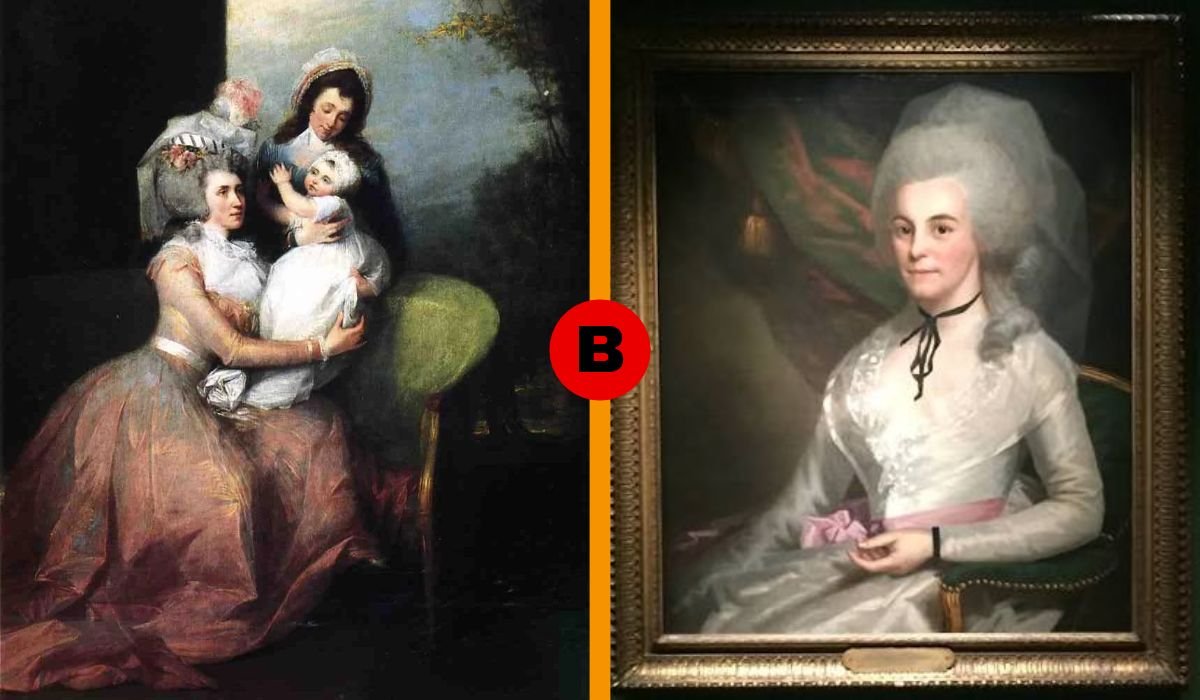
Angelica Schuyler Church lived close to the people and events that shaped the early United States, but her own story is often overshadowed by the famous names around her. Born into New York’s powerful Schuyler family, she grew up in a world of wealth, military affairs, politics, and social influence at a moment when the American colonies were moving toward revolution.
Today, many people searching for Schuyler Church first encounter Angelica because of Alexander Hamilton. She was the older sister of Elizabeth “Eliza” Schuyler Hamilton and therefore Hamilton’s sister-in-law. The warm, witty letters exchanged between Angelica and Hamilton have fascinated historians for generations and, more recently, inspired a much more dramatic interpretation of their relationship in popular culture.
But reducing Angelica to her connection with Hamilton misses much of what made her life remarkable. She married John Barker Church, raised a large family, spent years in Europe, followed political affairs closely, and formed relationships with some of the best-known figures of the Revolutionary era. Her social world stretched from New York to London and Paris.
The Broadway musical Hamilton brought Angelica to an enormous modern audience, but the historical woman was more complicated than any stage character could be. Her real biography is a story of family, politics, privilege, correspondence, slavery, international society, and the changing world of the late eighteenth and early nineteenth centuries.
Quick Bio Information
| Detail | Information |
|---|---|
| Full Name | Angelica Schuyler Church |
| Birth Date | February 20, 1756 |
| Birthplace | Albany, Province Of New York |
| Death Date | March 13, 1814 |
| Age At Death | 58 |
| Father | Philip Schuyler |
| Mother | Catherine Van Rensselaer Schuyler |
| Family | Schuyler Family |
| Famous Sister | Elizabeth “Eliza” Schuyler Hamilton |
| Husband | John Barker Church |
| Marriage Year | 1777 |
| Children | Eight |
| Famous Brother-In-Law | Alexander Hamilton |
| Historical Period | American Revolutionary And Early Republic Era |
| Known For | Political And Social Connections, Correspondence, Schuyler Family |
| European Life | Britain And France |
| Notable Connections | Thomas Jefferson, Benjamin Franklin, Marquis De Lafayette |
| Trinity Connection | Sponsor At Angelica Hamilton’s Baptism |
| Memorial | Marker At Trinity Churchyard |
| Namesake | Angelica, New York |
Who Was Angelica Schuyler Church?
Angelica Schuyler Church was the eldest surviving daughter of Philip Schuyler and Catherine Van Rensselaer Schuyler. Both sides of her family belonged to prominent New York networks, giving her an unusually privileged position from childhood.
Her father became a major general in the Continental Army during the American Revolution and later remained active in politics. As a result, Angelica grew up in a household where discussions about military strategy, government, commerce, land, and public affairs weren’t distant subjects. They were part of the world immediately around her.
Angelica couldn’t participate in formal politics on equal terms with men. Women of her generation were largely excluded from elected office and many other institutions of political power. Yet that didn’t mean they were entirely absent from political life.
For women in Angelica’s social position, letters, family relationships, friendships, and social gatherings could provide other ways to exchange ideas and maintain influence. Her surviving correspondence reveals a confident, intellectually curious woman who was comfortable communicating with some of the leading personalities of her age.
That makes Angelica worth studying in her own right, not simply as Alexander Hamilton’s sister-in-law.
Early Life And The Schuyler Family
Born in Albany in 1756, Angelica entered a family with deep roots in colonial New York. Her father belonged to the Schuyler family, while her mother came from the influential Van Rensselaer family. Together, those connections placed Angelica among the colony’s social elite.
She grew up with numerous siblings, including Elizabeth Schuyler, better known as Eliza, who would later marry Alexander Hamilton. The family’s wealth gave its children opportunities unavailable to most people living in eighteenth-century America.
Angelica’s childhood also unfolded against an extraordinary historical backdrop. Tensions between Britain and its North American colonies were growing, and her family would become directly involved in the Revolution that followed.
Still, the Schuylers’ privilege needs to be viewed honestly.
Philip Schuyler enslaved people, and enslaved labor formed part of the economic and domestic structure that supported wealthy families such as the Schuylers. Modern historical research has increasingly focused on the people whose labor made these elite households possible.
Recognizing this history doesn’t make Angelica less worthy of study. Instead, it gives a fuller and more accurate picture of the society into which she was born.
Education, Personality, And Political Interests
Angelica is often described as highly educated, intelligent, witty, and politically engaged. Some of those descriptions are well supported by her adult correspondence, although detailed records of exactly how she was educated as a child are limited.
That distinction matters.
Rather than filling gaps in the record with assumptions, Angelica’s surviving letters offer stronger evidence of the person she became. They reveal someone who expressed herself confidently, understood political affairs, maintained sophisticated friendships, and communicated comfortably with prominent figures.
Her reputation for lively conversation also followed her beyond America.
Once she entered European society, Angelica moved among diplomats, politicians, aristocrats, and intellectuals. She wasn’t simply observing these circles from a distance. Her correspondence suggests that she enjoyed discussing the public questions of her time.
For an eighteenth-century woman, that was significant. Formal political opportunities were restricted, but private correspondence and social networks could still provide meaningful spaces for intellectual and political exchange.
Marriage To John Barker Church
Angelica’s life took a major turn when she became involved with John Barker Church, an English-born businessman who had used the name John Carter while living in America.
The couple eloped in 1777. Their decision to marry without following the conventional expectations surrounding a prominent family became one of the better-known episodes of Angelica’s early adulthood.
John’s life was complicated by business, finance, and politics, and those activities eventually carried the Church family across the Atlantic. Angelica and John went on to have eight children and remained married until her death.
Marriage opened another chapter in Angelica’s life, but it would be misleading to treat her historical importance as something she simply inherited from her husband.
Her own letters show that she established friendships and maintained relationships independently. John’s position may have opened doors, but Angelica’s personality and intellectual interests helped her move confidently through the world on the other side of them.
Life In Britain And France
Angelica spent a substantial part of her adult life in Europe, an experience that gave her biography an unusually international character.
The Church family lived for years in Britain, while Angelica also spent time within social and political circles connected to France. These were not quiet decades in European history. Governments were changing, revolutionary ideas were spreading, and relationships between Europe and the young United States were evolving rapidly.
Angelica experienced these developments with a perspective few American women of her generation shared.
She had close family ties to the American Revolution while also living among people involved in European politics and diplomacy. The result was a genuinely transatlantic life.
This wider setting is essential for understanding Schuyler Church. Angelica wasn’t simply a member of a famous New York family. She belonged to networks that stretched across the Atlantic and connected the emerging United States with established European centers of power.
Famous Friends And Political Connections
Angelica’s circle included several figures who remain central to the history of the revolutionary Atlantic world. Among those associated with her were Benjamin Franklin, Thomas Jefferson, and the Marquis de Lafayette.
Her relationships with powerful men should not, however, be exaggerated into formal political authority.
Angelica didn’t hold public office, nor did she possess the political rights available to men of her social class. Her importance lies elsewhere.
In an age when women were excluded from many official institutions, correspondence, family networks, private gatherings, and friendships could become important channels for exchanging political ideas. Angelica operated comfortably within those spaces.
Her surviving correspondence therefore offers more than entertaining glimpses of famous historical personalities. It helps modern readers understand how elite social networks functioned and how politically interested women could participate in public culture without holding official power.
Angelica Schuyler Church And Alexander Hamilton
Of all the relationships in Angelica’s life, none has generated more modern curiosity than her friendship with Alexander Hamilton.
Hamilton became part of the Schuyler family when he married Angelica’s younger sister Eliza in 1780. By that point, Angelica had already been married to John Barker Church for about three years.
Angelica and Hamilton developed a close correspondence. Their letters could be thoughtful, playful, affectionate, and sometimes openly flirtatious by modern standards.
One particularly famous example came when Angelica jokingly wrote to Eliza that, if her sister were as generous as the ancient Romans, she might lend Hamilton to her for a little while.
It’s an irresistible line, which helps explain why it has received so much attention.
But it isn’t proof of an affair.
The style of eighteenth-century correspondence could be affectionate in ways that modern readers sometimes interpret differently. The surviving evidence clearly demonstrates warmth, mutual affection, humor, and intellectual companionship between Angelica and Hamilton.
What it doesn’t provide is reliable proof that they had a physical romantic relationship.
Keeping that distinction clear makes their genuine relationship more interesting, not less.
Angelica, Eliza, And The Hamilton Family
Modern storytelling sometimes turns Angelica, Eliza, and Alexander Hamilton into a romantic triangle. History is rarely that tidy.
Angelica remained connected to both her sister and brother-in-law, and the surviving correspondence between members of the family reflects much more than romantic teasing. Their letters touched on family matters, politics, affection, humor, personal worries, and everyday concerns.
Eliza remained Hamilton’s wife until his death in 1804. In the decades that followed, she became known for charitable work, her commitment to her family, and her efforts to preserve Hamilton’s memory.
Angelica, meanwhile, had her own marriage and family.
She had married John Barker Church in 1777, years before the events that popular culture sometimes frames as an unrealized romance between Angelica and Hamilton.
Remembering that chronology helps readers separate the historical family from its later theatrical interpretation.
Schuyler Church And Trinity Church
Angelica’s documented connection with Trinity Church in New York is relatively limited but historically valuable.
Eliza Hamilton maintained a stronger recorded relationship with the parish and regularly brought her family to church. For Angelica, one particularly important piece of evidence survives in Trinity’s baptismal records.
In October 1788, Angelica Schuyler Church served as a sponsor at the baptism of her niece and namesake, Angelica Hamilton, the daughter of Alexander and Eliza.
It’s a small detail, but an important one because it comes from a documented family event rather than later tradition.
Trinity Churchyard would eventually become closely associated with Hamilton history. Alexander and Eliza Hamilton are buried there, and a marker honoring Angelica can also be found in the churchyard.
The Hamilton Duels And The Church Family Connection
The Church family’s connection with the Hamiltons took a tragic turn through two fatal duels.
Philip Hamilton, Alexander and Eliza’s eldest son, died after being wounded in his 1801 duel with George Eacker. Three years later, Alexander Hamilton was mortally wounded in his duel with Aaron Burr.
Pistols belonging to John Barker Church became associated with these events, creating an unsettling link between the Church household and two of the Hamilton family’s greatest tragedies.
After Alexander Hamilton died in July 1804, his body was taken to the home of Angelica and John Church before his funeral procession through New York to Trinity Church.
The episode reveals how closely the families remained connected even during their darkest moments. Angelica wasn’t simply a distant relative appearing occasionally in Hamilton’s correspondence. She remained part of the family’s intimate circle.
Slavery And The Schuyler Church Story
A modern biography of Angelica cannot responsibly discuss the Schuyler family’s wealth without also addressing slavery.
Philip Schuyler enslaved people, and historical research has increasingly examined the lives and labor of enslaved individuals associated with the Schuyler household.
Research connected with the Schuyler Mansion State Historic Site has also identified Angelica and John Barker Church as enslavers.
This evidence complicates the polished image often associated with elite Revolutionary-era families, but that’s precisely why it belongs in a serious biography.
History doesn’t require choosing between describing Angelica as intelligent and politically interested or acknowledging her participation in an unjust system. Both can be true at once.
Angelica could be witty, internationally connected, intellectually curious, and historically significant while also benefiting from and participating in a society that denied freedom to others.
Acknowledging those contradictions gives readers a more complete understanding of both Angelica and the period in which she lived.
Later Life And Death
By the time Angelica returned to the United States after years abroad, the world of her childhood had changed dramatically.
She had lived through the American Revolution and the creation of the United States. She had watched political divisions emerge within the young republic and witnessed enormous upheaval in Europe.
There had also been painful personal losses.
Philip Hamilton’s death in 1801 was followed by Alexander Hamilton’s death in 1804, leaving Eliza widowed and permanently changing the extended family.
Angelica lived for another decade.
She died in New York City on March 13, 1814, at the age of 58. Long before Broadway or modern popular history rediscovered her, her letters and family records had already preserved glimpses of a distinctive personality living remarkably close to some of the defining events of her age.
Where Is Angelica Schuyler Church Buried?
Angelica’s burial is one area where historical certainty becomes harder to find.
A marker honoring Angelica Schuyler Church stands at the Livingston family vault in Trinity Churchyard in New York City. Her precise final resting place, however, isn’t securely established.
That distinction is important.
A memorial marker confirms commemoration, but it shouldn’t automatically be treated as proof that a person’s remains lie directly beneath it.
Alexander and Eliza Hamilton, by comparison, have well-known graves at Trinity Churchyard.
The uncertainty surrounding Angelica’s burial offers a useful reminder that even the lives of prominent historical families contain gaps. Good historical writing doesn’t hide those gaps. It identifies them clearly and avoids turning possibilities into facts.
Angelica, New York And Her Lasting Legacy
Angelica’s name survives in an unexpected place: western New York.
Her family became associated with a large tract of land in the region, and her son Philip Church helped establish a settlement there. He named the community Angelica in honor of his mother.
The town remains in Allegany County today.
There’s something fitting about the survival of her name on the map. Angelica’s life had carried her through sophisticated social circles in New York, Britain, and France, yet one of her most visible memorials became a small American community.
Her deeper legacy, however, lies in the unusual range of her experiences.
She belonged to an influential New York family, lived extensively abroad, corresponded with leading political figures, witnessed the creation of the United States, and participated in social networks connecting America and Europe.
Those experiences make her much more than a supporting character in the Hamilton story.
The Real Angelica Schuyler Church And Hamilton
Lin-Manuel Miranda’s Hamilton changed Angelica’s modern reputation almost overnight.
Through the musical, millions of people encountered an intelligent, ambitious, politically aware Angelica Schuyler who shared a powerful intellectual and emotional connection with Alexander Hamilton.
Parts of that characterization have roots in history. The real Angelica was known for her intelligence, maintained an affectionate correspondence with Hamilton, and moved comfortably in politically sophisticated circles.
Still, Hamilton is theater, not documentary history.
The real chronology is important. Angelica married John Barker Church in 1777. Alexander Hamilton married Eliza in 1780. Angelica’s family circumstances were also more complicated than the streamlined version presented on stage.
Most importantly, the historical record doesn’t establish a secret physical affair between Angelica and Hamilton.
The musical nevertheless accomplished something valuable. It encouraged millions of people to become curious about a woman who had often remained on the margins of popular accounts of the founding era.
And once the theatrical version is set aside, the real Angelica proves every bit as interesting.
Why Angelica Schuyler Church Still Matters
Angelica’s life offers a useful way to look beyond the traditional boundaries of early American political history.
Accounts of the founding era have often concentrated on presidents, generals, lawmakers, wars, and constitutional debates. Those subjects matter, but they don’t tell the whole story.
Angelica’s biography draws attention to correspondence, marriage, family networks, wealth, social gatherings, international friendships, and informal political culture. These were spaces in which women could participate even when formal institutions largely excluded them.
Her story also resists easy hero-making.
Angelica lived with considerable privilege while lacking many rights available to men. She could participate in sophisticated political conversations while remaining excluded from formal political power. She was remembered for intelligence and charm, yet she and her husband were also connected to slavery.
Those contradictions aren’t distractions from her biography. They’re central to understanding it.
Through Angelica, readers can see the founding era not as a collection of polished legends, but as a complicated society inhabited by real people whose lives contained ambition, affection, inequality, privilege, grief, and contradiction.
Final Thoughts
The Schuyler Church story becomes far richer once Angelica Schuyler Church is allowed to step out of Alexander Hamilton’s shadow.
She was born into one of colonial New York’s most powerful families, came of age during revolution, married John Barker Church, raised eight children, spent years in Europe, maintained relationships with influential political figures, and witnessed dramatic changes on both sides of the Atlantic.
Her life wasn’t without troubling contradictions. The wealth and privilege surrounding the Schuyler and Church families existed within a society deeply entangled with slavery, and historical research identifies Angelica and her husband as enslavers. Leaving that history out would produce an incomplete portrait.
Yet Angelica’s surviving correspondence also shows why women’s experiences deserve a larger place in accounts of the Revolutionary era. She couldn’t vote, hold political office on equal terms with men, or participate fully in the institutions that shaped government. Even so, she lived close to political power and took an active interest in the ideas and personalities surrounding it.
Modern audiences may arrive at her story through Hamilton, curious about whether she secretly loved her sister’s husband. The historical record leads somewhere more interesting.
Angelica Schuyler Church’s real legacy lies in the world she inhabited and the connections she maintained across family, politics, society, and continents. Her life offers a revealing window into the opportunities, inequalities, relationships, and contradictions of America’s founding generation—and that makes her worth remembering on her own terms.
FAQs About Schuyler Church
Who Was Angelica Schuyler Church?
Angelica Schuyler Church was the daughter of Revolutionary War General Philip Schuyler and Catherine Van Rensselaer Schuyler. She was the sister of Eliza Hamilton, the sister-in-law of Alexander Hamilton, and the wife of John Barker Church. Beyond those family connections, Angelica became known for her correspondence, interest in politics, years in Europe, and relationships with influential figures of the Revolutionary era.
Who Was Angelica Schuyler Church’s Husband?
Angelica married John Barker Church in 1777 after the couple eloped. Church was an English-born businessman whose financial and political activities eventually helped take the family to Europe. They remained married until Angelica’s death in 1814.
Did Angelica Schuyler Church Have Children?
Yes. Angelica and John Barker Church had eight children. Their son Philip Church became especially important to Angelica’s geographical legacy because he helped establish the western New York community named Angelica in his mother’s honor.
Did Angelica Schuyler Church Love Alexander Hamilton?
Their letters leave little doubt that Angelica and Hamilton shared genuine affection, humor, and intellectual companionship. Some exchanges can sound flirtatious to modern readers. What historians don’t have, however, is reliable evidence proving that the two had a physical romantic affair. Their documented closeness shouldn’t be turned into a confirmed secret romance.
Was Angelica Married Before Alexander Hamilton Married Eliza?
Yes. Angelica married John Barker Church in 1777, while Alexander Hamilton married Eliza Schuyler in 1780. The timeline is important because dramatic portrayals can leave audiences with a different impression of Angelica’s circumstances when Hamilton entered the Schuyler family’s life.
Where Is Angelica Schuyler Church Buried?
Angelica’s exact final resting place remains uncertain. A memorial marker honoring her stands at the Livingston family vault in Trinity Churchyard in New York City. The marker commemorates Angelica, but it shouldn’t be treated as definitive evidence that her remains are located directly beneath it.
Why Is Angelica, New York Named After Her?
Angelica’s son Philip Church helped establish a settlement on family-associated land in western New York and named the community after his mother. Angelica still exists in Allegany County, preserving her name more than two centuries after her lifetime.
How Accurate Is Angelica’s Story In Hamilton?
Hamilton uses real people and historical events as the foundation for a dramatic story, but it changes and simplifies parts of the historical record. Angelica really was Eliza’s sister and shared a close correspondence with Alexander Hamilton. Her actual marriage, family circumstances, life in Europe, and relationship with Hamilton, however, were considerably more complex than a stage musical can show.
Learn more and explore exciting content on: Nick Wolfhard Biography: Age, Parents, Brother Finn Wolfhard, and Career