

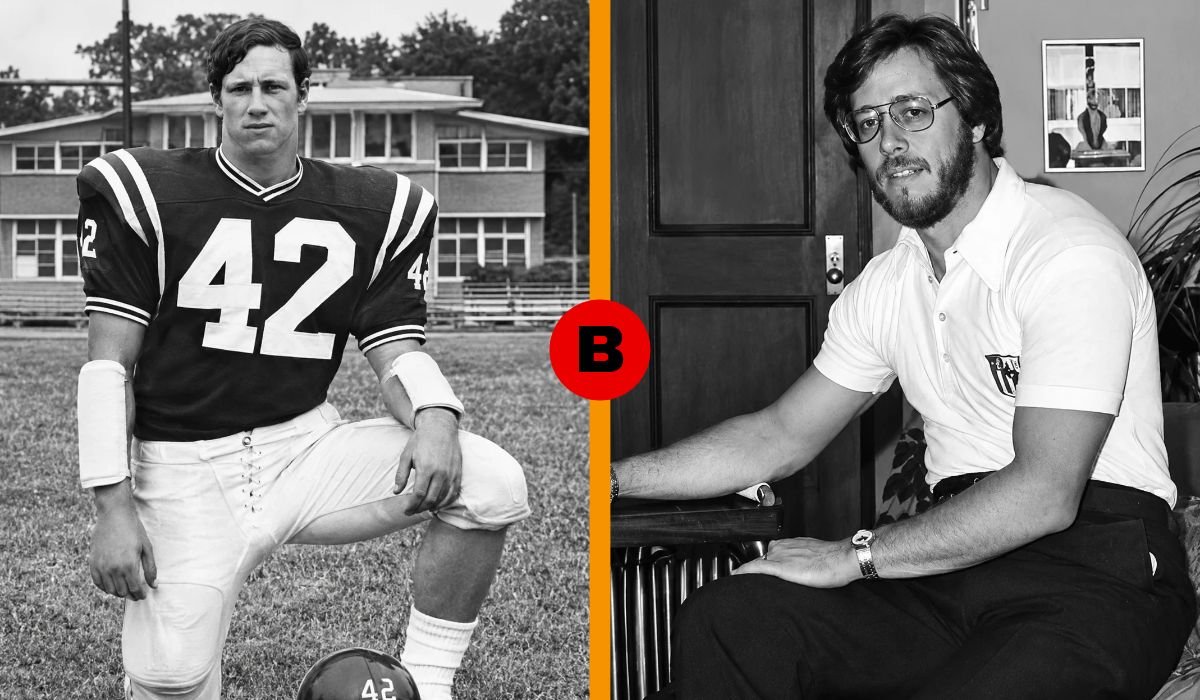
Gerry Bertier’s name is forever tied to Remember the Titans, but the real man lived a story far richer than the one Hollywood had time to tell. He was an All-American high school linebacker, a leader on one of Virginia’s most celebrated football teams, a competitive wheelchair athlete, and an advocate who worked to improve life for people with disabilities.
Football initially seemed destined to shape Bertier’s future. As a senior, he helped lead the T.C. Williams Titans through an undefeated season and a Virginia state championship. His talent had opened the door to college football, and at just 18, his athletic career appeared to be only beginning.
Then came the crash that changed everything.
A serious automobile accident shortly after the championship season caused a spinal cord injury that left Bertier permanently paralyzed. His football career was over, but his athletic ambitions weren’t. In the years that followed, he returned to competition through wheelchair sports, continued his education, worked professionally, and became involved in disability advocacy.
His life ended tragically in 1981 after a second automobile collision. He was only 27.
This Gerry Bertier biography looks beyond the familiar Hollywood story to explore his childhood, football career, relationship with Julius Campbell, accident, life after paralysis, death, and the legacy he left behind.
Gerry Bertier Quick Bio Information
Full Name: Gerry William Bertier
Known As: Gerry Bertier
Date Of Birth: August 20, 1953
Birthplace: Alexandria, Virginia, United States
Nationality: American
Profession: Football Player, Wheelchair Athlete, And Disability Advocate
Football Position: Linebacker
Jersey Number: 42
Former School: Francis C. Hammond High School
High School: T.C. Williams High School
Football Team: T.C. Williams Titans
Major Football Honor: All-American Recognition
Championship: Virginia State Champion
Mother: Jean Bertier, Later Jean Agnew
Sister: Rebecca “Becky” Britt
College: Northern Virginia Community College
First Major Accident: December 1971
Date Of Death: March 20, 1981
Age At Death: 27
Known For: T.C. Williams Titans And Remember the Titans
Who Was Gerry Bertier?
Gerry William Bertier was born on August 20, 1953, in Alexandria, Virginia. Long before movie audiences knew his name, he had earned a reputation as one of the area’s most talented young football players.
Bertier played linebacker at Francis C. Hammond High School before joining T.C. Williams High School. By his senior year, he had developed into an imposing defensive presence and an important team leader.
The defining football season of his life came in 1971. Bertier served as a defensive captain on a T.C. Williams team that went undefeated and won the Virginia state championship.
Yet describing him only as a football player misses much of what made his life remarkable. After paralysis brought his football career to an abrupt end, Bertier found new ways to compete and contribute. He became active in wheelchair athletics, pursued his education, worked professionally, and supported efforts benefiting people with disabilities.
That part of his life receives far less attention than the championship season, but it’s essential to understanding who Gerry Bertier really was.
Gerry Bertier’s Early Life And Family
Gerry Bertier grew up in Alexandria, Virginia, where athletics became an important part of his life at an early age. His parents separated when he was young, and he was raised primarily by his mother, Jean. She later married Robert Agnew, who became Gerry’s stepfather.
Bertier also had a sister, Rebecca “Becky” Britt. In later years, members of his family helped preserve details about his personality and experiences that weren’t captured in Remember the Titans.
Family accounts describe Gerry as fiercely competitive and ambitious. As a boy, he reportedly talked about someday winning an Olympic gold medal. Football eventually became the sport in which his talent was most obvious, but the desire to compete ran much deeper.
His family would become particularly important after the 1971 accident. Jean remained closely involved as her son went through hospitalization, rehabilitation, and the difficult process of adjusting to paralysis. Her later accounts of those years offer valuable firsthand insight into Gerry’s life beyond football.
Questions about Gerry Bertier’s wife and children often appear online. However, there is no well-established public record confirming that he married or had children. A responsible biography shouldn’t fill those gaps with speculation.
Gerry Bertier’s Education And Football Beginnings
Before joining T.C. Williams, Bertier attended Francis C. Hammond High School in Alexandria. That’s where his reputation as a powerful defensive football player began to take shape.
His school years unfolded during an important period in Alexandria’s educational history. The city’s public schools were going through major changes related to integration and consolidation. In 1971, older high school students from different parts of Alexandria were brought together at T.C. Williams.
For the football program, that meant former rivals suddenly found themselves sharing a locker room and competing for the same team.
The historical reality was more complicated than the version later presented in Remember the Titans. Integration hadn’t suddenly begun with one football season. Alexandria’s schools had already been experiencing racial and institutional change. The 1971 consolidation, however, created another major transition by bringing students from different schools and communities together.
For Bertier, it also placed him on a remarkably talented football roster.
Gerry Bertier’s Football Career And Achievements
Gerry Bertier didn’t become a leader simply because of his personality. He could play.
As a linebacker, he combined strength, aggression, athletic ability, and an instinct for defensive football. Those qualities had already made him stand out at Francis C. Hammond, and they became even more visible during his senior season at T.C. Williams.
Bertier earned significant recognition for his performances. Historical accounts identify him as a First Team All-Region and First Team All-State player who also received All-American recognition. He was honored locally as well and has been described as Alexandria’s first high school football All-American.
His ability attracted attention from major college programs, making college football a realistic next step.
That’s important context when considering what happened next. Bertier wasn’t merely finishing a successful high school career. At 18, he appeared to be approaching the beginning of an even bigger athletic chapter.
Instead, the championship season would become his final year of football.
Gerry Bertier And The T.C. Williams Titans
The 1971 T.C. Williams Titans have become part of American sports culture, largely because of Remember the Titans. The real team’s achievements, however, needed little Hollywood embellishment.
The Titans completed an undefeated season and won the Virginia state championship. Their defense was especially dominant, producing numerous shutouts and making life difficult for opposing offenses throughout the year.
Bertier stood at the center of that defense as one of its leaders.
The team’s significance went beyond the scoreboard. Alexandria was navigating school consolidation and racial change, and the Titans brought together athletes who came from different backgrounds and, in some cases, had previously been rivals.
Learning to function as one team required adjustment. Football gave those players a shared purpose, and their success eventually became one of the best-known chapters in Alexandria sports history.
The school itself has since changed names. T.C. Williams High School became Alexandria City High School in 2021, but the 1971 Titans remain an important part of its athletic history.
Gerry Bertier And Julius Campbell’s Friendship
Few relationships in Remember the Titans are as memorable as the friendship between Gerry Bertier and Julius Campbell.
The friendship wasn’t invented for Hollywood. Bertier and Campbell really were teammates, defensive leaders, and friends. What the movie did was reshape and dramatize parts of their relationship to fit a feature-length story.
Both young men played important roles on the Titans defense. As the season progressed, mutual respect developed into a genuine friendship.
That bond didn’t disappear when football ended. Historical accounts describe Campbell visiting Bertier after the accident, showing that their connection continued through one of the most difficult periods of Gerry’s life.
Individual conversations portrayed in the movie shouldn’t be read as literal historical records. Still, the emotional foundation behind the Bertier-Campbell friendship was real.
That distinction matters. The true story doesn’t need fictional dialogue to make their relationship meaningful.
Gerry Bertier’s Car Accident And Paralysis
One of the biggest differences between Gerry Bertier’s real story and Remember the Titans involves the timing of his car accident.
The movie places the crash before the state championship, leaving Bertier unable to participate in the final game.
That’s not what happened.
Bertier played through the Titans’ entire championship campaign. His accident occurred only after the undefeated season had ended.
In December 1971, after attending a banquet celebrating the team’s achievements, Bertier was involved in a serious automobile crash. The injuries were catastrophic. His spinal cord was badly damaged, leaving him permanently paralyzed in his lower body.
He was 18 years old.
Family accounts have linked the crash to a mechanical problem with the vehicle. Because some of the detailed explanation comes through family and historical recollections rather than independently documented accident findings, those details are best presented with attribution.
What isn’t disputed is the outcome. The accident ended the football career of one of Virginia’s most promising young linebackers and forced Bertier to confront an entirely different future.
Life After Gerry Bertier Became Paralyzed
The accident could easily dominate any telling of Gerry Bertier’s life. Yet what happened afterward is arguably more revealing.
Bertier had built much of his identity around physical competition. Suddenly, at 18, he had to learn how to navigate everyday life without the use of his legs. At the same time, the college football opportunities he had worked toward disappeared.
Adjustment wasn’t immediate or simple.
Historical and family accounts make clear that Bertier had to work through the reality of a permanent spinal cord injury. Rehabilitation became a long process involving both physical challenges and a profound change in expectations.
Eventually, he began building a different future.
Bertier continued his education, returned to competitive sports in a new form, found professional work, and became increasingly involved in disability-related causes.
That nearly decade-long chapter between his first accident and his death deserves far more attention than it usually receives. It transformed his story from one about lost potential into one about what he accomplished after football was no longer possible.
Gerry Bertier’s Wheelchair Sports Career
The end of Gerry Bertier’s football career didn’t extinguish his competitive instincts.
Once he had adjusted to life after paralysis, he became involved in wheelchair athletics. Throwing events suited his strength and athletic background, and he competed in disciplines including shot put, discus, and javelin. He also participated in wheelchair basketball.
Historical accounts credit Bertier with successful performances and medals in wheelchair competition. He also competed internationally, including participation in events outside the United States.
This part of his biography requires careful terminology. Modern articles sometimes describe Bertier simply as a Paralympian or state that he won Paralympic gold medals. Historical sources from his era may instead refer to wheelchair games or the Wheelchair Olympics, and competition structures weren’t always identical to today’s Paralympic system.
For that reason, specific medal claims should be tied to documented competitions rather than generalized.
What remains clear is that Bertier became a serious wheelchair athlete. The young man who once dreamed of athletic glory found a new arena in which to compete.
Gerry Bertier’s Career And Disability Advocacy
Athletics wasn’t Bertier’s only focus after paralysis.
He continued his education and attended Northern Virginia Community College. He also entered professional life, working for Abbey Medical, a company associated with equipment and services for people with disabilities.
That work connected naturally with his own experiences.
Bertier understood firsthand how much a curb, narrow entrance, inaccessible building, or poorly designed public space could limit a wheelchair user’s independence. He became involved in efforts promoting better accessibility and opportunities for people with disabilities.
Fundraising was another part of his public work. Historical accounts describe Bertier completing a demanding wheelchair fundraising effort of roughly 30 miles. His volunteer activities later earned recognition.
This period adds important depth to the Gerry Bertier biography. He wasn’t simply a former football player learning to live with paralysis. He was becoming an athlete again, pursuing education, developing a career, and using his experiences to help other people facing similar challenges.
Remember The Titans Vs. Gerry Bertier’s Real Story
When Disney released Remember the Titans in 2000, Gerry Bertier’s story reached an audience far larger than anything he could have experienced during his lifetime. Actor Ryan Hurst portrayed Bertier, turning him into one of the film’s central characters.
The movie gets several important things right.
Bertier really was an exceptional linebacker and team leader. Julius Campbell was his teammate and friend. The Titans completed an undefeated championship season. Bertier suffered a devastating automobile accident and later competed in wheelchair sports.
But Remember the Titans is a drama, not a documentary.
The clearest change concerns Bertier’s accident. In the film, it happens before the championship game. In reality, the Titans had already completed their undefeated season when he crashed.
The championship itself was also less dramatic than Hollywood’s version. T.C. Williams defeated Andrew Lewis High School 27–0.
Other characters, conflicts, conversations, and timelines were altered or compressed for storytelling purposes.
None of that necessarily diminishes the film’s emotional impact. It simply means viewers interested in Gerry Bertier’s true story should look beyond the movie to understand the man behind the character.
Gerry Bertier’s Second Accident And Death
Nearly ten years after surviving the crash that left him paralyzed, Gerry Bertier was involved in another serious automobile collision.
This time, he wouldn’t survive.
On March 20, 1981, Bertier was returning from a business trip when another vehicle crossed the center line and collided with his car near Charlottesville, Virginia. Historical reporting identified the other driver as intoxicated.
Bertier suffered severe injuries and was taken to the University of Virginia Hospital. He died that day at the age of 27.
The circumstances of his death are sometimes misunderstood because his first accident is so closely associated with his public story.
Gerry Bertier did not die from the crash that paralyzed him. Nor did he die shortly afterward from complications related to his spinal cord injury.
He lived for almost another decade.
During those years, he competed in wheelchair athletics, continued his education, worked, traveled, raised money, and advocated for people with disabilities. His fatal injuries came from an entirely separate automobile collision in 1981.
Gerry Bertier’s Legacy And Honors
Gerry Bertier’s life was short, but his legacy has endured in several different ways.
For football fans, he remains one of the most recognizable members of the 1971 T.C. Williams Titans. His accomplishments as a linebacker earned lasting recognition in Alexandria, and he was later inducted into the local school system’s Athletic Hall of Fame.
The gymnasium at what is now Alexandria City High School bears his name, ensuring that generations of students continue to encounter his story.
His legacy also extends into disability advocacy. The Gerry Bertier #42 Foundation was established in his memory and has been associated with efforts supporting spinal cord injury rehabilitation and research.
Then there’s Remember the Titans.
The movie ensured that Gerry Bertier’s name would become familiar far beyond Virginia. Yet the film represents only part of his story. His wheelchair athletics, education, professional career, fundraising, and advocacy deserve equal recognition.
Taken together, those achievements reveal a much fuller legacy than the image of a football player whose career ended in tragedy.
Gerry Bertier Net Worth And Financial Claims
Searches for Gerry Bertier’s net worth often lead to precise figures, but there is no reliable public documentation establishing what he was worth financially.
Bertier never reached the college or possible professional football career that had once seemed within reach. His 1971 accident changed that path before it could begin.
He later worked professionally while continuing his education and other activities, but there are no dependable public records detailing his salary, savings, property, investments, or overall financial position.
Assigning him a specific net worth would therefore create certainty where the historical record doesn’t provide it.
The most accurate answer is straightforward: Gerry Bertier’s net worth is not publicly documented.
Why Gerry Bertier’s Real Story Still Matters
Gerry Bertier’s story is often presented as a tale about a promising athlete whose future was destroyed by an accident. That’s true only up to a point.
The crash ended one future, but it didn’t end his life as an athlete or his ability to contribute.
Bertier found another way to compete. He pursued education. He built a professional career. He became involved in fundraising and accessibility efforts. Most importantly, he spent years living beyond the moment that Hollywood eventually made famous.
His story also offers a useful reminder about movies based on real events. Remember the Titans captured themes of friendship, teamwork, racial change, and perseverance that resonated deeply with audiences. At the same time, it compressed timelines and altered events to create a more dramatic story.
The historical Gerry Bertier doesn’t become less interesting when those changes are removed.
In many ways, he becomes more interesting.
Final Thoughts
It’s easy to understand why Gerry Bertier became such an important character in Remember the Titans. His life contained extraordinary athletic success, friendship, adversity, and tragedy.
But the movie tells only part of that life.
Before his accident, Bertier was one of Virginia’s outstanding high school linebackers, an All-American who helped lead T.C. Williams through an undefeated championship season. At 18, college football appeared to be waiting.
The December 1971 crash changed everything.
What followed, however, wasn’t simply an epilogue to his football career. Bertier returned to competitive athletics from a wheelchair. He continued his education, found professional work, raised money, promoted accessibility, and became involved in helping people with disabilities.
For nearly a decade after the accident, he built a second chapter that deserves to stand alongside his football achievements.
His death in 1981, following another automobile collision, ended that chapter far too soon. Gerry Bertier was just 27.
More than four decades later, his name remains closely associated with the Titans and the film that brought their story to millions. Yet his most meaningful legacy may lie beyond Hollywood.
Gerry Bertier shouldn’t be remembered only for what happened to him. He should also be remembered for what he chose to do afterward.
FAQs About Gerry Bertier
Who Was Gerry Bertier?
Gerry Bertier was an American high school football player, wheelchair athlete, and disability advocate. He became an All-American linebacker and defensive leader for the undefeated 1971 T.C. Williams Titans. Decades later, Ryan Hurst portrayed him in Remember the Titans, introducing his story to a worldwide audience.
Where Was Gerry Bertier Born?
Gerry Bertier was born in Alexandria, Virginia, on August 20, 1953. Some secondary biography websites have listed different Virginia locations, which is why stronger historical sources connected with Alexandria are more useful when establishing his background.
How Did Gerry Bertier Become Paralyzed?
Bertier suffered a severe spinal cord injury in an automobile accident in December 1971. The crash occurred after the Titans had completed their undefeated season and won the Virginia state championship. The injury left him permanently paralyzed in his lower body.
Did Gerry Bertier Play In The State Championship?
Yes. Gerry Bertier helped T.C. Williams complete its championship season before his accident. Remember the Titans changes the timeline by placing his crash before the championship game. The real accident occurred after the football season had ended.
Was Gerry Bertier Really Friends With Julius Campbell?
Yes. Gerry Bertier and Julius Campbell were genuine teammates and friends. The movie dramatized particular conversations and moments between them, but their friendship wasn’t a Hollywood invention. Their relationship continued beyond the championship season and through Bertier’s hospitalization.
Did Gerry Bertier Compete In Sports After Paralysis?
Yes. Bertier returned to competitive athletics through wheelchair sports. He participated in throwing events such as shot put, discus, and javelin and also played wheelchair basketball. Historical accounts credit him with medal-winning performances and international competition.
How Did Gerry Bertier Die?
Gerry Bertier died on March 20, 1981, after suffering serious injuries in a second automobile collision near Charlottesville, Virginia. He was 27 years old. The fatal crash was separate from the 1971 accident that had caused his paralysis.
What Is Gerry Bertier’s Legacy?
Gerry Bertier is remembered as an outstanding high school football player, a member of the championship T.C. Williams Titans, a wheelchair athlete, and an advocate for people with disabilities. His legacy continues through school honors, charitable work associated with his name, and the enduring popularity of Remember the Titans.
Learn more and explore exciting content on: Alvin Martin Biography: Whoopi Goldberg’s First Husband, Career, and Family