

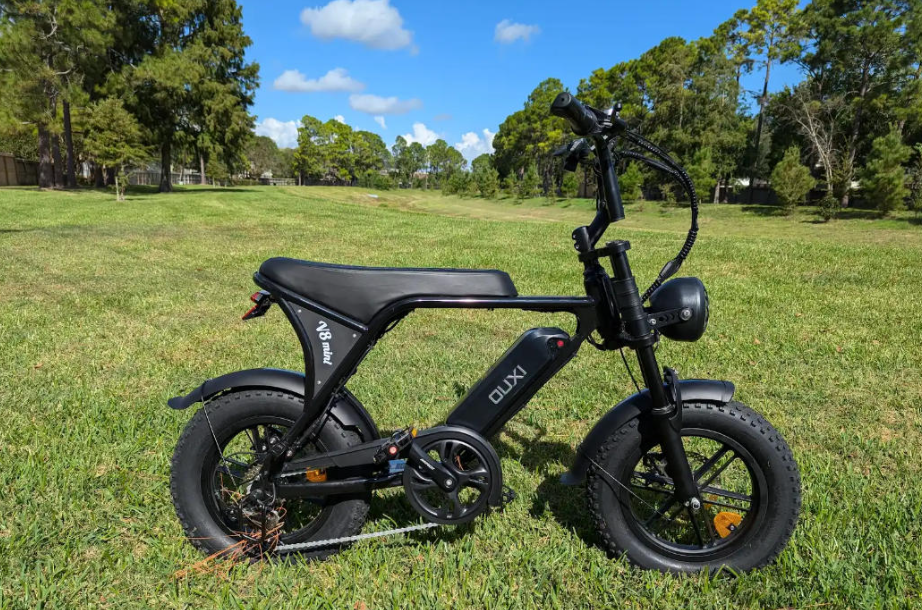
Electric two-wheelers have become increasingly popular among teenagers. They can be used for recreation, getting around a neighborhood, learning new riding skills, and enjoying outdoor trails. However, choosing an electric bike for a young rider requires more thought than simply finding a model with an attractive design or a powerful motor. Age, speed, physical size, riding environment, braking performance, battery safety, and local regulations all deserve consideration.
Parents who are researching an electric dirt bike for teens may notice that youth-oriented electric bikes can vary considerably. Some are designed primarily for controlled off-road riding, while others resemble conventional bicycles and are intended for streets or bicycle paths. Understanding these differences can help families choose equipment that matches the rider and the intended environment.
Electric Bikes Are Not All the Same
The term “electric bike” covers several different types of products. Some models are essentially bicycles with a small electric motor that assists the rider while pedaling. Others have throttles, allowing the motor to propel the bike without continuous pedaling. There are also electric dirt bikes and other off-road machines that may look like bicycles but have different performance characteristics.
This distinction matters because a product’s appearance does not necessarily tell you how it is regulated or how it should be ridden. A family should examine the manufacturer’s specifications, recommended rider age, maximum speed, weight capacity, intended terrain, and safety instructions before making a decision.
The Consumer Product Safety Commission explains that the commonly used e-bike classification system separates Class 1, Class 2, and Class 3 models based largely on how the motor operates and its assisted-speed limit. Class 1 generally provides pedal assistance up to 20 mph, Class 2 uses a throttle with a 20 mph limit, and Class 3 provides pedal assistance up to 28 mph.
Why Speed Matters for Young Riders
Speed is one of the most important factors when selecting an electric bike for a teenager. A bicycle that travels faster requires quicker reactions and more careful control. Stopping distance can increase, obstacles can appear more suddenly, and mistakes may have more serious consequences.
This is one reason parents should not automatically choose the fastest model available. A teenager may be physically capable of sitting on a large electric bike but still need time to develop the braking, cornering, balance, and judgment required to operate it safely.
Current pediatric guidance emphasizes that e-bikes are faster and heavier than traditional bicycles and can be more difficult for young riders to manage. The American Academy of Pediatrics recommends that families consider age, maturity, training, and local requirements before allowing a child or teenager to use an e-bike.
Choosing the Correct Size
A bike that fits properly is easier to control. Parents should look beyond the manufacturer’s suggested age range and consider the teenager’s height, weight, inseam, and overall physical ability.
The rider should be able to reach the handlebars comfortably without stretching excessively. Feet should be positioned securely when stopping, and the controls should be easy to operate. Brake levers should not be so far away that the rider struggles to use them quickly.
Size becomes particularly important with off-road electric bikes. Rough terrain can require the rider to shift body position, stand on the footrests or pedals, and respond quickly to bumps. A bike that is too large or heavy may make these movements more difficult.
Teenagers also grow quickly, so parents may be tempted to buy a larger model that they expect the rider to “grow into.” However, an oversized bike can be harder to control in the meantime. A properly fitting bike is generally a more practical starting point.
Street E-Bikes and Dirt Bikes Have Different Purposes
A conventional electric bicycle and an electric dirt bike should not be treated as interchangeable products. A street-oriented e-bike may be designed around paved roads, bicycle infrastructure, commuting, or recreational cycling. An electric dirt bike is generally designed for off-road environments and may have features such as different tires, suspension, frame geometry, and riding controls.
The riding environment should therefore be established before shopping. If the teenager will primarily ride around the neighborhood, a bicycle-style model may make more sense than an off-road machine. If the family has access to a suitable private or designated off-road area, an electric dirt bike may be considered instead.
Parents should also verify where the specific vehicle is legally permitted. Not every electric two-wheeler can legally be ridden on public streets, sidewalks, bike paths, or public trails.
Understanding Class 3 E-Bikes
For parents comparing different electric bicycle categories, another useful question is what is a class 3 ebike? In the commonly used classification system, Class 3 refers to pedal-assisted e-bikes where the motor provides assistance up to 28 mph. The Consumer Product Safety Commission describes Class 3 models as similar to Class 1 pedal-assist bicycles but with assistance continuing to a higher speed.
That higher speed is precisely why parents should pay attention to age and experience when considering one for a teenager. A Class 3 e-bike is not simply a slightly faster version of a traditional bicycle. The rider needs appropriate skills, and local laws may impose age or equipment requirements.
For example, Illinois’ current parent buying guidance states that Class 3 riders must be at least 16 under its state rules, demonstrating why families should never rely solely on a manufacturer’s classification without checking the regulations where they live.
Protective Equipment Should Match the Activity
A helmet should be considered essential equipment rather than an optional accessory. The type of helmet may depend on the type of riding and the speeds involved.
For off-road riding, additional protective equipment can be useful because the rider may encounter uneven ground, loose surfaces, branches, rocks, or other obstacles. Depending on the activity, parents may consider protective gloves, appropriate footwear, eye protection, knee protection, elbow protection, and other equipment recommended for the specific vehicle.
The Consumer Product Safety Commission advises riders to wear helmets, follow local laws, inspect the bike before riding, and follow manufacturer instructions concerning age and weight limits.
Learning Before Riding Fast
A teenager who already knows how to ride a normal bicycle still needs to become familiar with an electric bike’s controls. The motor changes acceleration and can make the bike feel different from an ordinary bicycle.
The first practice sessions should ideally take place in a controlled area away from traffic and pedestrians. The rider can learn how the brakes respond, how the motor engages, how quickly the bike accelerates, and how different assistance settings affect handling.
Starting slowly is particularly useful. The rider should become comfortable with stopping before attempting higher speeds. They should also practice turning at controlled speeds and maintaining a stable position when moving over small changes in terrain.
For off-road bikes, training should also include understanding how the bike behaves on dirt, grass, gravel, and uneven surfaces. A smooth paved road and a loose trail can require very different riding techniques.
Battery Safety Is Part of Riding Safety
Electric bikes depend on rechargeable lithium-ion batteries, so charging and storage should be treated as part of the overall safety routine. A battery should not be modified or repaired by an unqualified person.
The CPSC recommends using the charger supplied with or recommended for the device and being present while charging. It also advises against charging micromobility products while sleeping or when nobody is at home.
Parents should inspect the battery and electrical components for visible damage. If a battery becomes unusually hot, swollen, damaged, or otherwise appears abnormal, it should not simply be put back into normal use. Manufacturer instructions should be followed for inspection and replacement.
Proper storage is also important. Families should follow the manufacturer’s guidance regarding temperature, moisture, charging levels, and storage conditions.
Maintenance Can Prevent Problems
An electric bike needs both mechanical and electrical care. Tires should be checked regularly, while brakes, chains, cables, suspension components, and fasteners should be inspected according to the manufacturer’s maintenance schedule.
Off-road bikes can require particularly frequent inspection because riding over rough terrain can put additional stress on mechanical components. Mud and dirt can also accumulate around moving parts.
Before every ride, a teenager should develop the habit of checking the basic controls. Brakes should respond correctly, tires should appear properly inflated, and the handlebars should be secure. Any unusual noise or mechanical problem should be reported to a parent or qualified technician rather than ignored.
Pay Attention to Local Regulations
One of the easiest mistakes is assuming that an electric bike can be used anywhere a conventional bicycle can go. Regulations can differ significantly between states, cities, parks, and trails.
Some jurisdictions have specific age requirements for certain e-bike classes. Others restrict particular classes from certain paths or impose helmet requirements. Off-road electric vehicles can also fall under different rules depending on their design and where they are operated.
Parents should therefore check the regulations applicable to their location before purchasing or allowing a teenager to ride. The legal status of an electric dirt bike may be different from that of a pedal-assist e-bike.
A Practical Way to Evaluate a Teen’s Readiness
Rather than focusing only on age, parents can consider several practical questions. Can the teenager comfortably control a bicycle of the appropriate size? Can they stop quickly and safely? Do they understand basic traffic and trail rules? Can they remain focused instead of attempting risky stunts? Do they understand why modifying a speed limiter or electrical system can be dangerous?
Training is another important factor. The American Academy of Pediatrics recommends special training for young riders because e-bikes handle differently from traditional bicycles.
A teenager who understands the controls but repeatedly ignores safety instructions may not be ready for a faster electric bike. Responsible riding involves judgment as much as physical ability.
Avoid Unnecessary Speed Modifications
Some riders may be tempted to unlock a speed limiter or modify an electric bike to make it faster. This can change the vehicle’s performance and potentially its legal classification.
The American Academy of Pediatrics specifically warns that removing or unlocking an e-bike’s speed limiter can increase danger and may violate applicable laws.
For teenagers especially, there is little reason to prioritize maximum speed over control. A properly configured vehicle that matches the rider’s age, ability, and intended environment is a more sensible approach.
Making the Purchase a Family Decision
Buying an electric bike for a teenager should involve more than choosing a color or style. Parents and teens can discuss where the bike will be used, how fast it should travel, what protective equipment is needed, where it will be stored, and who will be responsible for charging and maintenance.
This conversation can also establish clear riding rules. For example, the family may agree that helmets are mandatory, passengers are not allowed, nighttime riding requires lights, and public roads or trails can only be used where permitted.
Having expectations established before the first ride can make it easier for teenagers to understand that an electric bike is both recreational equipment and a responsibility.
FAQs
What type of electric bike is best for a teenager?
There is no single model that is appropriate for every teenager. The choice should consider the rider’s age, size, maturity, experience, intended terrain, and local regulations. Lower-speed options may be more appropriate for younger riders.
Is a Class 3 e-bike suitable for teenagers?
Class 3 e-bikes can reach assisted speeds of up to 28 mph under the common classification system. Because of that higher speed, parents should carefully consider age, experience, and local laws before choosing one. Current pediatric guidance recommends Class 1 for riders ages 12–15 who are considered ready and Class 1 or 2 as the starting point for 16-year-olds.
What is the difference between an electric dirt bike and an e-bike?
An electric dirt bike is generally designed for off-road riding and may have motorcycle-style features, suspension, tires, and controls. A conventional e-bike is generally built around bicycle-style use and may be subject to different regulations. The exact classification depends on the vehicle’s design and jurisdiction.
Does a teenager need protective gear for an electric dirt bike?
Yes, protective equipment is especially important for off-road riding. At minimum, riders should use an appropriate helmet and follow the manufacturer’s safety recommendations. Additional protective equipment may be appropriate depending on the riding environment.
Can teenagers ride electric bikes on public roads?
That depends on the vehicle and local laws. Some jurisdictions have minimum-age requirements, class restrictions, equipment rules, and location restrictions. Families should check their state and local regulations before riding on public roads.
How should an electric bike battery be charged?
Use the charger recommended by the manufacturer and follow its charging instructions. The CPSC recommends being present while charging and not charging micromobility batteries while sl
 Blitz Blitz
  Wild Rise
  Apex Apex