

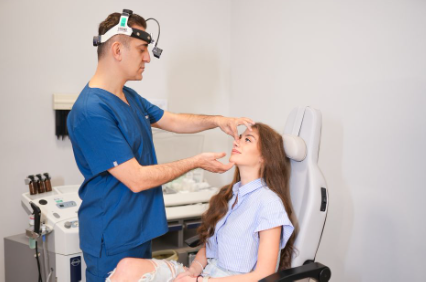
Facial features work together in ways that are easy to notice but sometimes difficult to explain. A small difference in shape, angle, or proportion can subtly change how balanced the face appears, even when there is nothing medically wrong. For some people, those differences are simply part of their natural appearance; for others, they may result from genetics, injury, aging, or previous cosmetic treatment. Understanding what creates a particular feature—and whether the concern is purely aesthetic or also affects function—is the first step toward deciding whether treatment is worth considering.
Understand What Is Creating the Concern
Before thinking about treatment, it helps to identify exactly what feels out of balance.
Sometimes the issue is not the overall size of a feature but one specific contour. With the nose, for example, a person may be more concerned about the bridge, tip angle, projection, or how the profile relates to the chin and forehead.
One commonly discussed variation is the “ski slope” nose. This generally describes a profile with an inward curve along the bridge and a tip that turns upward.
A subtle version may look completely natural. A more pronounced curve, however, can make the tip appear overly elevated or the bridge look under-supported.
The important point is that the term describes an appearance rather than a medical diagnosis.
Know What Surgical Correction May Involve
The appropriate surgical approach depends on why the contour exists.
If the bridge has been reduced excessively, cartilage may be used to rebuild height and create a smoother transition along the profile. In some cases, cartilage can come from the septum or ear. More complex reconstruction may require additional structural support.
An overly rotated tip may need to be repositioned rather than reduced further.
For people considering changes to an overly scooped or upturned profile, learning more about ski slope nose surgery can provide useful context on how rhinoplasty may address proportion, tip position, and overall facial balance.
This becomes especially important after previous rhinoplasty because scar tissue and altered anatomy can make revision work more complex.
The aim should be a balanced, stable result rather than an exaggerated or trend-driven profile.
Look at the Structure Behind the Shape
Facial contours are influenced by bone, cartilage, skin thickness, soft tissue, and underlying support. That means visible concerns are not always surface-level problems.
A ski slope appearance may be completely natural and related to inherited anatomy. In other cases, it can develop after previous surgery if too much bone or cartilage has been removed.
Scar tissue or an old injury can also change the shape over time.
Understanding the cause matters because treatment should address the underlying structure rather than simply disguise the most obvious visual feature.
When support has been weakened, removing more tissue may make the problem worse. In those situations, rebuilding or reinforcing the area may be more appropriate.
Remember That Appearance and Function Can Overlap
Cosmetic concerns are sometimes connected to functional ones.
The nose is part of the airway, so its external framework also helps support internal breathing structures. If cartilage becomes weak or certain areas narrow, airflow may be affected.
Some people with structural changes notice congestion, difficulty breathing through the nose, or a sense that airflow is restricted during sleep or exercise.
Understanding how rhinoplasty may involve both appearance and breathing can help explain why a thorough evaluation looks beyond what is visible in photographs.
If breathing symptoms are present, they should be discussed clearly during consultation rather than treated as a separate issue.
Expect a Detailed Evaluation Before Treatment
A useful consultation should involve more than looking at the face from one angle.
Bridge height, tip position, nostril visibility, skin thickness, cartilage strength, and overall facial proportions may all be considered. Previous procedures, injuries, breathing problems, and medical history can also influence the treatment plan.
Photos from several angles can help clarify what is creating the imbalance.
It is equally important to explain what you actually want to change. Someone bothered by an overly scooped bridge may need a different approach from someone whose main concern is an upward-turned tip.
Clear goals make it easier to avoid unnecessary treatment.
Understand the Limits of Non-Surgical Options
Non-surgical treatments may be useful for certain concerns, but they do not solve every structural issue.
Injectable filler can sometimes camouflage a small depression along the bridge by adding volume above or around it. From the side, that can create the appearance of a straighter contour.
However, filler does not actually make the nose smaller. It also cannot reliably correct weak cartilage, significantly reposition an overly elevated tip, or repair breathing problems caused by structural collapse.
Because filler adds volume, it may even be unsuitable for someone whose primary concern is overall size.
A less invasive option is not automatically the better option. What matters is whether it addresses the actual problem.
Give Recovery Enough Time
Healing after nasal surgery happens gradually.
Bruising and obvious swelling often improve during the early stages, but the final contour may continue changing for months. The tip can be particularly slow to settle.
A realistic understanding of rhinoplasty recovery and healing can make the waiting period easier to manage.
Patients may also experience temporary congestion, tenderness, or numbness. Activity restrictions vary, and more complex or revision procedures may require additional patience.
The result should not be judged solely by the first appearance after a splint or dressing is removed. Early swelling can temporarily distort proportions and make the shape look different from the eventual outcome.
Be Careful With Trends and Perfect Profiles
Cosmetic preferences change constantly.
A feature that dominates social media today may look dated several years from now. That is why treatment decisions should be based on individual proportions rather than copying a particular celebrity, filter, or fashionable profile.
Facial harmony is highly personal.
A nose that looks attractive on one face may feel completely out of place on another because the forehead, lips, chin, cheek structure, and overall proportions are different.
The goal should not be to create the smallest or straightest possible feature. It should be to make any chosen change feel natural within the face as a whole.
Make the Decision With Realistic Expectations
Not every unusual contour needs treatment.
Some people become more comfortable with a feature once they understand that it is simply part of their natural anatomy. Others may decide that a change would genuinely improve confidence, function, or both.
If you are considering treatment, identify exactly what bothers you and why. Think about whether the concern has been consistent over time rather than influenced by a temporary trend or photograph.
If breathing is involved, make that part of the discussion too.
A thoughtful cosmetic decision begins with understanding the structure, available options, limitations, recovery, and possible risks.
The most successful outcome is not necessarily the most dramatic transformation. Often, it is the one that restores balance so naturally that no single feature demands attention.
When treatment respects both facial proportion and function, small changes can make a meaningful difference without making the result look artificial.
 Qamer Javed
  HG Star
  Sky News Agency