

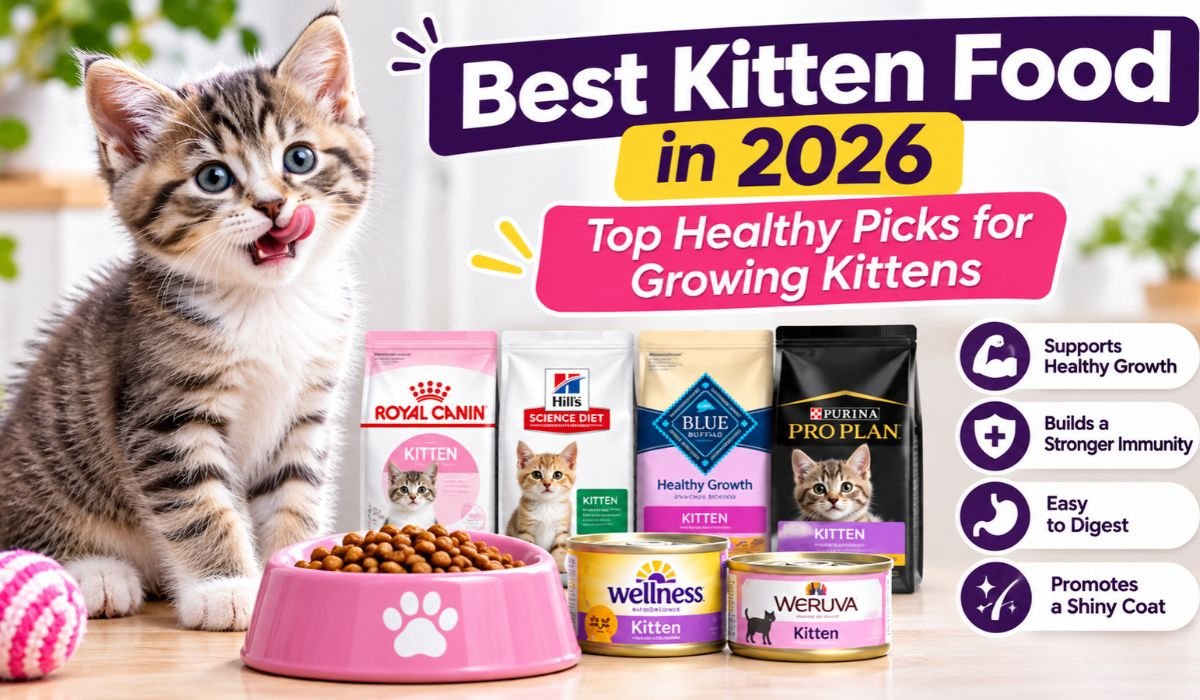
Few things are more exciting than welcoming a new kitten into your home. Between watching those first playful jumps and discovering your kitten’s personality, there’s plenty to enjoy. But there’s also an important responsibility that comes with raising a young cat: making sure it gets the nutrition it needs to grow.
Finding the Best Kitten Food can be surprisingly challenging. Walk through any pet store, and you’ll see shelves packed with dry kibble, canned meals, fresh food, and specialty recipes. Every brand seems to promise something different, whether that’s better digestion, stronger muscles, or healthier development.
The truth is that good kitten nutrition doesn’t have to be complicated or expensive. What matters is choosing food that delivers the right nutrients in the right amounts.
In this guide, we’ll explore the Best Kitten Food in 2026, look at popular brands, explain the differences between wet and dry food, and share practical feeding advice to help your kitten thrive.
Quick Information About Best Kitten Food
| Category | Important Information |
|---|---|
| Food Category | Complete and Balanced Kitten Food |
| Recommended Life Stage | Growth |
| Main Nutritional Requirement | Adequate Protein and Energy |
| Essential Amino Acid | Taurine |
| Important Fatty Acid | DHA |
| Bone Development | Calcium and Phosphorus |
| Muscle Development | Protein and Essential Amino Acids |
| Brain Development | DHA and Balanced Nutrition |
| Eye Health | Taurine and DHA |
| Wet Food Advantage | Additional Dietary Moisture |
| Dry Food Advantage | Convenient Storage and Feeding |
| Popular Wet Food Textures | Pâté, Mousse, and Shredded Food |
| Feeding Approach | Age-Appropriate Measured Meals |
| Drinking Water | Fresh Water Always Available |
| Food Transition | Gradual Introduction |
| Treat Allowance | Generally Less Than 10% of Daily Calories |
| Typical Adult Food Transition | Around 12 Months |
| Growth Monitoring | Regular Weight and Body Condition Checks |
| Nutritional Standard | Appropriate AAFCO Growth Adequacy Statement |
| Professional Guidance | Licensed Veterinarian |
What Makes the Best Kitten Food?
Kittens aren’t simply smaller versions of adult cats. Their bodies are growing rapidly, which means they need more energy relative to their size and a carefully balanced supply of essential nutrients.
Protein plays a central role in developing muscles, organs, and healthy tissues. Fat provides concentrated energy, while important nutrients such as taurine and DHA support normal heart, eye, and brain function.
Calcium and phosphorus are equally important because they’re involved in developing strong bones and teeth. Getting the balance right matters just as much as providing enough of each nutrient.
One of the easiest ways to identify suitable kitten food is to check its nutritional adequacy statement. In the United States, complete and balanced foods commonly reference AAFCO nutritional standards or feeding trials. Look for a statement indicating that the food is appropriate for growth or all life stages, including growth.
Ultimately, a balanced formula matters far more than impressive packaging or fashionable ingredient claims.
Best Kitten Food Brands in 2026
There’s no shortage of kitten food brands, but some established names offer particularly useful options for comparison. The right choice depends on your kitten’s age, appetite, nutritional requirements, and your household budget.
Hill’s Science Diet Kitten Chicken is a familiar choice among owners looking for dry kitten food. Its growth-focused formulation is designed to provide nutrients that support healthy development.
Another widely available option is Purina ONE Healthy Kitten, which offers wet and dry formulas. Its accessibility makes it worth considering for families who want practical everyday nutrition without necessarily choosing a premium-priced product.
For canned food, Fancy Feast Kitten Tender Turkey provides a softer texture at a generally affordable price. It may appeal to kittens that enjoy smooth pâté-style meals.
Owners interested in moisture-rich recipes can also explore Tiki Cat Baby Chicken, Salmon & Liver and Weruva Kitten Chicken & Tuna. Both offer different textures and animal protein combinations.
Wellness CORE Kitten is another pâté-style option, while Wellness Complete Health Kitten provides an alternative formulation for owners comparing wet foods.
Other products worth researching include Nulo Prowess Bright Beginnings, FirstMate Chicken Meal With Blueberries, The Honest Kitchen Chicken Câté, and Smalls Ground Other Bird.
These aren’t universal rankings or guarantees that every recipe will suit every kitten. Product formulations can change, so always check the current packaging for nutritional adequacy before making a purchase.
Best Wet Kitten Food for Healthy Growth
Wet kitten food has several advantages, particularly during the early stages of development. Its soft texture is often easier for young kittens to manage, while its high moisture content contributes to their daily fluid intake.
Texture can make a noticeable difference, too. Some kittens prefer a smooth mousse, while others are more interested in pâté, shredded meat, or food served with gravy.
Tiki Cat Baby offers soft meal options, and Wellness CORE Kitten provides pâté-style recipes. Weruva’s gravy-based products may appeal to kittens that enjoy wetter meals, while Fancy Feast Kitten offers a more budget-conscious canned alternative.
Still, a food’s moisture content doesn’t tell the whole nutritional story. The recipe must provide sufficient calories and essential nutrients for growth.
Because wet food generally contains fewer calories per gram than dry kibble, kittens may need larger portions to meet their daily energy requirements.
Once opened, canned food should be refrigerated according to the manufacturer’s instructions. Any uneaten food left at room temperature for too long should be discarded.
Best Dry Kitten Food for Everyday Feeding
Dry kitten food remains a popular choice for good reasons. It’s convenient to measure, easy to store, and often more economical per calorie than canned food.
Kibble also tends to be calorie-dense because it contains relatively little moisture. That can be useful for growing kittens, which need enough energy to support their rapid development.
Products such as Hill’s Science Diet Kitten, Nulo Prowess Bright Beginnings, and FirstMate Chicken Meal With Blueberries are among the dry foods owners may want to compare.
Before choosing one, look beyond the front of the package. Check its nutritional adequacy statement, calorie content, kibble size, and feeding recommendations.
Younger kittens may find softened kibble easier to eat. Adding a little warm water can help, although moistened food should be handled carefully and not left sitting out for long periods.
It’s also worth remembering that ordinary dry food isn’t a replacement for dental care. Crunchy kibble doesn’t automatically prevent dental problems.
Wet vs. Dry Kitten Food: Which Is Better?
The debate between wet and dry kitten food often makes feeding seem more complicated than it needs to be. In reality, both can support healthy growth when they’re nutritionally complete and served in appropriate portions.
Wet food provides additional moisture and tends to have a stronger aroma. These qualities can be helpful for kittens that prefer softer, more fragrant meals.
Dry food, meanwhile, offers convenience, longer storage after opening, and straightforward portion measurement.
There’s also no rule saying you must choose only one. Many owners combine wet and dry food to offer different textures while maintaining a consistent feeding routine.
The important part is managing calories. If you introduce canned food, you’ll generally need to reduce the amount of kibble to avoid unintentionally overfeeding.
Rather than searching for one universally superior format, focus on what works best for your kitten’s growth, appetite, and overall health.
Essential Nutrients Every Growing Kitten Needs
Healthy growth depends on more than simply providing enough food. Kittens need a specific balance of nutrients to support the many changes taking place inside their bodies.
Protein supplies the amino acids required to build muscles, organs, and other tissues. Since cats have particular amino acid requirements, the quality and balance of dietary protein are especially important.
Fat is another essential part of kitten nutrition. It provides concentrated energy and helps the body absorb certain vitamins. Essential fatty acids also contribute to healthy skin, coat, and neurological development.
DHA, an omega-3 fatty acid, plays an important role in normal brain and visual development.
Minerals deserve attention as well. Calcium and phosphorus help support growing bones, but excessive amounts or an improper balance can cause problems.
Taurine is particularly important for cats because they cannot produce enough of it to meet their needs. It supports normal heart function, vision, and several other bodily processes.
A properly formulated commercial kitten food should provide these nutrients without routine supplementation. Adding extra vitamins or minerals without veterinary guidance can do more harm than good.
How to Choose the Best Kitten Food
Choosing the right food becomes much easier when you know what to look for.
Start with the nutritional adequacy statement. A product intended only for adult maintenance may not provide the nutrient concentrations required by a growing kitten.
Next, consider calories and serving sizes. Two foods may look similar but deliver very different amounts of energy in the same-sized portion.
Texture matters, particularly for younger kittens. Soft pâté or mousse may be easier during early feeding, while older kittens often become comfortable with appropriately sized kibble.
Don’t judge a product entirely by its ingredient list, either. Properly processed meat meals and animal by-products can provide valuable nutrients, even if their names sound less appealing than fresh chicken or turkey.
It’s also helpful to consider the manufacturer’s nutritional expertise, quality-control practices, and willingness to provide detailed product information.
The best choice is one that combines sound nutrition with a texture your kitten enjoys and a price you can comfortably maintain.
Best Kitten Food for Different Growth Stages
A kitten’s first year brings remarkable changes, and feeding habits need to develop alongside them.
Weaning usually begins around three to four weeks of age. During this period, kittens gradually become interested in soft solid food while continuing to receive their mother’s milk or suitable kitten milk replacer.
As weaning progresses, complete kitten food becomes an increasingly important part of the diet.
Young kittens typically need several smaller meals throughout the day. Their stomachs are still developing, and frequent feeding helps them obtain enough energy.
As kittens grow older, their meal schedules can gradually become more structured. However, they still need nutrition designed to support growth.
Most cats are ready to transition to adult maintenance food around twelve months of age. Some larger breeds take longer to mature, so their feeding schedules may differ.
Your veterinarian can help determine the right time based on your kitten’s breed, growth, and body condition.
How Much Kitten Food Should You Feed?
One of the most common questions new cat owners ask is how much food their kitten actually needs.
Unfortunately, there’s no single portion size that works for every young cat.
Daily requirements depend on age, weight, activity, growth rate, and the calorie density of the chosen food. A highly active kitten may need a different amount from a less active kitten of similar size.
The feeding chart on the package is a useful starting point, but it shouldn’t be treated as an unchangeable rule.
Regular weight checks help you see whether your kitten is developing steadily. Monitoring body condition is just as important because weight alone doesn’t always reveal whether a cat is too thin or carrying excess fat.
Treats should generally account for less than ten percent of daily calories. Most of your kitten’s nutrition should come from complete and balanced meals.
If growth seems unusually slow or rapid, ask your veterinarian whether the feeding amount needs adjusting.
Best Kitten Food for Sensitive Stomachs
Digestive upset can be worrying, especially when your kitten is still very young.
Sometimes the explanation is relatively simple. A sudden food change, an oversized meal, or difficulty tolerating an ingredient may lead to loose stools or vomiting.
However, digestive symptoms aren’t always caused by food. Parasites, infections, and other medical conditions can produce similar problems.
Wellness Complete Health Kitten and other nutritionally complete formulas may be worth discussing with your veterinarian, but no ordinary commercial diet can guarantee relief from a sensitive stomach.
When switching foods, a gradual transition is usually easier on digestion than an abrupt change.
If your kitten experiences repeated vomiting, ongoing diarrhea, poor appetite, or inadequate weight gain, seek veterinary attention promptly. Young kittens can become dehydrated quickly, so persistent symptoms shouldn’t be ignored.
Best Kitten Food for Picky Eaters
Just like people, kittens can develop strong food preferences. One kitten may eagerly eat pâté, while another seems interested only in shredded food or crunchy kibble.
Aroma, temperature, texture, and previous feeding experiences can all influence these preferences.
Purina ONE Healthy Kitten, Tiki Cat Baby, and Fancy Feast Kitten offer different textures that may appeal to kittens with particular tastes.
If your kitten seems uninterested in refrigerated wet food, gently warming it to a comfortable temperature may make its aroma more noticeable. Always check the temperature before serving.
Consistent mealtimes can also encourage a predictable feeding routine.
Still, it’s important to distinguish ordinary preferences from a genuine loss of appetite. A young kitten that suddenly refuses food may be unwell and should receive prompt veterinary attention.
Ingredients and Feeding Mistakes to Avoid
Kitten food labels can be confusing, especially when certain ingredients are portrayed as automatically good or bad.
For example, animal by-products aren’t necessarily poor-quality ingredients. When properly processed, they can provide valuable nutrients. Similarly, grains aren’t inherently unsuitable for cats when included in a balanced formula.
The overall nutritional composition matters more than individual marketing claims.
Some everyday human foods, however, should never become part of your kitten’s diet.
Cow’s milk isn’t a suitable regular drink because many cats struggle to digest lactose. Chocolate, onions, garlic, grapes, and raisins should also be kept away from cats.
Raw diets carry additional concerns, including exposure to harmful microorganisms. Homemade diets can also create nutritional deficiencies or excesses unless they’re carefully formulated by a qualified professional.
Another common mistake is changing foods too quickly. Introducing a new diet gradually over approximately a week, or longer when needed, can help reduce digestive problems.
Common Kitten Feeding Problems and Food Storage
Even a nutritious diet can become less effective when feeding habits are inconsistent.
Overfeeding, giving too many treats, changing portions frequently, or switching foods abruptly may interfere with a kitten’s routine.
Regular weighing and measured meals make it easier to recognize changes in growth and appetite.
Food storage deserves attention, too.
Dry food should be kept in its original packaging inside a sealed container, away from excess heat and moisture. This helps preserve freshness while keeping important product information available.
Opened wet food should be refrigerated according to package directions. Food left sitting at room temperature beyond safe serving periods should be discarded.
Clean bowls are another simple but important part of daily care. Wash feeding dishes regularly and make sure fresh drinking water is always available.
These habits don’t require much effort, but they can make everyday feeding safer and more consistent.
Final Thoughts
Choosing the Best Kitten Food in 2026 isn’t about finding the most expensive brand or following the latest pet food trend. It’s about understanding what growing kittens actually need and finding a diet that consistently delivers those nutrients.
A complete and balanced formula, appropriate calorie intake, safe ingredients, and regular feeding routines matter far more than impressive advertising claims.
Whether your kitten prefers wet food, dry kibble, or a combination, pay attention to its appetite, energy, digestion, and growth. Those everyday observations can help you recognize when a feeding routine is working well or when something needs to change.
With nutritious meals, regular veterinary care, and plenty of attention, you’ll be giving your kitten something more valuable than a particular brand of food: a healthy foundation for the years ahead.
FAQs About Best Kitten Food
What Is the Best Kitten Food in 2026?
The best kitten food is a complete and balanced diet formulated for growth that provides appropriate calories and essential nutrients. Brands such as Hill’s Science Diet, Purina ONE, and Wellness offer products worth considering. However, the right choice depends on your kitten’s age, appetite, health, and individual nutritional needs.
Is Wet or Dry Food Better for Kittens?
Both wet and dry food can support healthy development. Wet food provides additional moisture and softer textures, while dry food offers convenience and concentrated calories. Many kittens do well with a combination of both, provided their overall calorie intake remains appropriate.
What Is the Healthiest Food for a Kitten?
A healthy kitten diet contains adequate protein, essential amino acids, healthy fats, vitamins, and minerals. It should be nutritionally complete for growth and served in portions that support steady development without excessive weight gain. The healthiest option isn’t necessarily the most expensive product.
Can Kittens Eat Adult Cat Food?
Adult maintenance food may not provide enough of certain nutrients for growing kittens. Young cats should generally eat food formulated for growth or an appropriate all-life-stages diet. An occasional small amount of adult food isn’t the same as relying on it for daily nutrition, but it shouldn’t replace a complete kitten diet.
How Often Should Kittens Eat?
Young kittens usually need several small meals throughout the day because they have limited stomach capacity and relatively high energy requirements. As they mature, meal frequency can gradually decrease. The most suitable schedule depends on age, appetite, growth, and veterinary guidance.
What Is the Best Affordable Kitten Food?
Fancy Feast Kitten and Purina ONE Healthy Kitten are practical options for budget-conscious owners to compare. Rather than focusing only on package price, consider nutritional adequacy, calories per serving, and the overall cost of meeting your kitten’s daily needs.
When Can Kittens Start Eating Dry Food?
Kittens generally begin exploring solid food during weaning, which usually starts around three to four weeks of age. Softened food is often easier at first. As their teeth develop and chewing improves, appropriately sized dry kibble can be introduced gradually.
When Should You Stop Feeding Kitten Food?
Most cats can transition to adult maintenance food around twelve months of age. However, some larger breeds mature more slowly and may benefit from growth nutrition for longer. Your veterinarian can recommend the best timing based on your kitten’s development and body condition.
Learn more and explore exciting content on: Chewy Gift Card Guide: Where to Buy, How to Redeem, and Check Balance