

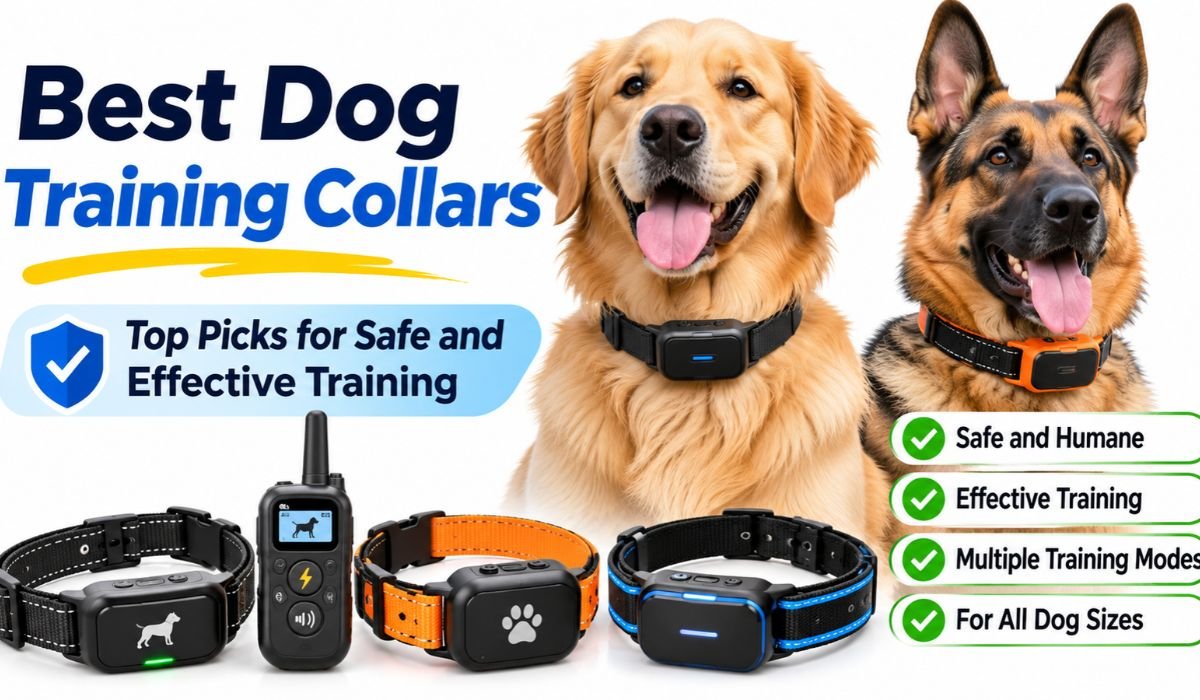
Every dog owner wants a well-behaved companion, but getting there takes more than teaching a few commands. Dogs need patience, consistency, and clear communication to understand what’s expected of them. The right equipment can make that process easier, especially when you’re working on recall, managing outdoor activities, or training a hunting dog.
That’s where the Best Dog Training Collars come into the picture. Today’s options go far beyond traditional collars. Some use GPS technology to track a dog’s location, while others provide sound or vibration signals to support communication. More specialized models include remote training functions designed for working dogs.
Of course, not every collar is right for every situation. A family pet learning basic obedience has very different needs from a hunting dog covering miles of unfamiliar terrain. And while electronic stimulation devices remain available, their potential effects on a dog’s comfort and emotional well-being deserve serious attention.
This guide explores the leading dog training and tracking collars for 2026, explains what makes each option different, and helps you choose equipment that suits your dog’s needs without overlooking safety.
Quick Information About Dog Training Collars
| Feature | Important Information |
|---|---|
| Product Category | Dog Training And Tracking Equipment |
| Main Purpose | Communication, Tracking, Or Behavior Management |
| Common Technologies | GPS, Sound, Vibration, And Static Stimulation |
| Remote Control | Available On Selected Models |
| GPS Tracking | Useful For Outdoor Location Monitoring |
| Cellular Tracking | Requires Compatible Network Coverage |
| Waterproof Protection | Depends On The Product And Its Rating |
| Collar Fit | Should Match The Dog’s Neck Measurements |
| Battery Options | Rechargeable Or Replaceable |
| Battery Life | Varies By Model And Usage |
| Operating Range | Influenced By Terrain And Interference |
| Multi-Dog Support | Available On Compatible Systems |
| Smartphone Features | Offered By Selected GPS Products |
| Subscription Costs | May Apply To Cellular And Satellite Services |
| Puppy Training | Positive Reinforcement Is Preferred |
| Main Welfare Concerns | Stress, Discomfort, And Skin Irritation |
| Recommended Training Approach | Reward-Based Training |
| Buying Priority | Comfort, Purpose, Reliability, And Safety |
What Are Dog Training Collars?
Dog Training Collars are specialized devices designed to help owners communicate with, locate, or manage their dogs. Unlike ordinary identification collars, these products may include electronic receivers, wireless transmitters, vibration motors, or GPS tracking technology.
Some collars work with handheld remotes, allowing handlers to send signals from a distance. Others track a dog’s movements and display its location on a smartphone or navigation device. Automatic bark collars respond when barking is detected, while wireless containment systems establish electronic boundaries around a property.
The important thing to remember is that these products don’t all perform the same job.
A GPS collar can help you locate a dog that has wandered out of sight, but it won’t automatically teach that dog to return when called. Similarly, a bark collar might interrupt unwanted noise without addressing why the dog is barking in the first place.
Understanding what each device actually does makes choosing the right one much easier.
How Do Dog Training Collars Work?
Most remote training collars use wireless communication between a handheld transmitter and a receiver worn around the dog’s neck. When the owner presses a button, the receiver produces a signal.
Depending on the device, that signal might be a sound, vibration, or electrical stimulation.
Sound and vibration can be useful when they’re introduced as learned cues. For instance, a dog can be taught to associate a particular sound with returning to its owner and receiving a reward. Over time, the signal becomes familiar rather than confusing.
Electronic stimulation collars operate differently. They deliver an electrical sensation, usually through contact points touching the dog’s skin. Although manufacturers offer adjustable intensity settings, these devices can cause discomfort, fear, or stress. Lower settings aren’t automatically harmless.
GPS collars use satellite positioning to determine a dog’s location. That information is then communicated through radio signals or cellular networks, depending on the system.
For ordinary obedience training, reward-based methods remain the preferred starting point.
Best Dog Training Collars for Different Needs
Choosing a training collar isn’t simply about finding the most expensive or feature-packed model. It’s about matching the equipment to the job.
The following products were featured in a July 2026 review published by Field & Stream. The original evaluation focused largely on hunting and outdoor applications, so these recommendations are especially relevant to owners of active working dogs.
Garmin Alpha 300i With TT25 – Best for Advanced Hunting and Tracking
The Garmin Alpha 300i With TT25 is designed for serious hunting dog handlers who need detailed information about their dogs’ movements.
Its biggest advantage is the combination of GPS tracking, mapping, navigation, and remote training features. Under favorable conditions, the system offers an advertised tracking range of approximately nine miles.
It also supports multiple compatible dog collars, making it useful for handlers managing several dogs during a hunt.
Another notable feature is optional inReach satellite communication, which can provide additional communication capabilities through a subscription service.
There’s a trade-off, though. The Alpha 300i is expensive, and its advanced interface takes time to learn. For someone teaching a family dog basic commands, it’s probably more equipment than necessary.
Garmin Pro 550 Plus With TT25 – Best for Simple Field Controls
Not everyone wants to navigate complicated maps while working with a dog. That’s where the Garmin Pro 550 Plus offers a different approach.
Its handheld transmitter provides relatively straightforward controls alongside useful tracking information. When paired with compatible equipment, it can display a dog’s direction, distance, and certain hunting-related status details.
This makes it appealing to handlers who want practical field information without the complexity of a full mapping system.
The transmitter is relatively bulky, however, and the product’s specialized features make more sense for hunting activities than ordinary household training.
SportDOG WetlandHunter 425X – Best for Retriever Training
Water, mud, and unpredictable weather are part of life for many retriever handlers. The SportDOG WetlandHunter 425X was developed with those conditions in mind.
Its compact receiver and waterproof construction make it suitable for demanding outdoor environments. The system offers an advertised operating range of approximately 500 yards, providing communication over moderate field distances.
Its straightforward design is another advantage for handlers who prefer uncomplicated equipment.
However, the shorter range may be limiting for dogs working across extensive terrain. The collar also includes electronic stimulation functions, which require careful consideration because of their potential welfare effects.
DT Systems DD700 – Best Budget Field Training Option
Owners looking for a more affordable field-training system may find the DT Systems DD700 worth considering.
It provides basic remote training functions without the advanced mapping and navigation features found in premium systems. Its advertised operating range is approximately 700 yards, and the receiver is designed for outdoor use.
The simpler feature set helps keep the product comparatively accessible.
Still, buyers should understand its limitations. There’s no GPS tracking, and the handheld transmitter requires a separate battery.
For handlers who need location monitoring or extensive navigation features, a more specialized device would be necessary.
Garmin Alpha LTE – Best for Cellular Dog Tracking
The Garmin Alpha LTE takes a different approach from traditional remote training collars.
Rather than focusing on electronic corrections, it helps owners monitor a dog’s location using GPS positioning and cellular connectivity.
Compatible smartphone software allows owners to view location information where supported cellular coverage is available.
This can be particularly useful during outdoor adventures when carrying a dedicated GPS handheld isn’t desirable.
However, the system depends on network availability, and subscription charges may apply. Owners should also confirm regional service compatibility before purchasing.
Most importantly, the Alpha LTE is primarily a tracking device, not a conventional remote stimulation collar.
PetSafe Stay & Play Wireless Fence – Best for Portable Boundaries
The PetSafe Stay & Play Wireless Fence is designed for owners who want an electronic containment area without installing underground boundary wires.
The system creates a circular boundary around a central transmitter. Depending on the model, coverage may extend to approximately three-quarters of an acre.
Its portable design can be convenient for certain properties or temporary arrangements.
However, electronic containment has important limitations. It doesn’t physically prevent other animals from entering the property, and a frightened or highly motivated dog may cross the boundary.
Because these systems may rely on aversive corrections, physical fencing and supervised outdoor access are generally preferable when practical.
DT Systems SPR5300 Upland – Best for Audible Dog Location
Finding a hunting dog in thick vegetation isn’t always easy, particularly when the animal disappears from view.
The DT Systems SPR5300 Upland addresses that challenge by combining remote training functions with an audible beeper system.
Its advertised operating range reaches approximately two miles under favorable conditions. The beeper helps handlers identify a dog’s location when visual contact is difficult.
Several operating modes add flexibility for specialized hunting situations.
Nevertheless, the product’s relatively high cost and field-oriented design make it less appealing for owners who only need everyday obedience equipment.
SportDOG NoBark SBC-10 – Best Dedicated Bark Collar in the Reviewed Selection
The SportDOG NoBark SBC-10 is designed to detect barking and respond automatically.
Its correction settings are intended to interrupt repeated barking without requiring constant input from an owner.
However, barking is a form of communication, and dogs bark for many reasons. Some are excited, others are frightened, and some may be responding to boredom or separation-related distress.
Interrupting the noise doesn’t necessarily resolve the problem.
Before using any automatic bark-control device, owners should investigate the underlying cause and consider reward-based behavior modification.
Different Types of Dog Training Collars
Dog training collars come in several forms, and understanding the differences can prevent an expensive purchasing mistake.
Vibration Collars produce a physical signal that a dog can learn to recognize. Sound Collars use an audible cue, which may help reinforce recall or other familiar commands when paired with rewards.
GPS Dog Tracking Collars serve another purpose entirely. They’re designed to provide location information, making them useful for hunting, hiking, and other outdoor activities.
Electronic Training Collars deliver static stimulation. Because these devices use an aversive sensation, they raise additional questions about animal welfare.
Automatic Bark Collars respond when barking is detected, while Wireless Containment Collars establish electronic property boundaries.
The best option depends on whether you’re trying to communicate with your dog, locate it outdoors, or address a particular behavior.
How to Choose the Best Dog Training Collar
Before comparing brands, think about what you actually need the collar to accomplish.
If you’re teaching a family dog to sit, stay, or walk calmly on a leash, a comfortable harness and consistent reward-based training may be all you need.
For hunting or outdoor tracking, the priorities change. GPS accuracy, battery life, signal reliability, and durability become much more important.
Comfort should never be overlooked. A heavy receiver can be awkward for a small dog, while a poorly fitted collar may rub against the skin or create pressure points.
It’s also worth checking waterproof ratings and manufacturer specifications carefully. Advertised wireless ranges usually reflect favorable conditions and may decrease around hills, trees, buildings, or interference.
Finally, look beyond the purchase price. Replacement accessories, additional receivers, warranty coverage, and subscription charges can all affect the long-term cost.
Are Dog Training Collars Safe for Dogs?
The answer depends largely on the type of collar and how it’s used.
A properly fitted GPS tracking collar serves a different purpose from a device that delivers electrical stimulation. Even ordinary collars, however, can cause skin irritation if they’re too tight or worn without appropriate checks.
Electronic stimulation introduces additional welfare concerns. Research into aversive training methods has identified potential effects involving fear, stress, and anxiety.
The American Veterinary Society of Animal Behavior supports reward-based training and advises against aversive methods.
Owners should watch for warning signs such as trembling, avoidance, unusual aggression, or visible discomfort. If these appear, stop using the equipment and seek professional guidance.
No training goal should come at the expense of a dog’s physical or emotional well-being.
What Professional Trainers and Veterinary Behavior Experts Recommend
Experienced trainers understand that successful dog training isn’t about forcing obedience. It’s about helping an animal understand what behavior is expected and making that behavior rewarding.
Positive Reinforcement Training does exactly that. Dogs receive something they enjoy, such as food, praise, or play, when they perform a desired action.
This approach can help teach recall, loose-leash walking, calm greetings, and everyday commands.
Behavioral problems involving fear, aggression, or separation-related distress require particular attention. Punishment may increase anxiety and can make an already difficult situation worse.
When problems persist, a qualified reward-based trainer or veterinary behaviorist can assess the underlying causes and develop a suitable training plan.
How to Use a Dog Training Collar Responsibly
Good training begins long before a dog wears specialized equipment.
Start by teaching basic commands through consistent rewards and short, enjoyable practice sessions. A dog should understand what’s being asked before additional communication cues are introduced.
When introducing a collar, allow the dog to become comfortable with its weight and fit. Keep the experience relaxed and check regularly for rubbing, redness, or pressure marks.
If you’re using a sound or vibration signal, teach its meaning gradually. Pair the cue with a familiar behavior and a positive reward so the dog learns what to do.
Avoid using electronic corrections to manage fear, anxiety, or aggression. These situations call for careful behavioral assessment rather than stronger stimulation.
The aim should always be clearer communication, not intimidation.
Best Dog Training Collars for Different Dog Sizes
A collar that works comfortably for a large retriever may be far too bulky for a small companion dog.
Small dogs generally benefit from lightweight equipment with appropriately sized receivers. Excess weight around the neck can interfere with movement and cause discomfort.
Medium-sized dogs often have a broader selection of compatible products, but proper measurements still matter.
Large dogs may need more durable straps and secure hardware, particularly when running through vegetation or working outdoors.
However, size doesn’t determine sensitivity. A large dog can experience discomfort or fear just as easily as a smaller one.
Whatever your dog’s breed or build, choose equipment that fits properly and supports comfortable movement.
Best Dog Training Collars for Puppies
Puppies are naturally curious, easily distracted, and still learning how the world works. Their early training experiences should help them feel safe and confident.
Positive Reinforcement is particularly valuable during this stage. Short sessions involving treats, play, and gentle encouragement can teach name recognition, recall, house training, and basic commands.
Electronic stimulation collars are generally inappropriate for young puppies. They may not understand why a correction occurs, creating confusion or fear.
A lightweight identification collar, comfortable harness, and age-appropriate training routine are better starting points.
Remember, puppies aren’t expected to behave like fully trained adult dogs. Progress comes through repetition, patience, and realistic expectations.
Common Mistakes Dog Owners Make With Training Collars
One of the biggest mistakes owners make is expecting a collar to do the training for them.
Equipment can support communication, but it can’t replace teaching. A dog that hasn’t learned a command won’t suddenly understand it because a device produces a signal.
Poor fit is another common issue. Tight collars may irritate the skin, while loose equipment can shift during activity.
It’s also easy to focus on stopping unwanted behavior without asking why it’s happening.
A dog that barks constantly may be anxious or bored. One that ignores recall commands may simply need more practice around distractions.
Understanding the cause usually leads to better results than repeatedly interrupting the behavior.
Alternatives to Electronic Dog Training Collars
Electronic stimulation isn’t necessary for most everyday obedience training.
Positive Reinforcement Training encourages dogs to repeat desirable behavior by rewarding them. Clicker Training builds on this idea by using a consistent sound to mark the exact moment a dog does something correctly.
Long Training Leads allow owners to practice recall while keeping their dogs safely connected. Comfortable harnesses can also make walks easier to manage.
For dogs that need secure outdoor boundaries, physical fencing is generally more dependable than electronic containment alone.
Regular exercise, enrichment activities, and predictable routines can help reduce boredom-related problems.
When training becomes challenging, working with a qualified reward-based professional can provide more effective, individualized guidance.
How Much Do Dog Training Collars Cost?
The price of a dog training collar depends on its technology, construction, and intended purpose.
Basic sound or vibration devices generally cost less than advanced remote systems. Premium GPS collars can cost several hundred dollars or more, particularly when they include dedicated handheld navigation equipment.
Cellular and satellite-connected models may also involve ongoing subscription fees.
Before making a purchase, consider replacement batteries, charging accessories, additional collars, and service charges.
It’s tempting to assume that expensive equipment delivers better results, but that isn’t necessarily true.
A well-fitted, appropriate device combined with consistent training is more valuable than advanced features you’ll never use.
How We Evaluate the Best Dog Training Collars
This guide draws on product information and field observations published in the July 2026 Field & Stream review by Phil Bourjaily.
That review focused primarily on hunting dog equipment, including GPS tracking systems, remote training collars, and specialized outdoor devices.
Our editorial assessment considers intended purpose, usability, advertised operating range, durability, battery requirements, compatibility, and potential welfare concerns.
Manufacturer specifications are treated as advertised capabilities rather than guaranteed real-world results. Likewise, third-party testing observations are not presented as our own firsthand experience.
The products discussed here haven’t been independently field-tested for this article. Before purchasing, readers should verify current specifications, pricing, subscriptions, and availability with manufacturers or authorized retailers.
Final Thoughts
Choosing the Best Dog Training Collars isn’t about finding the device with the longest range or the most advanced technology. It’s about understanding your dog’s needs and selecting equipment that genuinely helps.
For experienced hunting handlers, systems such as the Garmin Alpha 300i offer advanced tracking and navigation capabilities. Cellular tracking devices may appeal to owners who want location monitoring during outdoor adventures.
For everyday obedience, however, patient instruction, positive reinforcement, and comfortable equipment are often all that’s required.
Ultimately, the strongest foundation for successful dog training is trust. When dogs understand what’s expected and feel confident responding, training becomes more rewarding for everyone involved.
FAQs About Best Dog Training Collars
What Is the Best Dog Training Collar for Beginners?
For most beginners, comfortable equipment combined with reward-based training is the best starting point. Owners working with hunting dogs may appreciate the relatively straightforward controls of the Garmin Pro 550 Plus, although its electronic stimulation functions require careful consideration. Basic household obedience rarely requires electronic correction devices.
Are Dog Training Collars Safe for Everyday Use?
Safety depends on the type of device, its fit, and how it’s used. Properly fitted GPS or identification collars can be useful for everyday activities, provided owners check regularly for irritation. Electronic stimulation collars carry additional welfare concerns and aren’t necessary for routine obedience training.
Do Vibration Dog Training Collars Really Work?
Vibration collars can work as communication tools when dogs have learned what the signal means. For example, a vibration cue can be associated with returning to an owner for a reward. However, some dogs find vibration startling, so introduction should be gradual and carefully monitored.
Can Dog Training Collars Stop Excessive Barking?
Some automatic bark collars may interrupt barking, but they don’t necessarily solve the underlying problem. Dogs may bark because of fear, boredom, excitement, or separation-related distress. Identifying the cause and using reward-based behavior modification generally offers a more constructive long-term approach.
What Is the Best Dog Training Collar for Hunting?
The Garmin Alpha 300i With TT25 is a strong option for experienced hunting handlers who need detailed GPS tracking, mapping, and multi-dog monitoring. However, its advanced capabilities and premium price may be unnecessary for occasional outdoor activities. Buyers should confirm compatibility and current specifications before purchasing.
Are Dog Training Collars Suitable for Puppies?
Puppies should primarily learn through positive reinforcement, socialization, and short training sessions. Electronic stimulation collars are generally inappropriate for young dogs. A comfortable harness, lightweight identification collar, and consistent reward-based instruction are better starting choices.
Can Dog Training Collars Improve Recall?
A sound or vibration signal can become a useful recall cue when properly introduced and paired with rewards. GPS collars can also help owners locate dogs outdoors. However, dependable recall develops through consistent practice, beginning in quiet environments before gradually adding distractions.
Are Expensive Dog Training Collars Worth Buying?
Premium collars may justify their price when owners genuinely need advanced GPS tracking, specialized hunting features, or extensive outdoor monitoring. For ordinary household obedience, expensive electronics are rarely essential. Proper fit, reliable equipment, and effective training matter much more than the price tag.
Learn more and explore exciting content on: Dutch Shepherd: Complete Breed Guide, Temperament, Care, and Facts