

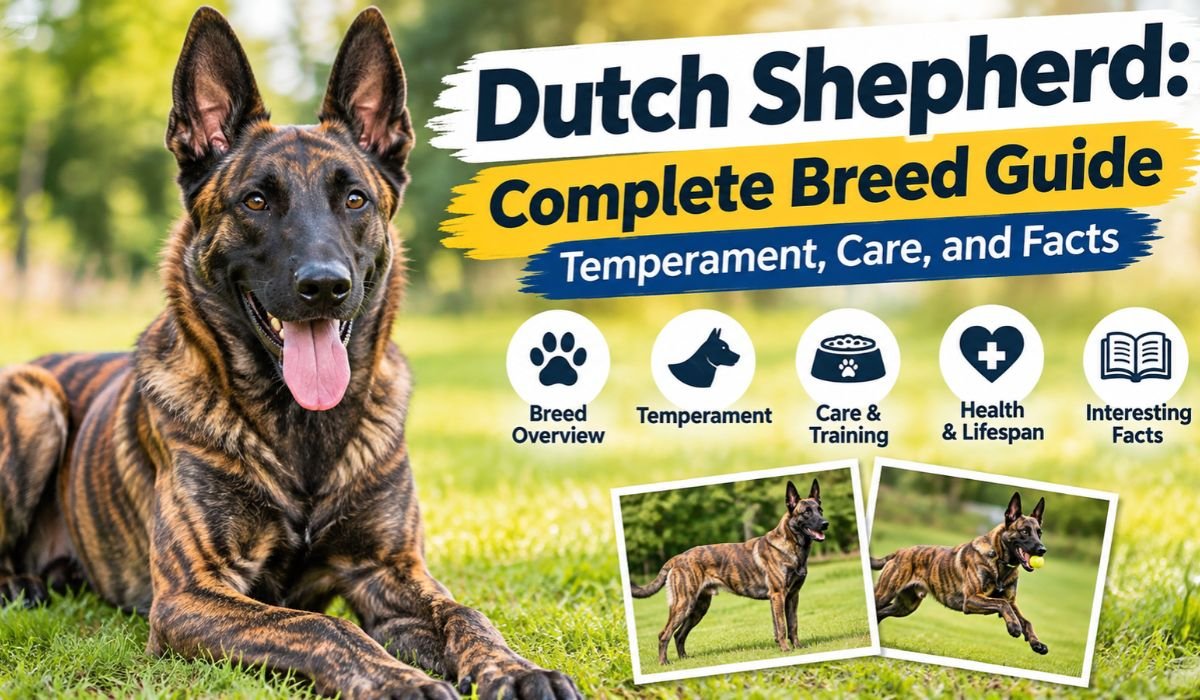
Introduction to the Dutch Shepherd
The Dutch Shepherd is a remarkable dog breed known for its intelligence, loyalty, athletic ability, and striking brindle coat. Originally bred in the Netherlands, these hardworking dogs spent generations helping farmers manage livestock, protect property, and handle everyday farm responsibilities. Today, they’re equally admired for their abilities in police work, search-and-rescue operations, dog sports, and family companionship.
There’s much more to the Dutch Shepherd than its impressive appearance. These dogs are quick learners, enthusiastic explorers, and devoted companions who enjoy being involved in their owners’ daily lives. Whether they’re learning a new command, exploring a hiking trail, or relaxing with their family after an active day, Dutch Shepherds thrive when they have a sense of purpose.
Still, this isn’t a breed that suits every household. Their high energy, natural working instincts, and need for mental stimulation require time, patience, and consistent training.
If you’re thinking about welcoming a Dutch Shepherd puppy into your home, understanding the breed’s temperament, size, grooming needs, health concerns, and exercise requirements is an important first step. This complete guide covers what you need to know before making that commitment.
Dutch Shepherd Quick Bio Information
| Breed Information | Details |
|---|---|
| Breed Name | Dutch Shepherd |
| Alternative Name | Hollandse Herdershond |
| Country of Origin | Netherlands |
| Breed Classification | Herding Dog |
| Original Purpose | Sheep Herding and Farm Work |
| Male Height | Approximately 22.5–24.5 Inches |
| Female Height | Approximately 21.5–23.5 Inches |
| Typical Weight | Approximately 42–75 Pounds |
| Average Lifespan | Approximately 11–14 Years |
| Temperament | Intelligent, Loyal, Alert, Active |
| Coat Varieties | Short-Haired, Long-Haired, Rough-Haired |
| Coat Colors | Gold Brindle and Silver Brindle |
| Shedding Level | Regular, With Seasonal Increases |
| Exercise Requirements | High |
| Grooming Requirements | Varies by Coat Type |
| Training Ability | Highly Trainable |
| Family Compatibility | Good With Proper Socialization |
| Best Suited For | Active and Committed Owners |
| Common Working Roles | Herding, Tracking, Police Work, Search and Rescue |
| Breed Recognition | FCI and UKC |
These characteristics offer a general picture of the breed. Individual Dutch Shepherd dogs may differ in size, personality, energy, and behavior depending on genetics, upbringing, training, and health.
What Is a Dutch Shepherd?
The Dutch Shepherd, also called the Hollandse Herdershond, is a versatile herding dog that originated in the Netherlands. Farmers originally relied on these dogs to guide sheep, protect farmland, move livestock, and help with other demanding agricultural tasks.
What made the breed especially valuable was its ability to handle different responsibilities without constant supervision. Dutch Shepherds could think independently while remaining attentive to their handlers, a combination that continues to define their working abilities.
Over time, their intelligence, endurance, and trainability opened the door to new roles. Today, Dutch Shepherds work in law enforcement, tracking, search and rescue, competitive obedience, and other specialized activities.
Although they’re sometimes mistaken for German Shepherds or Belgian Malinois, Dutch Shepherds are a distinct breed with their own history, characteristics, and recognizable brindle coloring.
Their versatility makes them impressive working dogs, but it also means they need owners who understand how to balance physical activity with training, companionship, and rest.
Dutch Shepherd History and Origin
The Dutch Shepherd’s story begins in the rural Netherlands during the nineteenth century, when farming communities needed dependable dogs capable of performing several jobs.
Rather than specializing in one task, these dogs helped farmers manage sheep, protect crops, move livestock, and watch over property. Their intelligence and adaptability made them especially useful in environments where working conditions could change throughout the day.
The breed’s first official standard was established in 1898, marking an important step toward its recognition as a distinct type of herding dog.
However, the Dutch Shepherd faced significant challenges as agriculture became increasingly mechanized. With fewer farms relying on traditional sheepdogs, demand for the breed declined.
World War II created additional difficulties, disrupting breeding programs and threatening the survival of several European working breeds.
Fortunately, dedicated breeders continued preserving Dutch Shepherd bloodlines. Their efforts helped the breed survive and eventually gain recognition for its abilities beyond traditional farming.
Today, Dutch Shepherds remain relatively uncommon compared with German Shepherds, but their reputation as capable, intelligent working dogs continues to attract attention.
Dutch Shepherd Appearance and Physical Characteristics
At first glance, the Dutch Shepherd looks athletic, confident, and ready for action. Its body is muscular and well-balanced, with proportions that favor agility and endurance rather than excessive size.
Adult male Dutch Shepherds typically stand between 22.5 and 24.5 inches tall. Females are generally slightly smaller, measuring approximately 21.5 to 23.5 inches.
Weight varies according to sex, body structure, and conditioning, with many adults falling within a general range of 42 to 75 pounds.
The breed has a wedge-shaped head, almond-shaped eyes, a black nose, and naturally upright ears that give it an alert expression.
Its long tail usually hangs with a gentle curve when relaxed, although its position changes when the dog becomes active or attentive.
Perhaps the most recognizable feature is the brindle coat. Dark stripes run through a gold or silver background, creating a distinctive pattern that helps separate Dutch Shepherds from other herding breeds.
Every part of the breed’s appearance reflects its working heritage. These dogs were developed to move efficiently, remain active for extended periods, and handle physically demanding tasks.
Dutch Shepherd Coat Types, Colors, and Shedding
One of the most interesting things about the Dutch Shepherd is that the breed comes in three recognized coat varieties.
The short-haired Dutch Shepherd has a close-fitting outer coat with a dense, woolly undercoat. This variety is relatively easy to maintain, although regular brushing is still necessary to remove loose hair.
Long-haired Dutch Shepherds have longer, straight coats that give them a softer appearance. Their fur requires more attention because tangles can develop when brushing is neglected.
Rough-haired Dutch Shepherds look slightly different from the other varieties. Their coats are dense, coarse, and textured, often requiring specialized grooming techniques such as hand-stripping.
Regardless of coat type, brindle remains the breed’s defining color pattern. Gold brindle and silver brindle are traditional variations, although the darkness and distribution of the stripes can differ.
Dutch Shepherd shedding is another important consideration for prospective owners. These dogs shed throughout the year, with heavier shedding often occurring during seasonal coat changes.
Regular grooming helps manage loose hair and keeps the coat healthy.
Because Dutch Shepherds produce allergens through their skin, saliva, and dander, they aren’t considered hypoallergenic.
Dutch Shepherd Temperament and Personality
The Dutch Shepherd temperament is one of the breed’s greatest strengths, but it’s also what makes responsible ownership so important.
These dogs are intelligent, observant, loyal, and naturally energetic. They enjoy learning, solving problems, and spending time with people they trust.
Many Dutch Shepherds develop close relationships with their families and prefer being involved in everyday activities rather than spending long periods alone.
Their working background also gives them a strong sense of awareness. Some may appear reserved around strangers, especially when encountering unfamiliar situations.
That doesn’t mean Dutch Shepherds are naturally aggressive. A dog’s behavior develops through a combination of genetics, socialization, training, health, and personal experiences.
When raised in a supportive environment, Dutch Shepherds can become confident, affectionate, and reliable companions.
Still, their personalities aren’t identical. Dogs bred for demanding police or protection work may have stronger working drives than those bred primarily for companionship.
Understanding these differences matters when choosing a puppy or adopting an adult dog.
Are Dutch Shepherds Good Family Dogs?
Dutch Shepherds can make wonderful family pets, particularly in households where people enjoy outdoor activities and understand the importance of consistent training.
Their loyalty and affectionate nature often help them form meaningful bonds with family members.
With proper socialization, many Dutch Shepherds get along well with children. However, their natural herding instincts may occasionally appear through chasing or attempts to control movement.
For this reason, interactions between young children and dogs should always be supervised.
Children should also learn how to approach dogs respectfully, recognize signs of discomfort, and avoid disturbing them while eating or resting.
Dutch Shepherds may live successfully with other dogs and cats, especially when introductions happen gradually.
However, compatibility depends on individual temperament, prey drive, and previous experiences.
Families considering this breed should think carefully about their daily schedules. A Dutch Shepherd needs more than affection and occasional playtime.
Regular exercise, training, companionship, and mental enrichment are essential for helping the dog feel secure and satisfied.
Dutch Shepherd Training and Socialization
Training a Dutch Shepherd can be a rewarding experience because these dogs are naturally curious and eager to learn.
They often understand new commands quickly, particularly when lessons are clear, engaging, and consistent.
Positive reinforcement works especially well. Treats, praise, toys, and play can all encourage desirable behavior while strengthening the relationship between dog and owner.
Training should begin during puppyhood with everyday skills such as recall, sitting, staying, loose-leash walking, and settling calmly.
Early socialization is equally important. Puppies benefit from safe, positive experiences with different people, environments, sounds, and animals.
However, socialization doesn’t mean forcing a puppy into every unfamiliar situation. The goal is to build confidence through experiences that feel manageable and rewarding.
Another important lesson is learning how to relax.
Because Dutch Shepherds are naturally active, owners sometimes focus entirely on exercise and obedience. Teaching calm behavior, patience, and impulse control is just as valuable.
Harsh punishment can damage trust and increase fear or unwanted behavior. Consistent, reward-based guidance is a more constructive approach.
For persistent behavioral problems, working with a qualified trainer or veterinary behavior professional can provide additional support.
Dutch Shepherd Exercise Needs and Mental Stimulation
A Dutch Shepherd needs an active lifestyle to remain physically healthy and mentally satisfied.
These dogs were developed for demanding work, so ordinary short walks may not provide enough activity for many healthy adults.
Depending on age, fitness, health, and individual temperament, an adult Dutch Shepherd may benefit from approximately 90 to 120 minutes of combined daily exercise.
Walking, hiking, swimming, retrieving, and agility activities can help provide physical stimulation.
However, exercise alone isn’t enough.
Dutch Shepherds also enjoy activities that challenge their minds. Scent games, puzzle feeders, obedience exercises, and interactive toys encourage concentration and problem-solving.
Owners should avoid assuming that more intense exercise is always the solution to restlessness.
Sometimes a dog needs better routines, mental enrichment, or opportunities to rest rather than additional physical activity.
Puppies require age-appropriate exercise that doesn’t place excessive strain on developing joints.
Older dogs may need shorter, gentler sessions based on their mobility and health.
A balanced routine that includes activity, training, companionship, and relaxation is usually the most effective approach.
Dutch Shepherd Grooming and Daily Care
Dutch Shepherd grooming is generally manageable, although the amount of work depends on the dog’s coat variety.
Short-haired dogs usually benefit from weekly brushing, with more frequent sessions during periods of heavy shedding.
Long-haired Dutch Shepherds need additional attention to prevent tangles and remove loose fur.
Rough-haired varieties may require professional grooming and periodic hand-stripping to maintain their coat’s texture.
Bathing should be done when necessary using a gentle shampoo formulated for dogs. Frequent bathing isn’t always required and may irritate the skin if inappropriate products are used.
Beyond coat care, routine maintenance is essential.
Nails should be trimmed regularly to prevent discomfort and movement problems. Ears should be checked for redness, unusual odors, or discharge.
Dental hygiene also deserves attention. Brushing with dog-safe toothpaste helps reduce plaque and supports healthy gums.
Regular grooming provides an opportunity to check for skin irritation, parasites, injuries, or unusual lumps.
These simple habits can make a meaningful difference to a Dutch Shepherd’s comfort and overall well-being.
Dutch Shepherd Diet and Nutrition
Good nutrition plays an important role in maintaining the Dutch Shepherd’s energy, muscle condition, and long-term health.
A complete and balanced diet appropriate for the dog’s age, activity level, and body condition should provide the nutrients needed for everyday life.
Active working dogs may require more calories than Dutch Shepherds living less demanding lifestyles.
However, feeding too much can lead to unwanted weight gain, placing additional stress on joints and reducing mobility.
Dutch Shepherd puppies need food formulated for healthy growth. Their portions should be monitored carefully as they develop.
Adult dogs benefit from consistent feeding schedules and regular body-condition checks.
Senior Dutch Shepherds may require dietary adjustments depending on their activity levels, metabolism, and medical needs.
Fresh drinking water should always be available.
Owners should also avoid dangerous foods such as chocolate, grapes, raisins, onions, and products containing xylitol.
Because Dutch Shepherds can have deep chests, discussing feeding routines and gastric dilatation-volvulus risk with a veterinarian is sensible.
Dutch Shepherd Health Problems and Lifespan
The Dutch Shepherd lifespan is commonly estimated at approximately 11 to 14 years, although individual dogs may live shorter or longer lives.
Like other breeds, Dutch Shepherds can experience certain inherited and acquired health conditions.
Hip and elbow dysplasia are important concerns because abnormal joint development can cause pain, stiffness, and mobility problems.
Gastric dilatation-volvulus, commonly known as GDV, is another serious condition that can affect deep-chested dogs.
It occurs when the stomach expands and twists, potentially restricting blood flow. Warning signs include unsuccessful retching, abdominal swelling, restlessness, and sudden weakness.
GDV is a medical emergency that requires immediate veterinary treatment.
Other potential health problems include glaucoma, hypothyroidism, and certain inherited neuromuscular disorders.
Some genetic conditions are associated with particular coat varieties or breeding lines, making responsible health screening especially important.
Prospective owners should ask breeders about hip and elbow evaluations, relevant genetic tests, and family health history.
Regular veterinary examinations, vaccinations, parasite prevention, dental care, and healthy weight management can help support a Dutch Shepherd’s long-term well-being.
Not every Dutch Shepherd will develop these conditions, but understanding potential risks allows owners to make informed decisions.
Dutch Shepherd Puppy Care and Development
Bringing home a Dutch Shepherd puppy is exciting, but it also introduces important responsibilities.
These puppies are naturally curious and often eager to investigate everything around them.
Early care should focus on creating a safe environment, establishing predictable routines, and encouraging positive behavior.
House training requires patience and consistency. Puppies should receive frequent opportunities to eliminate outdoors, followed by praise or rewards when they succeed.
Chewing and mouthing are normal puppy behaviors, so providing appropriate chew toys can help protect household belongings.
Short training sessions are usually more productive than lengthy lessons because young puppies have limited attention spans.
As Dutch Shepherd puppies enter adolescence, they may become more independent, energetic, or easily distracted.
Owners should continue reinforcing basic skills without expecting perfect behavior during every developmental stage.
Veterinary visits are important for monitoring growth, vaccinations, parasite prevention, and general health.
Physical exercise should also remain age-appropriate to avoid unnecessary stress on developing bones and joints.
Dutch Shepherd Price, Adoption, and Ownership Costs
The Dutch Shepherd price varies depending on location, breeder reputation, pedigree, health testing, and whether the puppy comes from working or companion lines.
In some markets, puppies from established breeders may cost several thousand dollars. However, prices can change considerably, so prospective buyers should research current local conditions.
Adopting a Dutch Shepherd through a rescue organization may be another option.
Rescue dogs can make excellent companions, although their individual medical histories, training needs, and temperaments should be considered carefully.
The initial purchase or adoption fee is only one part of the total cost.
Owners should also budget for food, veterinary examinations, vaccinations, grooming equipment, training, toys, and unexpected medical expenses.
When choosing a breeder, health and temperament should matter more than appearance or price.
Responsible breeders should provide information about relevant health screening, genetic testing, puppy socialization, and the temperament of the parent dogs.
They should also be willing to discuss whether a Dutch Shepherd is genuinely suitable for the buyer’s household.
Dutch Shepherd vs. German Shepherd and Belgian Malinois
Dutch Shepherds are often compared with German Shepherds and Belgian Malinois because all three breeds are intelligent, athletic, and widely associated with working roles.
However, each breed has its own history and physical characteristics.
German Shepherds are generally larger and may have black-and-tan, sable, or other recognized coat colors.
Belgian Malinois are typically lean, energetic dogs with short coats, often displaying fawn coloring and a black facial mask.
Dutch Shepherds are especially recognizable because of their brindle coats and three distinct coat varieties.
All three breeds can perform well in obedience, tracking, protection sports, and demanding professional roles.
Still, choosing between them shouldn’t depend on appearance alone.
Individual temperament, breeding background, training history, and household compatibility are far more important when deciding which dog is the best fit.
Is a Dutch Shepherd the Right Dog for You?
A Dutch Shepherd can be an exceptional companion for someone who enjoys an active lifestyle and appreciates the responsibilities of owning an intelligent working dog.
These dogs often thrive when they have opportunities to explore, learn, and spend meaningful time with their families.
However, they may not be ideal for people seeking a quiet, low-energy pet that requires little daily involvement.
Some Dutch Shepherds can adapt to apartment living, provided their owners consistently meet their exercise, training, and enrichment needs.
A secure outdoor space can be helpful, but having a large yard doesn’t automatically replace walks, companionship, or purposeful activities.
Before bringing one home, consider your available time, experience, living environment, and financial resources.
The best Dutch Shepherd owner isn’t necessarily the most experienced person. It’s someone prepared to learn, remain consistent, and meet the dog’s changing needs throughout its life.
Final Thoughts on the Dutch Shepherd
The Dutch Shepherd is much more than a beautiful brindle-coated working dog. Its intelligence, loyalty, athletic ability, and strong connection with people make it a remarkable companion for the right household.
From its history on Dutch farms to its modern roles in police work, search and rescue, and family life, the breed has consistently demonstrated adaptability and determination.
However, those impressive qualities come with responsibilities. Dutch Shepherds need regular exercise, thoughtful training, mental enrichment, proper nutrition, and consistent veterinary care.
For owners willing to invest the time and effort, the rewards can be substantial. A well-raised Dutch Shepherd can become an affectionate family member, an enthusiastic adventure partner, and a dependable companion for many years.
Ultimately, choosing this breed should be about more than admiring its appearance or intelligence. Understanding its needs, respecting its working instincts, and providing a supportive home are what make a successful relationship possible.
FAQs About Dutch Shepherd
Do Dutch Shepherds Shed a Lot?
Yes, Dutch Shepherds shed throughout the year, with heavier shedding often occurring during seasonal coat changes. Short-haired varieties generally require less coat maintenance, while long-haired dogs need more frequent brushing. Rough-haired Dutch Shepherds may require specialized grooming. Regular coat care helps manage shedding and keeps the skin and fur healthy.
How Long Do Dutch Shepherds Live?
The average Dutch Shepherd lifespan is approximately 11 to 14 years. Genetics, nutrition, exercise, veterinary care, and overall health can influence longevity. Maintaining a healthy weight, providing preventive healthcare, and addressing medical concerns early can help support a dog’s quality of life.
Are Dutch Shepherds Good With Children?
Dutch Shepherds can be affectionate and dependable companions for children when properly socialized and trained. However, their energy and herding instincts mean supervision is essential, particularly around younger children. Teaching children how to interact respectfully with dogs helps create a safer environment for everyone.
Are Dutch Shepherds Aggressive?
Dutch Shepherds aren’t inherently aggressive. They’re naturally alert and may display protective tendencies, but their behavior depends on genetics, upbringing, socialization, training, and individual experiences. Positive reinforcement, responsible handling, and early exposure to different situations can help encourage confident, balanced behavior.
Are Dutch Shepherds Easy to Train?
Dutch Shepherds are highly intelligent and generally respond well to consistent, reward-based training. They often learn new skills quickly, but their independence and strong working instincts can make them challenging for inexperienced owners. Short, engaging lessons and regular mental stimulation help produce reliable results.
How Much Exercise Does a Dutch Shepherd Need?
Many healthy adult Dutch Shepherds benefit from approximately 90 to 120 minutes of combined daily physical activity, although individual requirements vary. Walking, hiking, retrieving, and dog sports can provide exercise, while scent games and puzzle toys support mental stimulation. Puppies and senior dogs need routines suited to their age and health.
Are Dutch Shepherds Hypoallergenic?
No, Dutch Shepherds aren’t hypoallergenic. They shed fur and produce allergens found in dander and saliva. Although grooming can help manage loose hair, it doesn’t eliminate allergens. People with dog allergies should consider their individual sensitivity before choosing this breed.
What Is the Difference Between a Dutch Shepherd and a Belgian Malinois?
Dutch Shepherds are recognized for their brindle coats and three coat varieties, while Belgian Malinois typically have short coats with different standard coloring. Both breeds are athletic, intelligent, and capable of demanding working roles. However, individual temperament, training needs, and working drive can vary significantly.
Learn more and explore exciting content on: Can Dogs Eat Avocado? Safety, Health Benefits, and Risks Explained