

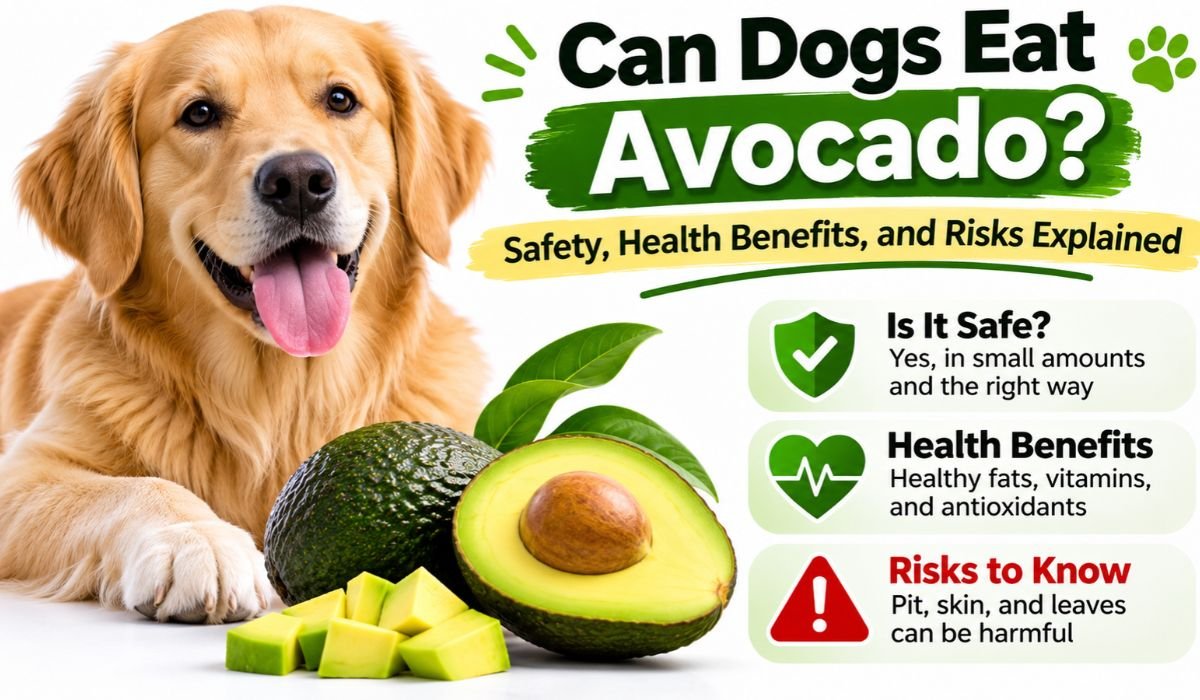
Avocados have become a staple in many American kitchens. From creamy guacamole to fresh salads and avocado toast, this nutritious fruit is enjoyed in countless ways. But if you’ve ever caught your dog watching you prepare an avocado, you may have wondered, Can Dogs Eat Avocado?
The answer is a little more complicated than a simple yes or no. Most healthy dogs can safely enjoy a small amount of ripe avocado flesh. However, other parts of the fruit can pose serious health risks. The pit can cause choking or intestinal blockage, while the skin and leaves contain a natural compound called persin.
There’s also the fruit’s high fat content to consider. Although avocado contains beneficial nutrients, eating too much may lead to digestive problems, particularly in dogs with sensitive stomachs or a history of pancreatitis.
So, before sharing a bite with your furry companion, it’s worth understanding what makes avocado different from other fruits. This guide explores its nutritional benefits, possible dangers, safe preparation methods, and what to do if your dog accidentally eats too much.
Quick Bio Information About Avocado for Dogs
| Information | Details |
|---|---|
| Common Name | Avocado |
| Scientific Name | Persea americana |
| Food Classification | Fruit |
| Safe for Dogs | Small amounts of ripe flesh may be tolerated |
| Main Nutrients | Healthy fats, fiber, vitamins, and minerals |
| Important Vitamins | Vitamins C, E, K, and B6 |
| Natural Plant Compound | Persin |
| Dog Sensitivity to Persin | Generally lower than in many other animals |
| Avocado Flesh | Relatively low risk in small portions |
| Avocado Skin | Should be avoided |
| Avocado Pit | Choking and intestinal blockage hazard |
| Avocado Leaves | Not recommended for dogs |
| Guacamole | Unsafe when containing toxic ingredients |
| Avocado Oil | High in fat and generally unnecessary |
| Common Side Effects | Vomiting, diarrhea, and stomach discomfort |
| Serious Potential Risks | Pancreatitis and intestinal obstruction |
| Recommended Frequency | Occasional treat, if offered |
| Best Preparation | Fresh, plain, peeled, and pitted |
| Suitable for Puppies | Generally best avoided |
| Veterinary Recommendation | Consult a veterinarian when uncertain |
Can Dogs Eat Avocado Safely?
Yes, dogs can generally eat a small amount of ripe avocado flesh without experiencing serious health problems. The important distinction is that only the soft, edible portion should be considered, and even that should be offered sparingly.
Unlike some fruits that are naturally low in fat, avocado contains a substantial amount of dietary fat. That’s one reason veterinarians recommend caution, particularly for dogs that struggle with digestive problems or weight management.
Preparation matters just as much as portion size. The skin and pit should always be removed, and the flesh must be served without seasonings, sauces, or other ingredients.
Your dog’s individual health also plays a role. A healthy adult dog might tolerate a small bite without difficulty, while a puppy or a dog with previous pancreatitis could react differently.
If you’re unsure whether avocado belongs in your dog’s diet, your veterinarian can help you make that decision.
Is Avocado Good for Dogs?
Avocado has earned a reputation as a nutritious food for people, but its benefits for dogs deserve a closer look.
The fruit contains unsaturated fats, dietary fiber, potassium, and several vitamins that contribute to normal bodily functions. These nutrients are important for overall health, yet dogs don’t necessarily need avocado to obtain them.
A complete and balanced dog food already provides the essential nutrients most healthy dogs require. Adding avocado won’t automatically improve your pet’s health, energy, or appearance.
There’s also a practical consideration: avocado is much richer than many other dog-friendly fruits and vegetables. A few small pieces can add more calories than owners might expect.
For dogs that enjoy the taste and tolerate it well, avocado may be an occasional treat. Still, it shouldn’t be considered a nutritional necessity or a substitute for properly formulated dog food.
Nutritional Benefits of Avocado for Dogs
One reason avocado attracts so much attention is its impressive nutritional profile. It contains several vitamins and nutrients involved in maintaining normal health.
Vitamin E acts as an antioxidant, helping protect cells against oxidative damage. Vitamin B6 contributes to protein metabolism and supports normal nervous system function, while vitamin K plays an important role in blood clotting.
Avocado also provides vitamin C, another antioxidant. However, healthy dogs naturally produce their own vitamin C, so they generally don’t need additional amounts from fruit.
Its dietary fiber can contribute to normal digestive function, while monounsaturated fats provide energy and support healthy cell membranes.
These benefits should be viewed in context. Although avocado contains useful nutrients, there isn’t strong evidence that feeding fresh avocado flesh produces specific health improvements in dogs already receiving balanced nutrition.
In other words, avocado can provide nutrients, but it isn’t a proven shortcut to better canine health.
Is Avocado Toxic to Dogs?
Avocado is frequently described as poisonous to pets, which understandably causes concern among dog owners. The reality, however, depends on the animal and the part of the plant involved.
Avocado contains persin, a naturally occurring compound that can be harmful to certain species. Birds, horses, rabbits, and some livestock are especially sensitive to its effects.
Dogs are generally more resistant to persin than these animals. According to veterinary toxicology guidance, small amounts of ripe avocado flesh are unlikely to cause severe persin poisoning in most healthy dogs.
That doesn’t make the entire fruit harmless.
Avocado skin and other plant parts can expose dogs to persin, while the pit creates a separate danger because it may become lodged in the digestive tract.
The fruit’s fat content is another concern, especially when dogs consume large quantities.
Understanding these differences helps explain why a small bite of avocado flesh isn’t the same as swallowing an entire avocado.
What Is Persin in Avocados?
Persin is a natural fungicidal compound produced by avocado plants. It occurs in different concentrations throughout the plant, including the leaves, skin, stems, pit, and flesh.
The substance helps explain why avocado can be dangerous to certain animals, even though people commonly eat the fruit without problems.
Its effects vary considerably between species. Some animals can develop serious complications after exposure, while dogs tend to be less sensitive.
Even so, digestive symptoms such as vomiting, diarrhea, or appetite changes may occur after dogs consume avocado plant material. These symptoms can also result from irritation or other problems unrelated to persin itself.
Another important detail is that researchers haven’t established a universally safe persin dose for dogs.
Rather than trying to estimate how much exposure might be acceptable, the sensible approach is to keep avocado leaves, skins, stems, and pits away from pets.
Which Parts of an Avocado Are Safe or Dangerous?
When deciding whether to share avocado with your dog, the part of the fruit matters more than many owners realize.
The soft, ripe flesh is generally considered the least concerning portion. It contains relatively little persin, although its high fat content still makes moderation important.
The skin is another story. Its tough texture makes it difficult to digest, and it contains persin. There’s no nutritional reason to include it in your dog’s treats.
Avocado leaves and stems should also remain off-limits. They contain plant compounds that may cause health problems when consumed.
The pit is particularly dangerous because of its size, firmness, and smooth shape. A dog may attempt to swallow it whole, creating a choking hazard or intestinal obstruction.
For this reason, dogs shouldn’t be allowed to play with avocado pits or investigate discarded fruit scraps.
Keeping these parts out of reach is one of the simplest ways to prevent an avoidable emergency.
Can Dogs Eat Avocado Skin?
Avocado skin isn’t suitable for dogs, even though it may seem harmless compared with the large pit.
The peel is thick and fibrous, making it difficult for dogs to digest properly. Depending on the size of the piece swallowed, it may irritate the digestive tract or contribute to a blockage.
It also contains persin, adding another reason to avoid feeding it.
If your dog accidentally swallows a tiny piece, serious illness isn’t inevitable. The outcome depends on the amount consumed, your dog’s size, and any underlying health conditions.
Still, it’s worth contacting your veterinarian for advice, especially if a large piece disappears.
Vomiting, abdominal discomfort, diarrhea, and reduced appetite are warning signs that shouldn’t be ignored.
Can Dogs Eat Avocado Pits?
Avocado pits should never be given to dogs. Of all the parts of the fruit, the pit presents one of the most immediate physical dangers.
Its large, rounded shape makes it possible for a dog to swallow it without properly chewing it. Once swallowed, the pit may become trapped in the esophagus, stomach, or intestines.
An obstruction can prevent food and digestive contents from moving normally through the body. Without treatment, this may become a serious medical emergency.
Dogs with intestinal blockages may develop repeated vomiting, abdominal pain, weakness, lethargy, or loss of appetite.
Unfortunately, symptoms don’t always appear immediately. Some dogs seem perfectly normal shortly after swallowing a foreign object.
If your dog swallows an avocado pit, contact a veterinarian immediately rather than waiting for signs of illness. Don’t induce vomiting or attempt home remedies unless a veterinary professional specifically instructs you to do so.
Can Puppies Eat Avocado?
Puppies are naturally curious, and many will eagerly investigate whatever their owners are eating. However, their developing bodies have nutritional needs that differ from those of adult dogs.
Although a tiny amount of ripe avocado flesh isn’t necessarily poisonous to a puppy, it isn’t a particularly useful addition to a growing dog’s diet.
Avocado is rich in fat, and unfamiliar foods may cause stomach upset when introduced suddenly.
Because puppies are smaller, even modest portions can represent a significant amount of their daily calorie intake.
Their regular meals should come from complete and balanced puppy food formulated to support growth.
If you’re interested in introducing avocado or another unfamiliar food, discuss it with your veterinarian first. Age-appropriate, lower-fat treats are generally a more practical choice.
How Much Avocado Can Dogs Eat?
There isn’t a scientifically established avocado serving size that works for every dog.
Some pet-care resources suggest starting with approximately one teaspoon of avocado flesh for every ten pounds of body weight. However, this is general feeding guidance, not a medically established safe dose.
Your dog’s size, daily calorie needs, digestive health, and medical history all influence whether avocado is appropriate.
Veterinary nutrition recommendations generally advise that treats should account for no more than ten percent of a dog’s daily calorie intake. The remaining calories should come from complete and balanced food.
Because avocado is calorie-dense, portions can add up quickly, especially for smaller breeds.
For dogs with obesity, pancreatitis, or conditions requiring a low-fat diet, avoiding avocado may be the safest decision.
When avocado is appropriate, start with a tiny piece rather than a full serving.
How to Prepare Avocado Safely for Dogs
If your veterinarian considers avocado suitable for your dog, careful preparation can reduce unnecessary risks.
Begin with a fresh, ripe avocado. Avoid fruit that shows signs of mold, spoilage, or unusual discoloration associated with decay.
Wash the outside before cutting it. This helps reduce the chance of transferring contaminants from the peel to the edible flesh.
Next, remove the skin and pit completely. Cut a small portion of the flesh into manageable pieces that are easy for your dog to chew.
Serve the avocado plain. Don’t add salt, butter, garlic, onions, sauces, or other seasonings commonly used in human meals.
After offering a small amount, pay attention to your dog’s behavior and digestion.
If vomiting, diarrhea, reduced appetite, or unusual discomfort develops, stop feeding avocado and contact your veterinarian.
Can Dogs Eat Avocado Every Day?
Just because a food can be eaten safely in small amounts doesn’t mean it should become an everyday habit.
Avocado contains useful nutrients, but dogs don’t need daily servings to stay healthy. Most already receive the necessary fats, vitamins, and minerals through balanced dog food.
Regular avocado treats can also increase calorie intake. Over time, excessive calories may contribute to unwanted weight gain.
Dogs with a history of pancreatitis face an additional concern because rich, fatty foods may aggravate their condition.
If your dog enjoys fruits and vegetables, consider offering suitable lower-fat options instead.
Carrots, plain green beans, and other dog-friendly produce can provide variety without adding as much fat.
The goal isn’t to eliminate every occasional treat. It’s to make sure treats support, rather than interfere with, your dog’s overall nutrition.
Can Dogs Eat Guacamole or Avocado Toast?
Guacamole may be delicious for people, but it’s not a suitable snack for dogs.
Many recipes contain onions or garlic, both of which are toxic to dogs. These ingredients can damage red blood cells and potentially cause anemia.
One challenge is that symptoms of onion or garlic poisoning may not appear immediately. A dog might seem fine shortly after eating guacamole, even though medical problems could develop later.
Other ingredients, including excessive salt and spicy seasonings, may cause additional digestive concerns.
Avocado toast isn’t automatically safe either. Garlic seasoning, onion toppings, butter, and salty spreads can make an otherwise simple snack unsuitable.
Some specialty breads also contain raisins, which are toxic to dogs.
If your dog eats guacamole containing onions or garlic, contact your veterinarian or an animal poison control service promptly.
Can Dogs Eat Avocado Oil?
Avocado oil is sometimes promoted as a healthy cooking ingredient because it contains unsaturated fats.
Properly processed avocado oil generally contains little to no persin, but that doesn’t mean dogs need it added to their meals.
Oil is highly concentrated in fat and calories. Even relatively small amounts can increase a dog’s overall fat intake.
For dogs with sensitive digestive systems or a history of pancreatitis, this may be particularly concerning.
Some commercial dog foods include avocado-derived ingredients as part of carefully developed recipes. However, a formulated product isn’t the same as pouring extra oil over your dog’s dinner.
Most healthy dogs eating complete and balanced food don’t require avocado oil supplementation.
Before adding oils or nutritional supplements, ask your veterinarian whether there’s a genuine dietary need.
What Happens If a Dog Eats Too Much Avocado?
Dogs that consume large quantities of avocado flesh may experience digestive problems because of its high fat content.
Vomiting, diarrhea, nausea, and abdominal discomfort are among the possible reactions.
For some dogs, the consequences may be more serious. A rich, high-fat meal can contribute to pancreatitis in susceptible animals.
Pancreatitis occurs when the pancreas becomes inflamed. It can cause significant abdominal pain, repeated vomiting, dehydration, lethargy, and loss of appetite.
Not every dog that overeats avocado will develop pancreatitis, and symptoms alone aren’t enough to confirm the condition.
A veterinarian may need to perform an examination and diagnostic tests to determine what’s happening.
If your dog consumes a large amount of avocado or develops persistent symptoms, seek professional advice rather than assuming the problem will resolve on its own.
Signs of Avocado-Related Illness in Dogs
The symptoms a dog experiences after eating avocado depend on what was consumed, how much was eaten, and the animal’s individual health.
Mild digestive upset may involve soft stools, nausea, temporary appetite changes, or occasional vomiting.
More serious symptoms include repeated vomiting, severe diarrhea, abdominal pain, weakness, and unusual tiredness.
Dogs experiencing an intestinal obstruction may also refuse food, become restless, or show discomfort when their abdomen is touched.
Difficulty breathing, collapse, or blue-colored gums require immediate emergency veterinary care.
It’s important to remember that these symptoms don’t necessarily indicate persin poisoning. They may result from excessive dietary fat, gastrointestinal irritation, or a swallowed foreign object.
A dog that has swallowed an avocado pit requires urgent veterinary guidance even if no symptoms are present.
What to Do If Your Dog Accidentally Eats Avocado
Discovering that your dog has eaten avocado can be worrying, but the appropriate response depends on exactly what was consumed.
Start by determining whether your dog ate a small amount of plain flesh or swallowed the skin, pit, or a prepared dish containing other ingredients.
Try to estimate the quantity and note when the incident happened.
Your veterinarian may ask about your dog’s weight, medical history, current behavior, and any symptoms you’ve noticed.
A healthy dog that eats a tiny piece of plain avocado flesh may not require emergency treatment, although veterinary advice is appropriate if you’re uncertain.
Swallowing a pit is different and requires immediate veterinary contact.
Guacamole containing onions or garlic also warrants prompt professional guidance.
Never induce vomiting, administer medication, or attempt home treatments without veterinary instructions.
When Should You Contact a Veterinarian?
Knowing when to seek veterinary help can make a significant difference in your dog’s recovery.
Contact a veterinarian immediately if your dog swallows an avocado pit, consumes a potentially toxic prepared dish, or develops severe symptoms.
Repeated vomiting, persistent diarrhea, significant abdominal pain, and unusual weakness should be assessed promptly.
Breathing difficulties, choking, collapse, or blue-colored gums are emergencies that require immediate attention.
Dogs with existing medical conditions, including pancreatitis or chronic digestive disorders, may need veterinary advice after smaller exposures.
For pet owners in the United States, the ASPCA Animal Poison Control Center and Pet Poison Helpline offer specialized guidance for suspected poisoning incidents.
When seeking help, provide as much information as possible about the food, quantity consumed, and timing.
Healthy Alternatives to Avocado for Dogs
If you’re looking for something nutritious to share with your dog, there are plenty of alternatives that contain less fat than avocado.
Carrots are a popular choice because they’re crunchy, relatively low in calories, and easy to prepare. They can be served raw or cooked, provided they’re cut into suitable pieces.
Plain green beans offer fiber and make a convenient occasional snack for dogs that enjoy vegetables.
Blueberries are another option. They contain naturally occurring antioxidants and can be offered in small portions.
Apple slices provide a refreshing treat, but the core and seeds should always be removed before serving.
Plain cooked pumpkin or unsweetened pumpkin purée can also be included in small amounts.
Whatever you choose, introduce new foods gradually and avoid added sugar, salt, butter, or seasonings.
Even nutritious treats should remain a small part of your dog’s daily diet.
Final Thoughts
So, Can Dogs Eat Avocado? Yes, most healthy dogs can tolerate a small amount of plain, ripe avocado flesh. However, knowing which parts to avoid is essential for keeping your pet safe.
The pit is particularly dangerous because it can cause choking or intestinal obstruction. The skin and leaves contain persin, while excessive amounts of avocado flesh may trigger digestive problems because of the fruit’s high fat content.
Although avocado provides vitamins, fiber, and beneficial fats, dogs don’t need it to maintain good health. A complete and balanced diet already supplies the nutrients most dogs require.
If your dog enjoys occasional fruits and vegetables, lower-fat options such as carrots, green beans, and blueberries may be more practical choices.
Ultimately, good nutrition isn’t about sharing every healthy human food with your pet. It’s about choosing foods that suit your dog’s individual needs, avoiding unnecessary risks, and knowing when professional veterinary advice matters most.
FAQs About Can Dogs Eat Avocado
Can Dogs Eat Avocado Flesh?
Yes, most healthy dogs can tolerate small amounts of plain, ripe avocado flesh. However, the fruit is relatively high in fat and shouldn’t become a regular part of their diet. Always remove the skin and pit completely, serve manageable pieces, and avoid seasonings. Dogs with pancreatitis or digestive sensitivities may need to avoid avocado.
Is Avocado Poisonous to Dogs?
Avocado contains persin, a naturally occurring compound that can be toxic to certain animals. Dogs are generally less sensitive than birds, horses, and some other species. Small amounts of ripe flesh are unlikely to cause severe persin poisoning in healthy dogs, but the skin, leaves, and pit should still be avoided. Excessive fat intake and intestinal obstruction are additional concerns.
Can Dogs Eat Avocado Skin?
No, avocado skin isn’t recommended for dogs. The peel is tough, difficult to digest, and contains persin. Swallowing larger pieces may cause digestive irritation or contribute to an obstruction. If your dog eats a substantial amount of skin or develops symptoms such as vomiting, abdominal pain, or reduced appetite, contact your veterinarian.
What Happens If My Dog Swallows an Avocado Pit?
A swallowed avocado pit can become lodged in the throat, stomach, or intestines. This may cause choking or a potentially life-threatening intestinal blockage. Symptoms can include repeated vomiting, abdominal pain, weakness, and loss of appetite, although they may not appear immediately. Contact a veterinarian immediately if your dog swallows a pit, even if they seem healthy.
Can Dogs Eat Guacamole?
No, guacamole shouldn’t be given to dogs. Many recipes contain onions or garlic, which can damage canine red blood cells and cause anemia. Guacamole may also contain excessive salt, peppers, and other ingredients that upset the digestive system. If your dog eats guacamole containing onions or garlic, seek veterinary guidance promptly because symptoms may be delayed.
Can Dogs Eat Avocado Oil?
Properly processed avocado oil generally contains little to no persin, but it’s highly concentrated in fat. Most dogs don’t need additional avocado oil when eating complete and balanced food. Excessive consumption may cause digestive upset or contribute to pancreatitis in susceptible dogs. Consult your veterinarian before adding avocado oil or other dietary supplements.
Can Dogs Eat Frozen Avocado?
Small amounts of plain avocado flesh that have been thawed may be tolerated by healthy dogs. However, freezing doesn’t remove the fruit’s fat content or eliminate concerns associated with the skin and pit. Avoid offering large, hard frozen chunks because they may be difficult to chew or swallow. Serve only a small, softened portion without seasonings.
Can Avocado Cause Pancreatitis in Dogs?
Avocado contains substantial amounts of fat, and high-fat foods may contribute to pancreatitis in susceptible dogs. The condition causes inflammation of the pancreas and may lead to vomiting, abdominal pain, lethargy, and reduced appetite. Not every dog that eats avocado will develop pancreatitis, but dogs with a previous history should generally avoid it unless their veterinarian recommends otherwise.
Learn more and explore exciting content on: Sheepadoodle Dog Breed Guide: Size, Temperament, Lifespan, and Care