

Farming rarely goes exactly according to plan. A tractor can develop a problem during the busiest part of the season, a crop can behave differently than expected, or a precision-agriculture system can create a compatibility issue that isn’t covered clearly in a manual. When that happens, hearing from someone who has already dealt with a similar situation can be incredibly helpful.
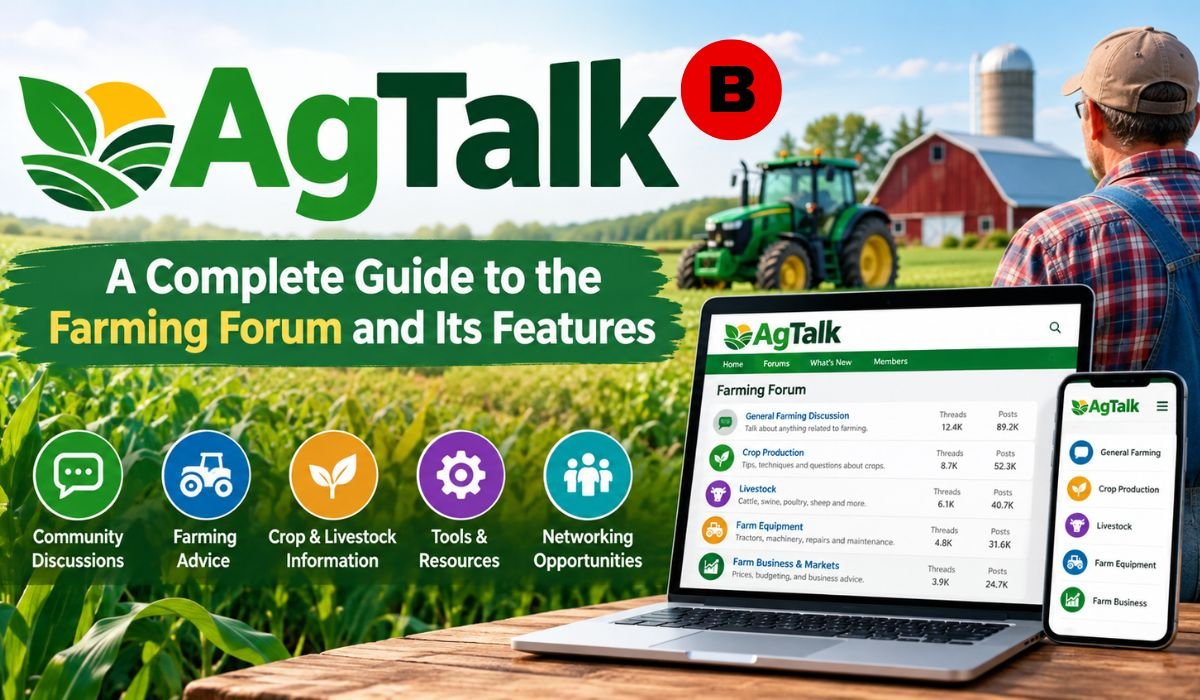
That’s where AgTalk comes into the picture. Also commonly associated with the name NewAgTalk, AgTalk is a long-running online discussion community centered on agriculture. Its current forum index includes Machinery Talk, Crop Talk, Stock Talk, Precision Talk, Drone Talk, Computer Talk, Market Talk, AgTalk Cafe, and Kitchen Table, along with other discussion and support areas.
Unlike a modern social-media platform built around a constantly changing feed, AgTalk is organized around individual discussions. Visitors can follow conversations about equipment, crops, livestock, technology, markets, repairs, and everyday rural issues. That straightforward format has helped make the forum a useful place for exchanging practical knowledge.
Still, there’s an important distinction to keep in mind. Not every answer posted by a forum member is automatically correct. AgTalk is most useful when readers use it to discover real-world experiences, compare different approaches, and identify questions that deserve further investigation.
Quick Bio: AgTalk Information
Platform Name: AgTalk.
Commonly Associated Name: NewAgTalk.
Primary Purpose: Agriculture-focused online discussion and knowledge sharing.
Main Audience: Farmers, growers, livestock producers, equipment owners, and other agricultural and rural users.
Forum Format: Traditional topic-based discussion board.
Crop Forum: Crop Talk.
Machinery Forum: Machinery Talk.
Livestock Forum: Stock Talk.
Precision Agriculture Forum: Precision Talk.
Drone Forum: Drone Talk.
Market Forum: Market Talk.
Computer Forum: Computer Talk.
Community Forum: AgTalk Cafe.
Home And Family Forum: Kitchen Table.
Classifieds: Farm equipment, trucks, parts, precision-agriculture equipment, and related items.
Search Function: Users can search previous forum discussions.
Technical Coverage: Machinery repair, precision agriculture, GPS-related systems, displays, data, and software questions.
Agricultural Coverage: Crops, livestock, farm equipment, markets, technology, and rural subjects.
Best Use: Comparing practical experiences and finding ideas for further research.
Important Limitation: User posts should be verified when they concern safety, chemicals, regulations, major equipment decisions, or significant financial matters.
What Is AgTalk?
AgTalk is an agriculture-focused online forum where users can start discussions, answer questions, share their experiences, and search through previous conversations. Its coverage stretches from traditional farming subjects to newer forms of agricultural technology.
The current forum index includes several major sections. Machinery Talk focuses on equipment operation, repairs, and useful hints. Crop Talk covers crops and cropping practices, while Stock Talk is dedicated to livestock. Precision Talk addresses precision-agriculture equipment and operation, and Market Talk focuses on agricultural marketing discussions.
That broad coverage reflects the way modern farms operate. A single farming operation may need information about planting equipment, GPS guidance, crop management, grain marketing, computer systems, and machinery repairs, sometimes all during the same season.
AgTalk brings these different conversations together within one community.
How Does AgTalk Work?
AgTalk follows a traditional discussion-board format rather than the fast-moving structure found on many social-media platforms. Users select a forum, open an existing thread, read the replies, or create a new discussion when they need help.
There’s a practical benefit to that arrangement. When useful information is posted in response to a question, it remains connected to the original discussion. Someone facing a similar problem months or even years later may be able to find the same conversation through the forum’s search features.
Current AgTalk discussions include technical conversations in areas such as Precision Talk, where users discuss displays, yield-data systems, equipment integration, and related technology.
The platform also provides search tools and classified listings. In other words, visitors don’t always have to start a new conversation. A little searching may uncover an existing answer or a discussion that points them in the right direction.
Why Do Farmers Use AgTalk?
For many users, the appeal comes down to one thing: practical agricultural experience.
Farming conditions vary widely. Soil, weather, equipment, crop varieties, budgets, local practices, and management decisions can all change from one farm to another. A general recommendation may therefore leave important questions unanswered.
AgTalk gives users an opportunity to explain what actually happened in the field or in the shop. One farmer might describe how a particular machine performed after years of use. Another might explain a repair that solved a similar problem. A third person may have tried something different and can explain what happened.
Those experiences can provide context that isn’t always available in a product description or short technical article.
The forum can also be useful when a problem appears outside normal business hours. A searchable discussion from an earlier planting or harvest season may offer a useful starting point while a farmer waits to speak with a dealer, technician, agronomist, or another professional.
The key is to remember that community experience is information, not a guarantee.
What Is Crop Talk?
Crop Talk is AgTalk’s dedicated discussion area for crops and cropping practices. It remains an active part of the forum, with users discussing practical questions and production-related issues.
Crop questions often depend heavily on context. Soil type, crop, variety or hybrid, planting date, field history, weather, fertility program, chemical applications, and visible symptoms can all affect what advice makes sense.
That’s why detailed questions tend to generate more useful conversations. Someone explaining exactly what happened gives other farmers a much better opportunity to offer relevant experience.
Crop Talk can be helpful for identifying possibilities and learning how other growers have approached similar situations. However, recommendations involving pesticides, fertilizers, disease management, or other regulated agricultural products should be checked against current product labels, local requirements, soil tests, and qualified agricultural advice.
A practice that worked well for a farmer in one region isn’t necessarily suitable for another.
What Is Market Talk?
Market Talk is AgTalk’s section for agricultural marketing discussions. Users talk about commodity markets, prices, selling decisions, costs, and broader economic conditions that affect producers.
One useful aspect of these conversations is that farmers often explain the circumstances behind their decisions. A producer with substantial grain storage may approach the market differently from someone who needs to sell quickly. Production costs, contracts, cash-flow needs, local bids, and risk exposure can all influence the decision.
That makes the discussions useful for understanding different perspectives, but they shouldn’t be mistaken for guaranteed forecasts.
Commodity markets can change quickly, and an individual prediction can turn out to be wrong. For major financial decisions, forum conversations should be considered alongside current market information, contracts, insurance arrangements, financial requirements, and appropriate professional advice.
What Is Precision Talk?
Precision Talk focuses on precision-agriculture equipment and its operation. Discussions can involve guidance systems, displays, GPS-related equipment, yield-monitoring systems, data, and equipment integration.
This section can be particularly valuable because today’s farm technology rarely operates in isolation. A farmer might be using a newer display with an older tractor, combining equipment from several manufacturers, or connecting an aftermarket guidance system to an existing setup.
Real-world troubleshooting can sometimes reveal details that aren’t obvious from a manual. Users may share what happened with a particular configuration and explain how they approached the problem.
At the same time, precision systems can be highly dependent on exact hardware and software combinations. Model numbers, firmware versions, cables, software settings, licenses, and communication standards can all matter.
Before changing a system that’s working during planting or harvest, it’s wise to confirm the proposed solution with manufacturer documentation and make sure important machine or field data is backed up.
Machinery, Livestock, and Rural Life
AgTalk covers considerably more than crops and markets. Machinery Talk focuses on equipment operation, repair, and practical hints, while Stock Talk covers livestock. The forum also has areas such as Drone Talk, Computer Talk, AgTalk Cafe, and Kitchen Table.
Machinery discussions can range from tractors and combines to planters, tillage equipment, engines, hydraulic systems, parts, and troubleshooting. These conversations can be especially useful with older equipment, where owners may be looking for help with recurring problems or difficult-to-find components.
The livestock and broader rural sections add another dimension to the community. Agricultural users don’t only deal with crops and machines. They also manage livestock, buildings, computers, tools, family matters, and everyday rural concerns.
That wider range is part of what makes AgTalk feel like a farming community rather than simply a technical database.
AgTalk Classifieds
The AgTalk Classifieds provide a separate space for buying and selling agricultural-related items. Current listings include equipment, trucks, parts, precision-agriculture components, and other farm-related products. Listings can include photographs, descriptions, prices, seller information, and locations.
For buyers searching for older machinery or specialized components, a farming-focused classifieds section can be useful. People browsing these listings may already understand the equipment and the terminology involved.
But an online listing shouldn’t be treated as a replacement for proper due diligence. Buyers should independently confirm the item’s condition, ownership, serial or identification information, location, payment arrangements, shipping details, and any important claims made by the seller.
For expensive machinery, an in-person inspection or qualified third-party evaluation can provide considerably more assurance than photographs alone.
The AgTalk Store
The AgTalk community has also been associated with branded merchandise. Compared with the forum and classifieds, the store is a relatively small part of the overall platform.
The merchandise is connected to the identity of the community rather than the site’s main agricultural information functions. Visitors may encounter branded clothing and other products associated with AgTalk.
Product availability can change over time, so anyone interested in merchandise should rely on current store information rather than an older forum reference.
In practical terms, the store is an extension of the community rather than a reason most users visit AgTalk.
How to Search AgTalk Effectively
One of the simplest ways to get more from AgTalk is to search before starting a new thread. Because the forum has accumulated a large archive of discussions, a problem that seems unusual may already have been discussed.
Specific searches generally work better than broad ones. For a machinery problem, a user can combine the manufacturer, model, symptom, and error code. For a crop question, combining the crop name with the specific disease, product, symptom, or management issue can narrow the results.
For example, searching only for “planter problem” is likely to be less useful than searching for the exact planter model and the component or symptom involved.
It’s also important to check when an older discussion was posted. A solution involving software, electronics, or newer equipment may have changed significantly over time.
How to Ask Better Questions
When an existing thread doesn’t provide the answer, the quality of the new question can make a big difference.
Start with a specific title. “Hydraulic Problem on 2018 Planter” immediately tells other users what the discussion is about. “Need Help” doesn’t provide nearly enough context.
In the body of the post, explain what machine or crop is involved, what happened, when the issue started, what has already been checked, and whether anything was recently repaired, replaced, or changed.
Photos can also be valuable when the problem involves machinery, parts, crop symptoms, or physical damage.
There’s one more step that often gets overlooked: the follow-up. If a suggested solution works, returning to the discussion and explaining the result can help everyone who finds the thread later.
Over time, these follow-ups turn individual troubleshooting experiences into a much more useful community record.
How to Evaluate Advice on AgTalk
This may be the most important skill for anyone using an online farming forum. A detailed response can be helpful without necessarily being correct in every situation.
Start by considering whether the person responding has direct experience with the same equipment, crop, or problem. Then look at the reasoning behind the recommendation rather than focusing only on the conclusion.
If several experienced users independently point toward the same issue, that can provide useful context. However, agreement alone doesn’t prove that a recommendation is correct.
The age of a post matters, too. Agricultural equipment, software, products, regulations, and recommended practices can change.
Extra care is necessary when the subject involves chemical applications, machinery safety, legal requirements, major purchases, or significant financial decisions. In those situations, AgTalk can help identify possibilities or questions to investigate, but authoritative sources should be used for verification.
Benefits and Limitations
AgTalk’s biggest strength is the depth of practical discussion available to its users. The current forum contains a substantial archive covering machinery, crops, livestock, precision agriculture, markets, computers, drones, and rural subjects.
Its specialized nature is another advantage. Instead of searching a general social network for information about a specific piece of agricultural equipment, users can look through discussions where farming terminology and real-world operating conditions are already understood.
There are limitations, however. User-generated information isn’t automatically verified. A response may reflect one person’s experience, leave out important details, or simply be wrong.
Geography also matters. Soil, weather, pest pressure, regulations, equipment availability, and market conditions can differ considerably between regions.
For that reason, AgTalk is best viewed as a research and experience-sharing resource, rather than the only authority behind an important decision.
AgTalk vs. Traditional Farming Advice
AgTalk works best alongside established agricultural information rather than replacing it.
Manufacturers remain the appropriate source for official specifications, service procedures, compatibility information, and warranty details. Product labels and applicable regulations are essential when agricultural chemicals are involved. Soil testing and qualified crop professionals can provide guidance specific to local field conditions, while financial and market professionals can help with decisions involving substantial financial risk.
AgTalk adds something different: peer experience.
A farmer may encounter a problem that isn’t immediately obvious from a manual. Another user may have already dealt with the same issue and can describe what happened in practice. That experience can help narrow down the possibilities and lead to better questions for a dealer, technician, agronomist, or manufacturer.
Used together, these sources create a stronger research process than relying entirely on any single source.
Is AgTalk Useful for Farmers Today?
AgTalk remains active in 2026. Current activity can be seen across Machinery Talk, Crop Talk, Stock Talk, Precision Talk, Drone Talk, Computer Talk, and Market Talk, while the classifieds continue to carry farm equipment and parts listings.
That continued activity is particularly relevant as agriculture combines established machinery with increasingly sophisticated digital systems. A modern farm might have older tractors working alongside new displays, GPS guidance, data-management tools, and aftermarket equipment.
The forum’s value comes from having both current discussions and a substantial archive. Recent conversations can provide contemporary user experiences, while older threads can remain useful when dealing with equipment or systems that have been in service for many years.
The most useful way to view AgTalk is neither as an unquestionable authority nor as merely casual conversation. Its value depends heavily on how carefully readers evaluate the information they find.
Final Thoughts
AgTalk remains a useful example of how an online community can preserve and exchange practical agricultural knowledge. Its forums bring together conversations about machinery, crops, livestock, markets, precision agriculture, drones, computers, and rural life, while the classifieds add another practical dimension for people looking for farm-related equipment and parts.
Its real strength isn’t that every answer is perfect. It’s that farmers and other agricultural users can compare experiences, describe problems in their own words, and learn how others have approached similar situations.
For the best results, search carefully before posting, provide specific details when asking a question, check the age of older discussions, compare different responses, and verify important information through authoritative sources.
Used this way, AgTalk can be a valuable starting point for understanding real-world farming challenges and learning from the experiences of people who work with agriculture every day.
FAQs About AgTalk
What Is AgTalk?
AgTalk is an agriculture-focused online discussion forum where users share questions, experiences, information, and practical solutions. Its forums cover machinery, crops, livestock, precision agriculture, drones, computers, markets, and rural subjects.
Is AgTalk The Same As NewAgTalk?
AgTalk and NewAgTalk are names associated with the same agricultural discussion community hosted at the NewAgTalk domain. The current platform identifies itself as AgTalk on its forum pages.
What Can You Find On AgTalk?
You can find discussions about farm machinery, crop production, livestock, agricultural markets, precision-agriculture equipment, drones, computers, repairs, parts, and general rural subjects.
Is AgTalk Advice Reliable?
AgTalk can provide valuable first-hand experience, but individual posts shouldn’t automatically be treated as authoritative. Important information should be checked against current manufacturer documentation, product labels, regulations, professional advice, or other reliable sources when appropriate.
Does AgTalk Have Classifieds?
Yes. AgTalk has a classifieds section containing agricultural equipment, trucks, parts, precision-agriculture components, and other farm-related items. Listings can include prices, descriptions, locations, and photographs.
What Is Precision Talk?
Precision Talk is the AgTalk forum dedicated to precision-agriculture equipment and operation. Discussions can involve displays, guidance-related technology, data, yield systems, and equipment integration.
Can Beginners Use AgTalk?
Yes. Beginners can search previous discussions, learn from experienced users, and create questions of their own. Clear titles and detailed descriptions make technical questions easier for other members to understand.
Should You Trust Old AgTalk Discussions?
Older discussions can be useful, particularly for established equipment and recurring problems, but they need to be viewed in context. Software, machinery, products, regulations, and recommended practices can change. Always check whether an older recommendation still applies before acting on it.
Learn more and explore exciting content on: Lois Smart: The Life, Family, Marriage, and Story of Elizabeth Smart’s Mother