

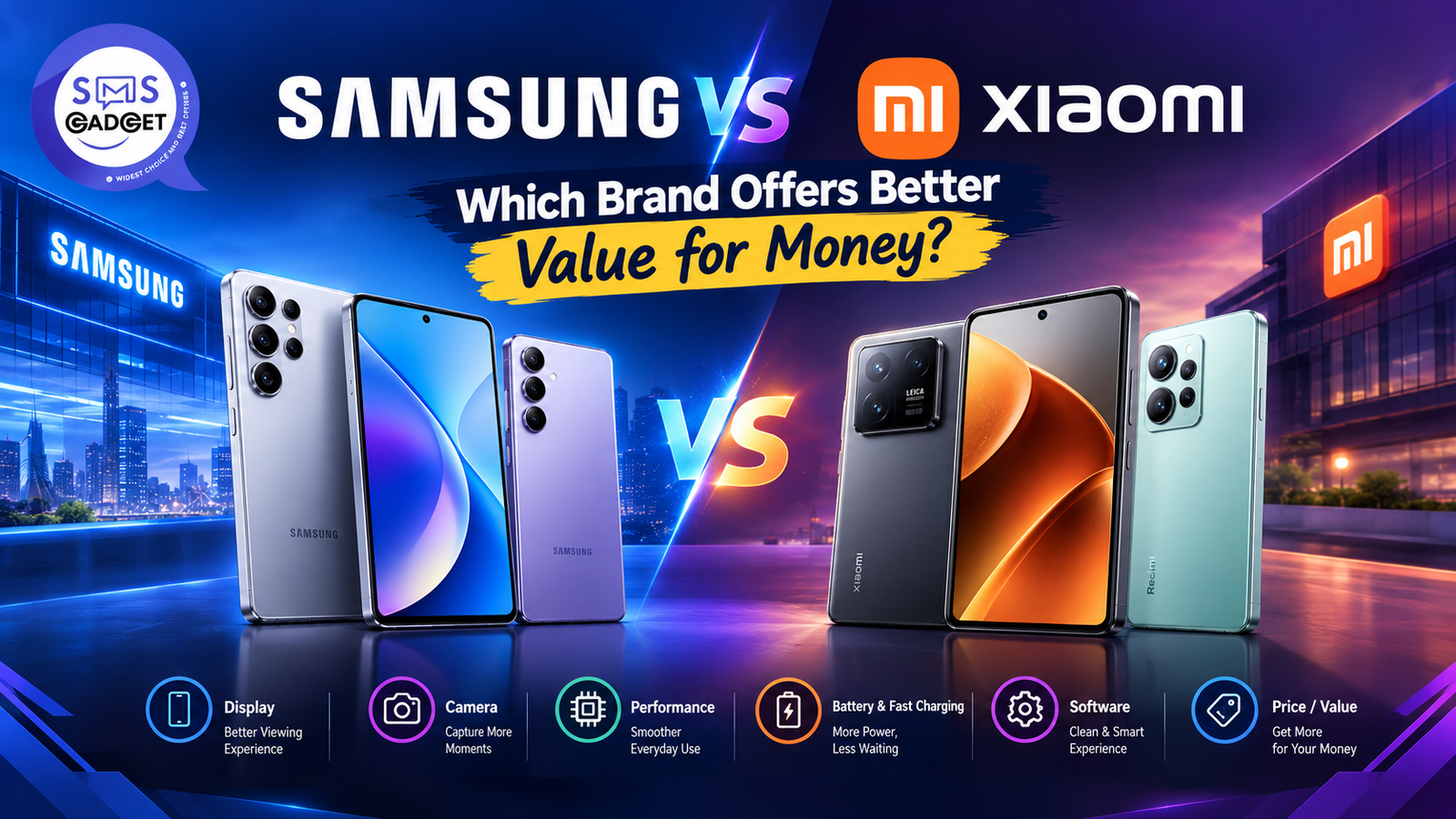
Samsung or Xiaomi at the same budget, this debate happens before almost every mid-range phone purchase in Bangladesh, and for good reason. The two brands approach value from completely different directions: Samsung leans on polish, display quality, and long-term reliability, while Xiaomi leans on cramming as many raw specs as possible into the lowest possible price.
Neither approach is wrong, they’re just built for different priorities. This guide breaks down exactly where each brand wins, what that actually costs in Bangladesh right now, and which one makes more sense depending on what matters most to the buyer.
A Quick Brand Overview — Samsung and Xiaomi
Samsung’s Position in Bangladesh
Samsung entered the Bangladesh market in 2009 and has maintained one of the strongest positions in the local smartphone market ever since, historically holding the largest or near-largest market share among all brands sold here. A major part of that strength comes from local manufacturing, Samsung has assembled the vast majority of the handsets it sells in Bangladesh through its partnership with Fair Electronics at a dedicated plant in Narsingdi since 2017, a setup that keeps import taxes lower and pricing more competitive than fully imported alternatives.
Xiaomi’s Position in Bangladesh
Xiaomi entered the Bangladesh market in 2016 and quickly built a loyal following, particularly after the Redmi Note 4’s launch in 2017 turned it into one of the most talked-about brands in the country almost overnight. It officially established its own brand entity in Bangladesh in 2018 and has consistently ranked among the top smartphone brands here since, built around the Redmi (value mid-range) and Poco (performance-focused) sub-brands alongside the flagship Xiaomi numbered series.
Samsung vs Xiaomi — Key Differences (Point-by-Point Comparison)
| Feature | Samsung | Xiaomi |
| Build Quality | Generally more refined, premium-feeling finishes | Solid, but sometimes uses more plastic at the same price tier |
| Display | Consistently strong Super AMOLED across most of the lineup | AMOLED on mid-range and up, often with higher refresh rates at lower prices |
| Performance | Mix of Exynos and Snapdragon/MediaTek, tuned for smoothness | Strong Snapdragon/MediaTek chips, often with more raw performance per taka |
| Camera | More consistent processing and color accuracy | Capable hardware, sometimes less consistent processing |
| Battery & Charging | Solid battery life, moderate charging speeds | Frequently larger batteries and notably faster charging at the same price |
| Software | One UI, polished, minimal ads | HyperOS, more customizable, has faced criticism over ads/bloatware in some regions |
| Update Support | Generally longer major OS update commitments | Improving, but historically shorter than Samsung on budget models |
| Resale Value | Holds value better in Bangladesh’s secondhand market | Depreciates faster, particularly on budget models |
Build Quality & Design
Samsung generally edges ahead on in-hand feel and finish quality, particularly in its A series, while Xiaomi’s Redmi lineup sometimes uses more plastic in the body to hit aggressive price points, functional, but noticeably less premium.
Display
Both brands use AMOLED technology extensively, but Xiaomi has a track record of pushing higher refresh rates (like 120Hz) into lower price tiers faster than Samsung has historically done, while Samsung tends to offer more consistent color accuracy and peak brightness across its lineup.
Performance & Processor
This is one of Xiaomi’s clearest advantages, Redmi and Poco phones frequently deliver stronger benchmark performance per taka than Samsung’s equivalent price tier, since Xiaomi leans more heavily into powerful Snapdragon and MediaTek chipsets as a selling point, while Samsung sometimes prioritizes overall polish over raw numbers.
Camera Quality & Consistency
Samsung tends to win on consistency, photos across different lighting conditions look more reliably good without much fiddling. Xiaomi’s camera hardware is often technically capable, sometimes even class-leading in flagship models, but processing consistency can vary more across the budget and mid-range tiers.
Battery Life & Charging Speed
Xiaomi frequently wins here. Redmi devices regularly ship with larger battery capacities and meaningfully faster charging speeds than Samsung phones at a comparable price, since fast charging has become one of Xiaomi’s signature value propositions.
Software Experience
Samsung’s One UI is widely regarded as clean, stable, and largely free of intrusive ads. Xiaomi’s HyperOS (the successor to MIUI) offers deeper customization options but has faced ongoing criticism in several markets, including complaints about bundled apps and occasional ad placements in system apps, an issue that’s improved over time but still comes up more often in user feedback than it does for Samsung.
Software Update & Security Support
Samsung has generally committed to longer major OS update windows, particularly on its A series, compared to Xiaomi’s budget Redmi lineup, though Xiaomi has been steadily improving this in recent years.
Resale Value
Samsung phones, especially the A series, tend to hold resale value more reliably in Bangladesh’s secondhand market. Xiaomi’s budget Redmi models depreciate faster, largely due to how quickly newer, cheaper Redmi models arrive and shift buyer attention.
Price Comparison in Bangladesh — Who Wins at the Same Budget?
Samsung vs Xiaomi at ৳15,000–20,000
At this tier, Samsung offers models like the Galaxy M06 or Galaxy F06 5G, focused on battery life and essentials. Xiaomi’s Redmi 15C sits in a similar range, typically packing a larger battery and sometimes a slightly stronger chipset for the price.
Specs-per-taka summary: Xiaomi generally wins on raw battery and chipset numbers here; Samsung wins on build consistency and brand trust at resale.
Samsung vs Xiaomi at ৳20,000–30,000
Samsung’s Galaxy A16 series and Galaxy M16 compete here, offering AMOLED displays and steady daily performance. Xiaomi’s Redmi Note series is the direct rival, typically bringing a 120Hz AMOLED display and stronger chipset performance at a similar price.
Specs-per-taka summary: This is arguably Xiaomi’s strongest tier, Redmi Note phones often out-spec Samsung’s equivalent on paper, while Samsung counters with better long-term software support.
Samsung vs Xiaomi at ৳30,000–45,000
Samsung’s Galaxy A26 and Galaxy A36 sit in this range, with stronger cameras and consistent AMOLED displays. Xiaomi’s Poco X-series and higher Redmi Note Pro models compete here, often emphasizing gaming performance and fast charging.
Specs-per-taka summary: Xiaomi tends to lead for gaming-focused buyers; Samsung leads for camera quality and overall polish.
Checking live Samsung mobile price listings against Xiaomi’s current lineup at each tier is the most reliable way to compare exact models before deciding, since both brands refresh their budget and mid-range lineups fairly often.
Official Warranty vs Grey Market—What You Need to Know in Bangladesh
Why Grey Market/Unofficial Imports Are More Common With Xiaomi?
Xiaomi’s global pricing strategy and strong overseas demand, particularly from Indian and Chinese markets, have historically made unofficial, imported “grey market” units more common for Xiaomi in Bangladesh compared to Samsung, which benefits from a well-established local manufacturing and distribution setup.
The Risks of Buying Without Official Warranty
A grey-market phone might be functionally identical hardware, but it typically comes with no valid local warranty, no guaranteed access to authorized service centers, and sometimes region-locked software features that don’t fully match the local network or app ecosystem.
How to Check If a Phone Is Official or a Grey Import?
Checking the IMEI against the brand’s official registration system, asking for a proper invoice with the IMEI listed, and confirming the warranty card comes from an authorized local distributor are the most reliable ways to confirm a phone is genuinely official before buying.
Service Centers & After-Sales Support — Which Brand Leads?
Samsung’s Service Network
Samsung’s service center coverage in Bangladesh benefits from its long-established local presence, with authorized service points reaching well beyond Dhaka into major regional cities, a direct result of the brand’s deep local manufacturing and distribution investment. Buying through an authorized Samsung mobile shop is the most reliable way to ensure that the service network is actually accessible when needed.
Xiaomi’s Service Network
Xiaomi’s service network has expanded significantly since its 2018 official entry into Bangladesh, with authorized distributors and service centers now present in Dhaka and several other major cities, though coverage in smaller towns still tends to lag behind Samsung’s more established footprint.
Repair Costs & Parts Availability
Samsung parts and repairs are generally easier to source outside Dhaka, given the brand’s longer local history, while Xiaomi repairs, particularly for less common models, can sometimes take longer to source parts for outside the capital.
Which Brand Is Better for You? (Persona-Based Recommendations)
Want Maximum Specs on a Tight Budget — Xiaomi
For buyers who care most about raw performance numbers and battery capacity per taka spent, Xiaomi’s Redmi and Poco lines consistently deliver more on paper at the same price point.
Want Long-Term Reliability & Resale Value — Samsung
For buyers planning to keep the phone for several years and eventually resell it, Samsung’s stronger software update commitment and better resale demand make it the more financially sound long-term choice.
Best for Gamers
Xiaomi’s Poco line is purpose-built for this, with strong chipsets, high refresh rate displays, and aggressive pricing specifically targeting gaming performance per taka.
Best if Camera/Photography Is Your Priority
Samsung’s more consistent image processing, especially across the A series, makes it the safer choice for anyone who wants reliably good photos without extra editing effort.
Best for First-Time Buyers/Students
Samsung’s combination of software longevity, stronger resale value, and a more forgiving learning curve on One UI makes it a slightly safer first purchase, though budget-conscious students specifically prioritizing raw specs may still find better value in a well-reviewed Redmi model.
Ultimately, whichever you decide to buy, make sure to consider your options carefully. There are many mobile shops available, but you might want to visit SMS Gadget; hope you will receive good service there.
Frequently Asked Questions
Which is more durable in Bangladesh—Samsung or Xiaomi?
Samsung generally has a slight edge in build quality and in-hand durability at matching price tiers, though both brands offer genuinely solid options, durability varies more by specific model than by brand overall.
Which brand gets a better resale price after a few years?
Samsung, particularly the A series, tends to hold resale value more reliably in Bangladesh’s secondhand market than Xiaomi’s budget Redmi lineup, which depreciates faster as newer models are released.
Does Xiaomi’s HyperOS show ads? Does Samsung’s One UI?
Xiaomi’s HyperOS has faced criticism in some markets for bundled apps and occasional ad placements in system apps, though this has improved over recent updates. Samsung’s One UI is widely regarded as largely ad-free and cleaner in this respect.
At the same price (e.g., ৳25,000), which brand offers more specs?
At this price point, Xiaomi’s Redmi Note series typically offers stronger on-paper specs, chipset performance, battery capacity, and sometimes display refresh rate, compared to Samsung’s equivalent tier, which tends to compete more on build quality and software support instead.
Is it safe to buy a grey market Xiaomi phone?
The hardware itself is usually genuine, but buyers give up local warranty coverage and guaranteed access to authorized service centers. It’s a reasonable trade-off for budget-conscious buyers who understand the risk, but buying through an official distributor is the safer route for anyone who wants warranty protection.
Final Verdict — Who Actually Offers Better Value for Money?
Short-term, Xiaomi generally wins with more specs, bigger batteries, and faster charging for the same money, right out of the box. Long-term, Samsung tends to win, better resale value, longer software support, and a more established service network across the country. Neither answer is universally “correct”; it depends on whether the priority is getting the most hardware today or holding value over the next few years.
Brief recap:
- Choose Xiaomi if raw specifications, battery capacity, and charging speed per taka are most important.
- Choose Samsung if long-term software support, resale value, and camera consistency are most important.
- For gamers, Xiaomi’s Poco line typically triumphs.
- For photography-oriented buyers, Samsung generally wins.
 Admin
Admin  Spero Agency