

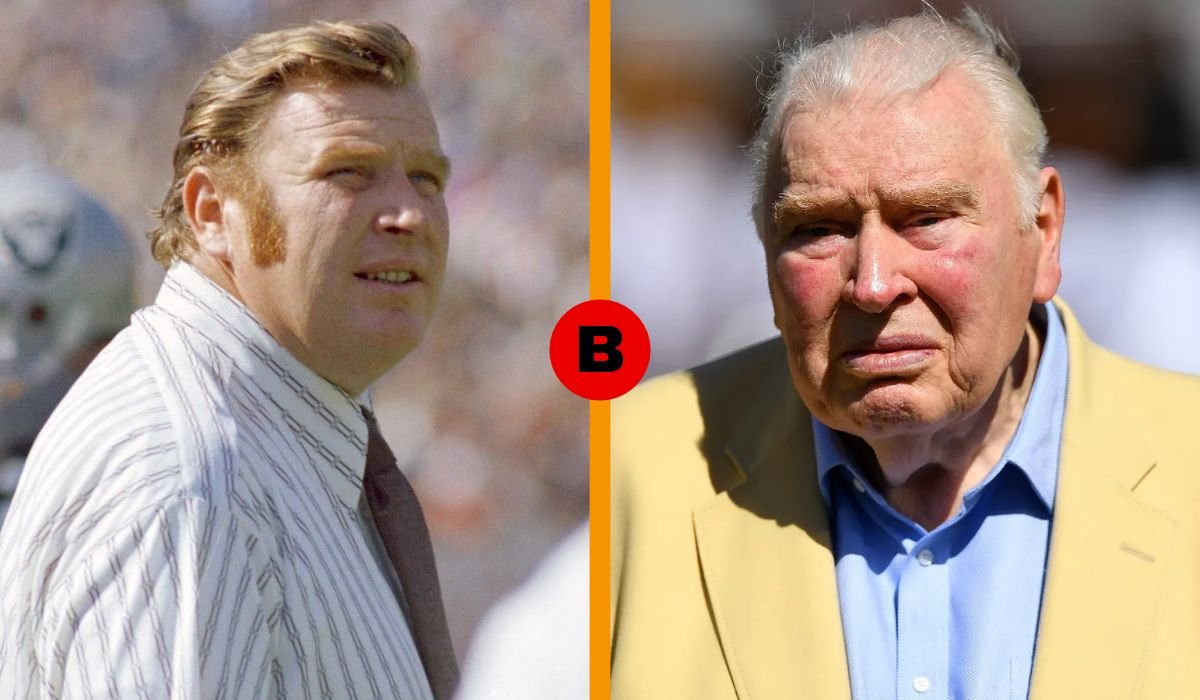
Some people leave their mark on football by winning championships. Others become famous for the way they explain the game or inspire the next generation. John Madden managed to do all three. He was a Super Bowl-winning coach, one of America’s most beloved sports broadcasters, and the name behind a video game franchise that introduced millions of young people to professional football.
What makes Madden’s story especially interesting is that his remarkable career began with disappointment. A knee injury ended his dream of playing in the NFL, but rather than walking away from football, he found another way to stay involved. That decision eventually took him from college coaching to the Oakland Raiders, where he built one of the most impressive records in league history.
His influence didn’t stop when he left the sidelines. Madden became a familiar voice in American homes, bringing football to life with colorful expressions, sharp observations, and an unmistakable enthusiasm for the sport.
Although he died in December 2021, John Madden remains an important part of football culture in 2026. His achievements, personality, and contributions to sports entertainment continue to connect generations of fans.
John Madden Quick Bio Information
| Personal Information | Details |
|---|---|
| Full Name | John Earl Madden |
| Date of Birth | April 10, 1936 |
| Birthplace | Austin, Minnesota, USA |
| Date of Death | December 28, 2021 |
| Age at Death | 85 Years |
| Place of Death | Pleasanton, California, USA |
| Nationality | American |
| Height | 6 Feet 4 Inches |
| Father | Earl Russell Madden |
| Mother | Mary Margaret Flaherty Madden |
| Education | College of San Mateo, Cal Poly |
| Profession | NFL Coach, Broadcaster, Author |
| Wife | Virginia Jo Fields |
| Children | Michael and Joseph Madden |
| NFL Coaching Team | Oakland Raiders |
| Head Coaching Career | 1969–1978 |
| Regular-Season Record | 103–32–7 |
| Postseason Record | 9–7 |
| Super Bowl Championships | One, Super Bowl XI |
| Hall of Fame Induction | 2006 |
Who Was John Madden?
John Earl Madden was an American football coach, television commentator, author, and sports personality who became one of the most recognizable figures in NFL history.
Born on April 10, 1936, in Austin, Minnesota, Madden spent much of his childhood in California before pursuing a career in football.
He became head coach of the Oakland Raiders in 1969 and remained in that position through the 1978 season. During those ten years, he transformed the Raiders into one of the league’s strongest teams and guided them to victory in Super Bowl XI.
After retiring from coaching, Madden began a second career that made him even more widely known. His television commentary helped viewers understand football without losing the excitement that makes the game special.
He also played an influential role in developing the Madden NFL video game franchise, helping bring realistic football strategy into homes around the world.
John Madden’s Early Life and Childhood
John Madden was born in Austin, Minnesota, but his family moved to California while he was still young. He grew up mainly in Daly City, a community just outside San Francisco.
His parents, Earl Russell Madden and Mary Margaret Flaherty Madden, raised him in a working-class household where determination and hard work were important values.
As a child, Madden enjoyed sports and showed considerable athletic ability. His large frame and competitive spirit made football a natural fit, although he also participated in other activities.
He attended Jefferson High School, where he continued developing his athletic skills.
Growing up in the San Francisco Bay Area gave Madden opportunities to experience competitive sports and develop friendships through athletics. Football gradually became more than a hobby. It was something he wanted to pursue seriously.
Those early years helped shape the enthusiasm and determination that later became defining features of his professional career.
John Madden’s Education and College Football Career
Madden continued his education at the College of San Mateo before transferring to California Polytechnic State University in San Luis Obispo.
At Cal Poly, he played as an offensive lineman, a position requiring physical strength, discipline, and a detailed understanding of team strategy.
He worked hard to improve his game and eventually attracted the attention of professional scouts.
In 1958, the Philadelphia Eagles selected Madden in the 21st round of the NFL Draft. For a young player hoping to compete professionally, it was an exciting opportunity.
Unfortunately, his playing career ended before it truly began.
A knee injury prevented him from establishing himself on an NFL roster, and he never appeared in an official regular-season game.
During his recovery, Madden spent time studying game film with Eagles quarterback Norm Van Brocklin. That experience deepened his appreciation for football strategy and helped him see the sport from a different perspective.
Although the injury was disappointing, it ultimately opened the door to a career that would bring him far greater recognition.
How John Madden Started His Coaching Career
After his playing ambitions ended, Madden decided to pursue coaching.
He began working at Allan Hancock College in California in 1960, initially serving as an assistant coach. Two years later, he became the school’s head football coach.
The position gave him practical experience in preparing teams, developing players, and making important decisions during games.
Madden soon discovered that coaching required more than understanding formations and plays. A successful coach also needed to communicate clearly, build confidence, and recognize what motivated individual players.
In 1964, he joined San Diego State University as a defensive coordinator under Don Coryell, whose innovative approach to football helped influence Madden’s development.
His growing reputation eventually attracted attention from the professional ranks.
In 1967, the Oakland Raiders hired Madden as their linebackers coach. His knowledge and enthusiasm impressed the organization, and within two years, he was offered the opportunity to lead the entire team.
John Madden’s Coaching Career With the Oakland Raiders
In 1969, Raiders owner Al Davis promoted Madden to head coach. At just 32 years old, he became the youngest head coach in the American Football League at the time.
It was a major responsibility, but Madden quickly demonstrated that he was ready.
He believed players performed best when they understood their responsibilities and felt trusted by their coaches. Rather than relying entirely on strict discipline, he emphasized communication, preparation, and mutual respect.
His approach helped create a confident, competitive Raiders team.
Under Madden, Oakland became known for its physical playing style and ability to compete against the league’s strongest opponents.
Over ten seasons, he recorded 103 regular-season victories, 32 losses, and seven ties.
His .759 regular-season winning percentage remains the highest among NFL head coaches with at least 100 victories, according to the Pro Football Hall of Fame.
The Raiders reached the playoffs eight times during his tenure, won seven division titles, and never finished a season with a losing record.
Including postseason games, Madden’s overall coaching record was 112–39–7.
He also worked with outstanding players such as Ken Stabler, Gene Upshaw, Fred Biletnikoff, and Art Shell.
What made his achievements particularly impressive was the level of competition. Madden regularly faced legendary coaches, including Don Shula, Chuck Noll, and Tom Landry.
Yet his Raiders remained among the NFL’s most consistently successful teams.
John Madden’s Super Bowl XI Victory
For all his regular-season success, Madden’s greatest coaching achievement came during the 1976 NFL season.
The Oakland Raiders finished that year with an outstanding 13–1 record, establishing themselves as serious championship contenders.
After defeating the New England Patriots and Pittsburgh Steelers in the playoffs, Oakland advanced to Super Bowl XI.
On January 9, 1977, the Raiders faced the Minnesota Vikings at the Rose Bowl in Pasadena, California.
Oakland controlled much of the game, combining a powerful rushing attack with strong defensive performances.
Quarterback Ken Stabler directed the offense, while wide receiver Fred Biletnikoff made several important catches and earned Super Bowl Most Valuable Player honors.
The Raiders won 32–14, securing the franchise’s first Super Bowl championship.
When the game ended, Madden’s players lifted him onto their shoulders and carried him off the field.
The moment became one of the most memorable images of his coaching career.
For Madden, the championship represented years of preparation, persistence, and belief in his players.
Why Did John Madden Retire From Coaching?
Despite his remarkable success, Madden stepped away from coaching after the 1978 season.
He was only 42 years old, making his decision surprising to many football fans.
The pressures of professional coaching had taken a toll. Long working hours, demanding travel schedules, and the constant responsibility of preparing for opponents made the job physically and emotionally exhausting.
Madden had also experienced health concerns and growing discomfort with flying.
One significant event in his personal history was the 1960 Cal Poly football team plane crash, which killed 22 people, including former teammates.
Although the tragedy was associated with his later anxiety about air travel, it would be inaccurate to suggest that his fear of flying alone caused his retirement.
Several factors contributed to his decision.
Leaving the Raiders ended an extraordinary coaching career, but Madden wasn’t ready to leave football behind.
Instead, he found a new way to share his knowledge with the public.
John Madden’s Legendary Broadcasting Career
Madden entered television broadcasting with CBS in 1979.
At first, moving from the sidelines to the commentary booth might have seemed like an unusual transition. However, his personality and deep understanding of football made him a natural broadcaster.
He explained complicated plays in straightforward language, often using humor to make his observations more memorable.
His partnership with Pat Summerall, which began in 1981, became one of the most successful combinations in sports television.
Summerall’s calm, measured delivery balanced Madden’s energetic analysis perfectly.
When CBS lost its NFL broadcasting rights, the pair moved to Fox in 1994.
Madden later joined ABC’s Monday Night Football in 2002, working alongside Al Michaels. In 2006, he moved to NBC’s Sunday Night Football.
This made him the first sports commentator to work for all four major American broadcast television networks.
His broadcasting style was instantly recognizable.
Madden used the telestrator to highlight blocking assignments, explain formations, and show viewers details they might otherwise miss.
His enthusiastic expressions, including “Boom!” and “Doink!”, became part of football culture.
Throughout his broadcasting career, Madden won 16 Sports Emmy Awards.
His final television broadcast was Super Bowl XLIII in February 2009. He officially announced his retirement that April, bringing three decades of commentary to an end.
John Madden and the Madden NFL Video Game Franchise
Madden’s influence reached far beyond television through his partnership with Electronic Arts.
In 1988, the company released the original John Madden Football video game.
At the time, football video games were still developing, and creating an accurate digital version of the sport presented technical challenges.
Madden insisted that the game should reflect real football as closely as possible.
He supported using eleven players on each side rather than reducing the number to simplify gameplay.
His emphasis on authentic formations, strategies, and player responsibilities helped establish the franchise’s identity.
Over the years, the series evolved into Madden NFL and became one of the most recognizable sports gaming franchises in the world.
Although Madden didn’t personally program the games, his knowledge and commitment to realism played an important role in their development.
The franchise also introduced younger audiences to football rules, teams, players, and strategies.
In 2026, Madden NFL continues to carry his name, ensuring that his influence remains familiar to generations who never watched him coach or broadcast a game.
John Madden’s Wife, Children, and Family Life
Away from football, Madden was a devoted family man who generally preferred keeping his personal life private.
He married Virginia Jo Fields on December 26, 1959.
Their relationship lasted more than six decades, remaining strong throughout his demanding coaching and broadcasting careers.
The couple had two sons, Michael Madden and Joseph Madden, often called Mike and Joe.
Madden was also a grandfather and valued spending time with his family.
Although his professional responsibilities frequently required travel, he maintained close family relationships.
When he retired from broadcasting in 2009, spending more time with loved ones was among the reasons he gave for his decision.
Following his death, friends and colleagues remembered him not only for his football achievements but also for his devotion to his wife, children, and grandchildren.
John Madden’s Personality, Humor, and Famous Traditions
One of Madden’s greatest strengths was his ability to connect with people.
He could discuss complicated football strategies with professional coaches and then enjoy an ordinary conversation with someone who knew little about the sport.
His humor was spontaneous, and he rarely missed an opportunity to share an amusing observation.
Food was another subject Madden genuinely loved.
During Thanksgiving football broadcasts, he became famous for celebrating turducken, a dish made by placing a chicken inside a duck and then stuffing both inside a turkey.
He also helped establish the tradition of presenting turkey legs to outstanding players during Thanksgiving games.
These moments gave his broadcasts a personality that went beyond the action on the field.
In a Los Angeles Times appreciation published after his death, colleagues recalled his warmth, curiosity, and ability to make people feel included.
Madden enjoyed teasing friends, telling stories, and finding humor in everyday situations.
That approachable personality helped make him one of the most beloved figures in American sports.
John Madden’s Fear of Flying and the Maddencruiser
Madden’s discomfort with flying eventually became a well-known part of his personal story.
After experiencing severe anxiety about air travel, he began traveling between broadcasting assignments by road.
His preferred vehicle was a specially customized luxury motor coach known as the Maddencruiser.
The bus provided comfortable accommodations and allowed him to travel long distances without relying on airplanes.
But Madden’s road journeys became more than a practical solution.
He enjoyed seeing different parts of America, visiting small communities, and meeting people along the way.
Traveling by road allowed him to experience places and conversations he might otherwise have missed.
Over time, the Maddencruiser became closely associated with his personality.
It represented his curiosity, love of travel, and appreciation for ordinary American life.
John Madden’s Books, Commercials, and Television Appearances
Madden’s popularity created opportunities outside coaching and sports broadcasting.
He became a successful author, sharing football knowledge and humorous observations through several books.
His best-known publications included Hey, Wait a Minute! (I Wrote a Book!), One Knee Equals Two Feet, and One Size Doesn’t Fit All.
Rather than presenting football as an overly complicated subject, his writing reflected the same conversational style that made his broadcasts popular.
Madden also appeared in advertisements for major brands, including Miller Lite, Tinactin, and Ace Hardware.
His natural humor made him particularly effective in commercials.
He appeared in entertainment productions such as Little Giants, The Replacements, and the television comedy Arli$$.
These appearances introduced his personality to people who weren’t necessarily regular football viewers.
John Madden’s Net Worth and Career Earnings
Madden’s professional success extended into several profitable areas of sports and entertainment.
He earned money through coaching, broadcasting contracts, advertising appearances, book sales, and his association with the Madden NFL video game franchise.
His television career became especially valuable as his popularity increased.
By the later stages of his broadcasting career, Madden was reportedly earning millions of dollars annually.
His commercial partnerships and video game involvement also contributed to his financial success.
Various entertainment websites have published estimates of John Madden’s net worth, but his complete personal financial records were never publicly disclosed.
For that reason, any precise net worth figure should be treated as an estimate rather than a confirmed amount.
What is clear is that Madden built a remarkably successful career across several industries while maintaining his strong connection to football.
John Madden’s Awards and Major Achievements
Madden’s contributions to football earned him recognition throughout his career.
His most important coaching achievement was guiding the Oakland Raiders to victory in Super Bowl XI.
He also established one of the highest regular-season winning percentages in NFL history and led Oakland to eight playoff appearances during ten seasons.
His broadcasting achievements were equally impressive.
In 2002, Madden received the Pete Rozelle Radio-Television Award, recognizing his outstanding contributions to professional football broadcasting.
Four years later, he was inducted into the Pro Football Hall of Fame as a coach.
He also received 16 Sports Emmy Awards for his television work.
These honors reflect the unusual breadth of his achievements.
Few people have earned such lasting recognition as both a championship-winning coach and a celebrated sports broadcaster.
When and How Did John Madden Die?
John Madden died unexpectedly on December 28, 2021, in Pleasanton, California. He was 85 years old.
The NFL announced his death, although its initial statement did not publicly identify a specific medical cause.
News of his passing prompted an outpouring of tributes from players, coaches, broadcasters, and football fans.
NFL Commissioner Roger Goodell praised Madden’s contributions to professional football and emphasized his devotion to family.
One particularly meaningful detail was the timing of the documentary All Madden.
The film celebrated his life, achievements, and influence on football. It premiered just days before his death, allowing Madden to see the tribute while he was still alive.
For many colleagues and fans, the documentary became a fitting celebration of a man who had given so much to the sport.
John Madden’s Lasting Legacy in American Football
Madden’s legacy is unusual because his influence reached several generations through different parts of football culture.
Older fans remember his successful years coaching the Oakland Raiders.
Others remember watching games with Madden and Pat Summerall, listening as he explained plays with unmatched enthusiasm.
Younger audiences may know his name primarily through the Madden NFL video game franchise.
Each generation encountered a different side of the same remarkable personality.
As a coach, Madden demonstrated the importance of preparation, leadership, and trusting talented players.
As a broadcaster, he showed that expert analysis didn’t have to be complicated or intimidating.
Through video games, he helped make football accessible to people who might never have played the sport themselves.
His ability to combine knowledge with genuine enthusiasm remains one of his most important contributions.
Final Thoughts on John Madden’s Life and Legacy
John Madden’s life tells a remarkable story about passion, perseverance, and finding new opportunities when circumstances change.
A knee injury ended his hopes of becoming a professional football player, but it led him toward coaching. That career brought him a Super Bowl championship and a place among the NFL’s most successful leaders.
When he left coaching, he found another way to contribute to the sport. His broadcasting career made football easier to understand and more entertaining for millions of viewers.
His involvement with Madden NFL then introduced his name and football knowledge to an entirely new generation.
Yet Madden’s lasting appeal came from something beyond statistics and awards.
He genuinely loved football, enjoyed people, and had a gift for making complicated ideas feel simple.
Even in 2026, John Madden remains an enduring symbol of football excellence, enthusiasm, and entertainment.
His greatest legacy isn’t simply that he helped teams win or taught audiences about football. It’s that he made millions of people feel closer to the game he loved.
Frequently Asked Questions About John Madden
Who Was John Madden?
John Madden was an American football coach, sports broadcaster, author, and television personality. He became famous for coaching the Oakland Raiders to victory in Super Bowl XI and later established himself as one of the most recognizable commentators in NFL history. His name also became associated with the successful Madden NFL video game franchise.
How Old Was John Madden When He Died?
John Madden was 85 years old when he died on December 28, 2021. He was born on April 10, 1936, in Austin, Minnesota. His career spanned several decades and included major achievements in coaching, broadcasting, and sports entertainment.
Did John Madden Ever Play in the NFL?
Madden was selected by the Philadelphia Eagles in the 21st round of the 1958 NFL Draft. Unfortunately, a knee injury prevented him from appearing in an official NFL regular-season game. He later moved into coaching, where he achieved far greater success.
How Many Super Bowls Did John Madden Win?
John Madden won one Super Bowl as head coach of the Oakland Raiders. His team defeated the Minnesota Vikings 32–14 in Super Bowl XI on January 9, 1977. The championship remains the defining achievement of his coaching career.
Who Was John Madden’s Wife?
John Madden married Virginia Jo Fields on December 26, 1959. They remained married until his death in 2021, sharing more than six decades together. The couple had two sons, Michael and Joseph Madden, and several grandchildren.
Why Did John Madden Stop Flying?
Madden experienced severe anxiety associated with flying and eventually preferred traveling by road. He used a customized luxury motor coach called the Maddencruiser to travel between broadcasting assignments. The arrangement also allowed him to enjoy visiting different parts of America.
Did John Madden Create the Madden NFL Video Game?
John Madden didn’t personally program the video game, but he worked with Electronic Arts and helped shape its realistic approach to football. He emphasized authentic formations, strategies, and eleven-player teams. His involvement helped establish the franchise’s identity.
What Was John Madden’s Cause of Death?
John Madden died unexpectedly on December 28, 2021, at age 85. The NFL’s initial announcement did not publicly disclose a specific medical cause. Claims identifying an exact cause should therefore be approached carefully unless supported by reliable documentation.
Learn more and explore exciting content on: PS5 Update: Everything You Need to Know Before Playing GTA 6