

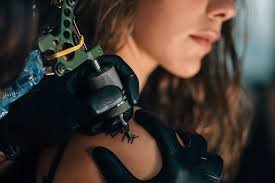
Choosing a design off a studio wall takes five minutes. Planning a custom tattoo takes longer, and that extra time is exactly what turns a vague idea into a piece you will still like in twenty years. For a first tattoo, a little preparation goes a long way.
Summary
- A custom tattoo starts with an idea, not a finished image, so bring references rather than a ready-made design.
- Size, placement and detail shape the final drawing as much as the subject does.
- Price depends on hours, complexity and the artist’s experience, not just the size of the piece.
- A good artist will ask questions before picking up a pencil.
Start With a Feeling, Not a Picture
Many first-timers walk in with a screenshot and ask for an exact copy, which rarely works. An image found online was made for someone else’s body and story. Instead, collect a handful of things you are drawn to: a colour palette, a type of line, an animal, a plant, a photograph from a trip. Write down why each one matters. Those notes give an artist far more to work with than a single picture.
Think About Where It Will Live
The same drawing behaves very differently on an inner arm than on a calf or shoulder blade. Before you settle on a concept, consider these points:
- Visibility: Do you want to see it every day, or keep it for yourself?
- Movement: Areas that twist and stretch suit flowing shapes better than rigid geometry.
- Scale: Fine detail needs room. Squeezing a complex design into a small space blurs it over time.
- Pain and healing: Bony areas tend to hurt more and can take longer to settle.
Answering these questions honestly narrows your options quickly, and it gives your artist a clear starting point for the first sketch.
Budget for Quality
It is worth reading up on what tattoos cost before you book, because prices vary widely. Most studios charge either by the hour or by the piece, and a custom hand drawn tattoo includes design time that a flash piece does not. A cheaper quote often means rushed linework or an artist working outside their style.
Find an Artist Whose Style Fits
Every artist has a visual language. Some excel at bold traditional work, others at delicate illustration or realism. Browse portfolios until you find someone whose existing pieces already feel close to what you imagine. Berlin-based artist Osman Ergin, for example, draws every design by hand and shapes it around the person wearing it, a process he explains in his custom tattoo design guide.
The Consultation Is Where It Comes Together
Expect a conversation before any sketch appears. The artist will ask about meaning, placement and size, then return with a draft. This is the moment to speak up. Small changes are easy on paper and impossible once the needle starts.
A first custom tattoo is a collaboration. Give it time, stay open to the artist’s suggestions, and you will end up with something that looks like it was always meant to be there.
 Wild Rise
 Backlinks Hub