

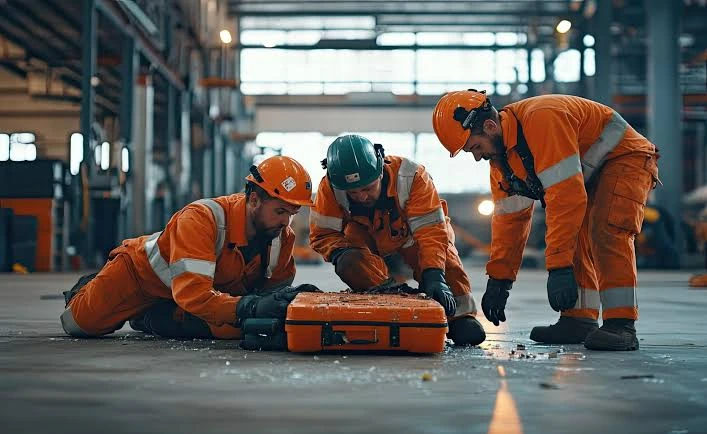
Think your climate-controlled corporate office is perfectly safe? Medical emergencies do not care if you work on a construction site or inside a cubicle. Discover why basic life support training is critical for corporate teams and how blended learning makes certification incredibly easy for busy professionals.
Most of us think office work is harmless. We worry about paper cuts, computer screen eye strain, or maybe spilling hot coffee in the breakroom. But when a coworker suddenly collapses from cardiac arrest during a morning meeting, who actually knows what to do? Panic sets in fast. I have seen the blank stares and chaos firsthand when a medical emergency hits a quiet corporate floor. That is exactly why booking your team for Coast2Coast First Aid Edmonton training is just as critical as your next quarterly review. You never know when you’ll need to step up and save a colleague’s life.
What Are The Real Medical Risks in an Office Setting?
It is easy to assume that sitting at a desk protects you from danger. But sedentary lifestyles and high-stress corporate environments carry their own hidden risks.
Heart attacks and sudden cardiac arrests happen every day in standard office buildings. Beyond heart issues, there are choking hazards during lunch hours, severe allergic reactions, and slip-and-fall injuries on wet lobby floors. When an airway is blocked or a heart stops beating, you only have minutes. A basic first aid kit hanging on the wall isn’t going to pump someone’s chest or clear their airway.
How Do Co-Workers Become the True First Responders?
When you dial 911, the dispatcher will send an ambulance immediately. But even in a major city, that ambulance has to navigate traffic, find parking, and get up the elevator to your floor.
That process can easily take 8 to 12 minutes. Irreversible brain damage from a lack of oxygen begins in just four to six minutes.
- Chest compressions keep blood flowing: By starting CPR immediately, you manually pump oxygenated blood to the brain.
- AEDs reset the heart: Using an Automated External Defibrillator within the first three minutes drastically increases survival odds.
- Preventing shock: Proper first aid can keep a trauma victim stable while paramedics are en route.
How Does Blended Learning Solve the Corporate Time Crunch?
I know what you are thinking. Pulling your entire staff away from their desks for two whole days of training sounds like a logistical nightmare. Managers hate losing productivity.
That is where the blended learning model steps in to save the day. Employees complete the theoretical portion online, at their own pace. They can knock it out at home or during a quiet afternoon at the office. Then, they only need to attend a single, half-day in-class session to practice the physical skills on mannequins.
Is It Hard to Learn How to Use an AED?
Not at all. In fact, modern AEDs are specifically designed for people who have zero medical background.
Once you pop the lid open, the machine literally talks to you. A calm voice tells you exactly where to place the sticky pads on the person’s bare chest. It analyzes the heart rhythm automatically and will only instruct you to push the shock button if it is absolutely necessary. You cannot accidentally shock someone who doesn’t need it.
If you are looking for first aid training near the ICE District, Churchill Square, or other areas close to our downtown facility off Jasper Avenue, then you may reach out to Coast2Coast First Aid/CPR – Edmonton in that area. For more info, course schedules, and articles like this, visit: https://www.c2cfirstaidaquatics.com/
Frequently Asked Questions
What is the best CPR certification for office workers? For most corporate environments, Standard First Aid & CPR/AED Level C is the ideal choice. It covers adult, child, and infant CPR, along with comprehensive first aid skills for common injuries and medical emergencies.
How long does the blended learning online portion take? The online theory module usually takes between 3 to 4 hours to complete. Because it is self-paced, employees can log in and out, saving their progress as they go.
Do we legally need an AED in our corporate office? While occupational health and safety regulations vary by province and building size, having an AED is highly recommended for all workplaces. Access to a defibrillator is the single most effective way to survive sudden cardiac arrest.
How often do employees need to renew their certification? A Canadian Red Cross Standard First Aid and CPR certificate is valid for three years from the date of issue. To keep skills sharp, many companies opt to host quick refresher courses annually.
Will I get in legal trouble if I perform CPR incorrectly? No. The Good Samaritan Act protects individuals who step in to help during a medical emergency. As long as you act voluntarily, without expectation of reward, and avoid gross negligence, you are legally protected.
 Blitz Blitz
 Admin