

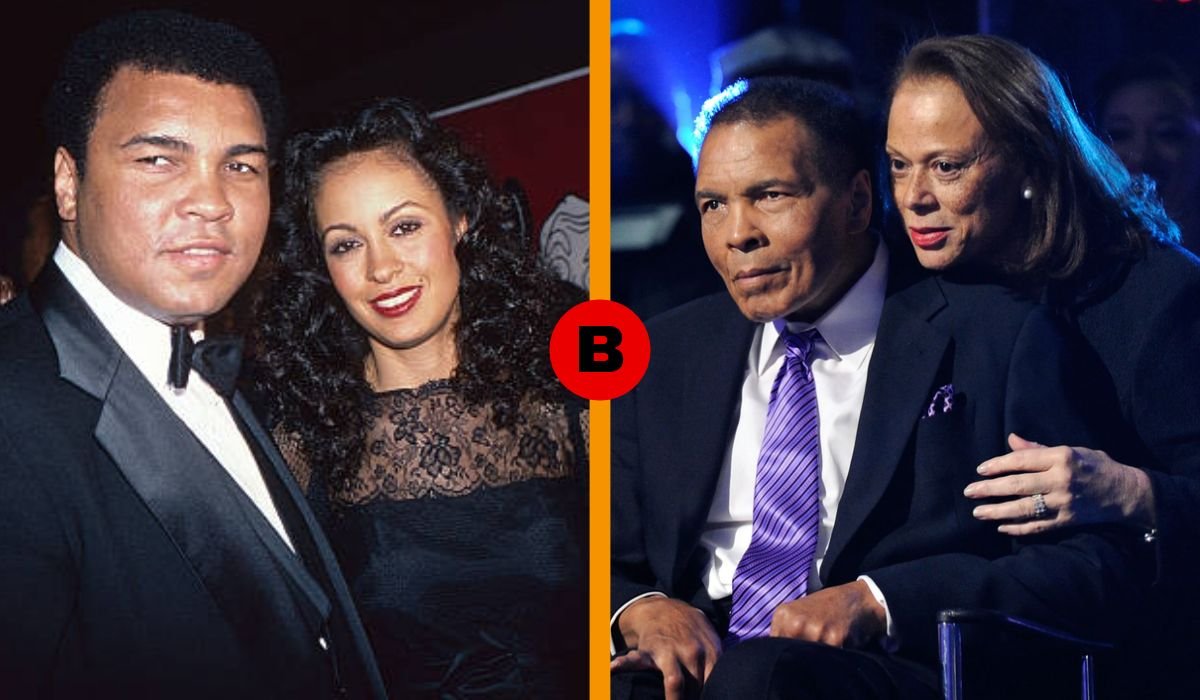
Muhammad Ali was more than a boxing champion. He was a global icon whose courage, personality, and humanitarian efforts inspired millions. Yet behind the extraordinary public figure was a woman who played a central role in his later life. Lonnie Ali, his fourth and final wife, became his trusted partner, business adviser, caregiver, and an important voice in preserving his legacy.
Born Yolanda Williams, Lonnie knew Muhammad Ali long before their marriage. Their families were neighbors in Louisville, Kentucky, and their friendship began when she was a child. Years later, that connection developed into a lasting relationship built on companionship, responsibility, and shared values.
But Lonnie Ali’s biography is about much more than her famous husband. An educated businesswoman and dedicated philanthropist, she helped manage Ali’s commercial interests, supported him through Parkinson’s disease, and contributed to organizations focused on healthcare, education, and humanitarian causes.
Even after Muhammad Ali’s death in 2016, Lonnie continued championing the principles that defined his life. Her journey offers a fascinating look at the woman who helped protect one of sports history’s greatest legacies while building a meaningful identity of her own.
Lonnie Ali Quick Bio Information
| Personal Detail | Information |
|---|---|
| Full Name | Yolanda Williams Ali |
| Popular Name | Lonnie Ali |
| Birth Name | Yolanda Williams |
| Birthplace | Louisville, Kentucky, USA |
| Estimated Birth Year | Around 1957–1958 |
| Nationality | American |
| Profession | Philanthropist and Former Business Executive |
| Education | Vanderbilt University |
| Higher Education | MBA, UCLA, 1986 |
| Former Employer | Kraft Foods |
| Husband | Muhammad Ali |
| Marriage Date | November 19, 1986 |
| Marital Status | Widowed |
| Adopted Son | Asaad Amin |
| Business Organization | Greatest of All Time, Inc. |
| Former Business Position | Vice President and Treasurer |
| Associated Institution | Muhammad Ali Center |
| Advocacy Interests | Parkinson’s Research and Children’s Rights |
| Known For | Business Leadership, Philanthropy, and Muhammad Ali’s Legacy |
Important Note: Lonnie Ali’s exact birthday is not consistently documented in reliable public records. Her own statements about meeting Muhammad Ali as a child, along with contemporary reporting about their marriage, suggest that she was born in the late 1950s. Claims listing January 17, 1940, should therefore be treated cautiously.
Who Is Lonnie Ali?
Lonnie Ali is an American philanthropist, former business executive, and the widow of legendary heavyweight boxing champion Muhammad Ali. She is best known as his fourth and final wife, although her professional achievements and charitable contributions extend well beyond their marriage.
Throughout their years together, Lonnie became deeply involved in Muhammad’s business affairs, healthcare decisions, and humanitarian activities. She helped manage commercial opportunities associated with his name while supporting him through the challenges of Parkinson’s disease.
Her influence also reached the nonprofit world. She played an important role in establishing the Muhammad Ali Center and supported initiatives dedicated to neurological healthcare and children’s welfare.
What distinguishes Lonnie is the combination of her professional experience and personal commitment. She wasn’t simply accompanying a famous athlete through public appearances. She was helping manage a complicated business operation, supporting a family, and contributing to causes that mattered to both of them.
Lonnie Ali Early Life and Childhood
Long before becoming part of one of the world’s most recognizable families, Lonnie Ali was a young girl growing up in Louisville, Kentucky.
Her mother, Marguerite Williams, shared a close friendship with Odessa Clay, Muhammad Ali’s mother. The families lived across the street from one another, which meant Lonnie was familiar with Muhammad years before he became a household name.
Back then, he was still known as Cassius Clay, an ambitious young boxer whose remarkable career was only beginning. For Lonnie, however, he wasn’t simply a future sporting legend. He was someone connected to her family and neighborhood.
She attended Catholic schools in Louisville and grew up in an environment where education and family relationships were important.
Although her childhood has received far less attention than Muhammad Ali’s early years, those experiences helped establish the connection that would eventually bring them together as adults.
Their story began not with fame or celebrity, but with two families who knew and trusted each other.
Lonnie Ali Age, Birthday, and Personal Background
Questions about Lonnie Ali’s age and birthday are common, partly because online biographies provide conflicting information.
Some celebrity websites identify January 17, 1940, as her birth date. However, that information doesn’t align with other documented accounts of her early life.
During congressional testimony in 2025, Lonnie recalled meeting Muhammad Ali in 1963 when she was six years old. That statement suggests she was born around 1956 or 1957.
Contemporary reporting from her November 1986 wedding described her as 28 years old, pointing instead to a birth year around 1957 or 1958.
Taken together, these accounts place her birth in the late 1950s, although her precise birthday remains unconfirmed.
What is much clearer is her Louisville upbringing, educational background, and longstanding connection with Muhammad Ali’s family.
These verified aspects of her life provide a more dependable picture than the conflicting ages sometimes published online.
Lonnie Ali Education and Academic Journey
Lonnie Ali’s education is an important part of her story, particularly because it prepared her for responsibilities that would later involve managing a globally recognized name.
She attended Vanderbilt University in Nashville, Tennessee, graduating in 1978 with a bachelor’s degree.
After completing her undergraduate studies, she entered the business world and worked for Kraft Foods. The experience gave her practical exposure to corporate operations and professional management.
She later continued her education at the University of California, Los Angeles, earning a Master of Business Administration in 1986 with an emphasis on marketing.
That combination of academic training and corporate experience proved valuable when she became involved in Muhammad Ali’s commercial affairs.
Managing licensing agreements, business relationships, and intellectual property required more than an understanding of celebrity branding. It demanded careful planning, financial judgment, and professional discipline.
Lonnie’s education helped establish the foundation for the business leadership she would demonstrate throughout her marriage.
How Did Lonnie Ali Meet Muhammad Ali?
The story of how Lonnie Ali met Muhammad Ali begins in Louisville during the early 1960s.
Their mothers were close friends, and their families lived near each other. As a result, Lonnie became acquainted with Muhammad while she was still a young child.
In her later congressional testimony, she recalled meeting him in 1963, when she was six years old.
At the time, Muhammad was already attracting attention as a talented boxer. He had won an Olympic gold medal in 1960 and was building the professional career that would eventually make him a global superstar.
Their early relationship was simply a family connection. Lonnie was a child, while Muhammad was a young adult pursuing his boxing ambitions.
Over the following years, their lives followed different paths. Muhammad became one of the most famous athletes in history, while Lonnie pursued her education and professional career.
Eventually, their longstanding familiarity developed into a closer relationship, setting the stage for their marriage.
Lonnie Ali and Muhammad Ali’s Love Story
Lonnie Ali and Muhammad Ali’s relationship stands apart from many celebrity romances because their connection existed long before marriage became a possibility.
By the time their relationship turned romantic, Muhammad had already experienced extraordinary success in boxing. He had also faced political controversy, personal challenges, and the early effects of declining health.
Lonnie knew the public figure admired around the world, but she also understood something of the person behind the fame.
Their relationship developed during a period when Muhammad’s life was changing. His competitive boxing career had ended, and questions surrounding his long-term health were becoming increasingly important.
As they grew closer, Lonnie became involved in both his personal life and practical responsibilities.
Their partnership eventually included family decisions, business management, medical care, and humanitarian work.
Rather than being defined by public attention alone, their relationship became a long-term commitment shaped by the realities of everyday life.
Lonnie Ali Marriage and Family Life
Lonnie Ali married Muhammad Ali on November 19, 1986, in Louisville, Kentucky.
She became his fourth and final wife. Muhammad had previously been married to Sonji Roi, Belinda Boyd, who later became known as Khalilah Ali, and Veronica Porché Ali.
By the time Lonnie entered his life as his wife, Muhammad was already a father and one of the most celebrated athletes of the twentieth century.
Their marriage brought together a large family while introducing new responsibilities connected to his health and professional affairs.
Although the couple occasionally appeared at major public events, much of their relationship centered on matters that rarely made headlines.
Lonnie helped coordinate appointments, manage schedules, oversee business interests, and support family life.
Their marriage lasted nearly three decades, ending with Muhammad Ali’s death on June 3, 2016.
Throughout those years, Lonnie remained one of the most important people in his personal and professional world.
Lonnie Ali Children and Adopted Son
Family has always been an important part of Lonnie Ali’s life.
She and Muhammad Ali adopted a son named Asaad Amin when he was approximately five months old. Asaad became the youngest member of Muhammad’s family and grew up surrounded by his father’s extraordinary sporting reputation.
However, Asaad developed his own athletic interests. Instead of entering professional boxing, he pursued baseball and later played at the college level.
His interest in baseball also connects with Lonnie’s reported enthusiasm for the sport.
Muhammad Ali had eight other children from earlier relationships, including Laila Ali, who became a successful professional boxer, and Maryum Ali, who pursued work involving social issues and public advocacy.
As a mother and member of a large blended family, Lonnie balanced private responsibilities with the demands of Muhammad’s international fame.
Despite the family’s public recognition, she has generally avoided sharing unnecessary details about their private lives.
Lonnie Ali and Muhammad Ali’s Parkinson’s Disease
Perhaps the most demanding chapter of Lonnie Ali’s marriage involved caring for Muhammad as he lived with Parkinson’s disease.
Muhammad was diagnosed with Parkinson’s syndrome in 1984, after his retirement from professional boxing. The condition gradually affected his movement, speech, balance, and ability to complete everyday tasks.
As his symptoms progressed, Lonnie became increasingly involved in organizing his care.
Her responsibilities included helping coordinate medical treatment, maintaining routines, and supporting him during public appearances.
In an interview with AARP, she discussed the practical challenges of caregiving, including the importance of medication schedules and adapting to changing physical needs.
Lonnie also explained that her father’s experience with polio had given her some understanding of the difficulties associated with physical disabilities.
Although Muhammad’s boxing career has often been discussed in connection with his neurological condition, the precise contribution of repeated head injuries to his illness has not been conclusively established.
For Lonnie, the experience was deeply personal. Yet it also inspired a broader commitment to helping other families affected by Parkinson’s disease.
Lonnie Ali Career and Business Achievements
Lonnie Ali’s professional accomplishments reveal a side of her life that is sometimes overlooked in celebrity biographies.
Before becoming involved in Muhammad Ali’s business affairs, she had already completed her university education and gained corporate experience.
In 1992, she incorporated Greatest of All Time, Inc., commonly known as GOAT Inc.
The company was responsible for managing licensing opportunities and commercial interests connected to Muhammad Ali’s name, image, and intellectual property.
Lonnie served as vice president and treasurer, overseeing important aspects of its daily operations.
Her work helped organize the commercial use of Muhammad’s identity at a time when his reputation extended far beyond professional sports.
The company was sold in 2006, although Lonnie continued participating in activities associated with Muhammad Ali Enterprises.
She also accompanied Muhammad on international journeys and humanitarian missions, bringing together her business responsibilities and charitable interests.
Her career demonstrates that she was not merely representing her husband publicly. She was contributing professional knowledge and leadership to the management of his legacy.
Lonnie Ali Philanthropy and Parkinson’s Advocacy
Lonnie Ali’s commitment to philanthropy developed alongside her experience supporting Muhammad through Parkinson’s disease.
In 1997, the couple helped launch the Muhammad Ali Parkinson’s Center in Phoenix, Arizona.
The center became associated with specialized neurological care, research, education, and support services for individuals living with Parkinson’s disease.
Their involvement reflected a desire to make treatment and information more accessible to other families facing similar challenges.
In 2009, Muhammad and Lonnie unveiled the Muhammad and Lonnie Ali Pavilion at Barrow Neurological Institute, further strengthening their support for neurological healthcare.
Lonnie’s public service also extended beyond Parkinson’s advocacy.
From 2010 to 2013, she served on the Presidential Commission for the Study of Bioethical Issues, contributing to discussions about ethical questions in medicine and scientific research.
She has also supported children’s rights and humanitarian initiatives.
These activities show how her personal experiences developed into a wider commitment to public service.
Lonnie Ali and the Muhammad Ali Center
One of Lonnie Ali’s most lasting contributions is her involvement in establishing the Muhammad Ali Center in Louisville, Kentucky.
The institution opened in November 2005, celebrating Muhammad’s sporting achievements while emphasizing the humanitarian principles that guided his life.
Rather than functioning solely as a boxing museum, the center explores subjects such as personal growth, social responsibility, cultural understanding, and human dignity.
Its educational mission is built around six core principles: confidence, conviction, dedication, giving, respect, and spirituality.
Lonnie has served as a lifetime director and vice chair of the center’s board. Its official biography has also identified her as serving as interim president and CEO.
Through exhibitions, educational programs, and community initiatives, the institution introduces new generations to Muhammad Ali’s influence beyond the boxing ring.
Lonnie’s continued involvement reflects her determination to preserve not only his athletic accomplishments but also the beliefs that made him an international humanitarian figure.
Lonnie Ali Net Worth and Financial Background
Lonnie Ali’s net worth is a popular search topic, but reliable information about her exact personal wealth remains limited.
Her financial background includes a corporate career, graduate business education, and extensive experience managing commercial interests associated with Muhammad Ali.
She held senior responsibilities at GOAT Inc. before the company’s sale in 2006 and remained connected to business activities involving Muhammad Ali’s intellectual property.
However, the value of Muhammad Ali’s commercial rights and estate should not be confused with Lonnie’s individual financial assets.
Several celebrity websites publish estimates of her fortune, but those figures are not supported by publicly verified personal financial disclosures.
For that reason, assigning a specific amount to Lonnie Ali’s net worth would be speculative.
Her documented business experience offers a more dependable understanding of her professional and financial background.
Lonnie Ali’s Life After Muhammad Ali’s Death
Muhammad Ali died on June 3, 2016, at the age of 74, bringing an extraordinary life to an end.
For Lonnie, his death marked the loss of a husband and longtime companion. It also began a new chapter in her public responsibilities.
She continued participating in initiatives connected to his legacy, including educational programs, humanitarian activities, and projects exploring his influence on sports and society.
Her work has also included involvement in media productions and public discussions about Muhammad’s historical importance.
In December 2025, Lonnie testified before a congressional subcommittee considering proposed boxing legislation.
During her testimony, she discussed athlete welfare, the opportunities boxing can provide, and the importance of protecting participants.
Her appearance demonstrated that her connection to the sport remains meaningful, even though her primary public work has often focused on humanitarian causes.
In 2026, she was also recognized among the Gordon Parks Foundation’s honorees, reflecting continued appreciation for her contributions.
Lonnie Ali’s Personal Interests and Life Away From the Spotlight
Despite spending much of her adult life alongside one of the world’s most famous athletes, Lonnie Ali has maintained a relatively private personal life.
She has been described as a baseball enthusiast, an interest that connects naturally with her adopted son Asaad’s involvement in the sport.
Her background also reflects a longstanding interest in education, professional development, and community service.
In public interviews, she has occasionally shared memories of her Louisville childhood, family relationships, and experiences caring for Muhammad.
Those conversations offer a glimpse of the person behind the public responsibilities.
While her husband’s fame made her recognizable around the world, Lonnie has generally directed attention toward charitable causes, education, and the preservation of his humanitarian message.
Her personal interests and professional achievements provide a fuller picture of a woman whose life cannot be defined by one relationship alone.
Lonnie Ali’s Lasting Influence and Legacy
Lonnie Ali’s influence reaches across several areas of Muhammad Ali’s life and the institutions that continue to honor him.
Her business leadership helped protect the commercial interests associated with his name. Her caregiving provided essential support during his long experience with Parkinson’s disease.
Meanwhile, her involvement in charitable organizations helped transform personal challenges into opportunities to support others.
The Muhammad Ali Center remains a particularly visible example of that commitment.
Through its educational programs, visitors can learn not only about Muhammad’s championship victories but also about his views on courage, respect, faith, and social responsibility.
Lonnie’s advocacy for Parkinson’s research has also brought attention to the experiences of patients and caregivers.
Taken together, these contributions reveal a legacy shaped by leadership, compassion, and a sustained commitment to public service.
Final Thoughts
Lonnie Ali’s life is a story of friendship, commitment, professional achievement, and lasting humanitarian service.
Her connection with Muhammad Ali began in a Louisville neighborhood, long before their relationship became part of boxing history. What followed was a marriage that brought extraordinary opportunities alongside demanding personal responsibilities.
As Muhammad faced the challenges of Parkinson’s disease, Lonnie became an important source of support. At the same time, she developed a meaningful professional role, managed business interests, and helped establish organizations designed to benefit others.
Her work did not end with Muhammad’s death. Through the Muhammad Ali Center, Parkinson’s advocacy, and continued public service, she has helped ensure that his humanitarian values remain relevant to new generations.
What makes Lonnie Ali’s story compelling isn’t simply her connection to one of the greatest athletes of all time. It’s the way she combined personal dedication with business leadership and a genuine commitment to helping others.
Lonnie Ali will always be remembered as Muhammad Ali’s wife, but her achievements in philanthropy, healthcare advocacy, and legacy preservation tell a much broader story—one that deserves recognition in its own right.
FAQs About Lonnie Ali
Who Is Lonnie Ali?
Lonnie Ali is an American philanthropist, former business executive, and the fourth and final wife of Muhammad Ali. She is recognized for managing his commercial interests, supporting his healthcare needs, and helping establish charitable organizations. Her work with the Muhammad Ali Center and Parkinson’s advocacy initiatives remains an important part of her public identity.
How Old Is Lonnie Ali in 2026?
Lonnie Ali’s exact birthday has not been consistently confirmed through reliable public records. In congressional testimony, she recalled being six years old when she met Muhammad Ali in 1963. Contemporary reporting also described her as 28 at their wedding in 1986. These accounts suggest she was born in the late 1950s and would be approximately 68 to 70 years old in 2026.
When Did Lonnie Ali Marry Muhammad Ali?
Lonnie Ali married Muhammad Ali on November 19, 1986, in Louisville, Kentucky. She was his fourth and final wife. Their marriage lasted nearly three decades, ending when Muhammad died on June 3, 2016. Throughout their relationship, Lonnie played an important role in his family life, business affairs, and medical care.
Does Lonnie Ali Have Children?
Yes. Lonnie Ali and Muhammad Ali adopted a son named Asaad Amin when he was approximately five months old. Asaad developed an interest in baseball and pursued the sport at the college level. Muhammad also had eight other children from earlier relationships, including former professional boxer Laila Ali.
What Is Lonnie Ali’s Net Worth?
Lonnie Ali’s exact personal net worth has not been publicly verified. She has a substantial professional background that includes corporate employment, business management, and leadership responsibilities at Greatest of All Time, Inc. However, published estimates of her wealth should be treated cautiously because they are not supported by confirmed personal financial disclosures.
What Does Lonnie Ali Do?
Lonnie Ali is involved in philanthropy, educational initiatives, Parkinson’s disease advocacy, and activities dedicated to preserving Muhammad Ali’s legacy. She has held leadership responsibilities at the Muhammad Ali Center and participated in public discussions concerning healthcare, humanitarian values, and athlete welfare.
Where Was Lonnie Ali Born?
Lonnie Ali was born and raised in Louisville, Kentucky, according to her biographical accounts. Her family lived near Muhammad Ali’s family, and their mothers were close friends. She attended Catholic schools in Louisville before continuing her education at Vanderbilt University and UCLA.
Is Lonnie Ali Still Alive in 2026?
Yes. Lonnie Ali remains publicly active in 2026. Her recent activities have included humanitarian advocacy, involvement with organizations connected to Muhammad Ali’s legacy, and public discussions about boxing and athlete protection. She continues to be recognized for her contributions to charitable leadership and public service.
Learn more and explore exciting content on: Mulan Vuitton: The Untold Story of Her Life, Instagram Fame, and Career