

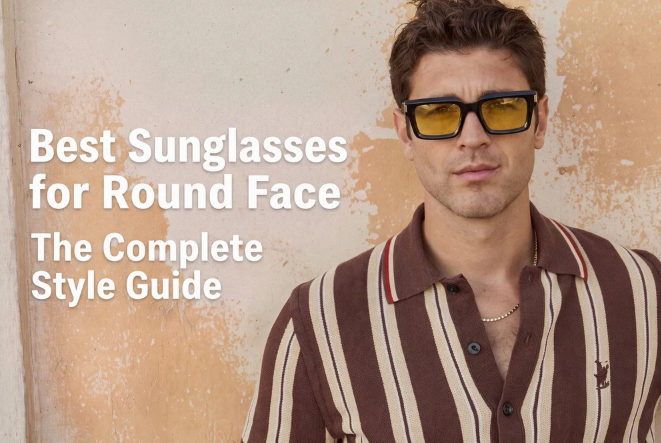
Yes, thick frames can suit round faces. The key is choosing a shape and size that feel balanced, rather than assuming a substantial rim will overwhelm softer features. Square edges, gently angular corners, and a defined upper line are useful starting points, but none of them replaces a comfortable fit.
You also don’t need to make your face look narrower to wear bold glasses well. The aim is to find an outline you enjoy seeing in the mirror and can imagine wearing with your everyday clothes.
Round is only a rough description, too. Two people who both use that same label may have different brow positions, bridge shapes, and cheek heights. Rather than searching for a single approved frame, use the category to begin experimenting. Your favorite existing pair can be a more helpful reference than a face-shape chart.
Start with shape, compare proportions, and then decide how much presence you want the frame to have.
Choose the Shape Before the Thickness
A thick rim tells you how prominent the border looks, not what shape the glasses are. A rounded frame and a rectangular one can have equally substantial edges while creating quite different impressions.
For a structured look, try a square silhouette with softened corners. It offers a way to explore straight lines without committing to a sharply geometric design. A rectangle is another option worth comparing, especially when you prefer a wider-looking outline.
Pay attention to the upper rim rather than judging the lenses alone. Try a more pronounced brow line beside a frame with an even thickness all the way around. Which feels more like something you would wear?
Donahugh’s best sunglasses for round face guide uses angular shapes as a starting point while also considering width, bridge fit, and proportion.
Treat that as a shortlist, not a restriction. Liking a rounded design is a perfectly good reason to try it.
Thick Doesn’t Have to Mean Oversized
A common shopping mistake is treating thickness and size as the same thing. Thickness describes the rim; size concerns the dimensions of the frame and lenses. A relatively compact pair can still have substantial edges.
When comparing Donahugh’s thick frame glasses, look at the front outline separately from the measurements. Don’t assume that a bold-looking product photograph means the frame will be wide on your face.
Start with a pair you already find comfortable. Compare overall width, lens dimensions, bridge measurements, and temple length where available, rather than relying on a size label.
You might discover that a medium-sized, clearly outlined frame gives you all the presence you want. You might prefer something larger. Either choice is worth trying, provided the frame sits securely.
Also distinguish frame styling from the product category. An optical frame can provide design inspiration, but check the individual listing for the sunglass version and its lens specifications before ordering.
Check the Fit While You Move
The first mirror impression is only part of a try-on. Keep the glasses on while you smile, look down, and turn your head. Notice whether the lower rims meet your cheeks, whether the bridge slips, or whether the temples feel tight.
A frame shouldn’t need constant repositioning to maintain the look you liked initially. Any discomfort deserves attention, even when the shape seems right.
Examine the side view as well as the front. Look at how the arms sit and whether the glasses appear level. For a pair you intend to wear frequently, spend more than a few seconds checking these details.
Online, use front and side photographs alongside the published dimensions. A model’s face can help you imagine a style, but it cannot establish how that frame will sit on you.
For prescription sunglasses, have an optical professional confirm the relevant lens and fitting requirements. Face-shape advice is about appearance; it should not stand in for checking a prescription frame properly.
Use Color to Adjust the Contrast
Before rejecting a shape as too bold, try another color. A dark, opaque rim and a translucent version can make the same silhouette feel quite different.
Black is worth trying when you want a clearly outlined accessory. For a less uniform effect, compare tortoiseshell, where the pattern breaks up the surface. Clear or translucent finishes offer another route: the thickness remains visible, but the frame reveals more of the face behind it.
Make the comparison in similar lighting. Look at the same shape in two finishes before changing several details at once.
For sunglasses, consider the frame and lenses together. Hold two pairs side by side and ask which combination you would reach for most often. Choose based on the complete appearance, not the frame color in isolation.
Keep protection specifications separate from that style decision. Review the actual lens information rather than treating a dark appearance as a product specification.
Wear Them With an Ordinary Outfit
Try the glasses with an outfit you already wear, not an imagined wardrobe you would need to buy.
For a weekend combination, start with a plain T-shirt, straight-leg jeans, and an open overshirt. Add the frames and leave everything else unchanged. The question is whether you like the added detail, not whether every accessory matches.
For something smarter, try a textured sweater, relaxed trousers, and a simple jacket. Compare black and tortoiseshell frames with those clothes, then choose the version that feels less forced. You don’t need your shoes, belt, and glasses to be the same shade.
With patterned clothing, experiment before ruling anything out. Put on the frames with a striped shirt, then compare the outfit without a hat or conspicuous necklace. Removing one competing detail may be all you want to change.
Take a photograph from far enough away to see the outfit. A close-up helps with the frame; a wider view helps you decide whether the overall styling feels natural.
Narrow the Choice Before You Buy
Instead of comparing twenty unrelated pairs, choose three with a purpose: one square, one softly geometric, and one with a stronger upper rim. Keep their dimensions reasonably close so the exercise is mainly about shape.
Then compare two colors in your preferred silhouette. This gives you a clearer basis for deciding than switching size, shape, and finish simultaneously.
Write down what you actually notice. “The bridge feels secure” is more useful than “this is supposed to suit my face.” “I would wear this with my usual jacket” tells you more than a trend label.
Check the retailer’s current return terms before ordering, especially when comparing options at home. Keep any required packaging and follow the stated try-on conditions.
There is no obligation to choose the boldest pair. A slightly less pronounced frame that feels easy to wear may be the one you enjoy most.
Find Your Version of Bold
Round faces don’t rule out thick frames, and choosing a stronger outline doesn’t require a complete style change. Begin with a shape you like, confirm the proportions and fit, then use color and clothing to make it your own.
The best result isn’t a frame that follows every face-shape rule. It’s one that feels comfortable, works with your daily wardrobe, and looks right to you after the first impression has passed.
 IQ newswire
 Sky Bloom IT