

Almost everyone has a drawer, closet corner, or car trunk filled with branded items collected over years of conferences, team-building retreats, and vendor meetings. More often than not, these items sit untouched: flimsy pens that run dry after three uses, oversized synthetic shirts with stiff graphic prints that feel like plastic, and mismatched plastic trinkets destined for a landfill. For companies spending real marketing and HR budgets on these products, that lack of utility represents wasted money and a missed opportunity to build meaningful brand affinity.
The solution is not to stop making branded items altogether. Instead, modern organizations are shifting away from cheap promotional junk toward retail-quality goods. When an item looks, feels, and performs like something a person would willingly buy off the shelf at a boutique or lifestyle store, they incorporate it into their daily routine. Here is how you can elevate your brand gear from disposable giveaway to everyday favorite.
1. Shift Your Mindset from Advertising Billboard to Curated Gift
The most common mistake in promotional production is treating the product like a miniature billboard. Placing an enormous, primary-color logo across the chest of a garment or wrapping a loud URL around a water bottle immediately strips the item of its aesthetic appeal outside of an expo hall. Most people do not want to walk through the grocery store or meet friends on the weekend looking like an unpaid brand ambassador.
To create items with lasting appeal, borrow design cues from contemporary lifestyle brands:
- Subtle branding: Opt for tone-on-tone embroidery, small woven hem tags, or minimalist chest prints rather than massive center-chest graphics.
- Design-led themes: Build artwork around an inspiring campaign slogan, a creative illustration, or a witty industry truth, relegating your actual company logo to a discreet secondary placement.
- Neutral, wearable palettes: Earthy tones, muted pastels, charcoal, navy, and off-white consistently outperform loud corporate neon colors in real-world wearability.
2. Focus on Material Quality and Tactile Value
People evaluate physical goods in seconds based purely on touch. A lightweight, rough fabric instantly communicates low value, while a dense, combed-cotton fabric signals comfort and durability. If you want people to reach for your branded apparel weekly, invest in high-grade fabrications.
When selecting apparel through professional Custom Merchandise services, pay close attention to fabric weights and printing methods. For everyday wear, a 180 to 220 GSM 100% combed ring-spun cotton tee delivers the right drape and breathability without feeling cheap. Choosing specialized T-shirt Printing methods such as soft-feel silkscreen inks, direct-to-garment (DTG) printing, or clean micro-embroidery ensures the design feels soft against the skin rather than stiff and scratchy.
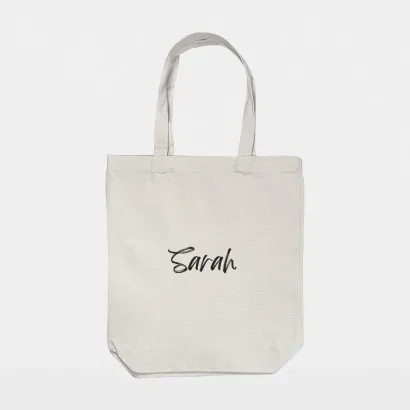
The same standard applies to carry goods. A flimsy bag might carry event flyers for an afternoon, but a sturdy, heavyweight Custom Tote Bag made from durable 10 to 14 oz cotton canvas will be carried to farmers’ markets, gyms, and libraries for years. When budgeting for mass-distribution scenarios, choosing a structured, reinforced Non woven bag offers a reliable, reusable alternative to single-use plastic without exhausting event budgets.
3. Curate Useful Kits Rather Than Random Assortments
A single, carefully considered item delivers far more emotional resonance than a grab bag of five disconnected knick-knacks. When assembling Corporate Gifts for high-value clients or onboard packages for new employees, think in terms of daily utility and coherent themes.
Consider the following practical combinations:
- The Commuter Capsule: A tailored custom shirt malaysia professionals can wear under a blazer on casual Fridays, paired with a dual-wall vacuum insulated tumbler and a sleek, double-clip Custom Lanyard that holds access cards securely without twisting.
- The Remote Work Wellness Kit: A premium French terry crewneck, a minimalist ceramic desk mug, and a structured notebook with a bound linen cover.
- The Event Starter Pack: A well-fitted ring-spun graphic tee, an understated enamel badge, and an eco-friendly tote designed to handle heavy convention catalogs without tearing.
4. Pay Attention to Unboxing and Presentation
Perceived value is heavily influenced by how an item is introduced. Handing someone a crumpled t-shirt pulled from a cardboard shipping carton creates a vastly different emotional impression than presenting a folded garment neatly tied with twine or packaged inside a reusable zip pouch.
You do not need an exorbitant packaging budget to make an impression. Simple additions—such as customized swing tags that share a short message about your team, recycled tissue paper sealed with a branded sticker, or a personalized postcard—transform ordinary products into memorable gifts. This extra layer of consideration encourages recipients to take photos, share their unboxing moments on social channels, and remember who gave it to them.
5. Audit Your Existing Merch Catalog
Before launching your next ordering cycle, conduct a simple internal audit of what your company has produced in the past. Ask your team honest questions:
- Do our staff members voluntarily wear our branded apparel on personal days?
- Are our current items sitting unused in supply closets six months after an event?
- Does this product represent the quality standard of our actual software, service, or product line?
If the answer to these questions suggests your items are falling flat, reduce your order quantities and increase the per-unit quality threshold. Producing 100 premium items that people love and use for years yields far better brand equity than handing out 500 cheap items that end up discarded by the weekend.
Frequently Asked Questions
How do I determine the right size breakdown for team shirts?
Unless you are surveying your recipients directly, an industry-standard bell curve typically skews toward sizes M and L. A common starting ratio for adult sizing is roughly 10% S, 35% M, 35% L, 15% XL, and 5% 2XL. Adjust this depending on your audience demographics, and consider slightly relaxed or unisex cuts that offer universal comfort.
What is the difference between screen printing and DTG printing?
Screen printing presses ink directly through mesh stencils onto the fabric. It is extremely durable and cost-effective for larger bulk runs with limited color palettes. Direct-to-Garment (DTG) uses specialized inkjet technology to print full-color designs directly onto the cotton fibers, making it ideal for smaller runs, complex illustrations, and multi-colored gradients.
Can eco-friendly materials hold up to daily wear?
Yes. Modern organic cotton, recycled canvas, and RPET (recycled polyethylene) fabrics match or exceed the durability of conventional virgin materials. Ensuring proper garment care instructions—such as washing inside out in cold water and air-drying—will maintain fabric integrity and print clarity over dozens of wash cycles.
 Blitz Blitz