

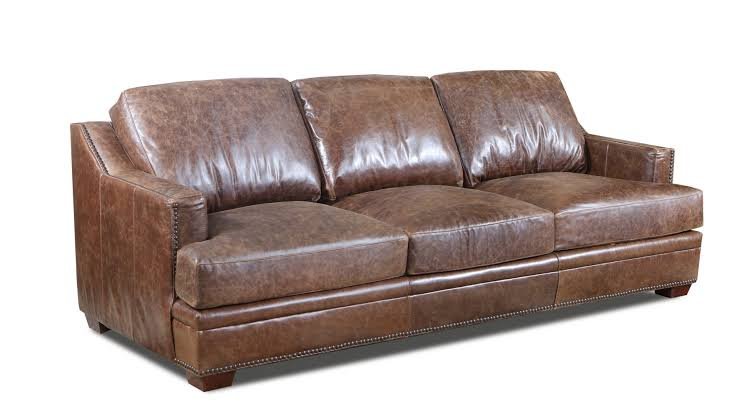
Leather sofas are often chosen for their distinctive appearance, comfortable feel, and ability to complement a wide range of interior styles. However, not all leather upholstery is manufactured in the same way. Differences in how hides are processed, finished, and assembled can significantly affect a sofa’s durability, texture, maintenance requirements, and price. Understanding these distinctions is particularly important because product descriptions sometimes use the word “leather” without clearly explaining the material’s composition.
Homeowners comparing leather sofas for sale should look beyond color and design when evaluating their options. Full-grain, top-grain, and bonded leather each have different characteristics, and the right choice depends on household use, budget, personal preferences, and expectations for long-term performance. Knowing how these materials differ makes it easier to assess whether a particular sofa represents good value.
What Makes Different Types of Leather Unique?
Leather quality is influenced by the portion of the hide used and the treatments applied during manufacturing. Natural hides contain variations in texture, grain patterns, and surface markings. Manufacturers may preserve these characteristics or modify the surface to achieve a more consistent appearance.
The three commonly discussed categories are full-grain leather, top-grain leather, and bonded leather. Although they may look similar in showroom displays, their construction and performance can differ considerably.
Full-Grain Leather: Natural Character and Long-Term Durability
Full-grain leather uses the outermost grain layer of the hide without sanding or buffing away its natural surface. This preserves the original grain structure, including small markings, wrinkles, and variations in texture.
Key Advantages
Because the natural grain remains intact, full-grain leather is generally strong and can develop a distinctive patina as it ages. Rather than maintaining an entirely uniform appearance, it gradually reflects patterns of use and exposure.
Its natural surface also gives each upholstered piece a slightly different character. This makes full-grain leather appealing to homeowners who appreciate authentic materials and subtle imperfections.
Potential Limitations
Full-grain leather is often among the more expensive upholstery options. Natural markings may also make its appearance less consistent than corrected leather surfaces.
It requires appropriate care to prevent excessive drying, staining, or damage from direct sunlight. For households looking for a perfectly uniform finish with minimal visible variation, another leather category may be more suitable.
Top-Grain Leather: A Balance of Appearance and Practicality
Top-grain leather also comes from the upper portion of the hide, but its surface is typically sanded or buffed to remove imperfections. Manufacturers may apply pigments, protective coatings, or embossing to create a more consistent finish.
Why Homeowners Choose It
Top-grain leather offers a relatively smooth, uniform appearance while retaining the underlying characteristics of genuine hide. Its finishing treatments can also make it easier to maintain, depending on the specific product.
For many living rooms, it provides a practical balance between appearance, comfort, and price. It is particularly suitable for homeowners who prefer the look of leather without the more pronounced natural markings associated with full-grain upholstery.
What to Consider
The additional surface processing means top-grain leather does not retain the same untouched grain characteristics as full-grain leather. Its feel and durability also vary according to thickness, finishing quality, and manufacturing standards.
Buyers should check whether the sofa uses top-grain leather on all upholstered surfaces or only on the areas that receive the most contact.
Bonded Leather: An Alternative With Different Construction
Bonded leather is manufactured differently from full-grain and top-grain leather. It generally consists of leather fibers and scraps combined with binding materials, then applied to a backing and finished with a surface coating.
Benefits and Limitations
Its primary attraction is affordability. Bonded leather can reproduce the appearance of traditional leather at a lower initial price, making it accessible to budget-conscious shoppers.
However, its performance is different from upholstery made from a continuous hide. The surface coating can deteriorate, crack, or peel with prolonged use, particularly when exposed to friction, heat, and inadequate maintenance.
Bonded leather also does not develop the same natural patina as full-grain leather. It is generally better understood as a leather-based composite material rather than a premium natural leather upholstery option.
Comparing the Three Leather Types
| Feature | Full-Grain | Top-Grain | Bonded |
| Construction | Natural grain layer | Finished upper hide | Leather fibers and binders |
| Appearance | Natural variations | More uniform | Consistent coated surface |
| Durability | Generally excellent | Generally good | Typically more limited |
| Price | Usually highest | Mid-to-high range | Usually lowest |
| Aging | Develops patina | Depends on finish | May crack or peel |
These are general characteristics rather than guarantees. Actual performance depends on leather thickness, upholstery construction, finishing methods, and manufacturing quality.
How to Choose the Right Leather Sofa
Before making a purchase, consider the following factors:
- Household activity: Busy households may benefit from durable upholstery and finishes suited to frequent use.
- Budget: Compare initial cost with expected lifespan and maintenance requirements.
- Texture preference: Full-grain leather has natural variations, while top-grain often offers a more consistent surface.
- Maintenance: Review manufacturer cleaning and conditioning recommendations.
- Upholstery coverage: Confirm which parts of the sofa use genuine leather and whether other areas contain matching materials or synthetic upholstery.
A particularly important detail is the manufacturer’s material specification. Terms such as “leather match” or “leather upholstery” do not necessarily mean every upholstered surface uses the same leather grade.
Frequently Asked Questions
Is full-grain leather better than top-grain leather?
Full-grain leather preserves more of the hide’s natural structure and generally offers excellent durability. Top-grain leather provides a more uniform appearance and can be easier to maintain, depending on its finish.
Does bonded leather last as long as genuine leather?
Generally, no. Bonded leather has a composite construction, and its surface coating is more susceptible to deterioration than well-maintained full-grain or top-grain leather.
Which leather is easiest to maintain?
Finished top-grain leather is often relatively easy to clean, although care requirements vary by coating. Always follow the manufacturer’s instructions.
Making an Informed Upholstery Decision
Choosing a leather sofa involves balancing material quality, appearance, maintenance, and budget. Full-grain leather appeals to buyers who value natural character and longevity, top-grain offers a versatile middle ground, and bonded leather provides a lower-cost alternative with different durability expectations. Understanding these distinctions helps homeowners select upholstery that suits their living environment and provides a more realistic expectation of how the sofa will perform over time.
 Admin
 Sky News Agency
 IQ newswire