

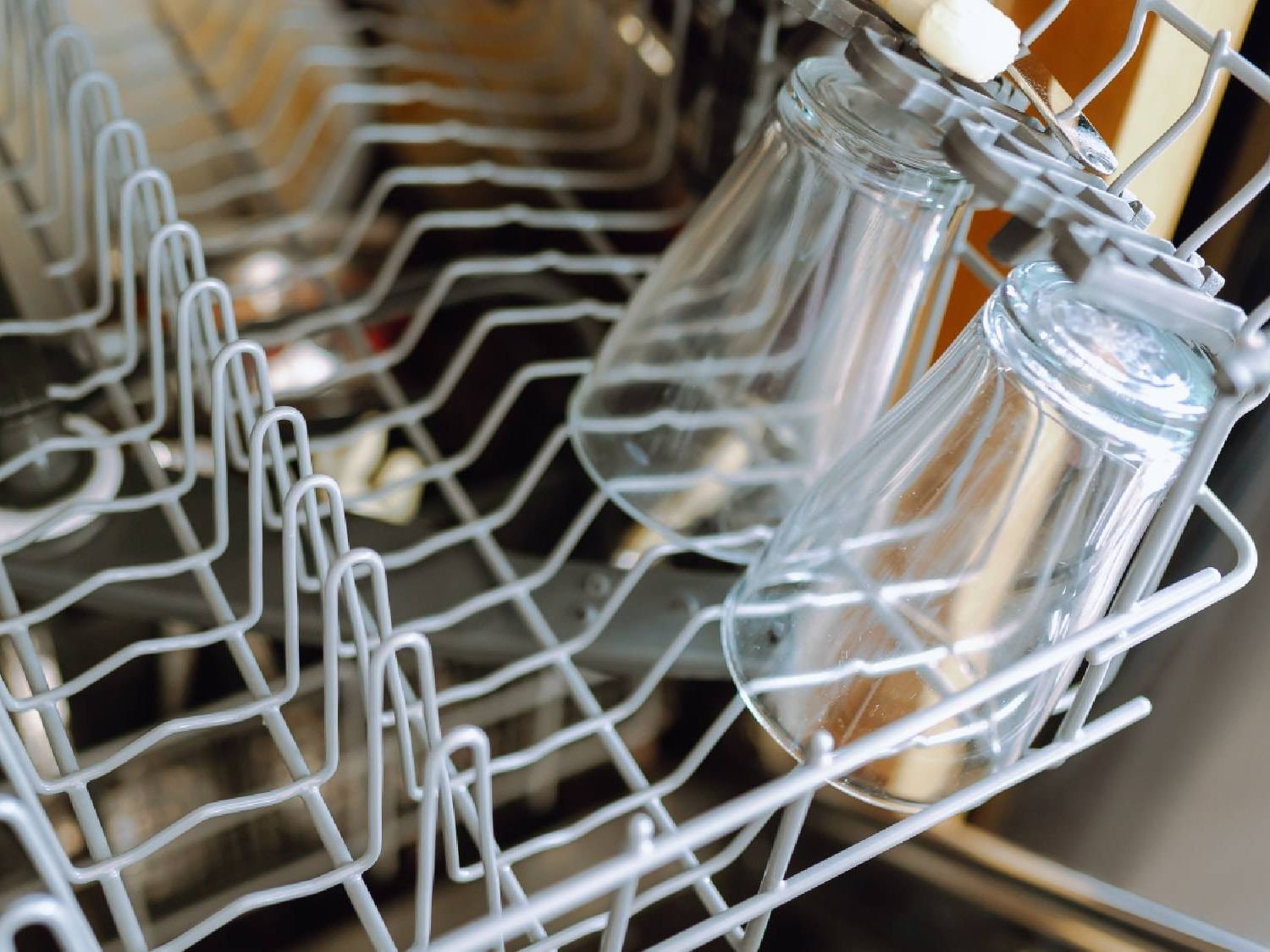
Open the dishwasher at the end of a cycle and a stale, slightly sour smell comes out with the steam. The glasses on the top rack look dull, as if someone had breathed on them, and a few plates feel faintly gritty. Nothing about the machine seems broken. It runs, it drains, it beeps when it finishes, yet the dishes come out in worse shape than they went in.
A dishwasher is easy to forget as a cleaning problem because it is supposed to clean itself. In practice it is a warm, wet, enclosed box that collects food scraps, soap, and minerals on every cycle, and it only dries out if someone leaves the door open. A kitchen can be spotless on the surface, whether wiped down by the household or by cleaning services, and the dishwasher inside it can still be the dirtiest thing in the room.
The smell and the film have different causes, and each one has a fix that takes about as long as a cup of coffee.
Where the Smell Comes From
Almost every dishwasher has a filter near the bottom of the tub, and it exists to catch food particles so they don’t circulate with the wash water or block the drain. When it clogs, the debris sits in warm, damp conditions for days. That is the source of most sour, rotting smells, and it is also the first place to look.
Pull out the lower rack and look at the floor of the machine. Many models have a cylindrical or flat filter that twists out; the manual shows how. Rinse it under warm water, scrub it gently with an old toothbrush, and check the area beneath it for bits of glass, labels, and olive pits. A slimy brown film on the filter is normal in a machine that hasn’t been cleaned in a while.
Next, check the rubber gasket around the door. Water and food residue collect in its folds, and mould can grow there. Wipe the full length of it with a cloth and a little dish soap, and wipe the bottom edge of the door as well. Look at the spray arms too. Small holes along the arms can clog with food or mineral scale, so remove the arms if the manual allows and poke the holes clear with a toothpick.
A smell that persists after all of this may come from the drain, and wiping the outside of the door does nothing for the filter or the hose. Households that want the dishwasher included in a kitchen clean can ask cleaning services chapel hill about it in advance, since appliance interiors are sometimes treated as an extra, not part of the standard visit.
The Cloudy Film: Minerals, Soap, or Damage
The haze on glasses has three possible causes, and they are easy to confuse.
The first is hard water. Tap water carries dissolved calcium and magnesium, and as a wash cycle dries, those minerals stay behind as a thin white film. It is most obvious on glass and dark plastic, and it feels slightly rough.
The second is detergent residue. Too much detergent, or a cycle too short to rinse it away, leaves a soapy film that often looks milky or streaky and can feel slick. Using the full dose in soft water is a common mistake, because the extra product has nothing to react with and stays on the dishes.
The third is etching, which is permanent. Over time, a combination of very soft water, too much detergent, and hot cycles can wear into the surface of glass and leave an iridescent or cloudy look that no cleaner will remove.
There’s a simple test. Put a cloudy glass in a bowl of white vinegar for about five minutes, then rinse it and look at it in good light. If it comes out clear, the film was mineral. If it still looks cloudy but feels smooth, the cause is probably etching, which cannot be fixed. If it feels greasy or slick, detergent residue is likely, and a smaller dose will help.
Habits That Quietly Cause Problems
Some common habits make the film and the smell worse. Rinsing dishes thoroughly before loading them is one, because modern detergents contain enzymes that work on food soil and may leave glassware cloudier when there is little to react with. Scraping plates is enough. Another is running short or eco cycles every day. They save energy, but they use cooler water and often don’t dissolve detergent or flush debris as well, so residue builds up inside the machine over time.
Overloading blocks the spray arms and leaves dishes dirty, while an underfilled machine run at the lowest setting can leave the interior damp for longer. Leaving the door shut after every cycle holds moisture inside and encourages mold along the gasket, so a dishwasher left closed all week, even in a kitchen cleaned weekly by CJS Cleaning Solutions, can be smelling musty again within days. These are worth passing to anyone loading the machine, family or cleaning services.
Rinse aid matters for hard-water spotting. It helps water sheet off dishes instead of drying in droplets. If the dispenser is empty, refill it, and if the water is very hard, a dishwasher salt or a softener built into the machine, where available, will reduce mineral film.
A Monthly Clean That Works
Once the filter, gasket, and spray arms are clean, run a hot maintenance cycle with an empty machine. Use a dishwasher cleaner made for the purpose, or follow what the manufacturer recommends. Citric acid, sold as a powder, is a common and gentle descaler for mineral film.
Be careful with vinegar. A cup of white vinegar on the lower rack is often suggested, but frequent use can wear on rubber gaskets and hoses over time, so check the manual before making it a habit. Never combine vinegar with bleach or any chlorine product, because the mixture releases dangerous gas. Bleach itself can damage some stainless interiors and should be used only if the manufacturer allows it.
For a heavily neglected machine, expect to repeat the filter and descaling steps a couple of times before the smell and film clear completely.
When the Smell Points to the Drain
A machine that stays musty after a thorough clean may have a drainage problem. Standing water at the bottom after a cycle points to a blocked hose, a clogged air gap, or a drain connection that needs attention, and a plumber, not a longer visit from CJS Cleaning Solutions, is the person to call.
If you have a garbage disposal, check that the knockout plug was removed when the dishwasher was installed, and run the disposal before the dishwasher so water can leave freely. A drain hose should loop up high under the counter before reaching the sink drain, which prevents dirty water from flowing backward into the machine. A smell like sewage rather than stale food can also come from the sink drain, so run water down it and clean the trap or the strainer.
Don’t pour drain cleaner into a dishwasher or its drain without checking the manual, and never mix chemicals. If the machine leaks, shows an error code for drainage, or makes grinding noises, switch it off and have a technician check it.
A Short Routine to Stop It Coming Back
Prevention is far easier than cleaning. Scrape plates into the bin instead of rinsing them under the tap, and run the hot tap at the sink until the water is hot before starting a cycle so the dishwasher begins with warm water. Run full loads, use the recommended amount of detergent, and keep the rinse aid topped up.
Clean the filter every month or two, depending on how often the machine runs, and wipe the gasket at the same time. After the last cycle of the day, leave the door slightly ajar so the interior can dry, which removes the damp that smells depend on.
A short list of these tasks, pinned inside the cupboard door, makes the monthly routine easier to keep and tells CJS Cleaning Solutions which parts of the machine the household is already covering.
Small Habits, Clear Glasses
A smelly dishwasher with cloudy glasses usually has a clogged filter, a damp gasket, and a mix of hard-water film and too much detergent. Cleaning those parts, descaling occasionally, scraping instead of pre-rinsing, and letting the machine dry between cycles will fix most cases. Whether the kitchen is looked after by you or by cleaning services, the dishwasher needs its own small routine, and a few minutes a month keeps both the smell and the film from coming back.
 Admin
 Sky News Agency