

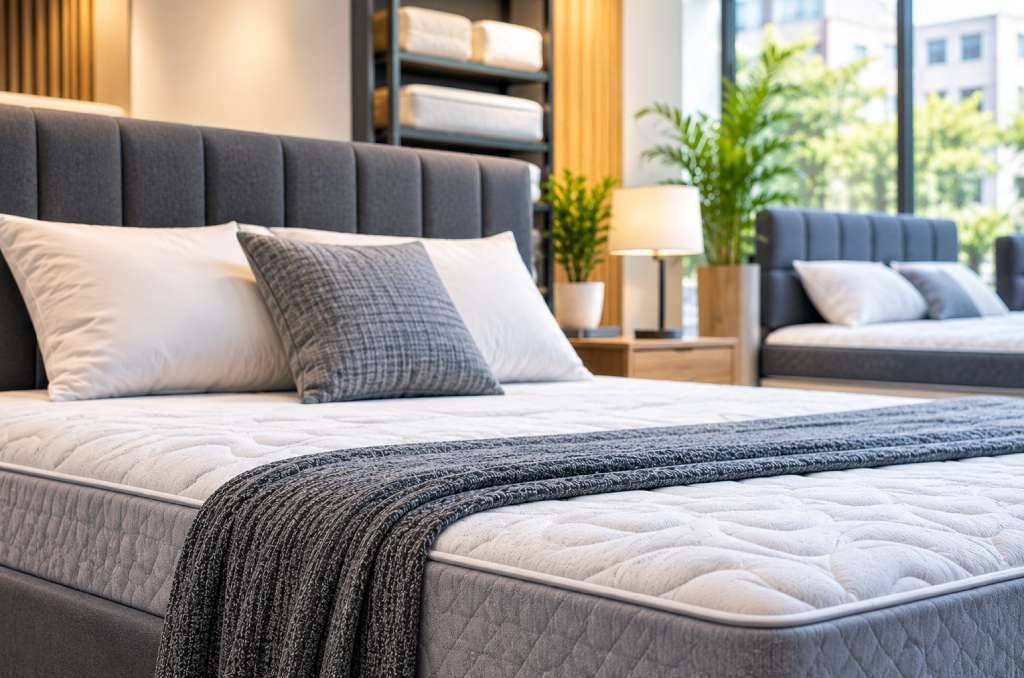
Choosing the right mattress quality and materials directly affects how well your spine stays aligned and how deeply you rest at night. Poor materials sag quickly, forcing your back muscles to work overtime instead of healing while you sleep. Understanding the difference between foam, springs, and latex helps you pick a bed that prevents morning pain and keeps you comfortable for years.
Have you ever woken up feeling like you ran a marathon in your sleep? Your eyes are heavy. Your lower back feels stiff as a wooden board. You blame your busy schedule or a bad pillow, yet the real culprit sits right under your fitted sheet.
If the inside of your mattress lacks strong support, your body pays the price every single morning.
How Does Mattress Quality Affect Your Spine While You Sleep?
High-quality mattresses keep your spine in a straight, natural line from your neck to your hips, allowing your back muscles to fully relax. Low-quality beds sag under your heaviest body parts, bending your spine into unnatural curves that cause morning stiffness, pinched nerves, and chronic lower back pain.
Your spine is not a straight stick. It has gentle, natural curves that need steady support when you lie down. Imagine laying a heavy bowling ball on a thin, cheap sponge. The sponge squishes completely flat under the weight. Now imagine placing that same bowling ball on a thick, dense block of memory foam. The foam cradles the ball without letting it hit the floor.
Cheap beds use low-density foams and weak wires that act just like that thin sponge. When you lie on your side or back, your hips and shoulders sink too deep. Your spine bends like a banana all night long. Your muscles stay tense because they are trying to hold your bones in place.
A well-built bed pushes back just enough to keep your back flat and happy, letting you wake up refreshed instead of sore.
Which Mattress Materials Offer the Best Comfort and Support?
Memory foam, natural latex, and pocketed coils offer the best balance of pressure relief and spinal support. Memory foam hugs your joints to ease soreness; latex provides a cool, bouncy lift that prevents sinking; and pocketed coils deliver sturdy airflow and targeted pushback for heavier body areas.
Walking into a furniture store or browsing online can feel overwhelming when every tag promises cloud-like rest. To keep things simple, look at what’s inside the fabric cover. Different materials solve different sleep problems.
- Memory Foam: This material acts like a warm hug. It uses your body heat to soften and mold around your shoulders and hips. It is fantastic if you wake up with sore joints, though cheaper versions can trap heat.
- Natural Latex: Made from rubber tree sap, latex feels bouncy and responsive. Unlike memory foam, latex lets you sleep on it rather than in It keeps you cool and bounces back the second you roll over.
- Innerspring (Pocketed Coils): Modern spring beds wrap each metal coil in its own fabric pocket. This lets every spring move on its own. They give you strong edge support and let fresh air flow freely through the bed.
- Hybrid: A hybrid combines the best of both worlds. It puts a thick layer of foam or latex on top of pocketed coils. You get soft pressure relief on the surface with sturdy bounce underneath.
When people start shopping around and checking the mattress price in bd, they often notice huge gaps between basic spring beds and thick hybrids.
Paying a little more upfront usually means getting denser foams and thicker steel coils that will not dip in the middle after just two years.
How Do Different Mattress Materials Compare Side by Side?
Memory foam wins at relieving joint pressure and blocking partner movement, while innerspring coils excel at cooling airflow and bounce. Latex offers the longest lifespan and natural cooling, whereas hybrid mattresses combine strong spinal support with plush surface comfort for almost every sleeping style.
Picking the right material comes down to how you sleep and what bothers you at night. Use this quick chart to match your sleep habits with the right build.
| Mattress Material | Best For | Spinal Support Level | Cooling & Airflow | Average Lifespan |
| Memory Foam | Side sleepers & joint pain | Medium to High | Low to Medium | 6 to 8 Years |
| Natural Latex | Hot sleepers & eco-buyers | High | High | 10 to 12 Years |
| Pocketed Coils | Back & stomach sleepers | High | Very High | 5 to 7 Years |
| Hybrid | Combination sleepers & couples | Very High | High | 7 to 10 Years |
What Simple Steps Help You Choose the Right Mattress Today?
You can pick the right mattress by matching firmness to your primary sleep position, checking foam density labels, and testing how easily you can change positions. Side sleepers need softer tops for shoulder relief, while back and stomach sleepers require firmer bases to stop hip sinking.
You do not need to be a sleep scientist to buy a great bed. Just follow these simple rules before you hand over your money:
- Match your sleep style: If you sleep on your side, pick a medium-soft bed so your shoulders do not get crushed. If you sleep on your back or stomach, use a medium-firm mattress to keep your hips from drooping.
- Do the roll-over test: Lie down on the bed for at least ten minutes in your normal sleep position. Try rolling from your back to your side. If you feel stuck in quicksand, the foam is too soft.
- Check the thickness: Aim for a mattress that is at least 10 to 12 inches thick. Thinner beds often lack the deep support layers adults need for proper spine alignment.
- Look at the warranty: A brand that trusts its materials will offer at least a 7- to 10-year warranty against deep sagging.
- Test the edges: Sit on the very edge of the bed to tie your shoes. If the side collapses completely under you, the internal structure is too weak.
 Sky News Agency
 IQ newswire