

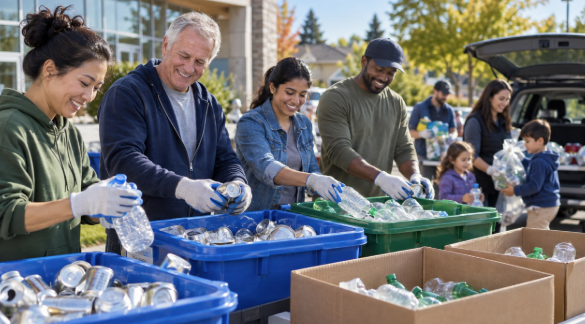
Community fundraising initiatives play an important role in supporting schools, charities, sports teams, and local organizations. While traditional fundraising often involves selling products or collecting donations, beverage container collection offers another practical approach. By gathering eligible empty bottles and cans, community groups can raise funds while encouraging environmentally responsible habits.
Bottle collection activities combine financial support with waste reduction, making them a useful initiative for organizations looking to involve residents in community projects.
Understanding How Community Bottle Drives Work
A bottle drive is a collection activity in which volunteers gather eligible beverage containers from households, businesses, or public collection points. These containers are then taken to authorized facilities where applicable deposits can be recovered.
Organizations searching online for “bottle depot Calgary” can explore collection and return options when planning their fundraising activities.
Funds generated through refundable deposits can support different community needs, depending on the number of containers collected and the applicable deposit values.
Why Bottle Drives Are Effective Fundraising Activities
Bottle drives offer several advantages compared with conventional fundraising methods.
Accessible for Different Organizations
Schools, sports clubs, charities, and neighbourhood associations can organize collection activities without requiring expensive equipment or complicated arrangements.
Encouraging Community Participation
Residents can contribute by donating eligible empty beverage containers. This allows people to support local causes through a simple everyday activity.
Supporting Environmental Awareness
Bottle drives encourage participants to separate recyclable packaging from general household waste. They also demonstrate how responsible disposal can provide environmental and financial benefits.
Flexible Fundraising Opportunities
Organizations can arrange one-day collection events, weekend activities, or ongoing donation programmes based on available volunteers and storage space.
Planning a Successful Community Collection
Good organization is essential for running an effective collection activity. Before starting, organizers should set clear objectives and decide how the collected funds will be used.
Consider the following steps:
- Choose a fundraising goal: Identify whether the money will support school activities, community projects, equipment purchases, or charitable work.
- Recruit volunteers: Assign responsibilities for collecting, sorting, transporting, and organizing containers.
- Set collection dates: Choose convenient dates that allow residents sufficient time to participate.
- Arrange storage: Identify a safe, accessible location to store collected containers.
- Plan transportation: Organize suitable vehicles to move larger quantities to a collection facility.
Clear communication helps volunteers understand their responsibilities and keeps the activity organized.
Selecting a Suitable Collection Facility
Choosing an appropriate return location is an important part of planning. Organizations comparing bottle drive services should consider collection arrangements, accepted container types, operating hours, and transportation requirements.
Confirm procedures before collecting large quantities. This helps organizers understand how containers should be prepared and what arrangements may be available for community fundraising collections.
A convenient location can also reduce transportation time and make the overall activity easier to manage.
Promoting Participation Across the Community
Effective promotion can help increase the number of residents participating in a fundraising drive.
Schools can distribute notices to parents, while neighbourhood groups can share collection information through community boards and social media.
Organizers should clearly communicate:
- The purpose of the fundraising activity.
- Accepted beverage container types.
- Collection dates and locations.
- Volunteer contact information.
- How the funds will support the intended project.
Clear instructions encourage participation and reduce confusion.
Managing Containers Safely and Efficiently
Large collections require suitable storage and handling procedures. Volunteers should use durable bags or containers and avoid creating unstable piles of packaging.
Containers should be emptied before storage, and collection areas should remain clean and organized. Heavy bags should be handled carefully to prevent injuries.
Separating materials according to collection guidelines can also make transportation and processing more efficient.
Long-Term Benefits of Community Bottle Drives
Regular collection activities can help organizations develop lasting relationships with residents and local businesses. They also provide opportunities to teach children and adults about recycling, resource conservation, and community responsibility.
When fundraising and environmental awareness work together, a simple container collection can become a valuable community initiative.
Final Thoughts
Community bottle drives offer an accessible way for organizations to raise funds while encouraging responsible recycling habits. With proper planning, volunteer coordination, and suitable collection arrangements, these activities can support meaningful local projects.
By participating in organized container collections, Calgary residents can support community fundraising while reducing waste and recovering valuable recyclable materials.
 Admin