

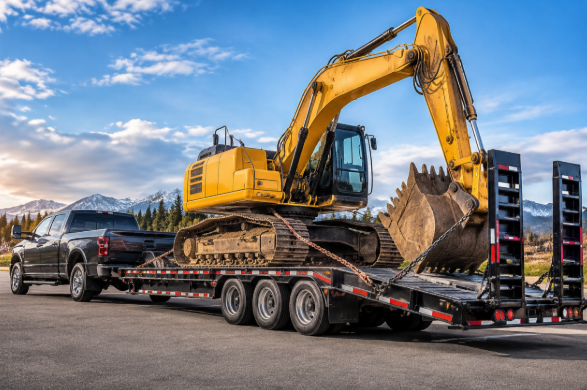
Transporting heavy machinery and oversized freight requires more than a capable truck and an experienced driver. The trailer plays a major role in managing cargo dimensions, loading requirements, road clearance, and overall transportation safety. Understanding the different trailer configurations can help businesses make better decisions when moving equipment over long distances.
What Makes a Step Deck Trailer Useful?
A step deck trailer has two deck levels, allowing it to carry taller freight than many conventional flatbed configurations. The lower deck helps reduce the overall height of loaded cargo, which can be beneficial when transporting machinery that may otherwise face height restrictions.
These trailers are often used for construction equipment, agricultural machinery, industrial components, and other freight that requires additional vertical clearance. Their design also offers flexibility for different loading and unloading situations, depending on the equipment being transported.
Understanding Trailer Options for Heavy Freight
Choosing a trailer depends on the shipment’s dimensions, weight, and loading requirements. Flatbeds are commonly used for cargo that can be loaded from the sides or above, while lower-deck configurations may be better suited for taller machinery.
Businesses researching step deck trucking companies should consider trailer capacity, equipment availability, transportation experience, route planning, and cargo securement practices. Evaluating these factors can help determine whether the available trailer configuration fits a particular shipment.
Common Equipment Transported Using Step Decks
Step deck trailers suit many types of machinery and freight that require additional clearance. Common cargo may include:
- Excavators and construction machinery
- Agricultural tractors and harvesting equipment
- Industrial machinery and manufacturing units
- Generators and compressors
- Large building materials and structural components
Before arranging transportation, freight dimensions should be measured accurately. The cargo’s length, width, height, and weight help determine the trailer configuration, securement equipment, and route requirements.
Importance of Load Securement and Route Planning
Heavy freight must be secured properly to reduce the risk of shifting during transit. Chains, straps, binders, and other securement devices should be selected according to the cargo’s weight and characteristics. Load distribution is also important because an improperly balanced shipment can affect vehicle stability and handling.
Route planning requires attention to bridge clearances, road restrictions, traffic conditions, construction zones, and provincial transportation regulations. Depending on cargo dimensions and weight, permits or additional transportation arrangements may be necessary.
Planning these details before pickup helps reduce avoidable delays and improves overall freight transportation coordination.
Final Thoughts
Transporting heavy and oversized equipment requires careful consideration of trailer design, cargo dimensions, securement requirements, and route conditions. Step deck configurations provide a practical option for many shipments involving taller machinery and industrial freight. By understanding trailer capabilities and preparing transportation details in advance, businesses can make more informed decisions and support safer, more efficient freight movement.