

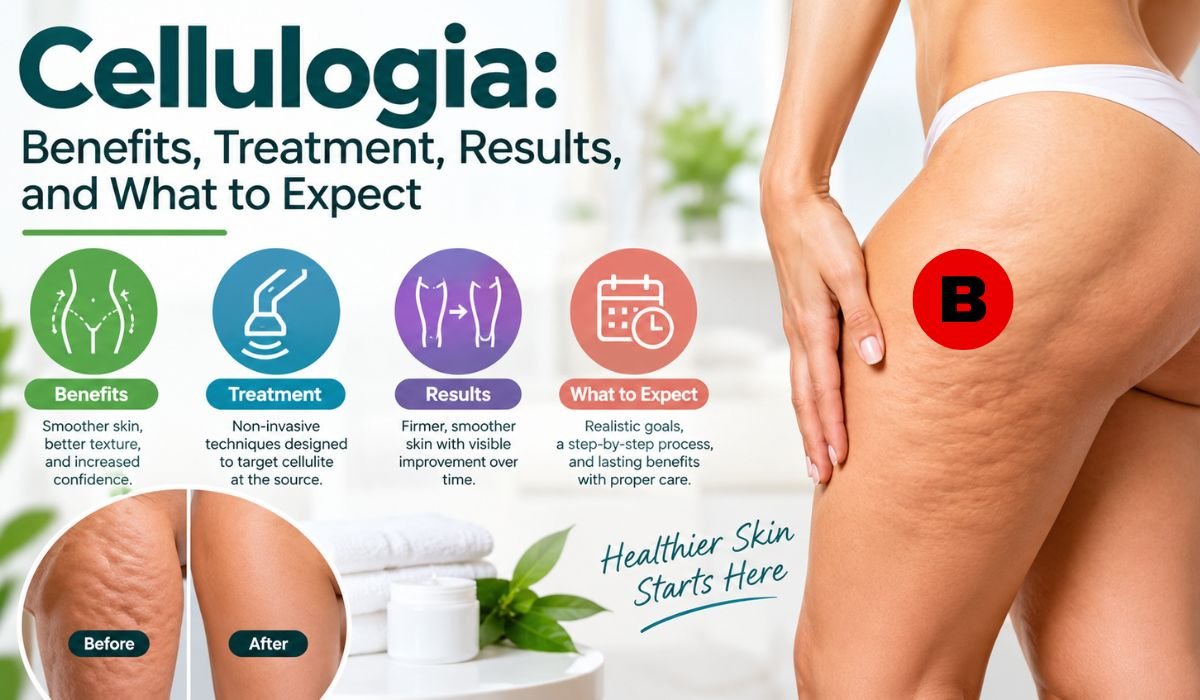
Cellulogia is a term that’s increasingly appearing in conversations about non-invasive cosmetic body treatments. It’s generally associated with techniques that combine mechanical massage, rollers, and controlled suction, particularly for people who want to improve the appearance of cellulite or achieve smoother-looking skin without undergoing surgery.
There’s an important point to understand before looking at the benefits or results: Cellulogia isn’t a universally standardized medical term. Different providers may use it to describe treatments that resemble vacuum massage, mechanical massage, or roller-based cellulite procedures. As a result, the actual device, technique, treatment settings, and claims can vary from one provider to another.
Established medical sources recognize mechanical massage and vibration as approaches that may temporarily improve the appearance of cellulite. However, research has produced mixed findings, and any improvement shouldn’t be confused with permanent cellulite removal or significant weight loss.
This guide takes a closer look at what Cellulogia means, how the treatment works, what people may expect during a session, possible benefits and side effects, how long results can last, and how it compares with other cosmetic procedures.
Quick Bio Information
Treatment Type: Non-Invasive Cosmetic Body Treatment
Main Purpose: Improving The Appearance Of Cellulite And Skin Texture
Common Technique: Mechanical Massage With Rollers And Controlled Suction
Common Treatment Areas: Thighs, Buttocks, Hips, Abdomen, And Some Arm Areas
Surgery Required: No
Incisions Required: No
Anesthesia: Generally Not Required
Typical Sensation: Firm Pressure, Rolling, And Suction
Possible Temporary Effects: Redness, Tenderness, Soreness, Or Bruising
Weight-Loss Treatment: No
Primary Fat-Removal Treatment: No
Permanent Cellulite Cure: No
Treatment Course: Often Involves Multiple Sessions
Maintenance: May Be Needed If Improvement Occurs
Results: Can Vary Significantly Between Individuals
Evidence: Research On Mechanical Massage For Cellulite Has Produced Mixed Results
What Is Cellulogia?
In general, Cellulogia refers to a machine-assisted cosmetic treatment in which controlled suction and mechanical rollers are used to massage selected areas of the body. The treatment device may gently lift a fold of skin while rollers move over the area, creating a repeated kneading or massage effect.
The idea is similar to established mechanical cellulite treatments. Rather than relying entirely on a practitioner’s hands, the machine delivers a consistent pattern of pressure and movement across the skin.
The U.S. Food and Drug Administration recognizes mechanical massage and vibration technologies as procedures that may temporarily improve the appearance of cellulite. That doesn’t mean every product or service marketed under the Cellulogia name has identical technology or identical evidence behind it.
That’s why the name alone shouldn’t be the deciding factor when considering treatment. A prospective client should ask which device is being used, what the device is intended to do, and how the provider performs the procedure.
How Does Cellulogia Work?
During a typical Cellulogia Treatment, controlled suction gently draws the skin toward the treatment head while rollers or another mechanical component move across the selected area. The result is a repeated physical massage of the skin and superficial tissue.
The proposed cosmetic effect is linked partly to the physical manipulation of the tissue. Mechanical pressure and movement can temporarily influence the way treated skin looks, while changes in tissue fluid may also contribute to a smoother appearance.
The FDA describes mechanical massage and vibration technologies as capable of temporarily improving cellulite appearance. These treatments aren’t intended to permanently change every structural factor responsible for cellulite.
Treatment intensity matters, too. More suction doesn’t automatically mean better results. Excessive pressure can increase discomfort and the chance of bruising, so the settings should be appropriate for the person’s skin, treatment area, and tolerance.
What Is Cellulogia Used For?
The most common reason people consider Cellulogia is the appearance of Cellulite. The familiar dimpling or uneven texture often appears on the thighs, hips, buttocks, and abdomen, although it can be visible in other areas as well.
Some providers may also promote Cellulogia for smoother-looking skin or cosmetic body contouring. In that context, however, body contouring refers to changes in appearance rather than substantial fat removal.
That’s an important distinction. Cellulogia isn’t designed to replace a healthy approach to weight management, nor should it be confused with procedures such as liposuction that physically remove fat.
The FDA also makes clear that non-invasive body contouring isn’t a treatment for obesity and doesn’t provide the health benefits associated with weight loss.
Understanding Cellulite Before Treatment
Understanding cellulite makes it easier to set realistic expectations for any treatment. Cellulite is extremely common and isn’t simply a consequence of being overweight.
The appearance develops partly from the way fat beneath the skin interacts with fibrous connective-tissue bands. These structures can pull the skin downward while underlying fat pushes upward, producing the familiar dimples or uneven surface.
Several factors can influence how visible cellulite becomes. These include genetics, hormones, age, sex, skin thickness, connective-tissue structure, and body composition.
This also explains why cellulite can affect people who are physically active or have a healthy body weight. Losing weight may make cellulite less noticeable in some individuals, but it doesn’t guarantee completely smooth skin.
In other words, having cellulite isn’t necessarily a sign that someone is unhealthy. It’s a common feature of normal human skin and underlying tissue.
What Are The Potential Benefits?
The main potential benefit of Cellulogia is a temporary cosmetic improvement in the appearance of treated skin. Mechanical massage may make cellulite appear less pronounced, particularly when changes in tissue fluid or skin appearance contribute to the effect.
Some people may also appreciate the massage-like experience. Since the treatment doesn’t involve surgical incisions, it can appeal to people who want a cosmetic procedure without an operation.
Still, the evidence deserves careful attention. The American Academy of Dermatology reports that research into endermologie-style mechanical massage has produced mixed findings. Some studies have reported improvements, while others have found little or no meaningful difference.
Where improvements do occur, they tend to be temporary. For that reason, Cellulogia is better described as a cosmetic management option than as a guaranteed cellulite solution.
Can Cellulogia Reduce The Appearance Of Cellulite?
It may make cellulite look less noticeable for some people, but that doesn’t mean the treatment permanently removes cellulite.
Mechanical massage physically manipulates the skin and underlying superficial tissue. This can temporarily change the appearance of the treated area. However, the connective-tissue structure involved in cellulite remains.
The FDA describes mechanical massage and vibration as technologies that may temporarily improve cellulite appearance. Mayo Clinic similarly notes that massage-based approaches may produce some improvement, but the results aren’t considered permanent.
Individual responses can be very different. Someone with mild cellulite and relatively elastic skin may notice a different result from someone with deeper dimpling or more significant skin laxity.
A realistic goal is therefore smoother-looking skin or temporarily less noticeable dimpling, rather than completely eliminating cellulite.
Can It Improve Skin Texture And Firmness?
A treated area may look smoother or feel different after mechanical massage. Changes in tissue fluid and physical manipulation can contribute to this temporary effect.
Firmness is a more complicated issue. Skin elasticity depends on collagen, elastin, age, genetics, sun exposure, and the underlying structure of the skin. Mechanical massage shouldn’t be described as a proven method for dramatically rebuilding collagen or permanently tightening loose skin.
Some cosmetic marketing can make this distinction difficult to spot. Claims about dramatic skin tightening should therefore be considered carefully, particularly when they’re based solely on massage.
The FDA notes that certain mechanical treatments may temporarily influence the appearance of cellulite through skin manipulation. That is different from proving a major, permanent change in skin structure.
Cellulogia And Body Contouring
The phrase Body Contouring covers several very different types of cosmetic treatment. Some procedures are designed to reduce localized fat, while others primarily address skin appearance, cellulite, or tissue texture.
Cellulogia-style mechanical massage fits more naturally into the latter category. It can potentially change the way a treated area looks without physically removing a substantial quantity of fat.
This is why it shouldn’t be compared directly with liposuction. Liposuction is a surgical procedure in which fat is physically removed, while Cellulogia is a non-invasive mechanical treatment.
The FDA emphasizes that non-invasive body-contouring procedures aren’t weight-loss treatments. Even technologies designed specifically to reduce localized fat aren’t equivalent to losing weight throughout the body.
If significant fat reduction is the main objective, a person should discuss appropriate options with a qualified healthcare professional rather than expecting massage to provide the same result.
Common Treatment Areas
Cellulogia is most often associated with areas where cellulite tends to be visible, particularly the thighs, buttocks, and hips. Depending on the equipment and provider, treatment may also be offered for the abdomen or upper arms.
Before treatment, the skin should be examined carefully. Areas with open wounds, active infections, substantial irritation, or unexplained swelling shouldn’t simply be treated without appropriate assessment.
The thighs, hips, buttocks, and abdomen remain particularly relevant because they’re among the areas where cellulite most commonly appears.
Treatment should also be individualized. Not every body area responds in exactly the same way, and the appropriate suction or mechanical pressure can vary according to the location.
What Happens During A Cellulogia Session?
A typical appointment begins with a consultation. The provider should discuss what the person hopes to achieve, identify the areas they want treated, and ask about relevant medical or skin conditions.
Once the treatment begins, the device is moved across the selected area while suction gently lifts the skin and rollers manipulate it. Many people describe the sensation as similar to a firm or deep massage.
The practitioner may adjust the treatment intensity depending on the area and the person’s comfort. There’s no reason to assume that the strongest possible suction will produce the best result.
Because Cellulogia isn’t a standardized medical treatment name, session details can differ. Some established mechanical massage systems use specialized clothing or coverings to help the treatment head move smoothly over the skin.
The provider should explain the exact process before starting, especially if the person is unfamiliar with the equipment.
Treatment Time And Number Of Sessions
There isn’t a single official Cellulogia schedule that applies everywhere. Treatment time depends on the equipment, the size of the treatment area, and how many areas are being treated during one appointment.
Established mechanical cellulite treatments often use a series of sessions rather than relying on one appointment. The American Academy of Dermatology notes that endermologie sessions commonly last around 45 minutes and may be repeated as part of a treatment course.
Some commercial programs advertise six, ten, twenty, or more sessions. Those numbers shouldn’t be interpreted as universal medical requirements, however. Different machines and protocols can produce different schedules.
A more useful question is how the provider intends to measure progress. If someone is purchasing a package, they should understand what happens if the expected cosmetic improvement doesn’t occur.
When Will You See Results?
Some people may notice that their skin looks smoother shortly after a treatment. Such changes can be temporary and shouldn’t automatically be interpreted as evidence of permanent structural improvement.
More noticeable cosmetic changes, when they occur, may become apparent after repeated sessions. Even then, research doesn’t support a guarantee that every person will see a meaningful improvement.
The American Academy of Dermatology reports mixed findings from studies of endermologie-style mechanical massage. Some research has shown improvement, while other studies have not found a significant difference.
Several personal factors may also influence the visible outcome. Skin elasticity, cellulite severity, age, genetics, body composition, and treatment technique can all play a role.
For that reason, a responsible provider should describe Cellulogia Results as variable rather than promising a specific before-and-after transformation.
How Long Do Results Last?
There isn’t a universal answer to how long Cellulogia Results last. The duration depends partly on what caused the visible improvement in the first place.
If some of the change comes from temporary tissue manipulation or fluid movement, the effect may fade relatively quickly. Other cosmetic improvements may last longer, but there isn’t enough consistency in the evidence to promise a fixed timeframe.
The American Academy of Dermatology notes that people who respond to endermologie-style treatment may need continued sessions to maintain improvement, and cellulite can become visible again once treatment stops.
This makes maintenance an important consideration before committing to a long treatment plan. Anyone considering Cellulogia should ask how often maintenance is expected and what ongoing costs may be involved.
Is Cellulogia Painful And What Are The Side Effects?
Cellulogia may feel like firm pressure, rolling, and suction. The experience varies from person to person. Some people may find it relaxing, while others may prefer a lower level of pressure.
Temporary redness, tenderness, soreness, discomfort, and bruising are possible. The FDA lists pain or discomfort and bruising among potential complications associated with mechanical massage or vibration technologies.
A treatment shouldn’t need to be extremely painful to be effective. If the pressure becomes uncomfortable, the practitioner should be able to adjust the settings.
Persistent pain, significant swelling, unusual skin changes, or symptoms that seem disproportionate to the treatment shouldn’t simply be ignored. Appropriate professional advice should be sought when concerning symptoms occur.
Who Should Be Cautious With Cellulogia?
Non-invasive doesn’t mean risk-free or suitable for everyone. People with certain medical or skin conditions may need to avoid mechanical suction or obtain professional advice before treatment.
Particular caution may be appropriate for people with open wounds, active skin infections, recent injuries, significant inflammation, certain vascular conditions, bleeding concerns, or unexplained swelling.
The FDA also identifies conditions such as vibrational or pressure urticaria as situations in which mechanical massage or vibration may be inappropriate. In these conditions, pressure or vibration can trigger symptoms such as itching, burning, or hives.
Pregnancy is another situation in which cosmetic procedures should be discussed with an appropriate healthcare professional rather than assumed to be safe.
If you’re taking medications that affect bleeding or have a condition involving circulation, blood vessels, skin sensitivity, or swelling, mention it during the consultation.
Cellulogia Compared With Other Treatments
Cellulogia differs from Radiofrequency Treatment, which uses electromagnetic energy to heat tissue. It also differs from Cryolipolysis, which uses controlled cooling to target fat cells.
Traditional massage is different again. It primarily relies on a practitioner’s hands, while Cellulogia-style treatment uses a device to deliver repeated mechanical movement and suction.
These differences matter because the treatments are intended to address different concerns. A procedure designed for localized fat reduction isn’t automatically a cellulite treatment, and a treatment intended to improve skin texture isn’t necessarily a fat-reduction procedure.
Mayo Clinic notes that cellulite treatments vary considerably in their mechanisms, evidence, side effects, and durability. Comparing treatments based solely on marketing claims can therefore be misleading.
The best comparison begins with the actual goal: cellulite appearance, skin laxity, localized fat, or another cosmetic concern.
What Should You Do After Treatment?
After an uncomplicated Cellulogia session, many people can return to their normal activities. However, specific aftercare instructions can vary depending on the equipment, treatment intensity, and how the skin responds.
Following the provider’s instructions is more sensible than assuming that extreme hydration or a special detox routine is necessary. Normal hydration is part of general health, but there isn’t a reason to treat excessive water consumption as a requirement for successful cellulite treatment.
Regular movement and a balanced diet remain valuable for overall health. Exercise, particularly activities that improve muscle tone, may also make cellulite less noticeable in some people.
At the same time, healthy habits can’t guarantee cellulite-free skin. Genetics and connective-tissue structure continue to influence how cellulite appears.
Can Cellulogia Permanently Remove Cellulite?
Permanent cellulite removal shouldn’t be expected from Cellulogia. Mechanical massage may temporarily improve the appearance of dimpling, but it doesn’t eliminate the underlying connective-tissue structures involved in cellulite.
Cleveland Clinic explains that cellulite can’t be completely removed, although its appearance can be reduced through certain treatments and lifestyle approaches.
That distinction is important when evaluating advertisements. A treatment can provide a worthwhile cosmetic improvement without being permanent.
For Cellulogia, a more realistic expectation is smoother-looking skin or temporarily reduced visibility of cellulite rather than a complete and lasting disappearance.
How To Choose A Cellulogia Provider
Because Cellulogia isn’t a standardized medical treatment name, finding out exactly what you’re receiving is particularly important.
Ask the provider which device they use, what the device is designed to do, how they were trained, how many sessions they typically recommend, and how they evaluate results.
The provider should also ask about your health history and explain potential side effects. A proper consultation should give you enough information to decide whether the treatment is appropriate rather than simply encouraging you to purchase a package.
Be particularly careful with promises of permanent cellulite removal, dramatic weight loss, guaranteed results, or substantial fat destruction through massage alone. Those claims don’t match the more cautious descriptions provided by major medical and regulatory sources.
Red Flags To Watch For When Considering Cellulogia
Cosmetic treatments are often marketed with impressive before-and-after photographs and confident promises. Those images can be useful for showing what one individual experienced, but they don’t guarantee that another person will achieve the same result.
A provider should be willing to explain limitations as well as benefits. Claims that Cellulogia permanently removes cellulite or produces major weight loss should be treated with skepticism.
Another warning sign is pressure to purchase a large number of sessions before you’ve had a chance to understand the equipment, expected results, possible side effects, and total cost.
A trustworthy consultation should be transparent. You should know what the treatment is, what it can realistically do, and what happens if the expected improvement doesn’t occur.
What Should You Expect From Your First Treatment?
Your first Cellulogia appointment should begin with realistic expectations rather than promises of a dramatic transformation.
The practitioner should discuss your goals and explain the procedure before treatment starts. During the session, you may feel firm rolling and suction, and the intensity should be adjusted to remain tolerable.
Temporary redness or tenderness can occur afterward. If the treated area looks smoother immediately, remember that an early visual change doesn’t necessarily represent a lasting result.
The first appointment can also help you determine how your skin responds. That’s useful information before deciding whether additional sessions are worth pursuing.
Cellulogia Benefits And Limitations
Cellulogia’s appeal comes largely from its non-invasive nature. There are no surgical incisions, and the procedure is based on mechanical massage rather than removing tissue.
For some people, it may temporarily improve the appearance of cellulite or make treated skin look smoother. The treatment may also provide a massage-like experience without the recovery associated with surgery.
The limitations are just as important. Research into mechanical cellulite treatments has produced mixed findings, results aren’t guaranteed, and improvements may be temporary. Multiple treatments or maintenance sessions may be recommended.
Most importantly, Cellulogia isn’t a weight-loss treatment and shouldn’t be presented as an alternative to procedures specifically designed for localized fat reduction.
Final Thoughts
Cellulogia is best understood as a term associated with non-invasive mechanical body massage using techniques such as suction and rollers. Its primary cosmetic appeal is the possibility of temporarily improving the appearance of cellulite and creating smoother-looking skin without surgery.
The available evidence calls for realistic expectations. Mechanical massage may improve cellulite appearance for some people, but research findings are mixed and improvements may not last. The American Academy of Dermatology reports variable results for endermologie-style treatments, while the FDA recognizes mechanical massage and vibration as technologies that may temporarily improve cellulite appearance.
For anyone considering a Cellulogia Treatment in 2026, understanding the actual device is one of the most important steps. Since the term isn’t standardized, the equipment, treatment protocol, practitioner qualifications, and evidence behind the specific procedure all matter.
Ultimately, Cellulogia is better viewed as a cosmetic option for managing the appearance of cellulite than as a permanent solution. A clear consultation, realistic expectations, and attention to safety can help readers decide whether this type of treatment fits their individual goals.
FAQs About Cellulogia
What Is Cellulogia?
Cellulogia generally refers to a non-invasive cosmetic approach involving mechanical massage, rollers, and controlled suction. The term itself isn’t a standardized medical treatment name, so the exact device and technique can differ between providers.
Does Cellulogia Really Reduce Cellulite?
It may temporarily make cellulite less noticeable in some people. However, research into mechanical massage treatments has produced mixed results, and any improvement may fade after treatment stops. It shouldn’t be described as a guaranteed or permanent cellulite cure.
Is Cellulogia A Weight-Loss Treatment?
No. Cellulogia is primarily intended to address cosmetic concerns such as cellulite appearance and skin texture. A temporary change in contour or puffiness shouldn’t be interpreted as meaningful fat loss or overall weight reduction.
How Many Cellulogia Sessions Are Needed?
There isn’t one universal treatment schedule. The number of sessions depends on the equipment, treatment area, cosmetic goals, and individual response. Some established mechanical massage treatments use a series of appointments, but a provider’s recommended number shouldn’t be viewed as a guarantee of results.
Is Cellulogia Safe?
Mechanical massage is non-invasive, but temporary redness, soreness, tenderness, discomfort, and bruising can occur. People with certain medical, vascular, skin, or pressure-related conditions may need to avoid treatment or obtain professional advice beforehand.
Is Cellulogia Painful?
It can feel like firm massage combined with suction and rolling. Sensitivity varies, and the intensity should be adjusted according to comfort. Severe or persistent pain isn’t something that should simply be accepted as part of treatment.
How Long Do Cellulogia Results Last?
Results vary considerably. Some changes may be temporary, particularly those related to tissue manipulation or fluid movement. People who experience cosmetic improvement may need repeated or maintenance treatments to preserve the effect.
Can Cellulogia Permanently Remove Cellulite?
No permanent removal should be expected. Cellulogia may temporarily improve the appearance of cellulite, but it doesn’t eliminate the underlying connective-tissue structures and other biological factors that contribute to dimpling.
Learn more and explore exciting content on: Douglas Fregin: Net Worth, Biography, Wife, Family, and Life Today
 Wild Rise