

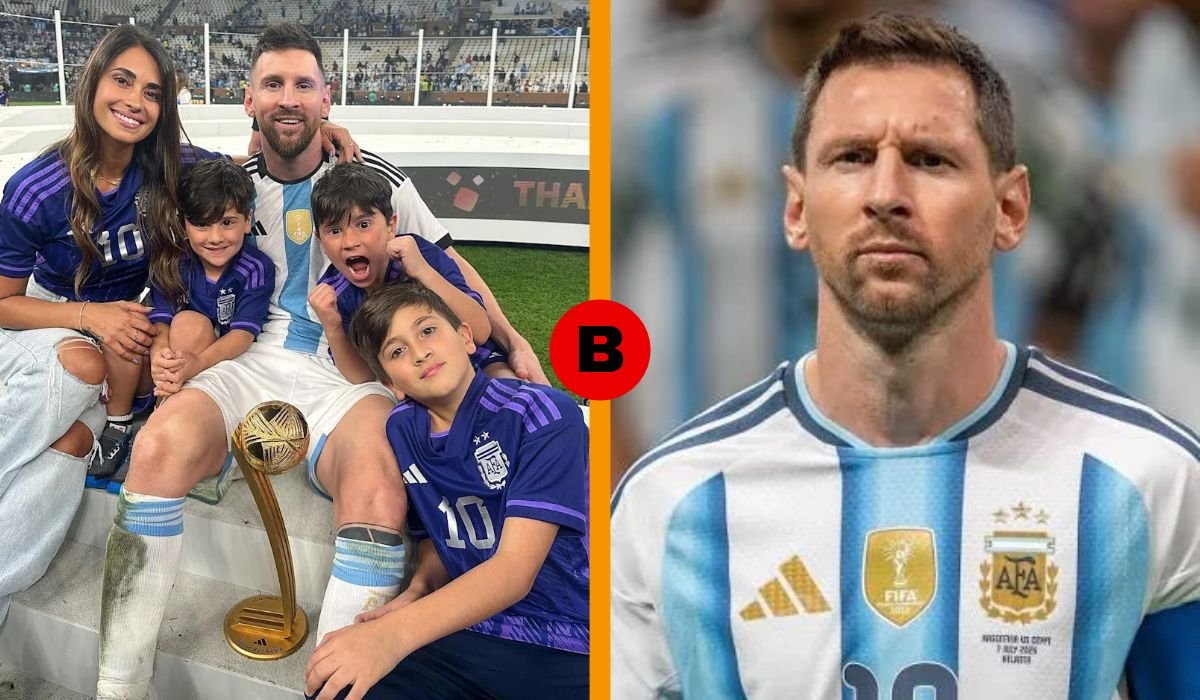
Few footballers have captured the world’s imagination quite like Lionel Messi. From a young boy chasing a football through the streets of Rosario to a World Cup-winning captain, his journey has been nothing short of extraordinary. His natural ability, determination, and love for the game have made him one of the most admired athletes in sporting history.
For anyone searching for Messi Argentina Age, Lionel Messi is 39 years old as of November 2026. Born on June 24, 1987, the Argentine superstar has spent more than two decades building a career filled with remarkable records, unforgettable performances, and major international achievements.
Yet Messi’s story goes far beyond his age or the trophies he’s collected. It’s also about a child who faced medical challenges, a family that believed in his potential, and a footballer who refused to let international disappointments define his legacy. From Barcelona’s famous stadium to Argentina’s historic World Cup victory, his life offers a fascinating look at what it takes to reach the very top of professional football.
Lionel Messi Quick Bio Information
| Personal Detail | Information |
|---|---|
| Full Name | Lionel Andrés Messi |
| Popular Name | Lionel Messi |
| Date of Birth | June 24, 1987 |
| Age in 2026 | 39 Years |
| Birthplace | Rosario, Argentina |
| Nationality | Argentine |
| Zodiac Sign | Cancer |
| Profession | Professional Footballer |
| Height | Approximately 170 cm |
| Playing Position | Forward |
| Preferred Foot | Left |
| Club in 2026 | Inter Miami CF |
| Former Clubs | Barcelona, Paris Saint-Germain |
| National Team | Argentina |
| Father | Jorge Horacio Messi |
| Mother | Celia María Cuccittini |
| Wife | Antonela Roccuzzo |
| Children | Thiago, Mateo, Ciro |
| FIFA World Cup Title | 2022 |
| Ballon d’Or Awards | Eight |
Messi Argentina Age: How Old Is Lionel Messi in 2026?
Lionel Messi is 39 years old in 2026. He was born on June 24, 1987, in Rosario, Santa Fe, Argentina. His full name is Lionel Andrés Messi, and his zodiac sign is Cancer.
His football journey began long before most young athletes start thinking seriously about professional careers. At just 17, Messi made his competitive debut for Barcelona. By 22, he’d already won his first Ballon d’Or, establishing himself among the world’s finest players.
One of the most meaningful moments of his career came in December 2022, when he captained Argentina to World Cup glory at the age of 35.
What makes Messi’s longevity so remarkable isn’t simply that he’s continued playing into his late thirties. It’s how intelligently his game has developed. While explosive acceleration defined many of his younger performances, experience, positioning, and creativity have become increasingly important.
His career is a reminder that football excellence involves much more than physical fitness. Understanding space, anticipating opponents, and making the right decisions can be just as valuable as speed.
Lionel Messi Early Life and Childhood in Argentina
Long before the worldwide fame, Messi was a football-loving child growing up in Rosario, a city where the sport holds a special place in everyday life.
His father, Jorge Messi, worked in the steel industry, while his mother, Celia María Cuccittini, worked in manufacturing. Like many Argentine families, the Messis shared a strong connection to football.
From an early age, Lionel showed an unusual understanding of the game. He loved playing with the ball, often displaying the balance and close control that would later become his trademarks.
He eventually joined Newell’s Old Boys, a respected local football club known for developing young talent. There, his performances quickly attracted attention.
However, his childhood wasn’t entirely straightforward. Doctors diagnosed him with growth hormone deficiency, a condition requiring expensive medical treatment.
For his family, the challenge was both emotional and financial. They wanted to support his health while giving him every opportunity to pursue football.
Their determination eventually led to a life-changing opportunity in Spain.
Lionel Messi Growth Hormone Deficiency and Move to Barcelona
Messi’s childhood medical condition could have complicated his dream of becoming a professional footballer. Growth hormone deficiency required regular treatment, including hormone injections, and the associated costs placed considerable pressure on his family.
Despite these difficulties, his football development continued.
Barcelona recognized his exceptional potential and offered him the chance to join its youth system while helping arrange the medical support he needed.
In 2000, Messi moved to Spain at just 13 years old.
It was an enormous change for someone so young. He had to leave familiar surroundings, adjust to a different culture, and compete against talented players in a new environment.
Barcelona’s La Masia academy provided the structure he needed to develop. Coaches helped refine his passing, movement, decision-making, and understanding of team football.
His natural ability was already extraordinary, but the academy gave him the opportunity to turn that talent into something more complete.
Those early years in Spain laid the foundation for one of football’s greatest professional careers.
Lionel Messi Parents, Siblings, and Family Background
Behind Messi’s remarkable success is a family that supported him long before the world knew his name.
His father, Jorge Horacio Messi, played an important role in his early football development and later became closely involved in managing his professional interests.
His mother, Celia María Cuccittini, also remained an important source of encouragement throughout his childhood and career.
Messi grew up with three siblings: his brothers Rodrigo and Matías and his sister María Sol.
Their childhood in Rosario helped shape his personality and maintain his connection to Argentina, even after he moved abroad.
The family’s decision to support his relocation to Barcelona was especially significant. It involved uncertainty, personal sacrifices, and the challenge of building a life away from home.
Messi has continued to acknowledge the importance of those early sacrifices. Although his career eventually brought international recognition and financial success, his family remained central to his personal life.
Lionel Messi Barcelona Career and Rise to Global Fame
Messi’s professional breakthrough came at Barcelona, where he made his competitive first-team debut against Espanyol in October 2004.
He was only 17 years old.
His first official senior goal arrived in May 2005 against Albacete, following a beautifully timed assist from Brazilian star Ronaldinho.
It was an early glimpse of the brilliance that would soon transform Barcelona’s future.
Over the following seasons, Messi developed into one of football’s most dangerous attacking players. His ability to glide past defenders, deliver precise passes, and score from seemingly impossible positions made him incredibly difficult to stop.
Alongside talented teammates such as Xavi Hernández and Andrés Iniesta, he helped Barcelona establish an era of exceptional success.
During his time with the Spanish club, Messi won ten La Liga championships, seven Copa del Rey titles, and four UEFA Champions League trophies.
He also became Barcelona’s all-time leading goalscorer, scoring 672 official goals.
His relationship with the club lasted until 2021, when financial difficulties and La Liga registration restrictions prevented Barcelona from completing a new contract.
The departure was emotional for Messi and supporters alike. After spending most of his life at Barcelona, he was suddenly preparing for a completely different challenge.
Lionel Messi Paris Saint-Germain Career
Leaving Barcelona was one of the biggest changes Messi had experienced in professional football.
In August 2021, he joined Paris Saint-Germain, beginning a new chapter in France.
At PSG, Messi became part of a star-studded attacking lineup featuring Neymar and Kylian Mbappé.
The combination attracted enormous attention, although adapting to French football wasn’t immediately easy.
After years of playing within Barcelona’s familiar system, Messi needed time to adjust to different teammates, tactical expectations, and competition.
As he settled in, his performances became increasingly productive.
He helped Paris Saint-Germain secure consecutive Ligue 1 championships in 2022 and 2023, contributing goals, assists, and creative attacking play.
However, the club failed to win the UEFA Champions League during his two seasons in Paris.
In 2023, Messi decided to move on again. This time, his destination was the United States, where his arrival would transform the profile of Major League Soccer.
Lionel Messi Inter Miami Career and Success in America
When Messi joined Inter Miami in July 2023, the announcement generated excitement far beyond American football.
Fans around the world followed his arrival, eager to see how one of the sport’s greatest players would perform in Major League Soccer.
He wasted little time making an impression.
On his debut against Cruz Azul, Messi scored a dramatic late free-kick that immediately became one of the most memorable moments in Inter Miami’s history.
His influence continued throughout the competition as he helped the club win the 2023 Leagues Cup, its first major trophy.
The following year, Inter Miami secured the Supporters’ Shield, awarded to the team with the best regular-season record in MLS.
Messi’s performances earned him the league’s Most Valuable Player award for 2024.
His success continued in 2025, when he won the MLS Golden Boot after scoring 29 regular-season goals. He also helped Inter Miami capture its first MLS Cup championship.
In October 2025, the club announced a contract extension keeping Messi with Inter Miami through the 2028 MLS season.
Beyond the results, his arrival brought increased global attention to American soccer. More international supporters began following MLS, while Inter Miami developed into one of the league’s most recognizable clubs.
Lionel Messi Argentina National Team Career
Although Messi achieved extraordinary success at club level, representing Argentina carried a different kind of emotional importance.
His international journey began with impressive youth achievements.
In 2005, he helped Argentina win the FIFA U-20 World Cup. Three years later, he was part of the team that secured an Olympic gold medal in Beijing.
Success with Argentina’s senior team, however, took much longer.
Messi experienced several painful defeats, including the 2014 World Cup final against Germany and consecutive Copa América final losses.
Those disappointments brought intense criticism, especially because Argentine supporters often compared him with Diego Maradona.
At times, the pressure appeared overwhelming.
Nevertheless, Messi continued representing his country and gradually developed into a respected national team leader.
The turning point came in 2021, when Argentina defeated Brazil to win the Copa América.
It was Messi’s first major senior international championship and an emotional achievement for both the player and his country.
Argentina followed that success by winning the 2022 Finalissima and defending its Copa América title in 2024.
These victories changed the way many supporters viewed Messi’s international career.
Lionel Messi World Cup Glory in Qatar
For years, winning the FIFA World Cup had remained the one major achievement missing from Messi’s extraordinary collection of honors.
That changed in Qatar in 2022.
At 35, Messi captained Argentina into a tournament filled with pressure and expectation.
The campaign began badly, with Argentina suffering a surprising defeat against Saudi Arabia.
Instead of allowing that result to define the tournament, the team recovered.
Messi delivered important performances against Mexico, Australia, the Netherlands, and Croatia, helping Argentina reach the final.
There, Argentina faced defending champion France in a match that would become one of the most dramatic World Cup finals ever played.
Messi scored twice, while Kylian Mbappé completed a hat-trick for France.
After extra time, the score stood at 3–3.
Argentina eventually won the penalty shootout, securing its first World Cup championship since 1986.
Messi received the Golden Ball as the tournament’s outstanding player, becoming the first male footballer to win the award twice.
For Argentina, the victory was a moment of national celebration. For Messi, it was the fulfillment of a dream that had followed him throughout his professional career.
Lionel Messi Wife Antonela Roccuzzo and Children
Away from football, Messi shares his life with his wife, Antonela Roccuzzo.
Their relationship has a particularly personal history because they knew each other while growing up in Rosario.
Unlike many celebrity relationships that begin after international fame, their connection developed long before Messi became a global sporting icon.
The couple married on June 30, 2017, in Argentina, celebrating with relatives, close friends, and several well-known footballers.
They have three sons: Thiago, born in 2012; Mateo, born in 2015; and Ciro, born in 2018.
Messi has frequently spoken about the importance of fatherhood and spending time with his family.
Despite the demands of professional football, his wife and children have remained an important part of his everyday life.
Their presence during major matches and celebrations has also given supporters a glimpse of the person behind the football superstar.
Lionel Messi Height, Playing Style, and Football Skills
Standing approximately 170 centimeters tall, Messi has never depended on being the biggest or strongest player on the pitch.
Instead, his relatively compact build has helped him develop remarkable balance, close control, and the ability to change direction quickly.
His left foot is central to his playing style.
Whether he’s dribbling through defenders, delivering a precise pass, or curling a shot toward goal, Messi combines technical skill with an exceptional understanding of space.
One of his greatest strengths is knowing what to do before the ball reaches him.
He constantly studies defensive movements, identifies passing opportunities, and adjusts his positioning.
Earlier in his career, explosive acceleration was a major part of his attacking game. As he has grown older, his experience and decision-making have become even more valuable.
This evolution helps explain why Messi has remained influential across different leagues, teams, and stages of his career.
Lionel Messi Ballon d’Or Awards and Football Records
Messi’s achievements are remarkable even by the standards of football’s greatest players.
He has won eight Ballon d’Or awards, more than any other player in the history of the prestigious individual honor.
His victories came in 2009, 2010, 2011, 2012, 2015, 2019, 2021, and 2023.
He has also earned six European Golden Shoe awards, recognizing his exceptional goalscoring performances in domestic league football.
One of his most extraordinary records came in 2012, when he scored 91 goals for Barcelona and Argentina during a single calendar year.
His 474 La Liga goals remain another historic achievement.
At Barcelona, he finished with 672 official goals, becoming the club’s leading goalscorer.
Yet his legacy isn’t based entirely on individual statistics.
Messi has also won major championships at club and international level, including four UEFA Champions League titles, multiple domestic trophies, two Copa América titles, and the FIFA World Cup.
Together, these achievements reflect extraordinary consistency across more than two decades of professional football.
Lionel Messi Net Worth, Endorsements, and Global Influence
Messi’s football success has also made him one of the world’s most commercially recognizable athletes.
Throughout his career, he has earned substantial income from club contracts, sponsorship agreements, endorsement partnerships, and business activities.
His long-standing relationship with Adidas remains one of his most recognizable commercial partnerships.
According to salary information released by the MLS Players Association in 2026, Messi’s annual base salary was approximately $25 million, while his guaranteed compensation was around $28.3 million.
Those figures don’t necessarily include every commercial agreement, endorsement payment, or other source of income.
Although numerous websites publish estimates of Lionel Messi’s net worth in 2026, his exact personal wealth hasn’t been independently confirmed.
It’s therefore important to distinguish reported estimates from verified financial information.
Beyond money, Messi’s commercial influence is considerable. His arrival in Miami increased global attention on American soccer and introduced MLS to audiences who previously followed mainly European competitions.
Still, his greatest contribution remains what he has accomplished on the football pitch.
Lionel Messi vs Cristiano Ronaldo and His Football Legacy
Few sporting rivalries have generated as much discussion as the comparison between Lionel Messi and Cristiano Ronaldo.
For nearly two decades, both players have dominated conversations about football excellence.
Their achievements include extraordinary goalscoring records, major championships, individual awards, and worldwide recognition.
However, they have reached the highest level through different playing styles.
Messi is especially admired for his close control, creative passing, dribbling, and ability to influence the rhythm of a match.
Ronaldo is widely recognized for his finishing, physical strength, aerial ability, and remarkable goalscoring consistency.
Supporters continue debating which player deserves to be considered the greatest, although such judgments inevitably involve personal preference.
Messi’s 2022 World Cup victory strengthened his position in that conversation.
Yet his influence goes well beyond comparisons with another player.
Young footballers study his movements, coaches analyze his decision-making, and supporters admire the way he combines creativity with efficiency.
From Rosario to Barcelona, Paris, Miami, and Argentina’s national team, Messi has left a lasting impression on football.
Final Thoughts
Lionel Messi’s journey from a football-loving child in Rosario to a World Cup-winning superstar is one of sport’s most memorable success stories.
At 39 years old in 2026, he has achieved nearly everything a professional footballer could hope for. His career includes historic Barcelona performances, major international trophies, individual records, and a lasting influence on football around the world.
What makes his story especially compelling is the journey behind those achievements. Childhood medical challenges, the emotional difficulty of leaving Argentina, years of international disappointment, and the pressure of enormous expectations all became part of his development.
For anyone researching Messi Argentina Age, understanding his birthday is just the starting point. His life shows how natural talent, family support, determination, and a willingness to adapt can help an athlete achieve extraordinary success.
Whether future generations remember his breathtaking dribbles, his record-breaking goals, or the unforgettable moment he lifted the World Cup, Lionel Messi’s place in football history is secure.
His greatest legacy may be the inspiration he continues to give young players who dream of following a similar path.
FAQs About Messi Argentina Age
How Old Is Lionel Messi in 2026?
Lionel Messi is 39 years old as of November 2026. He was born on June 24, 1987, in Rosario, Argentina. Despite being in his late thirties, he has continued demonstrating exceptional football intelligence, creativity, and technical ability.
When Is Lionel Messi’s Birthday?
Lionel Messi celebrates his birthday on June 24 every year. He was born in 1987 and belongs to the Cancer zodiac sign. His birthday is widely recognized by football supporters who celebrate his achievements and contribution to the sport.
How Old Was Messi When Argentina Won the World Cup?
Messi was 35 years old when Argentina won the 2022 FIFA World Cup in Qatar. He captained the team, scored twice against France in the final, and helped Argentina win the championship through a penalty shootout.
Who Is Lionel Messi’s Wife?
Lionel Messi is married to Antonela Roccuzzo, whom he has known since childhood in Rosario. The couple married on June 30, 2017, in Argentina. They have built a family together while Messi has pursued his international football career.
How Many Children Does Lionel Messi Have?
Messi has three sons named Thiago, Mateo, and Ciro. Thiago was born in 2012, Mateo in 2015, and Ciro in 2018. Messi has often described family life as an important source of happiness and personal balance.
How Many Ballon d’Or Awards Has Lionel Messi Won?
Messi has won eight Ballon d’Or awards. He received the honor in 2009, 2010, 2011, 2012, 2015, 2019, 2021, and 2023. These awards recognize his outstanding individual achievements throughout different stages of his career.
Which Football Club Does Lionel Messi Play For in 2026?
Lionel Messi plays for Inter Miami CF in Major League Soccer. He joined the American club in July 2023 and signed a contract extension in October 2025 that runs through the 2028 MLS season.
Why Is Lionel Messi Famous in Argentina?
Messi is celebrated in Argentina for his remarkable football achievements and leadership of the national team. His most significant international accomplishment came in 2022, when he captained Argentina to FIFA World Cup victory, becoming one of the country’s greatest sporting heroes.
Learn more and explore exciting content on: Cam Cameron: Biography, Age, Wife, Family, and Football Coaching Career