

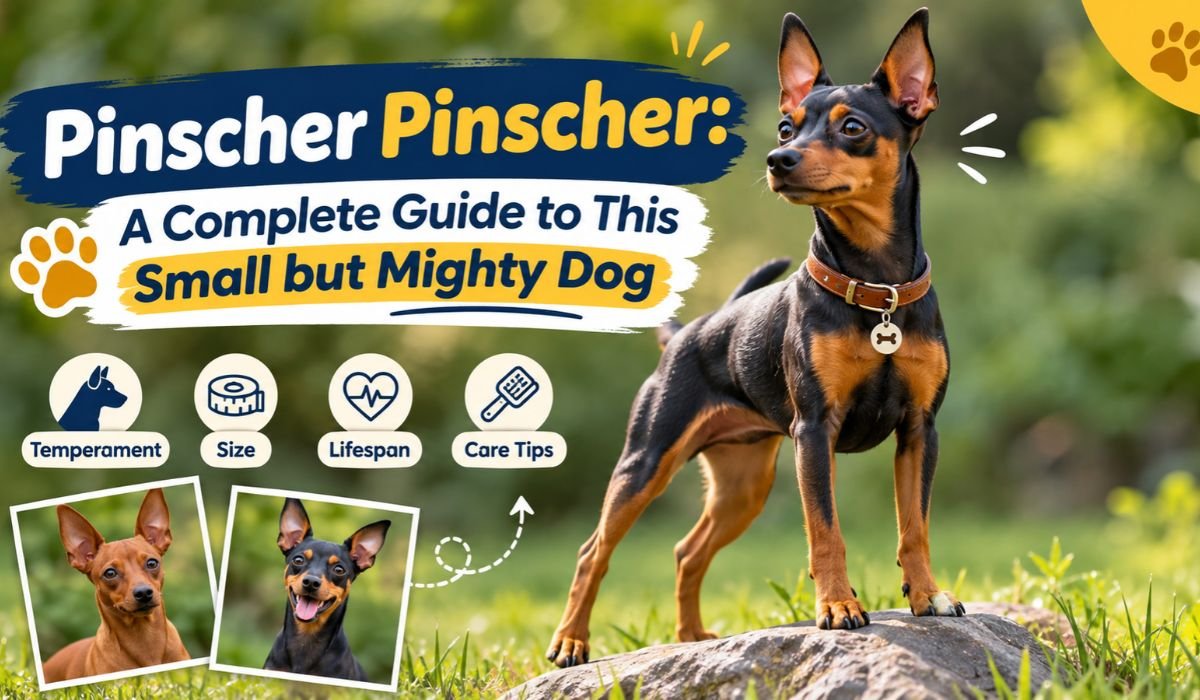
The Miniature Pinscher has never seemed particularly concerned about being small. Confident, quick on its feet, and endlessly curious, this compact dog tends to approach life with the attitude of a breed several times its size. That bold personality, paired with an elegant appearance and unmistakable high-stepping walk, has helped the Min Pin earn a devoted following.
If you’ve been searching for Pinscher Pinscher, the breed you’re most likely looking for is the Miniature Pinscher, commonly called the Min Pin. Developed in Germany, these dogs were historically valued for hunting rats and other small rodents. Today, they’re better known as lively companions with sharp minds and plenty of character.
Still, there’s more to the Miniature Pinscher than its small frame and spirited personality. A Min Pin needs consistent training, regular exercise, mental stimulation, good nutrition, and a home that takes its safety seriously. For the right owner, though, those needs are rewarded with an entertaining and affectionate companion.
This 2026 Miniature Pinscher guide looks closely at the breed’s size, temperament, lifespan, health, training needs, nutrition, grooming, and everyday care.
Miniature Pinscher Quick Bio Information
Breed Name: Miniature Pinscher
Common Nickname: Min Pin
Origin: Germany
Breed Group: Toy
Height: 10–12.5 inches
Weight: 8–10 pounds
Typical Lifespan: 12–16 years
Temperament: Bold, Alert, Playful
Energy Level: High
Coat Type: Short and Smooth
Shedding: Low to Moderate
Grooming Needs: Relatively Low
Trainability: Intelligent but Independent
Barking Tendency: Often Vocal
Exercise Needs: Daily Activity
Original Purpose: Rodent Hunting
Living Environment: Can Adapt to Apartments or Houses
What Is a Miniature Pinscher?
The Miniature Pinscher is a compact, muscular dog recognized by the American Kennel Club as a member of the Toy Group. Its size may place it among the smallest recognized breeds, but there’s very little that’s timid about the typical Min Pin. The breed is known for its proud posture, energetic movement, watchful expression, and self-assured personality.
That confidence is one reason the Miniature Pinscher has long been nicknamed the “King of Toys.”
Unlike some small companion breeds that are happiest spending much of the day relaxing, a Min Pin usually wants to know what’s happening. A noise in another room, an unfamiliar visitor, or a toy rolling beneath the sofa can quickly become the day’s most important event.
This curiosity makes Miniature Pinschers entertaining companions, but it can also get them into trouble. They’re clever enough to explore opportunities their owners might rather they ignored, so clear household rules and consistent training matter.
A well-socialized Min Pin can be affectionate and deeply connected to its family without losing the independence that makes the breed so distinctive.
History and Origin of the Miniature Pinscher
Despite the resemblance, the Miniature Pinscher isn’t simply a scaled-down Doberman Pinscher. In fact, the Min Pin’s history predates the development of the modern Doberman.
The breed originated in Germany, where small, agile dogs were useful for controlling rats around homes, farms, and stables. That working background helps explain several characteristics still seen in Miniature Pinschers today: quick reactions, alertness, persistence, and an instinct to investigate or chase small moving animals.
The breed’s exact ancestry isn’t completely documented. German Pinschers, Dachshunds, and Italian Greyhounds are commonly mentioned as influences in its development, although historical breed development isn’t always as straightforward as modern pedigrees might suggest.
The American Kennel Club recognized the Miniature Pinscher in 1925. Over the decades that followed, the breed increasingly moved from working environments into family homes.
Modern Min Pins may no longer spend their days chasing rodents around stables, but their history hasn’t disappeared. Their prey drive, curiosity, and energetic personality remain important considerations for anyone thinking about bringing one home.
Miniature Pinscher Size, Weight, and Appearance
An adult Miniature Pinscher typically measures 10–12.5 inches at the shoulder and weighs roughly 8–10 pounds. Although that’s undeniably small, a healthy Min Pin should look compact and athletic rather than weak or excessively delicate.
The body is muscular and balanced, while the short, smooth coat gives the breed a polished appearance. Dark, oval eyes contribute to its alert expression, and the ears are set high on the head. Natural ears may stand upright or have some fold depending on the individual dog.
Under the American Kennel Club breed standard, recognized colors include solid red, stag red, black with rust markings, and chocolate with rust markings. Standards used by other kennel organizations can differ, so owners may occasionally encounter colors described differently outside the United States.
Perhaps the most recognizable feature of the breed is its movement. The Miniature Pinscher is associated with a distinctive high-stepping, hackney-like gait. Combined with its confident posture, that movement gives the little dog an unusually commanding presence.
Some Min Pins have cropped ears or docked tails. These procedures aren’t required for a companion dog’s health or happiness, and cosmetic ear cropping and tail docking are opposed by veterinary organizations including the American Animal Hospital Association.
Miniature Pinscher Temperament and Personality
Spend enough time around a Miniature Pinscher and its size can become surprisingly easy to forget. These dogs tend to approach the world with confidence and enthusiasm, whether they’re greeting their family, inspecting a new object, or announcing that something unfamiliar is happening outside.
The typical Miniature Pinscher temperament combines intelligence, affection, independence, alertness, and plenty of energy. Many Min Pins become strongly attached to their families and want to be involved in whatever is happening at home.
That doesn’t mean they’re always eager to follow instructions.
A Min Pin may understand exactly what you’re asking and still decide that something across the room deserves immediate investigation. This independent streak is part of the breed’s charm, but it’s also why consistent training is so important.
Their natural alertness can make Miniature Pinschers effective little watchdogs. Barking at visitors, unusual noises, or movement outside isn’t uncommon. Individual personality matters, however. Not every Min Pin will behave identically, and socialization, genetics, training, and past experiences all influence temperament.
Are Miniature Pinschers Good Family Dogs?
For the right household, a Miniature Pinscher can be an affectionate and entertaining family companion. The key is understanding that being small doesn’t automatically make a dog suitable for every family situation.
Min Pins often enjoy playing with older children who understand how to interact gently with dogs. Younger children require closer supervision. An accidental drop, rough game, or poorly judged jump can cause injuries to a dog weighing less than 10 pounds.
Children should be taught to let the dog approach voluntarily, avoid grabbing its legs or tail, and leave it alone while it’s eating or sleeping.
Miniature Pinschers can also live successfully with other dogs, particularly when they’ve been properly socialized and introductions are handled carefully. Their confidence can sometimes put them in situations where they underestimate the physical difference between themselves and a much larger dog, making supervision sensible.
Small pets require more caution. Because the breed has a history of hunting rodents, animals such as hamsters and mice may trigger prey behavior and should be securely separated.
How to Train a Miniature Pinscher Successfully
A Miniature Pinscher is intelligent enough to learn quickly, but intelligence shouldn’t be confused with automatic obedience. Successful training usually depends on making the process consistent, rewarding, and interesting.
Positive reinforcement works particularly well. Food rewards, praise, toys, and play can make good behavior worth repeating. Long, repetitive sessions are less useful because an energetic Min Pin may simply find something else to do.
Short training sessions throughout the day are often more productive.
Practical commands such as sit, stay, come, and leave it deserve early attention. Reliable recall is especially valuable, although a Min Pin should still be kept securely leashed or contained where appropriate.
House training also benefits from routine. Puppies should have frequent opportunities to relieve themselves, particularly after eating, sleeping, and active play. Successful bathroom trips can then be rewarded immediately.
Crate training can provide a comfortable resting place when the crate is introduced gradually and never used as punishment.
Socialization belongs alongside obedience training. Positive exposure to different people, environments, surfaces, sounds, and suitable dogs can help a young Min Pin develop into a more confident adult.
Miniature Pinscher Exercise and Activity Needs
Don’t let the Toy Group label suggest that a Miniature Pinscher is content with a sedentary lifestyle. These dogs are energetic and generally benefit from daily opportunities to walk, play, explore, and think.
For many healthy adults, roughly 30–60 minutes of physical activity spread across the day can be a reasonable starting point. It isn’t a universal prescription, though. Age, health, fitness, weather, and individual temperament all influence how much exercise a dog needs.
Walks are useful, but exercise doesn’t have to mean covering miles. Indoor games, brief training sessions, hide-and-seek, food puzzles, and treat searches can provide valuable physical and mental stimulation.
Safety outdoors deserves particular attention. Min Pins are curious, fast, and sometimes determined explorers. Secure fencing and appropriate leash use can prevent an interesting scent or small animal from turning into a dangerous chase.
Puppies and older dogs need routines adjusted to their bodies. More activity isn’t automatically better, particularly when joints are still developing or age-related mobility problems are present.
Miniature Pinscher Diet and Nutrition
Good nutrition doesn’t need to be complicated. A Miniature Pinscher should receive a complete and balanced diet appropriate for its age, health, and life stage.
Puppies need food formulated to support growth, while healthy adults require nutrition designed for maintenance. Senior dogs may eventually benefit from dietary adjustments based on their weight, activity level, and medical needs.
Many healthy adult dogs do well with two measured meals each day. Puppies generally need smaller, more frequent meals. The right portion can’t be determined from breed alone because calorie needs vary with age, activity, metabolism, body condition, and the energy density of the food.
This matters particularly with a small breed. A few extra treats may look insignificant to a person, but they can represent a meaningful amount of additional energy for an 8-pound dog.
Fresh water should always be available. Owners should also keep known toxic foods and ingredients out of reach, including chocolate, grapes, raisins, onions, and products containing xylitol.
When weight, allergies, medical conditions, or feeding difficulties become concerns, dietary decisions are best made with a veterinarian.
Miniature Pinscher Grooming and Coat Care
The Miniature Pinscher’s grooming routine is refreshingly straightforward. Its short, smooth coat doesn’t require elaborate trimming, and weekly brushing is generally enough to remove loose hair and keep the coat looking tidy.
Min Pins do shed, so they’re not a no-shedding breed. Still, their coat is considerably easier to maintain than the coats of many long-haired dogs.
Bathing can be done when the dog becomes dirty or develops an odor rather than according to an unnecessarily rigid schedule. A gentle shampoo designed for dogs is preferable to human products, which may irritate canine skin.
Nails should be checked regularly and trimmed before they become long enough to affect comfortable movement. Ears also deserve routine inspection. Persistent redness, discharge, unpleasant odor, or discomfort should prompt veterinary attention rather than repeated home cleaning.
Dental care is equally important. Regular brushing with dog-safe toothpaste, combined with veterinary dental examinations when needed, can help reduce dental disease.
Common Miniature Pinscher Health Problems
Miniature Pinschers are generally considered a relatively healthy breed, but that doesn’t mean they’re free from inherited or acquired medical problems.
Patellar luxation is one concern. It occurs when the kneecap moves out of its normal position and may cause limping, skipping, or intermittent changes in gait. Severity varies, and treatment depends on the individual case.
Legg-Calvé-Perthes disease affects the hip joint and can cause pain and lameness, particularly in younger dogs. More severe cases may require surgery.
Progressive retinal atrophy is an inherited eye disorder that can gradually impair vision. Epilepsy may cause recurring seizures, while hypothyroidism can be associated with symptoms such as lethargy, weight changes, and skin or coat problems.
Heart, eye, and orthopedic conditions can occur as well. Importantly, listing a disease as a breed concern doesn’t mean every Miniature Pinscher will develop it.
Health screening is particularly relevant when buying a puppy. The Miniature Pinscher Club of America’s 2024 guidance includes patella evaluation among its health-testing recommendations and identifies additional screening options involving areas such as the thyroid, heart, eyes, hips, and inherited disorders.
Prospective owners should ask to see actual health-testing documentation rather than relying solely on assurances that a puppy’s parents are “healthy.”
Miniature Pinscher Lifespan and Senior Care
The typical Miniature Pinscher lifespan is around 12–16 years, though no lifespan range can predict how long an individual dog will live.
Genetics matter, but so do everyday decisions. Maintaining an appropriate body weight, feeding a balanced diet, providing regular exercise, keeping up with preventive veterinary care, and addressing medical problems promptly can all support long-term health.
As a Min Pin gets older, changes may happen gradually. Walks might become shorter, jumping may become more difficult, and dental, hearing, vision, or mobility problems may become more noticeable.
Simple household changes can make senior life easier. Comfortable bedding, nonslip surfaces, and easier access to favorite areas can reduce unnecessary strain.
Owners shouldn’t automatically dismiss significant changes as “just old age.” A sudden change in appetite, thirst, mobility, behavior, or energy can indicate an underlying health problem and deserves veterinary attention.
Miniature Pinscher Puppy Care
A Miniature Pinscher puppy can turn almost anything into an adventure, which makes puppy-proofing especially important.
Electrical cords, medications, toxic plants, household chemicals, and objects small enough to swallow should be kept out of reach. Gaps around gates and fencing deserve attention too; a tiny puppy can fit through spaces that might not look particularly large.
Jumping from high furniture should be discouraged, especially while the puppy is young and physically vulnerable.
Veterinary care begins early. Puppies need an appropriate vaccination schedule, parasite prevention, nutritional guidance, and routine examinations based on veterinary recommendations and local disease risks.
This period is also an important time for social development. Positive, controlled exposure to people, everyday household noises, suitable animals, and new environments can help build confidence.
The goal isn’t to overwhelm a puppy with experiences. Good socialization means helping it encounter the world safely and positively.
Living With a Miniature Pinscher in an Apartment
A large backyard isn’t a requirement for owning a Miniature Pinscher. With adequate exercise and enrichment, these dogs can adapt very well to apartment living.
Size, however, isn’t the only consideration.
Min Pins are alert dogs, and noises in hallways, elevators, neighboring apartments, or outside windows can trigger barking. Teaching calm behavior early can make apartment life considerably easier for everyone.
Daily walks, puzzle feeders, training games, and interactive play provide useful outlets for energy. A dog that has appropriate things to do is less likely to invent its own entertainment.
Miniature Pinschers also tend to enjoy human company, but that doesn’t mean they should never spend time alone. Gradual alone-time training can help them become more comfortable when family members leave the home.
Climate matters too. Their short coats provide limited protection in cold conditions, so some Min Pins benefit from a properly fitted sweater or coat during chilly walks.
Miniature Pinscher Price, Adoption, and Ownership Costs
The cost of a Miniature Pinscher puppy varies widely according to location, pedigree, breeder practices, health testing, and other factors. For that reason, a single advertised price isn’t a reliable measure of breeder quality.
Responsible breeders should be willing to discuss health screening, temperament, veterinary history, and how their puppies are raised and socialized. Prospective buyers should be able to ask questions without being pressured into making an immediate decision.
Adoption offers another route. Miniature Pinschers and Min Pin mixes sometimes appear in animal shelters and breed-specific rescue organizations, including adult dogs whose personalities may already be easier to assess.
The initial purchase or adoption fee is only one part of the financial commitment. Food, preventive veterinary care, vaccinations, parasite control, dental treatment, training, bedding, harnesses, toys, and emergency medical care all contribute to lifetime ownership costs.
Planning for those expenses before bringing a dog home is part of responsible ownership.
Miniature Pinscher vs. Doberman Pinscher
The resemblance between the Miniature Pinscher and Doberman Pinscher causes understandable confusion, particularly when both dogs have black-and-rust coloring. But they’re distinct breeds, not large and small versions of the same dog.
The size difference alone is substantial. Miniature Pinschers generally weigh around 8–10 pounds, while adult Dobermans commonly fall in roughly the 60–100-pound range.
Both breeds can be intelligent, alert, energetic, and deeply engaged with their families. Their practical ownership requirements, however, are quite different.
A Doberman’s size and strength require owners who are prepared to manage a powerful working breed. A Miniature Pinscher is physically easier to accommodate in a small home, but its independence, energy, and tendency to explore still require consistent training.
Choosing between them shouldn’t come down to appearance. Space, experience, activity level, household composition, training commitment, and long-term costs are much better factors to consider.
Final Thoughts: Is a Miniature Pinscher Right for You?
The Miniature Pinscher is a convincing reminder that physical size tells you very little about the size of a dog’s personality. Bold, intelligent, playful, and remarkably self-assured, the Min Pin brings plenty of energy into a very small package.
That’s also why prospective owners should look beyond the breed’s striking appearance. Living successfully with a Pinscher Pinscher means making time for training, providing meaningful daily activity, managing its natural curiosity, protecting its small body from avoidable injuries, and staying attentive to its health throughout life.
For someone looking for a quiet dog that requires little interaction, the Miniature Pinscher may prove more demanding than expected. For an owner who enjoys training, play, companionship, and a dog with an independent streak, the match can be excellent.
Good ownership ultimately isn’t about changing the Min Pin into a different kind of dog. It’s about understanding what the breed was developed to do and giving that intelligence and energy productive outlets.
With thoughtful socialization, sensible health care, consistent boundaries, and plenty of affection, a Miniature Pinscher can be an engaging companion for many years.
For publication, important breed-standard and historical details should be checked against the American Kennel Club and Miniature Pinscher Club of America. Medical and nutrition information should rely on current veterinary guidance, and health-related content should ideally receive professional veterinary review before publication.
Frequently Asked Questions About Miniature Pinschers
Are Miniature Pinschers Aggressive?
Miniature Pinschers aren’t inherently aggressive dogs. They can, however, become territorial, defensive, fearful, or reactive depending on genetics, socialization, training, environment, and past experiences. Positive early socialization and respectful handling can help encourage confident behavior. Persistent aggression or sudden behavioral changes should be discussed with a veterinarian or qualified behavior professional.
Are Miniature Pinschers Hypoallergenic?
No. Miniature Pinschers aren’t considered hypoallergenic. Their short coat may be relatively easy to groom, but allergens aren’t limited to loose hair. Proteins found in dog dander and saliva can also trigger reactions. Anyone with significant allergies should spend time around dogs before committing to ownership and discuss serious allergy concerns with a medical professional.
Do Miniature Pinschers Bark a Lot?
They can. Miniature Pinschers are naturally alert, and many are quick to announce visitors, unfamiliar sounds, passing animals, or activity outside. Exercise and mental enrichment can reduce boredom-related barking, while reward-based training can teach calmer responses to common triggers.
Are Miniature Pinschers Easy to Train?
They’re intelligent learners, but they’re also independent. A Min Pin may pick up a new behavior quickly while still testing whether following the instruction is worthwhile. Consistency, positive reinforcement, short sessions, and worthwhile rewards generally produce better results than punishment or repetitive drills.
Can Miniature Pinschers Live With Cats?
Some can live very successfully with cats, particularly when introductions are gradual and both animals have safe spaces. However, the Miniature Pinscher’s historical prey drive means chasing can occur. Compatibility should be assessed individually rather than assuming every Min Pin will behave the same way around cats.
Do Miniature Pinschers Like to Cuddle?
Many do, especially with people they trust. Some Min Pins happily curl up beside their owners after exercise, while others would rather continue exploring the house. Cuddliness varies considerably between individual dogs, so it shouldn’t be treated as a guaranteed breed characteristic.
Are Miniature Pinschers Good for First-Time Owners?
They can be, provided the owner is prepared for an energetic and independent dog. Their coat is easy to maintain and their compact size can simplify everyday living, but training, barking, prey drive, and escape-minded curiosity may surprise someone expecting an effortless lapdog.
Do Miniature Pinschers Need Sweaters in Winter?
Sometimes. Their small bodies and short coats offer limited insulation against cold weather. In chilly conditions, a well-fitting sweater or coat may make walks more comfortable. Shivering, lifting the paws, slowing down, or trying to return indoors are signs that a dog may be getting too cold.
Learn more and explore exciting content on: 30 Big Dogs Big Breeds: Sizes, Temperaments, Lifespans & Care Guide