

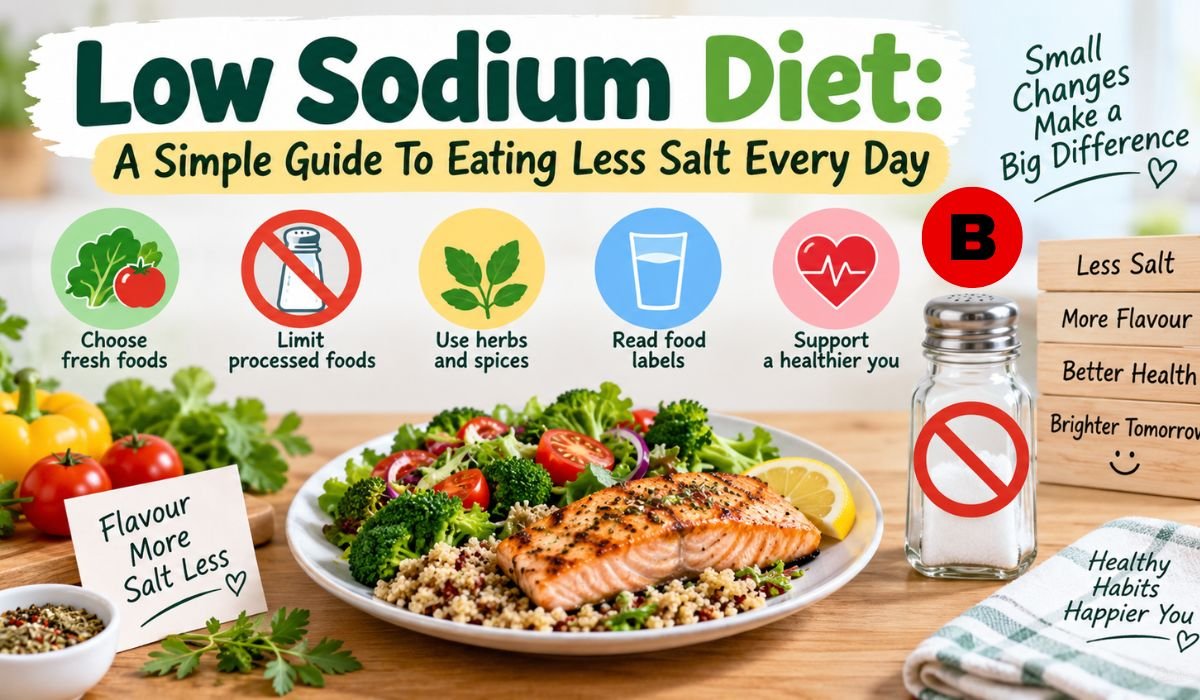
Eating less salt doesn’t mean giving up flavorful food or turning every meal into a bland plate of vegetables. A Low Sodium Diet is really about understanding where sodium comes from and making practical choices that help keep your daily intake under control.
Sodium is an essential mineral. Your body needs it to help regulate fluid balance and support normal nerve and muscle function. The problem is that most people consume considerably more sodium than they need. In the United States, adults consume more than 3,100 milligrams of sodium a day on average, according to the American Heart Association. That’s well above its recommended maximum of 2,300 milligrams per day.
For most adults, the FDA’s Daily Value is less than 2,300 milligrams of sodium per day. The American Heart Association recommends no more than 2,300 milligrams daily, with an ideal goal of no more than 1,500 milligrams for most adults, particularly those with high blood pressure.
There’s another important point to keep in mind: most dietary sodium doesn’t come from the salt shaker. More than 70% of the sodium Americans consume comes from packaged, prepared, and restaurant foods.
That means following a Low Sodium Diet requires more than simply putting less salt on your dinner. It means learning how to read food labels, recognizing hidden sodium, choosing less processed food, and finding flavorful alternatives that make healthier eating enjoyable.
Quick Bio Information
| Quick Bio Fact | Information |
|---|---|
| Topic | Low Sodium Diet |
| Main Nutrient | Sodium |
| FDA Daily Value | Less Than 2,300 Mg Per Day |
| FDA Low Sodium Claim | 140 Mg Or Less Per Serving |
| Very Low Sodium | 35 Mg Or Less Per Serving |
| Sodium-Free | Less Than 5 Mg Per Serving |
| Reduced Sodium | At Least 25% Less Than The Regular Product |
| Main Health Concern | Excess Sodium Intake |
| Major Health Connection | Blood Pressure |
| Major Sodium Sources | Packaged, Prepared, And Restaurant Foods |
| Useful Fresh Foods | Fruits, Vegetables, Eggs, And Plain Grains |
| Protein Choices | Fresh Meat, Poultry, Fish, Eggs, And Dry Beans |
| Flavor Alternatives | Herbs, Garlic, Ginger, Lemon, Vinegar, And Pepper |
| Label Measurement | Milligrams, Or Mg |
| AHA Daily Limit | No More Than 2,300 Mg |
| AHA Ideal Goal | No More Than 1,500 Mg For Most Adults |
| Salt And Sodium | Related But Not Identical |
| Salt Substitutes | Some Contain Potassium |
| Best Approach | Choose More Fresh And Minimally Processed Foods |
What Is A Low Sodium Diet?
A Low Sodium Diet is an eating pattern that limits the amount of sodium you consume while still providing the nutrients your body needs. Sodium occurs naturally in some foods, but it’s also added during food processing, preservation, cooking, and preparation.
It’s worth clearing up one common source of confusion. Salt and sodium aren’t exactly the same thing. Table salt is sodium chloride, while sodium can also be found in other ingredients used in packaged foods. As a result, something doesn’t have to taste particularly salty to contain a significant amount of sodium.
The goal isn’t to eliminate sodium completely. Your body needs some sodium to function properly. Instead, the aim is to stay within an appropriate daily range and choose foods that make that goal easier to achieve.
For many adults, the general benchmark is less than 2,300 milligrams a day. People with certain medical conditions may need a lower or otherwise individualized target, so anyone following a medically prescribed sodium restriction should use their healthcare professional’s recommendation as the guide.
Why Sodium Matters For Your Health
Sodium has several important jobs in the body. It helps maintain fluid balance and supports normal nerve and muscle function. Healthy kidneys also play an important role by regulating sodium and helping the body retain what it needs while removing excess amounts.
The problem begins when sodium intake is consistently too high. Sodium attracts water, and a high-sodium diet can draw more water into the bloodstream. That can increase blood volume and contribute to higher blood pressure.
Over time, uncontrolled high blood pressure can put extra strain on the heart and damage blood vessels and organs. It can increase the risk of heart disease, stroke, kidney disease, and other serious health complications.
That’s one reason sodium reduction is particularly important for people with hypertension. The American Heart Association says reducing sodium can help lower blood pressure, although the amount of benefit varies from person to person.
How Much Sodium Should You Eat Each Day?
For adults, the FDA Daily Value for sodium is less than 2,300 milligrams per day. Think of this as a general daily reference rather than a personalized medical prescription.
The American Heart Association recommends no more than 2,300 milligrams each day and says an ideal goal for most adults is no more than 1,500 milligrams, especially for people with high blood pressure. The organization also notes that cutting sodium by about 1,000 milligrams a day can improve blood pressure for many people.
At the same time, there’s no need to assume that everyone should aggressively push sodium as low as possible. Individual needs can differ. Competitive athletes, people exposed to substantial heat stress, and people with certain medical conditions may have different requirements. If your doctor or dietitian has given you a specific sodium target, follow that recommendation rather than adopting a generic goal.
Where Does Dietary Sodium Come From?
If you’re trying to reduce sodium, don’t make the mistake of looking only at the salt shaker. That’s one of the easiest things to control, but it’s far from the whole story.
More than 70% of sodium consumed by Americans comes from packaged, prepared, and restaurant foods. Bread, processed meats, canned soups, pizza, sandwiches, sauces, dressings, frozen meals, instant noodles, and packaged mixes can all add substantial amounts to a day’s total.
Restaurant meals can be particularly difficult to judge because several sodium-containing ingredients may be combined in one dish. A sandwich, for example, might contain sodium from the bread, deli meat, cheese, sauce, and dressing all at once.
That’s why a successful Low Sodium Diet looks at your overall eating pattern rather than focusing on one ingredient.
How To Read A Food Label
The Nutrition Facts label can become one of your most useful tools when you’re trying to eat less sodium. Start by checking the serving size. The sodium amount shown on the label generally applies to one serving, not necessarily the entire package.
If you eat two servings, you’ll generally consume twice the listed sodium. That simple detail is easy to overlook, especially with packaged foods that appear to contain only one portion.
The FDA’s Daily Value for sodium is less than 2,300 milligrams. As a general guide, 5% Daily Value or less is considered low, while 20% or more is considered high.
It’s also useful to understand common sodium claims. Low Sodium means 140 milligrams or less per serving. Very Low Sodium means 35 milligrams or less, while Sodium-Free means less than 5 milligrams per serving. Reduced Sodium means the product contains at least 25% less sodium than the regular version. No Salt Added or Unsalted means salt wasn’t added during processing, but the product may still contain sodium naturally.
In other words, don’t rely on the front of the package alone. Look at the actual sodium number.
Best Foods For A Low Sodium Diet
Fresh and minimally processed foods can make lowering sodium much easier because you have more control over what goes into your meals.
Fresh fruits and vegetables are naturally low in sodium. Plain rice, pasta, oats, eggs, unsalted nuts, and fresh or frozen meat, poultry, and seafood can also work well in a Low Sodium Diet when they’re prepared without large amounts of added salt.
Dry beans and peas are useful choices, too. If you prefer canned beans or vegetables for convenience, compare brands and look for lower-sodium or no-salt-added options.
The idea isn’t that every packaged food is unhealthy or that everything must be cooked completely from scratch. Rather, choosing more foods with minimal added sodium gives you greater control over your daily intake.
High Sodium Foods To Limit
Some foods can consume a surprisingly large portion of your daily sodium allowance in a single meal.
Processed meats such as bacon, ham, sausage, hot dogs, and deli meats are common examples. Regular canned soups, instant noodles, frozen meals, pizza, processed cheese, pickles, olives, salted nuts, packaged sauces, and heavily seasoned convenience foods can also contribute significant amounts.
That doesn’t necessarily mean you have to eliminate every one of these foods forever. For most people, a sustainable approach is to eat them less often, choose lower-sodium versions when available, and make fresh or minimally processed foods the foundation of most meals.
The FDA also recommends choosing fresh meat, poultry, and seafood over processed varieties when possible. It’s worth checking labels on packaged meats because some products may have salt water or saline added during processing.
Smart Low Sodium Food Swaps
One of the easiest ways to make a Low Sodium Diet practical is to think in terms of substitutions rather than restrictions.
Fresh poultry or fish can take the place of cured meats. Unsalted nuts are an easy alternative to heavily salted snacks. Plain rice or pasta can replace highly seasoned packaged mixes, while fresh or frozen vegetables without sauce can take the place of heavily salted vegetable dishes.
Regular canned vegetables can often be replaced with fresh, frozen, low-sodium, or no-salt-added versions. Homemade soup gives you much more control over sodium than many conventional canned soups.
You can also swap salted butter for unsalted butter and use olive or other vegetable oils when appropriate. Lemon juice, vinegar, garlic, herbs, and spices can provide plenty of flavor without depending on salt.
If canned beans, tuna, or vegetables are convenient staples in your kitchen, rinsing certain canned foods can remove some sodium. The FDA specifically recommends rinsing some canned foods to help reduce sodium intake.
Choosing Dairy, Grains, Fruits, And Vegetables
Sodium can show up in everyday foods that people don’t necessarily think of as salty. Dairy is a good example. Processed cheese, cheese spreads, cheese sauces, buttermilk, and some cottage cheese products can contain significant amounts of sodium.
Milk and yogurt can be useful lower-sodium choices, while sodium levels in cheese vary considerably. If cheese is part of your regular diet, compare labels rather than assuming one variety is automatically low in sodium.
Bread deserves similar attention. A slice may not taste salty, but it can still contribute to your daily sodium intake. Plain rice, pasta, oats, and other minimally processed grains can be useful alternatives to heavily seasoned packaged mixes.
Fresh and frozen vegetables without added sauces are practical choices, and low-sodium or no-salt-added canned vegetables can provide a convenient alternative. Fresh, frozen, and appropriately selected canned fruits are also naturally low in sodium.
Add Flavor Without Adding Salt
One of the biggest concerns people have when starting a Low Sodium Diet is simple: “Will my food still taste good?”
Absolutely.
Salt is only one way to build flavor. Lemon juice, vinegar, garlic, ginger, onions, black pepper, fresh herbs, dried herbs, and salt-free seasoning blends can completely change the character of a meal.
Cooking technique matters, too. Roasting vegetables can bring out their natural sweetness, while grilling and baking can create deeper flavors in meat, fish, and vegetables. A squeeze of lemon or splash of vinegar can brighten an otherwise simple dish.
The FDA recommends using herbs and spices in place of salt when possible. As you gradually reduce added salt, your palate can also become more comfortable with the natural flavors of food.
Cooking At Home And Eating Out
Cooking at home gives you something valuable: control. You decide how much salt goes into the pot, which sauces you use, and whether a packaged seasoning mix becomes part of the meal.
Homemade soups, dressings, marinades, and grain dishes can therefore make sodium reduction easier. Instead of relying on an instant seasoning packet, you can build flavor with garlic, herbs, spices, citrus, vinegar, and other ingredients.
Eating out takes a little more planning. Restaurant food can contain substantial sodium because sauces, cheese, processed meats, seasonings, and prepared ingredients are often combined in one dish. The American Heart Association notes that restaurant and prepared foods are major contributors to sodium intake.
When nutrition information is available, check it before ordering. You can also ask for sauces and dressings on the side, request less added salt when possible, and choose simply prepared foods more often.
Salt Substitutes, Medications, And Other Considerations
Some salt substitutes replace sodium chloride with potassium chloride. These products may be useful for some people, but they aren’t automatically appropriate for everyone.
If you’ve been told to limit potassium, have a condition that affects potassium levels, or take medication that can alter potassium levels, talk with your healthcare professional before using a potassium-based salt substitute.
Medications deserve attention, too. Some over-the-counter medicines contain sodium. The American Heart Association recommends checking medication labels and asking a pharmacist or healthcare professional if you’re unsure about the sodium content of a product.
People following a medically restricted sodium diet should also discuss their overall eating pattern with their healthcare team. A sodium target that is appropriate for one person may not be right for another.
Simple Habits For Eating Less Sodium Every Day
A successful Low Sodium Diet doesn’t require you to calculate every milligram at every meal. In fact, that approach can quickly become frustrating. Instead, focus on habits you can realistically maintain.
Start by checking sodium on Nutrition Facts labels and comparing similar products. Choose fresh or minimally processed foods more often, limit processed meats and heavily salted sauces, and prepare more meals at home when practical.
It can also help to make one change at a time. Replace regular soup with a lower-sodium version. Choose unsalted nuts instead of salted ones. Experiment with herbs and spices instead of automatically reaching for the salt shaker.
The American Heart Association notes that reducing sodium by about 1,000 milligrams a day can improve blood pressure for many people.
The goal isn’t perfection. It’s creating a pattern of eating that consistently moves your sodium intake in a healthier direction.
Final Thoughts
A Low Sodium Diet isn’t about making food boring or following an impossibly strict menu. It’s about becoming more aware of where sodium comes from and making better choices more consistently.
The biggest changes often happen when you look beyond the salt shaker. Packaged meals, restaurant food, processed meats, sauces, dressings, canned soups, and other prepared foods can contribute much more sodium than people realize.
Start with manageable changes. Read the Nutrition Facts label. Compare brands. Choose fresh or minimally processed foods more often. Use herbs, spices, garlic, citrus, and vinegar to build flavor. When you eat out, pay attention to sauces, dressings, and prepared ingredients.
And remember, you don’t have to overhaul your diet overnight. A sustainable Low Sodium Diet is one that fits your everyday life and can be maintained for the long term. If you have high blood pressure, kidney disease, heart disease, or another condition requiring sodium restriction, speak with your healthcare professional about the sodium target that’s appropriate for you.
FAQs About A Low Sodium Diet
What Is A Low Sodium Diet?
A Low Sodium Diet is an eating pattern designed to reduce sodium intake while still providing adequate nutrition. It generally emphasizes fresh and minimally processed foods, careful label reading, lower-sodium alternatives, and less reliance on processed meats, packaged meals, salty sauces, and convenience foods.
How Much Sodium Should I Eat Daily?
The FDA Daily Value for adults is less than 2,300 milligrams per day. The American Heart Association recommends no more than 2,300 milligrams daily and identifies no more than 1,500 milligrams as an ideal goal for most adults. Your healthcare professional may recommend a different target based on your individual health needs.
What Foods Are Naturally Low In Sodium?
Many fresh fruits and vegetables are naturally low in sodium. Plain rice, oats, pasta, eggs, unsalted nuts, dry beans, and fresh or frozen meat, poultry, and fish can also fit well into a lower-sodium eating pattern when prepared without substantial amounts of added salt.
Is Sea Salt Better Than Table Salt?
Sea salt isn’t a reliable way to reduce sodium. Different types of salt can contain somewhat different amounts of sodium by volume because crystal size and texture vary, but all types of salt contribute sodium. What matters most is how much you use.
What Can I Use Instead Of Salt?
Try lemon juice, vinegar, garlic, ginger, onion, black pepper, fresh or dried herbs, and salt-free seasoning blends. Roasting, grilling, and baking can also bring out the natural flavors of food, making it easier to rely less on added salt.
Are Canned Foods Always High In Sodium?
No. Sodium levels can vary significantly between canned products and brands. Look for low-sodium or no-salt-added versions, compare Nutrition Facts labels, and rinse appropriate canned foods when practical. Rinsing can remove some sodium from certain products.
Are Salt Substitutes Safe?
Not necessarily for everyone. Some salt substitutes contain potassium chloride, which may be inappropriate for people with certain medical conditions or medication-related potassium concerns. If you’ve been told to monitor potassium, talk with your healthcare professional before using these products.
Can A Low Sodium Diet Help Lower Blood Pressure?
Yes. Reducing sodium can help lower blood pressure, particularly in people with hypertension or greater sensitivity to sodium. The effect varies among individuals, and sodium reduction should be part of an overall healthy eating pattern rather than a substitute for prescribed medical treatment.
Learn more and explore exciting content on: Who Is Ramzi Habibi? Inside His Career, Marriage, Family and Life
 IQ newswire
  ENGR NEWSWIRE