
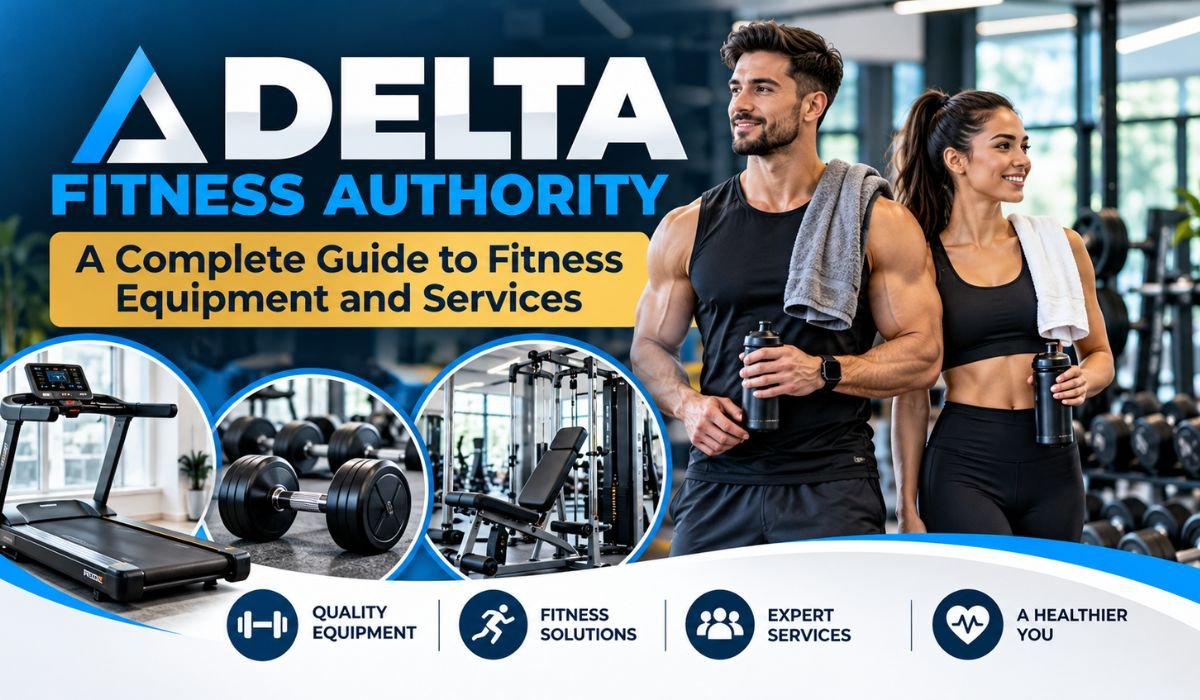
Buying fitness equipment can look straightforward from the outside. Pick a treadmill, add a few strength machines, find some free weights, and the gym is ready. In practice, creating a useful fitness space takes considerably more thought.
The equipment has to suit the people who’ll use it, fit comfortably within the available space, and withstand the level of use expected from it. Installation, flooring, maintenance, warranties, and technical support matter as well. A machine that works perfectly in a private home, for instance, may not be built for the constant daily use of a busy commercial gym.
That’s where specialist fitness equipment suppliers become relevant.
Delta Fitness Authority is associated with this professional fitness market in Saudi Arabia. More specifically, corporate information from Reza Group describes Delta Health & Fitness as operating through Delta Fitness Authority flagship stores in Jeddah, Riyadh, and Al Khobar. The wider business is connected with fitness equipment and facility solutions, including equipment layout, flooring, staff training, and other forms of support.
For anyone researching Delta Fitness Authority, the important question isn’t simply what the name represents. It’s also what buyers should expect from a professional fitness equipment supplier and how to judge whether a particular solution is right for their facility.
This guide looks at the company’s background, equipment categories, services, locations, and the practical details worth considering before investing in fitness equipment.
Quick Bio Information
| Information | Details |
|---|---|
| Name | Delta Fitness Authority |
| Industry | Fitness Equipment And Services |
| Market | Saudi Arabia |
| Business Connection | Delta Health & Fitness |
| Company Connection | Delta Marketing |
| Group Association | Alireza Group |
| Reported Start Of Delta Health & Fitness | 1992 |
| Early Fitness Relationship | Life Fitness |
| Flagship Store Cities | Jeddah, Riyadh And Al Khobar |
| Main Equipment Area | Commercial And Private Fitness Equipment |
| Cardio Category | Cardio Training Equipment |
| Strength Category | Strength Training Equipment |
| Specialist Equipment | Fitness And Assessment Solutions |
| Facility Service | Equipment Layout |
| Additional Service | Flooring Solutions |
| Professional Support | Staff Training |
| Financial Services | Finance And Leasing |
| Commercial Customers | Gyms And Professional Facilities |
| Hospitality Market | Hotels And Resorts |
| Residential Market | Private And Multi-Unit Residential Facilities |
What Is Delta Fitness Authority?
The easiest way to understand Delta Fitness Authority is through its relationship with Delta Health & Fitness. It shouldn’t be confused with a fitness philosophy, workout application, personal training system, or ordinary membership gym.
Corporate information describes Delta Health & Fitness as operating through Delta Fitness Authority flagship stores in Saudi Arabia. That places the name within the professional fitness equipment and facility-solutions market.
The distinction is useful because a person encountering the name online could reasonably assume Delta Fitness Authority is a gym chain or training program. Its business context is broader and more equipment-focused.
Supplying fitness equipment is only part of that picture. Developing a functional exercise facility can involve choosing appropriate machines, determining where they’ll be positioned, selecting suitable flooring, preparing staff, and considering what happens once the equipment is in regular use.
Those requirements can apply across very different settings. A large health club won’t need the same setup as a hotel fitness room, and neither will necessarily resemble a private Home Gym. The value of a specialist supplier lies partly in understanding those differences.
Company Background
Delta Fitness Authority sits within a wider corporate history in Saudi Arabia.
Reza Group’s published corporate information describes Delta Marketing as a subsidiary of the Alireza Group, with Reza Investment Company holding a 50 percent interest. Delta Marketing began operating in 1984 and subsequently developed several business divisions.
Its Sport & Leisure activities include Delta Health & Fitness and Delta Sports Retail.
A significant point in the company’s fitness history came in 1992, when Delta Health & Fitness began working with Life Fitness. Its business later expanded to include equipment and solutions associated with a broader range of international manufacturers.
That history gives potential customers useful context, particularly because Fitness Equipment isn’t usually a short-term purchase. Commercial machines can represent a substantial investment, and their usefulness depends on far more than how they perform on the day they’re installed.
Still, history alone isn’t enough to judge a current purchase. Product ranges evolve, commercial arrangements change, and individual equipment models come with different specifications. Buyers should always confirm present-day pricing, availability, warranties, delivery conditions, and support before making a decision.
Fitness Equipment And Brands
One notable part of the Delta Health & Fitness background is the range of international fitness brands historically associated with the business.
Corporate information has identified brands such as Life Fitness, Hammer Strength, Cybex, InBody, SportsArt, Pavigym, Concept II Rowing Machines, and Peak Pilates, alongside other specialist names.
These brands don’t all serve the same purpose. Their products span areas such as Cardio Equipment, Strength Equipment, Pilates, body assessment, flooring, and other specialist Fitness Solutions.
For customers, however, a long brand list shouldn’t be the deciding factor.
The better question is whether the available equipment suits the environment where it’ll actually be used. A commercial health club may need machines capable of handling frequent daily workouts. A hotel might prioritize simple controls and equipment that occasional users can operate comfortably. Someone building a Home Gym may care more about space, noise, and versatility.
Product ranges and distribution arrangements can also change over time. Historical associations shouldn’t automatically be treated as confirmation that every brand or model remains available today. Current inventory should always be checked before purchasing.
Cardio Equipment
Cardio Equipment often occupies some of the most prominent space in a fitness facility. Treadmills, exercise bikes, elliptical trainers, rowing machines, and similar products give users a controlled way to perform aerobic exercise indoors.
Choosing among them isn’t simply a matter of comparing displays or counting workout programs.
A buyer needs to consider the machine’s construction, dimensions, maximum user capacity, adjustment options, stability, noise, power requirements, maintenance demands, and expected workload.
That last point is particularly important.
A treadmill in someone’s home may be used for a relatively limited amount of time each week. The same type of machine in a busy commercial facility could be used repeatedly throughout the day by people of different sizes and fitness levels. Equipment intended for those environments needs to be selected accordingly.
Home users face their own practical concerns. A large machine might offer impressive specifications but become inconvenient if it overwhelms the room or produces more noise than expected.
Ultimately, good Cardio Equipment is equipment that fits its users, its environment, and its intended workload.
Strength And Functional Training
A balanced fitness facility usually needs more than Cardio Equipment. Strength and Functional Training can serve different exercise goals while giving users greater variety.
Strength Equipment may include selectorized resistance machines, plate-loaded equipment, benches, racks, cable systems, and free-weight areas. Each option comes with advantages and practical considerations.
Fixed resistance machines can make adjustments relatively straightforward and guide users through a defined movement. Free weights provide greater flexibility in exercise selection, but they also require appropriate storage and enough room for people to move safely.
Functional Training introduces another layer of versatility. Depending on the equipment available, users can perform pulling, pushing, carrying, rotational, and other multi-directional movements.
This is where facility design becomes especially important.
A machine might fit according to its listed dimensions but still be unsuitable once the space required for actual exercise is considered. Benches need room to move. Free weights require clearance. Users shouldn’t have to squeeze between machines simply because every available section of floor has been filled.
Good equipment planning considers movement as well as machinery.
Facility Planning And Equipment Layout
The layout of a gym can influence the experience almost as much as the equipment itself.
Corporate information about Delta Health & Fitness identifies equipment layout among its services. For commercial facilities in particular, this can be important because poor planning can undermine an otherwise strong equipment selection.
A useful Fitness Facility needs logical pathways, sufficient equipment spacing, appropriate flooring, ventilation, electrical access, and consideration for entrances and emergency routes. The expected number of users matters too.
Different training zones create different demands.
Powered Cardio Equipment may need convenient electrical connections. Strength machines require enough space for adjustments and movement. Free-weight areas generally benefit from greater clearance, while Functional Training often works best when users aren’t restricted to a tiny section of floor.
Flooring also deserves more attention than it sometimes receives. Different exercise areas may have different surface requirements, and flooring can affect both practical facility management and the overall training environment.
The goal isn’t to squeeze the largest possible number of machines into the room. A successful layout makes the available equipment easier and more comfortable to use.
Commercial Fitness Solutions
Commercial Fitness Equipment faces a demanding working life.
Corporate information indicates that Delta Health & Fitness has served environments including health clubs, personal studios, private gyms, physiotherapy clinics, residential developments, hospitality facilities, and other institutional settings.
Those customers can have dramatically different requirements.
A hotel Fitness Center, for example, may serve guests who exercise only occasionally. Straightforward controls and an approachable equipment selection can therefore be valuable. A busy commercial gym may have experienced members using machines throughout the day, making durability, variety, and service support more significant.
Residential facilities introduce another challenge because their users can vary widely in age, experience, and fitness goals.
These differences are why Commercial Gym Equipment shouldn’t be selected on appearance alone.
Facility operators also need to consider what happens when something goes wrong. A machine waiting weeks for repair still occupies valuable floor space but can’t serve customers. Access to technical expertise and replacement components can therefore affect the long-term value of an equipment purchase.
Home Fitness Equipment
The priorities change considerably when Fitness Equipment moves from a commercial facility into someone’s home.
Most households don’t require machines designed to withstand continuous use by dozens of people. Instead, practical issues such as available room, noise, convenience, and versatility often become more important.
Accurate measurements should come before the purchase.
The dimensions printed on a product specification tell only part of the story. Users need enough room to get onto the equipment, exercise comfortably, make adjustments, and move around it. Ceiling height can become important with some machines, while treadmills and other powered equipment require appropriate access to electricity.
Noise deserves consideration as well, especially in apartments or homes where exercise could disturb other people.
Where space is limited, versatility can be particularly valuable. A carefully chosen piece of equipment that supports several useful exercises may contribute more to a Home Gym than several machines that largely duplicate one another.
A successful Home Gym isn’t necessarily the one with the most equipment. It’s the one people can realistically and consistently use.
Installation And Professional Support
Fitness Equipment doesn’t always arrive ready to use.
Large machines can require assembly, careful positioning, setup, and operating checks. Commercial installations may be even more involved when multiple pieces of equipment need to be delivered and arranged as part of a larger facility project.
Corporate information about Delta Health & Fitness also identifies staff training among its services. That can be useful in a professional setting, where employees may need to understand equipment operation and basic facility procedures.
Customers shouldn’t assume, however, that every service is automatically included with every order.
Before purchasing, it makes sense to establish exactly what the quotation covers. Does the price include delivery? Who handles assembly? Is installation part of the package? Does the room need electrical or other preparation before the equipment arrives? Is staff training included?
These may sound like small details during the buying process, but they can become significant once a large order reaches the site.
Clear written terms help prevent misunderstandings.
Maintenance And Long-Term Value
The real cost of Fitness Equipment doesn’t end at the checkout.
Machines experience wear. Moving components, cables, belts, upholstery, electronics, fasteners, and other parts may eventually require inspection, adjustment, servicing, or replacement.
This makes maintenance particularly important in high-use environments.
Owners should follow the maintenance instructions provided for their specific equipment rather than assuming every machine requires the same care. Regular cleaning and visual inspection can also make it easier to notice developing problems.
Unusual sounds, unstable movement, damaged cables, worn components, electrical faults, or malfunctioning controls shouldn’t be dismissed simply because a machine still operates.
Commercial facilities have another reason to take maintenance seriously: downtime.
A cheaper machine may appear to offer better value initially, but the calculation changes if replacement parts are difficult to obtain or repairs repeatedly take equipment out of service.
Long-term value comes from balancing the purchase price with reliability, maintenance requirements, repairability, and available technical support.
Warranty And Buying Checks
Warranty information is easy to overlook when a buyer is focused on equipment features, but it can become extremely important later.
Coverage may vary by manufacturer, model, component, and intended use. A warranty that applies to residential use shouldn’t automatically be assumed to offer identical protection in a commercial facility.
Buyers should understand the duration of coverage, which components are included, whether labor is covered, what exclusions apply, and how a service request is handled.
The same level of attention should be given to the quotation itself.
A headline price may not represent the complete cost of a Fitness Facility project. Delivery, flooring, installation, accessories, staff training, servicing, and other requirements could be priced separately.
For larger purchases, written quotations and technical specifications make meaningful comparisons easier. Instead of asking which supplier offers the lowest number, buyers can compare what they’re actually receiving for the money.
That usually provides a much clearer picture of value.
Delta Fitness Authority Locations
Corporate information published by Reza Group identifies Delta Fitness Authority flagship stores in Jeddah, Riyadh, and Al Khobar. The same business information also refers to standalone Life Fitness stores within the wider operation.
Having a presence in major Saudi cities gives useful context to Delta Fitness Authority’s role in the country’s Fitness Equipment market.
Still, readers shouldn’t rely on historical location information alone when planning a visit.
Store addresses, operating hours, inventory, and available brands can change. Anyone considering a purchase should confirm the latest details before traveling.
Availability becomes even more important for larger commercial projects. A facility opening or renovation may depend on equipment arriving at a particular stage of the project. Product lead times, installation schedules, site readiness, and delivery arrangements should therefore be discussed early.
A strong equipment plan can still run into problems if timing is ignored.
How To Choose The Right Fitness Equipment
The most sensible Fitness Equipment purchase begins with a simple question: who is going to use it?
Everything else follows from there.
A private homeowner, hotel guest, experienced gym member, and corporate employee won’t necessarily need the same equipment. Frequency of use also matters. A machine operating for several hours each day faces different demands from equipment used occasionally at home.
Once the users and workload are understood, buyers can consider space, adjustability, user capacity, power requirements, maintenance, warranty coverage, and technical support.
It’s also worth separating genuinely useful features from attractive extras.
A long list of digital functions doesn’t automatically make a machine the right choice. If users find it uncomfortable, the equipment doesn’t fit the available space, or servicing is difficult, those additional features may offer little practical value.
The best purchase is rarely determined by one specification. It’s the result of balancing usability, performance, durability, support, and total ownership cost.
Fitness Technology And Future Facilities
Fitness Equipment has become increasingly connected.
Modern machines may include interactive displays, workout tracking, user profiles, performance information, and other digital functions designed to make exercise more engaging or measurable.
These developments can be useful, but technology shouldn’t overshadow the fundamentals.
A high-resolution screen won’t fix poor ergonomics. Advanced software won’t make an unsuitable machine fit into a cramped room. Connected features also don’t eliminate the need for maintenance and reliable mechanical construction.
For facility owners, long-term flexibility deserves consideration as well.
Durable equipment that can be maintained and repaired may offer greater long-term value than products that quickly become difficult to support. Facilities themselves may also need to adapt as training preferences and user expectations change.
In 2026, a modern Fitness Facility doesn’t have to be the one with the most technology. A stronger approach combines useful digital features with sensible planning, reliable equipment, comfortable spaces, and dependable support.
What Buyers Should Know Before Choosing Delta Fitness Authority
Researching a supplier should involve more than asking whether it has a good reputation.
In the case of Delta Fitness Authority, corporate information provides useful background. It connects the flagship stores with Delta Health & Fitness, identifies locations in major Saudi cities, and traces Delta Health & Fitness’s relationship with Life Fitness back to 1992.
That establishes context, but it doesn’t answer every question a customer should ask before buying.
The details of the actual transaction matter more.
Buyers should confirm the exact equipment model, technical specifications, current price, expected delivery date, installation arrangements, warranty conditions, maintenance options, and availability of replacement parts.
Commercial buyers should be especially careful because a delayed installation or long equipment outage can affect an entire facility rather than a single user.
Instead of asking only whether Delta Fitness Authority is a good supplier, consider a more useful question: does the specific equipment and service package being offered meet the needs of this particular project?
That’s the comparison that matters.
Final Thoughts
Delta Fitness Authority is connected with Saudi Arabia’s professional Fitness Equipment sector through Delta Health & Fitness. Corporate information identifies flagship stores in Jeddah, Riyadh, and Al Khobar, while the history of Delta Health & Fitness includes a relationship with Life Fitness beginning in 1992.
The wider business has been associated with Fitness Equipment, flooring, equipment layout, staff training, and other services designed for professional and private fitness environments.
Yet the most useful lesson for a buyer goes beyond any individual supplier.
A good Fitness Facility begins with understanding its users. Equipment then needs to match the available space, expected workload, training goals, budget, and ability to maintain it over time.
Warranty terms, installation, technical support, servicing, and replacement-parts availability deserve the same attention as features and appearance.
Whether the project is a Commercial Gym, hotel Fitness Center, residential facility, professional studio, or Home Gym, thoughtful planning usually delivers more value than simply buying more machines.
The strongest fitness spaces aren’t necessarily the biggest or most expensive. They’re the ones where equipment, people, and purpose fit together naturally.
FAQs About Delta Fitness Authority
What Is Delta Fitness Authority?
Delta Fitness Authority is the name associated with flagship stores through which Delta Health & Fitness operates in Saudi Arabia. The wider business is focused on Fitness Equipment and facility-related solutions rather than functioning simply as a conventional membership gym.
Who Owns Delta Fitness Authority?
The corporate relationship is best understood through Delta Health & Fitness and Delta Marketing. Reza Group states that Delta Marketing is a subsidiary of the Alireza Group and that Reza Investment Company holds a 50 percent interest in Delta Marketing.
When Did Delta Health & Fitness Start?
According to published corporate information, Delta Health & Fitness began with Life Fitness in 1992. Its business subsequently expanded to include equipment and solutions associated with several international Fitness Equipment brands.
Where Are Delta Fitness Authority Stores Located?
Corporate information identifies Delta Fitness Authority flagship stores in Jeddah, Riyadh, and Al Khobar in Saudi Arabia. Because retail information can change, customers should confirm current store details before planning a visit.
What Equipment Is Associated With Delta Fitness Authority?
The wider Delta Health & Fitness operation has historically been associated with equipment covering Cardio Training, Strength Training, Functional Fitness, Pilates, body assessment, flooring, and other specialist areas. Current brands, models, and stock should be confirmed directly before a purchase.
Does Delta Fitness Authority Serve Commercial Facilities?
Yes. Published corporate information describes Delta Health & Fitness as serving several professional environments, including health clubs, private gyms, studios, hospitality facilities, residential developments, physiotherapy clinics, and other organizations.
Does Delta Fitness Authority Provide Facility Planning?
Equipment layout and flooring are among the services identified in corporate information about Delta Health & Fitness. Because the exact scope of a project can vary, customers should confirm what planning, installation, training, and related services are included in their particular quotation.
What Should Customers Check Before Buying Fitness Equipment?
Buyers should examine the equipment’s specifications, intended workload, available space, installation requirements, warranty coverage, maintenance needs, service support, and replacement-parts availability. For larger projects, a detailed written quotation makes it easier to understand the full cost and compare suppliers fairly.
Learn more and explore exciting content on: Marketing Fundamentals: Essential Concepts Every Beginner Should Know
 IQ newswire
 ENGR NEWSWIRE