

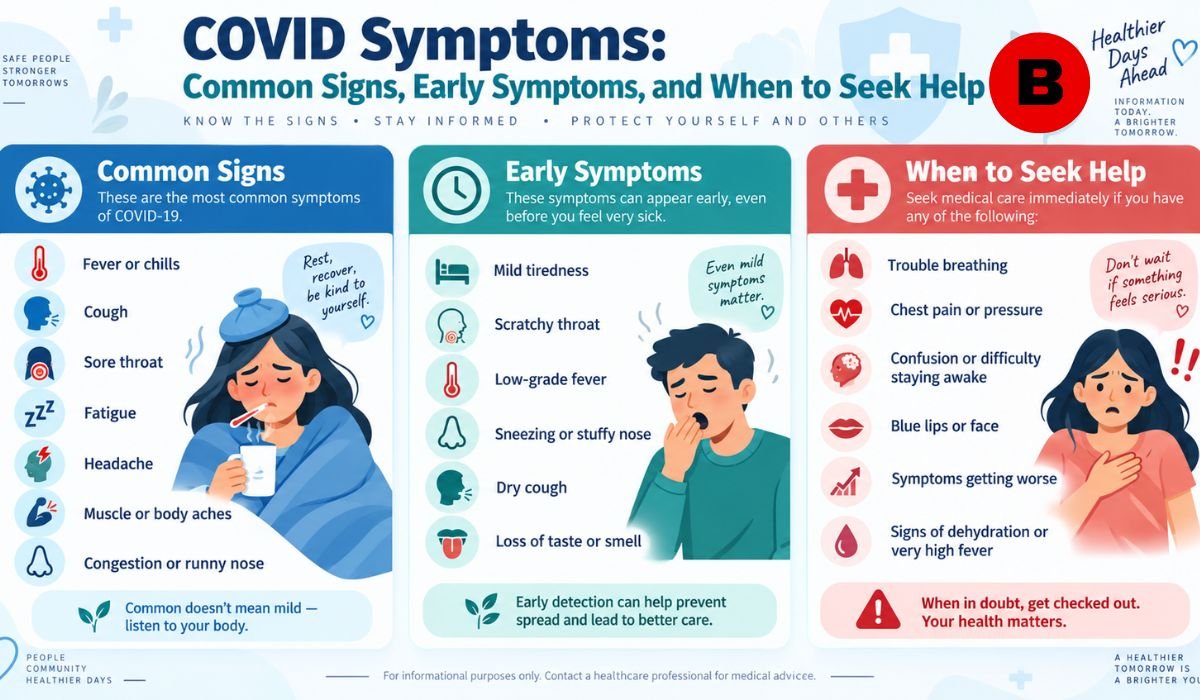
COVID Symptoms can look very different from one person to another. For some people, the illness feels much like a mild cold and passes within a relatively short time. For others, it can bring significant fatigue, breathing problems, or complications that require medical attention. Some people may not notice any symptoms at all, yet they can still carry and spread the virus.
COVID-19 is caused by SARS-CoV-2, a coronavirus that continues to circulate in 2026. While the disease is no longer in the same phase as the early pandemic, COVID-19 hasn’t disappeared, and severe illness remains possible, particularly among older adults and people with certain underlying health conditions.
Recognizing the common signs, understanding what early symptoms can look like, and knowing when a symptom has become an emergency can make it easier to decide what to do next. This guide explains COVID Symptoms, how they compare with cold and flu symptoms, who is more vulnerable to serious illness, how testing and treatment work, and when medical help is needed.
COVID-19 Quick Facts
| COVID-19 Fact | Helpful Information |
|---|---|
| Disease Name | COVID-19 |
| Causing Virus | SARS-CoV-2 |
| Virus Family | Coronavirus |
| Main Transmission | Respiratory Particles |
| Common Symptoms | Fever, Chills, Sore Throat, Cough, And Fatigue |
| Other Symptoms | Headache, Congestion, Body Aches, Nausea, And Diarrhea |
| Symptom-Free Infection | Possible |
| Pre-Symptomatic Spread | Possible |
| Possible Symptom Onset | 2–14 Days After Exposure |
| Testing Options | Antigen Tests And Molecular Tests |
| Treatment | Supportive Care And Antivirals For Eligible People |
| Higher-Risk Groups | Older Adults, Immunocompromised People, And Those With Certain Medical Conditions |
| Serious Complications | Pneumonia, Blood Clots, And Other Complications |
| Long COVID | Possible After Infection |
| Vaccination | Helps Reduce The Risk Of Severe Disease |
| Global Circulation | SARS-CoV-2 Continues To Circulate |
| Recovery | Varies From Person To Person |
| Emergency Concerns | Breathing Difficulty, Chest Pain, Or Confusion |
| Medical Advice | Especially Important For People At Higher Risk |
What Is COVID-19?
COVID-19 is a respiratory illness caused by the SARS-CoV-2 virus. The virus can spread from an infected person through respiratory particles, particularly during close contact. A person can transmit SARS-CoV-2 before symptoms begin, and some infected people never develop noticeable symptoms.
The illness can range from an infection with no symptoms to mild or moderate disease and, in some cases, critical illness. Symptoms and their severity can also change as an illness progresses. That’s why a person who initially feels only mildly unwell shouldn’t automatically assume the illness will remain mild.
COVID-19 symptoms can include fever, chills, sore throat, cough, fatigue, headache, congestion, body aches, shortness of breath, and digestive symptoms. Changes in taste or smell can also occur. The exact pattern varies, and symptoms can change as SARS-CoV-2 continues to evolve.
Common COVID Symptoms
The most familiar COVID Symptoms include fever or chills, cough, sore throat, fatigue, headache, muscle or body aches, congestion, runny nose, and shortness of breath. Some people also experience nausea, vomiting, or diarrhea. A new loss of taste or smell remains a possible symptom, although it isn’t present in every infection.
One important point is that there’s no single symptom that proves someone has COVID-19. A person may have several symptoms at once, while another may experience only one or two. Someone might start with a sore throat and congestion, for example, and develop a cough or unusual tiredness later.
Fever isn’t required either. Some people with COVID never develop a fever, so waiting for a temperature increase before considering the possibility of infection can be misleading. Symptoms alone also can’t reliably distinguish COVID-19 from influenza or a common cold.
Early COVID Symptoms
Early COVID Symptoms can be subtle. A person may first notice a scratchy or painful throat, headache, tiredness, congestion, cough, fever, chills, or body aches. In some cases, the change is simply that they feel unusually tired or generally unwell.
According to the CDC, COVID-19 symptoms can appear anywhere from 2 to 14 days after exposure, although the timing varies from person to person.
Early symptoms can easily be mistaken for a cold because the illnesses share several features. That’s one reason testing can be useful, particularly for people who recently had a known exposure or who are at higher risk for severe disease.
The most important thing isn’t to identify a particular symptom as the “first” COVID symptom. Instead, pay attention to a new combination of respiratory or flu-like symptoms and how they develop over the following days.
COVID Symptoms Without A Fever
You can absolutely have COVID without a fever. Fever and chills are possible symptoms, but they’re not present in every infection. Some people mainly experience congestion, sore throat, cough, headache, fatigue, or body aches. Others may have digestive symptoms such as nausea, vomiting, or diarrhea.
There are also people who have COVID without noticeable symptoms. This is important because feeling healthy doesn’t necessarily mean you can’t transmit SARS-CoV-2. The virus can be spread before symptoms appear, and some infected people remain asymptomatic.
For that reason, a recent exposure, symptoms, and personal risk factors may all be relevant when deciding whether testing or medical advice is appropriate.
COVID Symptoms Vs. Cold And Flu
COVID-19, influenza, and the common cold have considerable overlap. Cough, sore throat, congestion, headache, fatigue, fever, and body aches can occur with more than one of these infections.
That makes it difficult to determine which virus is responsible simply by looking at symptoms. The CDC specifically notes that COVID-19 and flu can’t reliably be distinguished by symptoms alone. Some molecular tests can even test for both infections at the same time.
Testing becomes particularly important when the result could affect treatment. Someone at increased risk of severe COVID-19 or influenza may benefit from antiviral treatment, and these medicines work best when started early.
So, rather than trying to diagnose yourself from a symptom checklist, consider the bigger picture: your symptoms, recent exposure, current circulation of respiratory viruses, risk factors, and whether testing is available and appropriate.
COVID Symptoms In Adults And Children
COVID-19 can affect both adults and children, but the severity and combination of symptoms can differ. Children may experience fever, cough, sore throat, congestion, fatigue, headache, body aches, or digestive symptoms. Some children have very mild infections, while others can become seriously ill.
Parents and caregivers should pay attention to changes that go beyond an ordinary respiratory illness. Difficulty breathing, dehydration, unusual sleepiness, confusion, or rapidly worsening symptoms deserve prompt medical attention.
It’s also important to be careful with medicines given to children. Parents should follow the product instructions and speak with a pediatrician or other qualified healthcare professional when they’re unsure whether a particular medicine is appropriate.
Who Is At Higher Risk Of Severe COVID-19?
COVID-19 doesn’t affect everyone in the same way. Many people experience mild or moderate illness, but the risk of severe disease rises with certain age groups and medical conditions.
Older adults are among those at greatest risk, with risk increasing as age advances. People with conditions such as chronic lung disease, heart disease, or a weakened immune system may also be more likely to develop severe illness. People who aren’t up to date with recommended COVID-19 vaccination can also face greater risk.
Other medical conditions can influence the course of an infection as well. That’s why someone with significant underlying health concerns shouldn’t necessarily wait for severe symptoms before contacting a healthcare professional.
Early medical advice can be especially important for higher-risk people because COVID-19 antiviral treatment has a limited window in which it should be started.
When COVID Symptoms Become Serious
Many COVID infections can be managed outside the hospital, but symptoms can change during the illness. A person may begin with mild symptoms and later develop more significant problems.
Increasing difficulty breathing is particularly concerning. Persistent or worsening chest discomfort, new confusion, unusual difficulty staying awake, or a noticeable change in the color of the skin, lips, or nail beds can also signal a medical emergency.
The important lesson is simple: don’t judge the seriousness of COVID solely by how the illness began. If symptoms become severe or suddenly change, seek appropriate medical care.
COVID-19 Complications And Long COVID
COVID-19 can sometimes cause complications that go beyond the initial respiratory infection. Severe illness can involve pneumonia, acute respiratory distress syndrome, blood clots, and problems affecting other organs.
Another concern is Long COVID, also known as post-COVID-19 condition. Some people continue to experience symptoms after the initial infection has passed. These can include fatigue, shortness of breath, headaches, muscle or joint pain, sleep problems, memory difficulties, and trouble concentrating.
Long COVID isn’t a single symptom or one clearly defined experience. Symptoms can vary from person to person, and they may improve, return, or fluctuate over time. When ongoing symptoms interfere with everyday activities, a healthcare professional can help evaluate them and look for other possible causes.
How COVID-19 Is Diagnosed
COVID-19 is diagnosed using a viral test. The two broad categories are molecular tests, including nucleic acid amplification tests such as PCR, and antigen tests that detect SARS-CoV-2 or components of the virus.
Rapid antigen tests are convenient because they can provide results quickly. Molecular tests are another important option and can be particularly useful when a reliable diagnosis is needed.
Testing can be especially valuable for someone at higher risk of severe disease. A confirmed diagnosis may help a healthcare professional decide whether antiviral treatment is appropriate and whether additional precautions are needed.
How Is COVID-19 Treated?
For most people with mild COVID-19, treatment focuses on managing symptoms while the body recovers. Rest, fluids, and appropriate over-the-counter medicines can help with problems such as fever, headache, body aches, or cough.
People at higher risk of severe disease may qualify for antiviral treatment. Current CDC guidance recommends starting COVID-19 treatment as soon as possible and within 5 to 7 days after symptoms begin, depending on the medication.
Current outpatient treatment options include nirmatrelvir with ritonavir, commonly known as Paxlovid, and remdesivir. Molnupiravir may be used in certain circumstances when preferred options aren’t appropriate or available. Each medicine has different eligibility requirements, timing, routes of administration, and potential interactions or precautions.
One particularly important point is that people at high risk shouldn’t delay contacting a healthcare professional simply because they haven’t received a positive test result. CDC guidance says a positive test isn’t required to begin treatment when a clinician determines that treatment is appropriate.
COVID-19 can also sometimes rebound. This means symptoms may return or a new positive test may appear several days after initial recovery or a negative result. CDC notes that rebound can occur whether or not someone took antiviral medication and is usually mild and short-lived.
How Long Do COVID Symptoms Last?
There’s no universal recovery timeline. Some people feel substantially better within days, while others continue dealing with fatigue, cough, breathing problems, or other symptoms for longer.
The course can also change as the illness progresses. Someone may improve and then experience a return or worsening of symptoms. Current CDC guidance advises seeking medical care when symptoms are severe or concerning, or when symptoms improve and then return or become worse.
If symptoms remain persistent or interfere with everyday life, particularly after the initial infection has resolved, it’s worth discussing them with a healthcare professional. Persistent symptoms may require evaluation for Long COVID or other conditions.
How Long Are You Contagious With COVID?
There isn’t one fixed number of days that applies to every person with COVID-19. People can transmit SARS-CoV-2 before symptoms begin, and some infected people don’t develop symptoms at all. Infectiousness also changes over the course of an infection.
If you’re experiencing respiratory symptoms, the safest approach is to stay home and away from other people while you’re sick and take additional precautions when returning to normal activities. This is particularly important around people who are older, immunocompromised, or otherwise at higher risk of severe illness.
Following current local public-health guidance is also important because recommendations can change as respiratory-virus patterns and scientific evidence evolve.
How To Feel Better At Home
Most people with mild or moderate COVID-19 can recover at home. Supportive care generally means getting enough rest, drinking fluids, and using appropriate over-the-counter medicines to ease uncomfortable symptoms.
Medicines such as acetaminophen or ibuprofen may help reduce fever or relieve aches for people who can safely take them. Always follow the product instructions and consider other medicines or health conditions that could affect whether a particular medication is suitable.
Home recovery should also include paying attention to how symptoms are changing. Trouble breathing, dehydration, persistent chest pain, confusion, or another severe or concerning symptom shouldn’t simply be watched at home. People at higher risk of severe COVID-19 should also contact a healthcare professional promptly because treatment works best when started early.
How To Prevent COVID-19
COVID-19 prevention remains relevant even though the world has moved beyond the emergency phase of the pandemic. Vaccination can reduce the risk of severe disease, while practical measures such as staying away from others when sick can reduce transmission.
Good ventilation can also help reduce exposure to infectious respiratory particles indoors. Depending on the situation, wearing a well-fitting mask may provide an additional layer of protection, particularly around people at higher risk.
Vaccination recommendations can vary according to age, health status, country, and changing public-health guidance. Rather than relying on an old schedule, it’s best to follow current recommendations from your local health authority or healthcare professional.
People with weakened immune systems may need additional protection. CDC guidance currently includes pre-exposure preventive treatment for certain moderately or severely immunocompromised people.
When Should You Seek Medical Help?
If you develop COVID Symptoms and have risk factors for severe illness, don’t wait until you’re seriously sick to contact a healthcare professional. Early testing and treatment can be important because antiviral medicines have a short treatment window.
You should also seek medical advice when symptoms are severe, concerning, or aren’t improving as expected. Current CDC guidance recommends medical evaluation for problems such as trouble breathing, dehydration, symptoms that persist without improvement, or symptoms that improve and then return or worsen.
Emergency care is necessary for serious warning signs such as difficulty breathing, persistent chest pain or pressure, new confusion, inability to wake or stay awake, or pale, gray, or blue-looking skin, lips, or nail beds. If these symptoms occur, seek emergency medical help immediately.
Final Thoughts
Understanding COVID Symptoms is still important in 2026. SARS-CoV-2 continues to circulate, and infection can range from an illness with no noticeable symptoms to severe disease requiring hospitalization. Common symptoms include fever or chills, sore throat, cough, fatigue, headache, congestion, body aches, shortness of breath, and sometimes digestive problems.
The most useful approach isn’t to wait for one specific symptom. Instead, pay attention to changes in how you feel, consider testing when appropriate, and take your personal risk factors seriously. For people who are more likely to develop severe COVID-19, early medical advice can be especially valuable because antiviral treatment needs to be started within a limited window.
Most people with mild illness can recover at home, but COVID-19 shouldn’t be dismissed when symptoms become severe or unexpectedly change. Trouble breathing, persistent chest pain, confusion, difficulty staying awake, or pale, gray, or blue discoloration require urgent medical attention.
COVID-19 may be a familiar illness now, but knowing what to watch for still matters. Understanding the symptoms, recognizing your own risk, testing when appropriate, and seeking timely care can help you make safer and better-informed decisions throughout an infection.
FAQs About COVID Symptoms
What Are The First COVID Symptoms?
Early COVID Symptoms can include a sore throat, cough, fatigue, headache, congestion, fever or chills, and body aches. The order and combination aren’t the same for everyone. Symptoms can appear 2 to 14 days after exposure, according to the CDC.
Can You Have COVID Without A Fever?
Yes. Not everyone with COVID develops a fever. Some people may experience cough, sore throat, congestion, fatigue, headache, or digestive symptoms instead. Others may have no noticeable symptoms at all.
How Can You Tell COVID From A Cold?
It’s often impossible to tell from symptoms alone. COVID-19 and the common cold can both cause congestion, cough, sore throat, and fatigue. COVID can also resemble influenza. Testing is the more reliable way to determine whether SARS-CoV-2 is responsible when confirmation is important.
How Long Do COVID Symptoms Usually Last?
The duration varies considerably. Many people improve within days or over the course of a couple of weeks, while others have symptoms that last longer. If symptoms persist, interfere with daily life, or improve and then worsen, medical advice is appropriate.
Can COVID Symptoms Come Back?
Yes. Some people experience a return of symptoms after initially improving. CDC also recognizes COVID-19 rebound, in which symptoms return or a positive test appears again several days after recovery or a negative test. Rebound can happen with or without antiviral treatment and is generally mild.
When Should I Seek Emergency Care?
Seek emergency medical attention if you develop trouble breathing, persistent chest pain or pressure, new confusion, inability to wake or remain awake, or pale, gray, or blue discoloration of the skin, lips, or nail beds. These symptoms can signal serious illness.
Are COVID Antivirals Available?
Yes. Several antiviral treatments are available for eligible people at higher risk of severe COVID-19. Treatment should be started as soon as possible and within the appropriate window, which is generally 5 to 7 days after symptoms begin depending on the medicine.
Can Vaccination Reduce The Risk Of Severe COVID-19?
COVID-19 vaccination can help reduce the risk of severe disease. Recommendations vary according to age, health status, location, and current public-health guidance, so it’s best to follow the latest advice from an appropriate health authority or healthcare professional.
Learn more and explore exciting content on: Who Is Mark Fluent? Inside Justine Bateman’s Husband’s Life and Career
 IQ newswire
  ENGR NEWSWIRE