

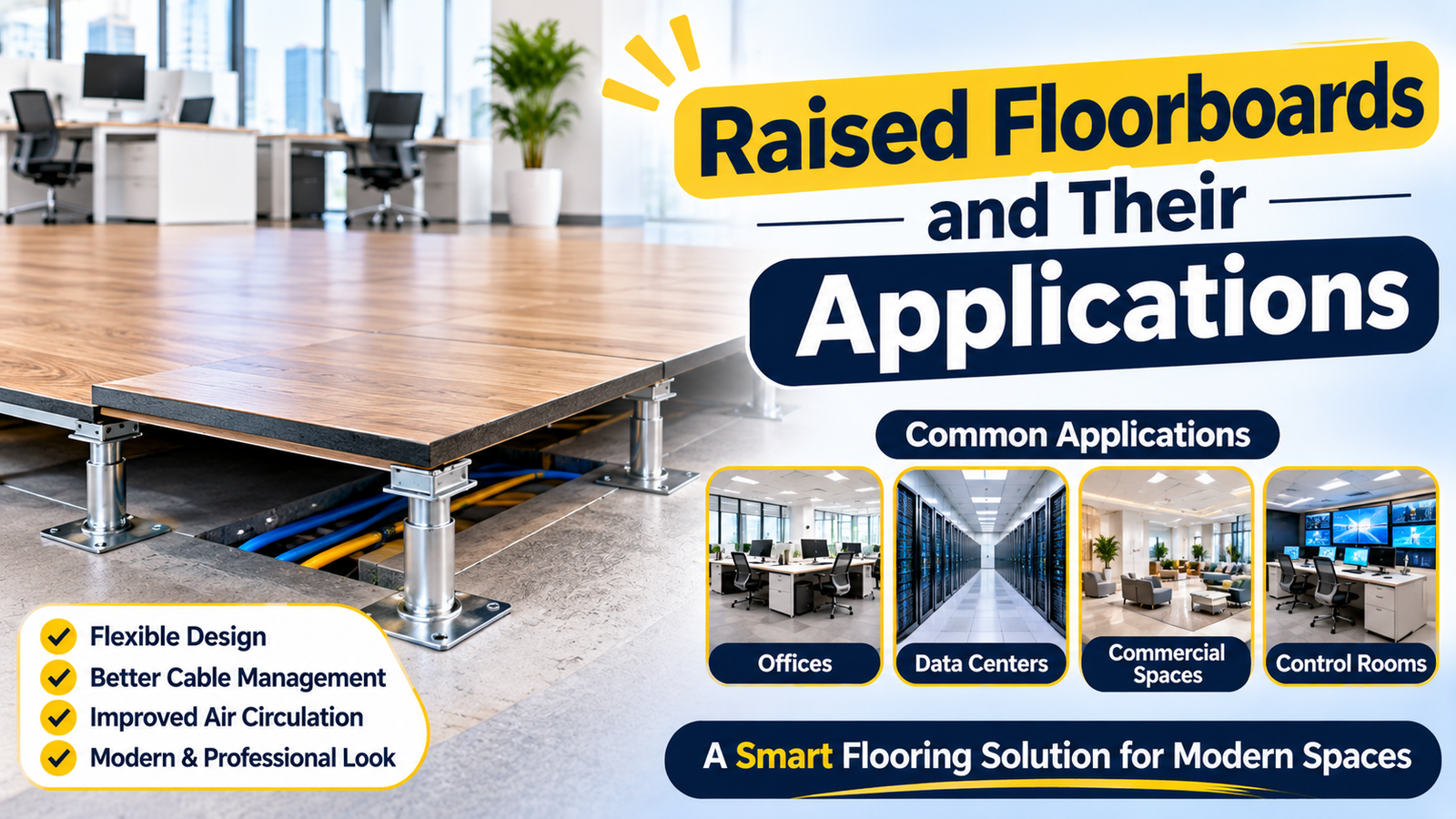
Modern commercial buildings depend on far more cabling, cooling, and power distribution than older properties were ever designed to handle. Raised access floors solve this by creating a hidden void between the structural slab and the walking surface, where services can run freely and be reached at any time by lifting a panel. The result is a cleaner, safer and far more adaptable workspace.
Not every system suits every building, however, as panels differ in core material, load capacity, finish and airflow. Before you buy, it helps to know the main types of raised floorboards and the spaces each one suits best.
Woodcore Panels
Woodcore panels feature a high-density chipboard core, usually encased in galvanised steel or finished with a protective edge trim. They are lightweight, quiet underfoot and among the most cost-effective options available.
These qualities make them a popular choice for general offices, meeting rooms and open-plan workspaces where loads are moderate and frequent layout changes are expected. However, keep them away from moisture, as prolonged damp can cause the core to swell.
Calcium Sulphate Panels
Made from a dense blend of calcium sulphate and reinforcing fibres, these panels offer excellent fire resistance, strong acoustic performance and a solid, stable feel. They are also less affected by humidity than woodcore alternatives.
Calcium sulphate systems are well suited to corporate headquarters, banks, government buildings and premium office fit-outs where comfort and safety are priorities.
Steel Cementitious Panels
These panels consist of a welded steel shell filled with lightweight cement, combining high load capacity with good fire performance and moisture resistance. They handle heavy rolling loads and equipment with ease, making them ideal for data centres, server rooms, control rooms and telecommunications facilities.
Their rigid construction also keeps panels level under constant movement, reducing rocking and wear over time.
Aluminium Panels
Aluminium panels are precision die-cast, lightweight and corrosion-resistant, with very tight dimensional tolerances. They are typically specified for cleanrooms, laboratories, pharmaceutical facilities and semiconductor environments, where hygiene, stability and electrostatic control are critical.
Although more expensive, their precision and longevity justify the investment in sensitive settings.
Perforated and Grated Airflow Panels
In spaces that use underfloor air distribution, perforated or grated panels allow cooled air to rise directly where it is needed. Data centres place them in front of server racks to manage heat efficiently, while some offices use them to improve ventilation and reduce energy costs.
This targeted cooling helps prevent hotspots that could damage equipment. Adjustable dampers allow airflow to be fine-tuned as equipment layouts change.
Choosing the Right Finish
The top surface is just as important as the core. Common finishes include:
- Carpet tiles for offices, adding comfort and sound absorption
- High-pressure laminate for anti-static performance in technical rooms
- Vinyl for durable, easy-to-clean surfaces in busy areas
- Conductive finishes for sensitive electronic environments
Pedestal height also matters, with low-profile systems suiting cable-only offices and taller pedestals accommodating air distribution and heavier services. Specialists offering complete flooring solutions Jordan can advise on the right core, finish and pedestal height for each zone, ensuring the system meets load, safety and budget requirements.
Building Flexibility into Commercial Spaces
Raised floors give commercial buildings the freedom to adapt as technology and teams evolve. Matching the panel type to the demands of each space, from quiet offices to high-load data halls, ensures long-term performance, easier maintenance and a far better return on investment. Careful specification at the planning stage also prevents costly modifications once the building is occupied.
 Apex Apex