

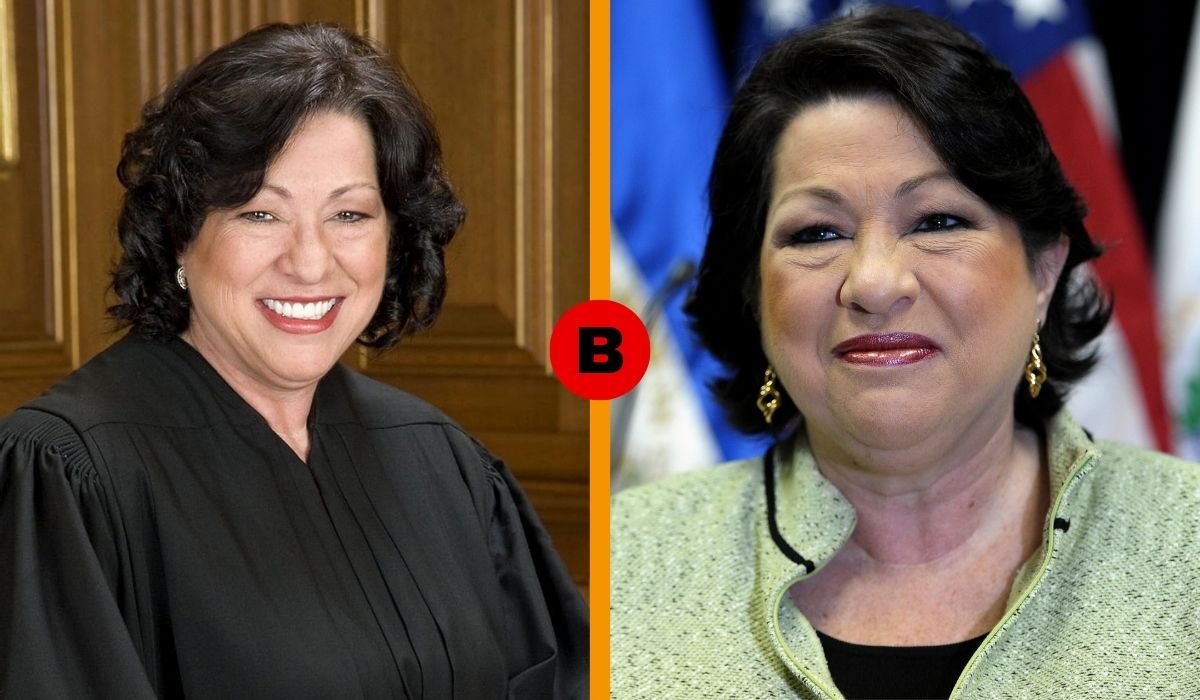
Sonia Sotomayor has built one of the most remarkable careers in modern American law. Born in the Bronx to Puerto Rican parents, she grew up in a working-class family before going on to study at Princeton University and Yale Law School. Her professional journey took her through the New York County District Attorney’s Office, private legal practice, the federal judiciary, and eventually the United States Supreme Court.
When Sonia Sotomayor joined the Supreme Court in 2009, she became the first Hispanic Justice and the first Latina to serve on the nation’s highest court. The appointment was historic, but it didn’t happen overnight. It followed decades of education, courtroom experience, judicial service, and steady professional growth.
As of 2026, Sotomayor continues to serve as an Associate Justice of the Supreme Court. Away from the bench, she has also shared much of her personal journey through her memoir, My Beloved World. The book offers readers a closer look at her childhood, family, education, career, and the experiences that helped shape the woman who eventually reached the highest court in the country.
Quick Bio Information
| Bio Detail | Information |
|---|---|
| Full Name | Sonia Maria Sotomayor |
| Born | June 25, 1954 |
| Birthplace | Bronx, New York City, New York |
| Heritage | Puerto Rican |
| Profession | Lawyer And Judge |
| Current Position | Associate Justice Of The U.S. Supreme Court |
| Supreme Court Tenure | Since August 8, 2009 |
| Historic Distinction | First Hispanic Justice Of The Supreme Court |
| Undergraduate School | Princeton University |
| Princeton Degree | B.A. In History, 1976 |
| Law School | Yale Law School |
| Law Degree | J.D., 1979 |
| Early Legal Position | Assistant District Attorney |
| Private Practice | Pavia & Harcourt |
| Federal District Court | U.S. District Court For The Southern District Of New York |
| Appellate Court | U.S. Court Of Appeals For The Second Circuit |
| Former Spouse | Kevin Edward Noonan |
| Marriage | 1976–1983 |
| Memoir | My Beloved World |
| Major Recognition | Time 100 Most Influential People, 2010 |
| Princeton Honor | Sonia Sotomayor Hall, Dedicated In 2025 |
Sonia Sotomayor’s Early Life And Childhood
Sonia Maria Sotomayor was born on June 25, 1954, in the Bronx, New York City. Her parents, Juan Sotomayor and Celina Sotomayor, were of Puerto Rican heritage and had moved to New York in search of better opportunities. She grew up in the South Bronx, and those early years would become an important part of the personal story she later shared with the public.
Her father worked as a tool-and-die worker, while her mother eventually became a nurse. When Sonia was just nine years old, her father died. His death left Celina to raise Sonia and her younger brother, Juan, while continuing to make education a priority for her children.
Sotomayor has often spoken about the modest circumstances of her childhood. She grew up in a household where money was limited and possessions were treated carefully. Those experiences gave her an early understanding of financial hardship and, just as importantly, of how much educational opportunity could change a person’s future.
The Bronx of her childhood didn’t determine where she would end up. Instead, Sotomayor gradually turned her attention toward education and professional achievement. That determination would eventually take her far beyond the neighborhood where she was raised.
Sonia Sotomayor’s Puerto Rican Family Heritage
Sotomayor’s Puerto Rican heritage remains an important part of her life story. Her parents were part of the Puerto Rican migration to New York, and their experience reflected the search for opportunity that brought many Puerto Rican families to the mainland United States.
Her mother, Celina, had a particularly strong influence on her upbringing. After her husband’s death, Celina continued raising her children and encouraged them to take education seriously. Sotomayor has credited her mother with nurturing her interest in reading and helping develop the discipline that later became so important in her academic and professional life.
That family background gained even greater attention when President Barack Obama nominated Sotomayor to the Supreme Court in 2009. Her nomination represented a historic moment for Hispanic and Latino Americans.
Still, her heritage was only one part of her story. By the time she reached the Supreme Court, Sotomayor had already accumulated decades of legal experience. She had worked as a prosecutor and private attorney and had served as both a federal trial judge and appellate judge.
Sonia Sotomayor’s Education And Path Toward Law
Education became one of the defining forces in Sonia Sotomayor’s life. She attended Cardinal Spellman High School in the Bronx before entering Princeton University in 1972.
At Princeton, she studied history and graduated in 1976 with highest honors. She was elected to Phi Beta Kappa and received the Moses Taylor Pyne Honor Prize, Princeton’s highest general undergraduate honor. She also became active in student organizations, including Acción Puertorriqueña, and participated in efforts involving Latino students and campus life.
After Princeton, Sotomayor attended Yale Law School. She earned her Juris Doctor degree in 1979 and served as an editor of the Yale Law Journal.
Her academic success gave her an exceptional foundation for the legal profession. Yet her eventual rise to the Supreme Court wasn’t the result of one impressive credential. It was built through a series of demanding steps, with each stage adding another layer of experience.
Sonia Sotomayor’s Early Legal Career
After graduating from Yale Law School, Sotomayor began practicing law as an Assistant District Attorney in the New York County District Attorney’s Office. She served there from 1979 to 1984, gaining valuable courtroom experience along the way.
Working as a prosecutor gave her a practical understanding of the criminal justice system. She handled criminal matters and spent time in court, where legal arguments and decisions had immediate consequences for real people.
In 1984, she moved into private practice at Pavia & Harcourt in New York City. Her work there focused largely on international commercial litigation and business-related legal matters. She eventually became a partner at the firm.
The two sides of her early career gave her a broad legal foundation. Her prosecutorial work exposed her to criminal law and courtroom practice, while private practice allowed her to work on complicated commercial disputes. That combination would prove useful when she moved into the federal judiciary.
Sonia Sotomayor’s Rise To The Federal Judiciary
Sotomayor entered the federal judiciary in 1992 after President George H. W. Bush nominated her to the U.S. District Court for the Southern District of New York. The Senate confirmed her nomination, and she began serving as a federal district judge that year.
She remained on the district court until 1998. During that period, she presided over trials and handled a wide range of federal cases. The role required her to evaluate evidence, hear arguments, interpret federal law, and make decisions affecting individuals, businesses, and government interests.
Her next step came in 1997, when President Bill Clinton nominated her to the U.S. Court of Appeals for the Second Circuit. After receiving Senate confirmation, she joined the appellate court in 1998.
The Second Circuit gave Sotomayor a different judicial perspective. Rather than presiding over trials, appellate judges review decisions made by lower courts and address significant questions of law. She remained on the Second Circuit until her nomination to the Supreme Court in 2009.
By then, Sotomayor had developed extensive experience at both the trial and appellate levels. Her judicial background would become one of the major strengths of her Supreme Court nomination.
Sonia Sotomayor’s Historic Supreme Court Appointment
President Barack Obama nominated Sonia Sotomayor to the Supreme Court on May 26, 2009. She was chosen to fill the vacancy created by the retirement of Justice David Souter.
The Senate confirmed her nomination on August 6, 2009, by a vote of 68–31. Two days later, on August 8, she took the constitutional and judicial oaths and officially became a member of the Supreme Court.
With that appointment, Sotomayor became the first Hispanic Justice of the Supreme Court and the first Latina to serve on the nation’s highest court. She also became the 111th Justice in the Court’s history and the third woman to serve on it.
Her oath ceremony marked another notable moment. It was televised live from the Supreme Court for the first time. A formal investiture ceremony followed on September 8, 2009, with Chief Justice John Roberts administering the judicial oath.
For many Americans, the appointment carried significance beyond the Court itself. Sotomayor’s journey from a working-class neighborhood in the Bronx to the nation’s highest court represented a dramatic example of educational and professional mobility.
Sonia Sotomayor As A Supreme Court Justice
As a Supreme Court Justice, Sonia Sotomayor takes part in cases involving some of the most consequential legal and constitutional questions in the United States. Her responsibilities extend well beyond the highly publicized arguments that occasionally dominate the news.
The Justices review petitions, study written briefs, hear oral arguments, discuss cases in private conferences, and write or join opinions. Sotomayor’s earlier experience as both a trial and appellate judge gave her years of practical judicial experience before she arrived at the Supreme Court.
During her tenure, she has written opinions involving areas such as criminal justice, constitutional rights, discrimination, civil procedure, government authority, and other important questions of American law.
Her historical importance, therefore, isn’t limited to becoming the first Latina on the Court. Her decisions, opinions, and years of judicial work form a substantial part of the record she will leave behind.
As of 2026, Sotomayor remains an Associate Justice of the United States Supreme Court. She is also the Justice assigned to the Second Circuit, which includes Connecticut, New York, and Vermont.
Sonia Sotomayor And The “Wise Latina” Description
The phrase “wise Latina” became strongly associated with Sotomayor after she made comments about how personal experience can influence the way people understand difficult issues.
The statement became a major topic of debate during her Supreme Court nomination. Supporters saw it as an acknowledgment of the value that different life experiences can bring to decision-making, while critics questioned whether a judge’s personal background should influence judicial decisions.
The phrase, however, represents only a small part of Sotomayor’s much broader professional record. Before joining the Supreme Court, she had spent years as a prosecutor, private attorney, district judge, and appellate judge.
Sotomayor has also spoken about the fact that judges are human beings who inevitably bring their experiences and perspectives to their understanding of the world. Her comments help explain why her personal background became such an important part of the national discussion surrounding her appointment.
Sonia Sotomayor’s Personal Life And Marriage
Although Sonia Sotomayor has lived much of her professional life in the public eye, she has generally kept her personal life relatively private.
She was previously married to Kevin Edward Noonan. The couple married on August 14, 1976, and divorced in 1983.
Their marriage began shortly after Sotomayor graduated from Princeton and before she completed her studies at Yale Law School. Beyond those documented details, relatively little about the relationship is central to her public biography.
Her family background and childhood have played a much greater role in the story of her life. Those experiences, particularly the influence of her mother and the challenges her family faced, are explored more fully in My Beloved World.
Sonia Sotomayor’s Personality And Work Habits
Sotomayor has occasionally shared personal details that offer a glimpse of the person behind her formal judicial role. One example is her description of her ability to concentrate for long periods.
She has recalled that colleagues would sometimes joke about talking outside her office because they knew that, when she was deeply focused, even loud conversations were unlikely to distract her.
Stories like this add a human dimension to a career that can otherwise seem distant and highly formal. Sotomayor has also shown a willingness to talk about ordinary experiences, family memories, and the challenges she encountered along the way.
Her comments suggest a person who places considerable value on preparation and concentration. At the same time, she hasn’t presented her success as something that happened without help. Her story repeatedly acknowledges the influence of family, education, mentors, and opportunity.
My Beloved World And Sonia Sotomayor’s Life Story
In 2013, Sotomayor published her autobiography, My Beloved World. The memoir offers readers a more personal account of her childhood, family, education, early ambitions, and professional development.
One of the reasons she chose to write the book was her concern that becoming a Supreme Court Justice could create an unrealistic image of who she was. She wanted readers to understand that she had grown up as an ordinary child facing ordinary challenges and that her eventual success developed gradually.
The memoir provides additional insight into the role her family played in her life, particularly her mother’s determination to support her children after the death of Sonia’s father.
It also shows how education, relationships, mentors, setbacks, and personal choices contributed to her development. For anyone interested in Sonia Sotomayor beyond her Supreme Court title, My Beloved World remains an important first-person account of the journey behind her public career.
Sonia Sotomayor’s Views On Success And Networking
Sotomayor has spoken openly about the importance of professional relationships and networking. Her view is practical: doing good work matters, but professional success can also depend on whether people know who you are and understand what you can contribute.
Her own career illustrates that point. Education created opportunities, while legal ability and professional experience helped her make the most of them. Along the way, relationships with teachers, mentors, lawyers, judges, colleagues, and institutions became part of her professional journey.
Her experience offers a useful lesson for people entering demanding fields. Networking isn’t a substitute for knowledge, preparation, or integrity. Rather, professional relationships can help capable people find opportunities where their skills and work can be recognized.
In Sotomayor’s case, that combination of preparation and professional connection accompanied her journey from Princeton and Yale to law practice, the federal courts, and ultimately the Supreme Court.
Sonia Sotomayor’s Major Achievements And Recognition
Sotomayor’s career includes significant achievements at almost every stage. She graduated from Princeton with highest honors, received the university’s highest general undergraduate honor, earned her law degree from Yale, and built experience as both a prosecutor and private attorney.
She then moved into the federal judiciary, first as a district judge and later as a judge on the Second Circuit Court of Appeals. Her nomination to the Supreme Court in 2009 marked the culmination of those years of professional and judicial experience.
In 2010, Time magazine included her among its 100 Most Influential People in the World in the “Thinkers” category.
Her connection with Princeton has also continued decades after her graduation. In 2025, the university dedicated Sonia Sotomayor Hall in her honor and unveiled a portrait of her for its permanent art collection. The building houses programs connected with access, opportunity, admission, and career development.
Princeton has also established a scholarship fund in her honor for first-generation students who demonstrate a commitment to service. The recognition is especially fitting given the role education played in Sotomayor’s own rise from the Bronx to the Supreme Court.
Sonia Sotomayor’s Influence And Legacy
Sonia Sotomayor’s legacy has several important dimensions. Her appointment changed the representation of the Supreme Court and showed that the nation’s highest court could include a woman whose family story began with migration from Puerto Rico and whose childhood was spent in the Bronx.
Her career also demonstrates the value of education and public service. Sotomayor didn’t move directly from college into the Supreme Court. She spent decades building experience as a prosecutor, private lawyer, trial judge, and appellate judge before reaching the highest court.
Her influence can also be seen in the institutions that recognize her work. Princeton’s decision to name a building after her in 2025 is particularly meaningful because the building supports programs focused on access and opportunity.
Ultimately, her legacy won’t rest solely on being the first Latina or first Hispanic Justice. Her judicial opinions, legal reasoning, professional record, and years of public service will also shape how future generations understand her place in American legal history.
What Can We Learn From Sonia Sotomayor’s Life?
Sonia Sotomayor’s biography offers a powerful reminder that major achievements are usually built over many years. Her journey began in the Bronx and continued through demanding academic programs, legal practice, and several levels of the federal judiciary before reaching the Supreme Court.
Education clearly played a central role, but it wasn’t the only factor. Persistence, preparation, professional relationships, mentorship, and the willingness to take on difficult responsibilities all contributed to her progress.
Her life also illustrates the importance of remembering where you came from. Even after reaching one of the most prestigious positions in American law, Sotomayor has continued to talk about her family, childhood, education, and the people who helped shape her.
That combination of ambition and perspective is one reason her story continues to resonate with readers well beyond the legal profession.
Final Thoughts
Sonia Sotomayor’s life story is much more than the account of a historic Supreme Court appointment. It’s the story of a child raised in the Bronx, a family with Puerto Rican roots, an ambitious student, a dedicated lawyer, an experienced federal judge, and a woman who ultimately reached the highest court in the United States.
Her path from the South Bronx to Princeton, Yale Law School, the federal judiciary, and the Supreme Court took decades of preparation and hard work. Along the way, she built a legal career grounded in professional experience while remaining connected to the family and community experiences that shaped her.
As of 2026, Sonia Sotomayor continues to serve on the Supreme Court. Her career remains significant not only because she broke an important historical barrier, but also because her professional record demonstrates the impact that education, persistence, preparation, and public service can have over a lifetime.
FAQs About Sonia Sotomayor
Who Is Sonia Sotomayor?
Sonia Sotomayor is an Associate Justice of the United States Supreme Court. Born in the Bronx in 1954, she became the first Hispanic Justice and first Latina to serve on the Supreme Court when she took office in 2009. Before joining the Court, she worked as a prosecutor, private attorney, federal district judge, and federal appellate judge.
When Was Sonia Sotomayor Born?
Sonia Sotomayor was born on June 25, 1954, in the Bronx, New York City. Her parents were of Puerto Rican heritage, and she grew up in the South Bronx with her younger brother.
Where Did Sonia Sotomayor Go To College?
Sotomayor attended Princeton University, where she studied history and graduated in 1976 with highest honors. She received the Moses Taylor Pyne Honor Prize, Princeton’s highest general undergraduate honor. She later attended Yale Law School and earned her J.D. in 1979.
When Did Sonia Sotomayor Join The Supreme Court?
President Barack Obama nominated Sotomayor on May 26, 2009, to replace retiring Justice David Souter. The Senate confirmed her on August 6, 2009. She took the constitutional and judicial oaths on August 8, 2009, becoming the first Hispanic Justice of the Supreme Court.
Was Sonia Sotomayor Married?
Yes. Sonia Sotomayor married Kevin Edward Noonan on August 14, 1976. They divorced in 1983. Sotomayor has generally kept her personal life private, so her professional career and family background receive considerably more attention in public biographies.
What Is My Beloved World About?
My Beloved World is Sonia Sotomayor’s autobiography, published in 2013. It covers her childhood in the Bronx, her Puerto Rican family background, education, early ambitions, legal career, and the experiences that helped lead her into the federal judiciary and eventually the Supreme Court.
Why Is Sonia Sotomayor Historically Important?
Sonia Sotomayor is historically important because she became the first Hispanic Justice and first Latina to serve on the U.S. Supreme Court. Her appointment also marked an important milestone for women and Hispanic Americans in the American legal system. Her broader career is equally significant because she spent decades working in law and the federal judiciary before joining the Supreme Court.
What Is Sonia Sotomayor Doing In 2026?
As of 2026, Sonia Sotomayor remains an Associate Justice of the United States Supreme Court. She continues to participate in the Court’s work, including hearing cases, reviewing legal arguments, and writing or joining opinions. She also remains an important figure in discussions about law, education, public service, and representation.
Learn more and explore exciting content on: Jade Cargill: Inside the Life, Career, and Rise of the WWE Star