

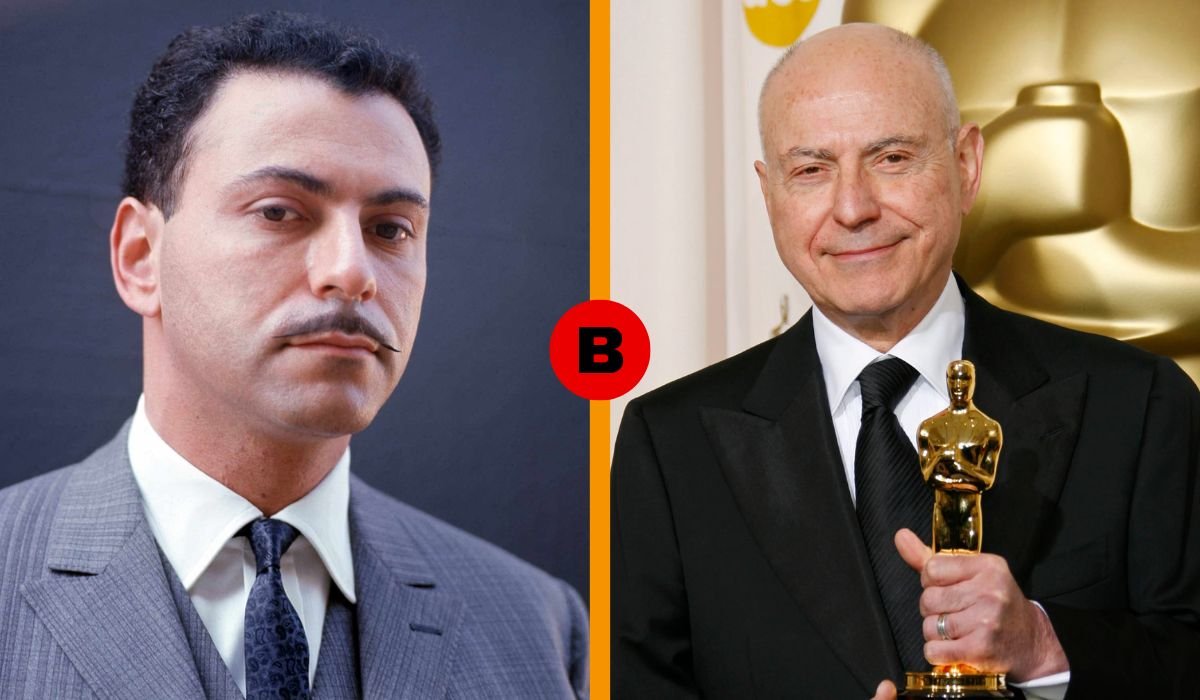
Alan Arkin Built One Of The Most Remarkable Acting Careers In American Entertainment. Across More Than Six Decades, He Worked On Broadway, In Film And Television, And In Both Comedy And Drama. What Made His Career Stand Out Wasn’t Simply Its Length. Arkin Had A Rare Ability To Make Very Different Characters Feel Natural, Whether He Was Playing A Nervous Young Actor, A World War II Bombardier, A Troubled Grandfather, Or An Aging Hollywood Agent.
His Professional Journey Began In Sketch Comedy Before He Found Major Success On Broadway With Enter Laughing In 1963. From There, Hollywood Quickly Took Notice. His Early Film Performances earned Academy Award Nominations, While Later Roles Brought Him An Oscar, Emmy Recognition, And Some Of The Most Beloved Supporting Performances Of His Generation. He Also Worked As A Director, Showing That His Interest In Storytelling Extended Beyond Acting.
Arkin Died On June 29, 2023, At The Age Of 89. Born On March 26, 1934, In New York City, He Left Behind A Body Of Work That Stretched Across Generations. His Career Is Especially Interesting Because It Was Never Built Around One Type Of Character Or One Particular Genre. Instead, He Kept Evolving, Finding New Ways To Connect With Audiences Throughout His Long Time In The Entertainment Industry.
Quick Bio Information
| Alan Arkin | Details |
|---|---|
| Full Name | Alan Wolf Arkin |
| Born | March 26, 1934 |
| Birthplace | New York City, New York |
| Died | June 29, 2023 |
| Age At Death | 89 |
| Profession | Actor And Filmmaker |
| Main Fields | Film, Television, Theater, And Broadway |
| Early Performance Work | Sketch Comedy |
| Comedy Group | The Second City |
| Broadway Breakthrough | Enter Laughing |
| Tony Recognition | Won In 1963 |
| First Oscar Nomination | The Russians Are Coming, The Russians Are Coming |
| Major Dramatic Film | The Heart Is A Lonely Hunter |
| Notable War Comedy | Catch-22 |
| Oscar-Winning Film | Little Miss Sunshine |
| Oscar Category | Best Supporting Actor |
| Oscar Year | 2007 |
| Oscar-Nominated Film | Argo |
| Notable Late TV Role | Norman Newlander In The Kominsky Method |
| Directing Work | Included Little Murders |
| Career Legacy | More Than Six Decades Of Acting And Filmmaking |
Early Life And The Road To Acting
Alan Arkin Didn’t Arrive In Hollywood With The Typical Story Of A Young Performer Being Discovered Overnight. His professional development happened gradually, through comedy, theater, and live performance. One of the most important early chapters was his work with The Second City, the influential improvisational comedy troupe that helped launch his professional career.
That experience proved valuable. Improvisation demands quick thinking, strong listening skills, sharp timing, and the confidence to respond naturally to whatever happens around you. Those qualities would become recognizable in Arkin’s later performances. Even when he was working from a tightly written script, there was often something spontaneous about the way he reacted to other actors.
His early theater experience also taught him how to build a character from the ground up. That combination of improvisational freedom and theatrical discipline became an important part of his identity as an actor. Long before audiences knew him from movies such as Little Miss Sunshine or Argo, Arkin was developing the tools that would eventually make him such a versatile performer.
From Second City To Broadway
Arkin’s major Broadway breakthrough arrived in 1963 with Enter Laughing, a comedy adapted from Carl Reiner’s autobiographical novel. He played David Kolowitz, a young man from the Bronx who dreams of becoming an actor and tries to find his way into the theater.
The role was a natural showcase for Arkin’s comic instincts, but it also required sincerity. David isn’t simply a collection of jokes. He’s an ambitious young man trying to figure out what he wants from life, and Arkin gave the character enough warmth to make that ambition believable.
The performance earned Arkin a Tony Award, marking an important turning point in his career. Broadway had established him as more than a promising comedian. He was a serious stage performer with the ability to carry a major role.
That early success also gave Arkin a strong foundation for what came next. His transition from the stage to the screen wasn’t a rejection of theater; instead, it became an expansion of the skills he had already developed.
Alan Arkin’s Early Film Success
Arkin made an immediate impression in Hollywood. In The Russians Are Coming, The Russians Are Coming (1966), he played a Soviet submarine officer caught in a chaotic situation involving a New England community. The Cold War satire allowed him to combine physical comedy with tension and cultural misunderstanding.
The performance earned Arkin his first Academy Award nomination. It was a significant achievement for an actor still relatively early in his film career.
Two years later, he took on a dramatically different challenge in The Heart Is A Lonely Hunter. Arkin portrayed John Singer, a deaf-mute man living in a small Southern town. Because Singer communicates without conventional spoken dialogue, the performance depended heavily on facial expression, physical movement, posture, and subtle reactions.
Arkin received another Academy Award nomination for the role. The contrast between his performances in these two films says a great deal about his range. One allowed him to lean into comedy and political satire; the other demanded restraint and emotional subtlety.
These early successes established a pattern that would continue throughout the Alan Arkin career. Just when audiences might have expected him to settle into one kind of role, he would take on something completely different.
Catch-22 And A Defining Comic Role
In 1970, Arkin stepped into the lead role of Captain John Yossarian in Catch-22, the film adaptation of Joseph Heller’s influential anti-war novel.
Yossarian is a World War II bombardier who becomes increasingly desperate to escape the military system around him. The rules governing his service are so contradictory and absurd that simply trying to survive becomes an exercise in frustration.
Arkin understood how to make that absurdity funny without stripping away its darker meaning. Yossarian isn’t merely a comic figure. He’s frightened, intelligent, suspicious of authority, and determined to stay alive. Arkin allowed all of those characteristics to exist together.
That balance became one of the most effective features of his performance. The comedy comes naturally from Yossarian’s situation, while the underlying fear keeps the character grounded. Catch-22 therefore became an important example of Arkin’s ability to use humor to examine serious subjects, including war, bureaucracy, authority, and survival.
It also reinforced his reputation as a leading film actor who could carry complicated material without losing the human side of the character.
Alan Arkin Behind The Camera
Acting wasn’t Arkin’s only creative interest. He also worked as a director, both in theater and film, giving him another way to explore storytelling and performance.
One of his notable film directing credits was Little Murders, a dark comedy released in 1971. On Broadway, he directed Neil Simon’s The Sunshine Boys, a comedy about two former vaudeville performers who reunite for a television appearance despite their difficult relationship.
Arkin’s work behind the camera is an important but sometimes overlooked part of his career. His experience as a performer clearly informed the way he approached directing. He understood what actors needed, how timing affected comedy, and how individual performances contributed to a larger production.
For that reason, describing Arkin only as an actor leaves out part of the picture. He was also a theater professional and filmmaker who understood storytelling from several different perspectives.
Serious Television Work And Escape From Sobibor
Arkin’s television career provided another opportunity to demonstrate his dramatic range. One of his most notable performances came in the 1987 television film Escape From Sobibor.
Arkin played Leon Felhendler, a Jewish resistance figure involved in organizing the prisoner uprising and escape from the Sobibor extermination camp during World War II. The historical setting gave the performance a gravity that was very different from his earlier comic work.
There was little room for the kind of broad humor audiences had seen in some of his films. Instead, Arkin approached the character with restraint, focusing on the determination and seriousness required by the story.
His performance earned an Emmy nomination for Outstanding Lead Actor In A Limited Series Or Movie. The recognition was another indication that his abilities extended well beyond the comedy that had helped launch his career.
A Strong Supporting Presence In The 1990s
During The 1990s, Arkin Continued To Work Steadily In Film, Often In Supporting Roles. His Credits Included The Rocketeer, Glengarry Glen Ross, And Gattaca, Along With Other Notable Productions.
These roles demonstrated one of Arkin’s greatest professional strengths: he didn’t need to be the central character to leave an impression. He could enter a film, establish a character quickly, and make that person feel as though they had a complete life beyond what appeared on screen.
That quality made him especially valuable in ensemble casts. Arkin understood how to support the story while still giving his own character personality and depth.
The decade also helped bridge the gap between his earlier success and the acclaimed work that would arrive in the 2000s. He remained a familiar and respected presence rather than relying solely on the reputation he had built in the 1960s and 1970s.
Thirteen Conversations About One Thing And A Later Career Rise
In 2001, Arkin appeared in Thirteen Conversations About One Thing, an ensemble film built around interconnected stories. The movie explores happiness, guilt, disappointment, chance, and the unexpected ways people’s lives affect one another.
Arkin’s performance attracted strong critical attention and became an important moment in his later career. He received nominations from the Independent Spirit Awards and the National Society of Film Critics, while the Boston Society of Film Critics recognized him with its Best Supporting Actor award.
The recognition mattered because it arrived decades after his first major successes. Arkin wasn’t simply being celebrated for work he had done years earlier. Critics were responding to what he was doing at that moment.
The film helped reinforce the idea that his strongest performances could continue appearing at any stage of his career.
Little Miss Sunshine And His Oscar Victory
For A New Generation Of Viewers, Little Miss Sunshine Became The Film Most Closely Associated With Alan Arkin. Released In 2006, The Comedy-Drama Follows The Dysfunctional Hoover Family As They Travel Across The Country So Young Olive Can Compete In A Children’s Beauty Pageant.
Arkin plays Edwin Hoover, Olive’s grandfather. Edwin is foul-mouthed, rebellious, blunt, and frequently inappropriate, but he also has genuine affection for his family. Arkin’s performance works because he doesn’t allow the character’s outrageous behavior to become his entire personality.
There is vulnerability beneath the humor. His delivery is often understated, and his presence gives the character an unexpected emotional dimension.
The performance earned Arkin the Academy Award for Best Supporting Actor at the 79th Academy Awards in 2007. It was the first and only Oscar win of his career.
The timing was remarkable. Arkin was 72 when he received the award, after spending more than four decades as a professional actor. The Oscar therefore represented more than recognition for one popular film. It was also a celebration of a career that had repeatedly demonstrated its depth and staying power.
Argo And Another Oscar Nomination
Arkin followed his Oscar-winning role with another highly memorable supporting performance in Argo (2012).
Directed by Ben Affleck, the historical thriller dramatizes the CIA operation connected to the rescue of six American diplomats during the 1979 Iran hostage crisis. Arkin plays Lester Siegel, a Hollywood producer who becomes involved in the elaborate fake-film cover story created for the rescue operation.
The role suited Arkin’s dry sense of humor particularly well. Lester is confident, experienced, and capable of cutting through Hollywood nonsense with a sharp remark. Arkin brought authority to the character without making him overly serious.
His performance earned another Academy Award nomination for Best Supporting Actor. He ultimately lost the award to Christoph Waltz for Django Unchained, but the nomination itself became another important milestone in an already extraordinary career.
Coming only a few years after his Oscar win, it also demonstrated that Arkin’s late-career success was far from a one-film phenomenon.
The Kominsky Method And His Final Major Television Chapter
Arkin Continued Acting Well Into His 80s, And The Kominsky Method Became One Of The Most Notable Projects Of His Later Career.
In The Netflix Comedy-Drama, He Played Norman Newlander, A Longtime Friend And Agent Connected To Sandy Kominsky, The Acting Teacher Played By Michael Douglas. The Series Explored Aging, Friendship, Grief, Relationships, And The Difficult Realities Of Growing Older In Hollywood.
The Material gave Arkin plenty of room to use both sides of his acting personality. Norman could be funny and sarcastic, but the character also had to deal with loss and the emotional complications of later life.
Arkin’s performance earned consecutive Emmy nominations. His work on the series was especially fitting in retrospect. After spending decades around actors, directors, writers, and Hollywood productions, he was playing a character whose life was deeply connected to the entertainment business.
The role also proved that Arkin could remain compelling on television even as the industry itself was changing rapidly.
Alan Arkin’s Awards And Career Achievements
Arkin’s Awards Tell A Story Of Recognition Across Multiple Generations And Mediums. His First Major Honor Came On Broadway, Where Enter Laughing Earned Him A Tony Award In 1963.
His Early Film Work Brought Two Academy Award Nominations, First For The Russians Are Coming, The Russians Are Coming And Then For The Heart Is A Lonely Hunter. Decades Later, He Won The Oscar For Little Miss Sunshine And Received Another Academy Award Nomination For Argo.
Television Provided Additional Recognition. His work in Escape From Sobibor earned an Emmy nomination, while The Kominsky Method brought two consecutive nominations.
He also received important recognition from critics, including the Boston Society of Film Critics Award for his work in Thirteen Conversations About One Thing.
Taken together, these achievements show that Arkin’s career wasn’t concentrated in one successful period. He was recognized repeatedly across theater, film, and television, including during the early, middle, and later stages of his professional life.
What Made Alan Arkin Such A Versatile Actor?
The Best Way To Understand Arkin’s Longevity Is To Look At How Often He Changed Without Losing His Authenticity. He Could Play A Young Man Chasing An Acting Career, A Soviet Officer, A Silent And Emotionally Complex Character, A World War II Soldier, A Rebellious Grandfather, A Hollywood Producer, Or An Aging Talent Agent.
His improvisational background gave him strong instincts for timing and reaction. His theater experience taught him discipline and character development. Film allowed him to communicate through small gestures and expressions, while television gave him opportunities to build relationships and emotional arcs over time.
Another important quality was his restraint. Arkin rarely needed to announce what a character was feeling. A pause, glance, or change in expression could communicate something that another actor might have explained through dialogue.
That quality helped his supporting performances stand out. He understood that being memorable isn’t necessarily about having the most lines. Sometimes it’s about knowing exactly what to do with the moments you have.
Alan Arkin’s Legacy After Seven Decades
Alan Arkin Died On June 29, 2023, At The Age Of 89, Closing A Professional Journey That Had Taken Him From Improvisational Comedy And Broadway To Major Hollywood Films And Modern Television.
His legacy, however, can’t be reduced to his Oscar for Little Miss Sunshine. That award was certainly one of the highlights of his career, but it came after decades of work that had already established his reputation.
His early Academy Award nominations showed his dramatic ability. Catch-22 demonstrated his talent for combining comedy with serious themes. Escape From Sobibor highlighted his dramatic television work. Thirteen Conversations About One Thing showed that he could continue earning critical praise decades into his career. Argo brought another Oscar nomination, and The Kominsky Method introduced his talents to another generation of television viewers.
Perhaps the most impressive part of the Alan Arkin story is the absence of a single formula. He kept moving between genres, mediums, and generations. He didn’t need to repeat the same kind of performance to remain recognizable.
That is why his career remains worth revisiting. Arkin showed that longevity isn’t simply about staying in the business. It’s about remaining curious, adaptable, and willing to let every new character be different from the last.
Final Thoughts
Alan Arkin’s Seven-Decade Career Was Remarkable Not Merely Because Of Its Length, But Because Of How Much It Changed Along The Way. He Started In Improvisational Comedy, Became A Tony-Winning Broadway Actor, Moved Into Acclaimed Film Performances, Explored Directing, Won An Academy Award, Earned Another Oscar Nomination Late In His Career, And Continued Working In Television Into His 80s.
His Most Famous Roles Tell Only Part Of The Story. The Oscar-winning Edwin Hoover In Little Miss Sunshine Is A Career Highlight, But So Are The Earlier Performances That established his dramatic credibility and the later roles that proved he could still surprise audiences.
From Catch-22 And The Heart Is A Lonely Hunter To Little Miss Sunshine, Argo, And The Kominsky Method, Arkin Built A Body Of Work Defined By Variety. He never seemed interested in simply repeating what had worked before.
That may be the clearest explanation for his enduring appeal. Alan Arkin understood that great acting isn’t about looking the same in every role. It’s about finding the truth of each character and trusting the audience to recognize it. Decades after his first major successes, that quality remains at the heart of his legacy.
Frequently Asked Questions About Alan Arkin
Who Was Alan Arkin?
Alan Arkin Was An American Actor And Filmmaker Known For His Work In Theater, Film, And Television. His Career Included Broadway Success, Academy Award Nominations, An Oscar Win, Emmy Recognition, And Numerous Memorable Supporting And Leading Roles. He Died In 2023 At The Age Of 89.
When Did Alan Arkin Win His Oscar?
Alan Arkin Won The Academy Award For Best Supporting Actor For Little Miss Sunshine At The 79th Academy Awards In 2007. He Played Edwin Hoover, The Unconventional Grandfather Of The Hoover Family.
What Was Alan Arkin’s First Major Breakthrough?
Arkin’s Major Broadway Breakthrough Came With Enter Laughing In 1963. His Performance As David Kolowitz Earned Him A Tony Award And Helped Establish Him As A Major Stage Performer.
What Are Alan Arkin’s Best-Known Movies?
Some Of Alan Arkin’s Best-Known Movies Include The Russians Are Coming, The Russians Are Coming, The Heart Is A Lonely Hunter, Catch-22, Little Miss Sunshine, And Argo. He Also Appeared In Films Such As The Rocketeer, Glengarry Glen Ross, And Gattaca.
Did Alan Arkin Work In Television?
Yes. Alan Arkin Had A Significant Television Career In Addition To His Film And Theater Work. His Television Credits Included Escape From Sobibor, The Pentagon Papers, And The Kominsky Method. His Work Earned Emmy Recognition At Different Stages Of His Career.
Was Alan Arkin Also A Director?
Yes. Arkin Worked As A Director As Well As An Actor. His Directing Career Included The Film Little Murders And Theater Productions Such As Neil Simon’s The Sunshine Boys. His Work Behind The Camera Reflected His Broader Interest In Storytelling And Performance.
What Was Alan Arkin’s Role In Argo?
Arkin Played Lester Siegel, A Hollywood Producer In Argo. His Character Becomes Involved In The Fake-Film Cover Story Used During The CIA Rescue Operation. The Performance Earned Arkin An Academy Award Nomination For Best Supporting Actor.
Why Is Alan Arkin Still Remembered?
Alan Arkin Is Remembered For His Range, Timing, Emotional Restraint, And Extraordinary Longevity. He Worked Successfully Across Broadway, Film, Television, Comedy, Drama, And Directing. His career included important performances at almost every stage of his life, allowing several generations of audiences to discover his work.
Learn more and explore exciting content on: Sonia Sotomayor: Biography, Career, Family, and Life Story