

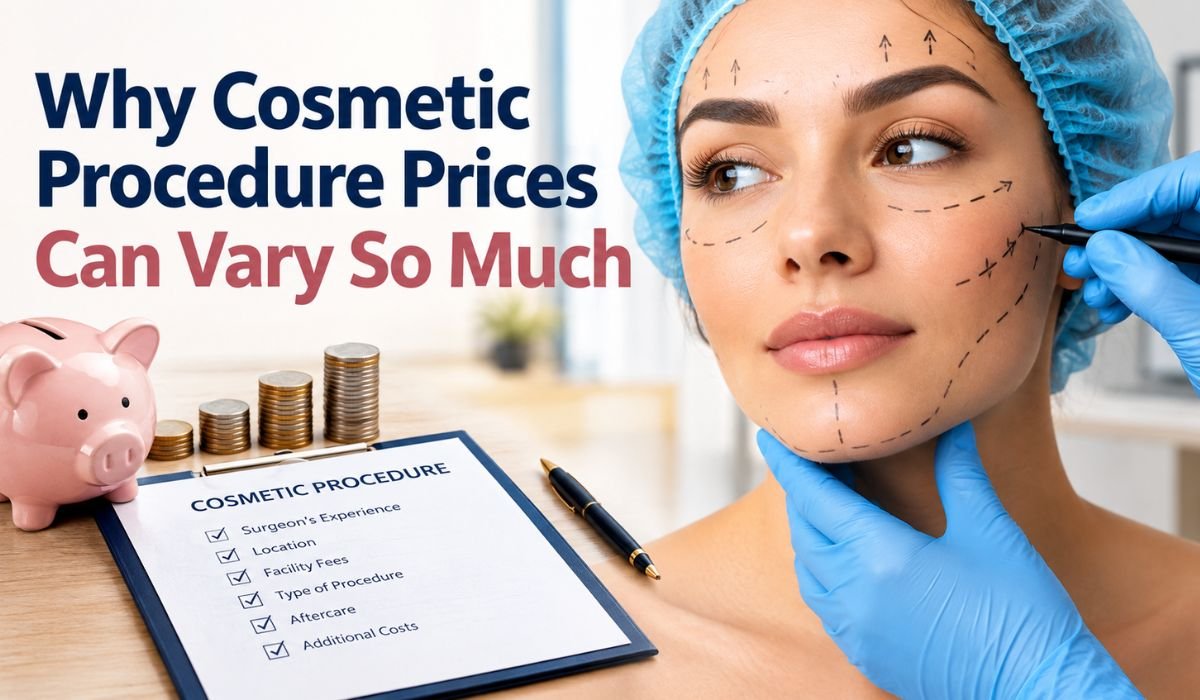
Call three clinics about what sounds like the same procedure and you can collect three numbers that seem to belong to three different operations. One says eight thousand. One says fourteen. The third will not give you a figure at all until you come in for a consultation. None of that inspires confidence when you are trying to plan a budget.
The spread is real, though, and most of it is explainable. A cosmetic surgery price is never one price. It is a stack of separate costs that happens to get presented as a single number, and different clinics assemble that stack in different ways, with different things left in or out.
Once you can see the layers, comparing clinics stops feeling like guesswork. You quit asking who is cheapest and start asking what each figure actually covers, which is the only version of the question that protects you from a surprise invoice six weeks later.
The Quote Is a Bundle, Not a Price Tag
The surgical fee pays for the surgeon’s time and skill. Sitting beside it are the anesthesia fee, the facility fee, the preoperative workup, compression garments, prescriptions, and every follow-up visit over the months that follow. Some clinics fold all of that into one headline number. Others quote the surgical fee alone and let the rest show up later.
That single difference accounts for a lot of apparent bargains. A quote that leaves out anesthesia and operating room time can look thousands cheaper on paper while landing in the same place, or higher, by the time you are discharged. Ask for the itemized breakdown before you compare anything, and ask directly what a revision would cost if one turns out to be necessary.
Experience Gets Priced Like Any Scarce Skill
Surgeons charge what their results and their waitlist support, which is unglamorous but not unfair. Someone who has performed a particular operation a thousand times tends to work faster, manage complications more calmly, and produce a narrower range of outcomes. Patients pay for that consistency, and the market lets them.
Credentials are the floor rather than the ceiling here. Certification through a recognized specialty board means a surgeon finished accredited residency training, holds an unrestricted license, and passed examinations built by practicing specialists, and the American Board of Medical Specialties spells out exactly what that process evaluates. Plenty of people performing cosmetic work have no such training, and their prices usually reflect it. That is the discount you do not want.
Scope Moves the Number Faster Than Anything Else
Two patients can book the same named procedure and sit on the table for wildly different lengths of time. Treated area, tissue volume, whether skin needs to be removed, whether anything is being corrected from an earlier operation: all of it changes the time under anesthesia, and time is the engine of the whole bill.
This is where published figures mislead people most. A quoted liposuction cost that assumes one modest area will not survive contact with a plan that treats the abdomen, both flanks, and the lower back in one session. Combination cases shift the math again, sometimes downward per procedure, since you only pay for one round of anesthesia and one facility booking.
Technique matters too, and it is rarely explained well in a price list. Approaches that go deeper or take longer cost more up front while often lasting longer, and this breakdown of contemporary facelift techniques is a useful illustration of how two operations under one familiar name can differ enormously.
The Room and the City Show Up on the Invoice
Facility cost is not a rounding error. An operation can happen in a hospital, in an independent surgical center, or in an accredited office suite, and each carries its own overhead for staffing, monitoring equipment, sterilization, and emergency readiness. Accreditation bodies such as the Accreditation Association for Ambulatory Health Care survey these facilities against published standards, and meeting those standards costs money that eventually reaches the patient.
Geography layers on top of that. Rent, nursing wages, insurance, and local competition all vary by city, so identical work genuinely costs more in an expensive downtown than two hours outside it. Medical pricing opacity is a broader problem that regulators have been chipping at for years, and the push for hospital price transparency in the United States exists precisely because patients could not previously see what anything cost before agreeing to it.
Anesthesia deserves its own line of questioning. Local anesthetic with light sedation is cheaper than full general anesthesia, and who administers it, a physician anesthesiologist or another provider, changes both the fee and the safety profile of a long case.
Final Thoughts
Price variation in cosmetic surgery is less mysterious than it looks from the outside. Credentials, operating time, facility standards, and local costs do nearly all the work, and a quote that sits far below everything else usually achieved that by removing something from the bundle rather than by being clever.
So treat the number as the last question instead of the first. Confirm who is operating and what they are certified to do, confirm where the surgery happens and whether that facility is accredited, confirm how long the case should take, then ask what is included and what is not. Write the answers down for each clinic and the comparison makes itself.
The goal is not the lowest price. It is a price you understand completely, attached to a plan you would still choose if every clinic charged the same.
 sk news
  Wild Rise
  Qamer Javed