

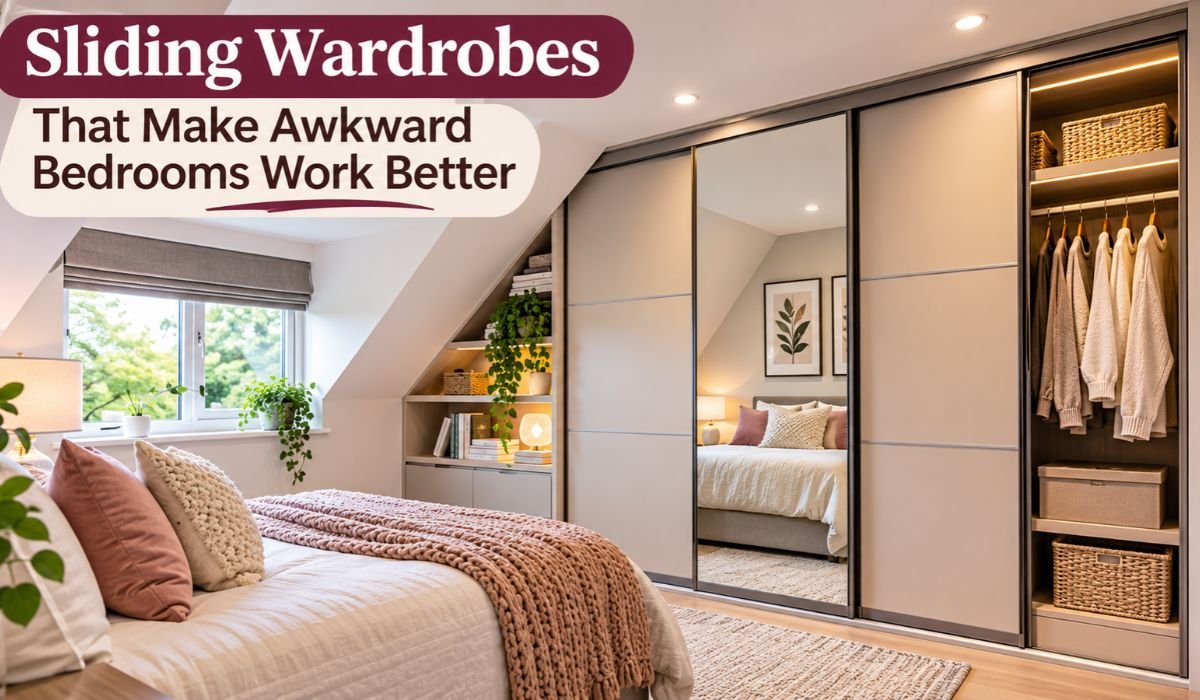
Some bedrooms look perfectly fine until you try to fit a wardrobe into them. There’s a window in an inconvenient spot, a bed taking up most of the floor, or a narrow walkway that makes opening cupboard doors a daily annoyance.
Moving furniture around might help, but it doesn’t always solve the problem. That’s where a properly designed sliding wardrobe can make a noticeable difference. By removing the need for outward-opening doors and making better use of available wall space, you can create storage that actually suits the room.
Why Standard Wardrobes Don’t Always Fit
Ready-made wardrobes are designed around standard measurements. Unfortunately, bedrooms rarely follow those convenient dimensions.
You might have an unusually high ceiling, a short wall between two doorways, or a recessed area that seems too awkward to use. A freestanding wardrobe could leave unused gaps above and beside it, while hinged doors might hit nearby furniture.
Sliding wardrobes offer a practical alternative because their doors move sideways along tracks rather than swinging into the room.
This makes them particularly useful in smaller bedrooms, apartments, and homes where every bit of floor space matters.
However, simply choosing sliding doors isn’t enough. The wardrobe’s dimensions, internal compartments, and door configuration all need careful consideration.
Start With How You Actually Use Your Bedroom
Before choosing finishes or door colours, think about your daily routine.
Do you hang most of your clothes, or do you prefer folding them? Are you constantly searching for shoes? Does your current wardrobe have shelves that are difficult to reach?
These questions might sound basic, but they reveal what your storage should prioritise.
For example, someone who wears business clothes regularly might benefit from two hanging sections. A person with a large collection of casual clothing could get more value from drawers and adjustable shelving.
The goal is to avoid paying for storage features you’ll barely use.
Experienced custom sliding wardrobe designers can help translate these everyday habits into a practical internal layout while accounting for the room’s available dimensions.
Getting these decisions right early can prevent years of frustration.
Make Better Use of Difficult Spaces
One of the biggest advantages of custom wardrobe design is the ability to work around unusual room dimensions.
Narrow Bedrooms
In a narrow bedroom, traditional wardrobe doors can interfere with the bed or block the walking area.
Sliding doors remove that particular problem.
You still need enough clearance to stand comfortably in front of the wardrobe and access the compartments, but there’s no additional door-swing space to worry about.
A full-height design can also provide extra storage above your everyday clothing.
Recessed Walls and Alcoves
Some bedrooms have recessed sections that seem too shallow or unusually shaped for standard furniture.
Instead of leaving these spaces unused, a fitted wardrobe may be designed around the available opening.
The result can look more integrated with the room, especially when the doors align neatly with the surrounding walls.
Rooms With High Ceilings
Tall ceilings offer valuable storage opportunities that freestanding wardrobes often fail to use.
Upper compartments can accommodate seasonal bedding, spare pillows, luggage, or clothing that isn’t needed regularly.
Just remember that storage above comfortable reaching height should be reserved for items you don’t need every morning.
Choose Sliding Doors That Suit the Room
Sliding wardrobe doors occupy a large visual area, so their appearance can influence the entire bedroom.
Mirrored doors are popular because they reflect light and eliminate the need for a separate full-length mirror.
They’re particularly useful in compact rooms, although reflections and fingerprints may require more frequent cleaning.
For a quieter appearance, plain laminate panels can blend with existing furniture or wall colours.
Frosted glass provides another option for homeowners who want a softer finish without using mirrors.
You can also combine different panel finishes to create contrast without overwhelming the space.
The important thing is to consider the room as a whole. A door finish that looks impressive in a showroom might feel too busy beside patterned bedding, decorative wallpaper, or heavily textured furniture.
Don’t Overlook the Internal Layout
A wardrobe can look beautiful from the outside and still be frustrating to use.
Poorly positioned shelves, insufficient hanging space, and oversized compartments are common reasons storage becomes disorganised.
Start by dividing the interior into everyday items and occasional-use storage.
Clothing worn frequently should be easy to reach. Shoes can sit in lower compartments, while accessories may be better suited to shallow drawers.
Adjustable shelves are especially useful because your storage requirements may change over time.
You should also consider how the sliding doors overlap.
Unlike hinged wardrobes, sliding systems don’t usually expose the entire interior at once. Some sections remain covered depending on which door is open.
For this reason, drawers and pull-out accessories need to be positioned where the doors can move sufficiently clear of them.
It’s a small design detail that makes a big difference when you’re using the wardrobe every day.
Pay Attention to Tracks and Door Hardware
Sliding doors depend on their tracks, rollers, and guides to move correctly.
These components might not be the most exciting part of a wardrobe renovation, but they’re essential to its performance.
Poor-quality rollers can become noisy or difficult to operate. Misaligned tracks may cause doors to rub, stick, or move unevenly.
A well-designed system should feel smooth and stable during normal use.
Ask about the door hardware, weight limits, and maintenance requirements before making a decision.
It’s also sensible to discuss how easily damaged components can be replaced.
Keeping tracks free from accumulated dust and debris can help maintain smooth movement over time.
Think About Lighting and Accessibility
Wardrobe lighting is easy to overlook until you’re searching for a dark shirt in a poorly lit corner.
Built-in LED lighting can make deeper compartments easier to use, particularly when the wardrobe is positioned away from the room’s main light source.
Motion-activated lighting is another option worth considering.
Accessibility matters just as much.
Shelves positioned too high can become inconvenient, while drawers placed directly at floor level might require constant bending.
If two people share the wardrobe, consider separating their storage areas rather than forcing both sets of clothing into one arrangement.
These decisions don’t necessarily require more space. They simply make the available space more comfortable to use.
Get Accurate Measurements Before Ordering
Even a carefully planned wardrobe can run into problems if the measurements are wrong.
Walls aren’t always perfectly straight, floors can be uneven, and ceiling heights may vary slightly across a room.
Skirting boards, power outlets, cornices, and existing fixtures can also affect installation.
Professional measurement helps identify these details before manufacturing begins.
It’s worth discussing the planned installation process, including whether existing storage needs to be removed and how surrounding surfaces will be protected.
A clear quotation should identify the selected materials, internal fittings, door finishes, hardware, and installation work.
Knowing exactly what’s included makes comparing options much easier.
A Better Bedroom Starts With Practical Storage
A sliding wardrobe won’t magically make a small bedroom larger, but thoughtful design can make it feel considerably easier to live in.
The biggest improvements often come from simple decisions: removing unnecessary door clearance, using otherwise wasted wall space, and organising the interior around your actual belongings.
Choose materials that suit your home, pay attention to the hardware, and avoid designing storage around appearances alone.
When a wardrobe fits the room and works with your daily habits, keeping the bedroom organised becomes far less of a chore.
 Apex Apex