

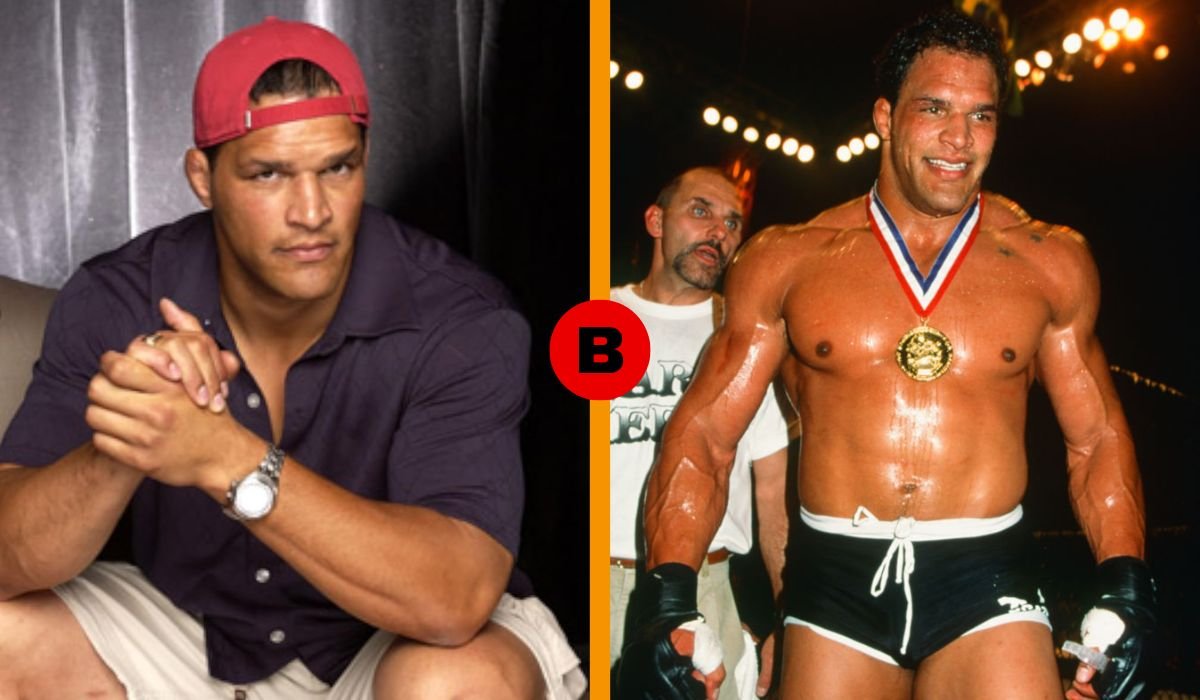
Mark Kerr became one of the most intimidating figures of the early Mixed Martial Arts era. Long before the nickname The Smashing Machine followed him around the world, Kerr had already made his mark as an elite wrestler. He won an NCAA Division I national championship, pursued an Olympic opportunity, and eventually became one of the most feared heavyweights in the UFC and PRIDE Fighting Championships.
Yet Kerr’s story has never been limited to his victories. Behind the money, fame, and reputation was a deeply personal struggle with substance use, painkillers, injuries, and the relentless pressure to perform. His career eventually lost momentum, while his problems continued even after he left professional fighting.
There was, however, another chapter still to come. Kerr found a path toward recovery, spoke openly about his experiences, and was inducted into the UFC Hall of Fame’s Pioneer Wing in 2025. That same year, his life reached an even wider audience through Benny Safdie’s film The Smashing Machine, with Dwayne Johnson portraying Kerr. Together, those milestones brought renewed attention to a fighter whose legacy extends well beyond what he accomplished inside the cage.
Quick Bio Information
Full Name: Mark Kerr
Nickname: The Smashing Machine
Date Of Birth: December 21, 1968
Birthplace: Toledo, Ohio
Nationality: American
Profession: Former Professional MMA Fighter And Wrestler
College: Syracuse University
NCAA Achievement: 1992 NCAA Division I National Champion
NCAA Weight Class: 190 Pounds
Professional MMA Debut: January 19, 1997
Professional MMA Record: 15-11, 1 No Contest
UFC Record: 10-4, 1 No Contest
Major Promotions: UFC And PRIDE
Wife: Dawn Staples
Child: Son Named Bryce
Final Professional Fight: August 28, 2009
Final Opponent: Muhammad Lawal
Final Result: Loss By Knockout
UFC Hall Of Fame: 2025
Hall Of Fame Category: Pioneer Wing
Film: The Smashing Machine
Who Is Mark Kerr?
Mark Kerr Was Born On December 21, 1968, In Toledo, Ohio, Into A Family With Its Own Connection To Combat Sports. His Father, Thomas Kerr, Was A Former U.S. Amateur Boxing Champion, And Mark Was One Of Seven Siblings.
When Kerr was 12, his parents sent him to Davenport, Iowa, where he lived with his older brother Michael. He played several sports during those years, but wrestling gradually became the discipline that shaped his future. The time away from Toledo also coincided with a dramatic change in his physique. By the time he returned to Ohio, Kerr had grown into a much larger and stronger young athlete.
That transformation was only the beginning. Wrestling would eventually take him to the highest levels of American collegiate competition before providing the foundation for his professional MMA career.
From Wrestling Champion To MMA Fighter
Kerr’s Wrestling Credentials Were Already Impressive Before He Ever Entered A Professional MMA Cage. During His Junior Year At Waite High School, He Won The Ohio Division I State Championship At 175 Pounds In 1986. That accomplishment helped earn him a scholarship to Syracuse University, where he continued to develop as one of the country’s top collegiate wrestlers.
His college career included conference championships in 1989, 1991, and 1992. The defining achievement came in 1992, when Kerr captured the NCAA Division I national championship at 190 pounds. He finished the championship season with a 31-3-1 record and earned All-American honors.
The final itself has become part of combat-sports history. Kerr defeated Randy Couture in the championship match. Years later, Couture would become a UFC Hall of Famer and one of the most accomplished heavyweights in MMA. At the time, however, the two were simply elite college wrestlers competing for a national title. Their meeting offers an intriguing glimpse into the careers that both men would eventually build.
The Olympic Dream And Kurt Angle
Winning An NCAA Championship Didn’t End Kerr’s Wrestling Ambitions. He Continued To Compete In Freestyle Wrestling And Set His Sights On The 1996 U.S. Olympic Team For The Atlanta Games.
Kerr trained at the Foxcatcher facility in Pennsylvania, a place that later became infamous because of the murder of U.S. wrestler Dave Schultz by Foxcatcher founder John du Pont. Kerr also trained alongside Kurt Angle, another highly accomplished American wrestler who was competing for the same Olympic dream.
Ultimately, Kerr didn’t make the Olympic team. Angle secured the spot and went on to win a gold medal at the Atlanta Olympics before building a successful career in professional wrestling.
Kerr also suffered a devastating personal loss in the same period. His mother, Mary, died of cancer in September 1996. The disappointment of missing the Olympics and the death of his mother made an already challenging period in Kerr’s life considerably harder.
His freestyle career nevertheless included notable accomplishments. He won medals at the United World Wrestling World Cup, competed at the USA Wrestling World Team Trials, and earned a silver medal at the 1995 Pan American Games. By the time he considered MMA, Kerr had already spent years competing against elite athletes.
Why Mark Kerr Turned To MMA
In 1997, Kerr Turned His Attention To Mixed Martial Arts. The Sport Was Still Far Removed From The Mainstream Position It Holds Today. MMA faced substantial criticism in the United States, and the UFC was dealing with political opposition while introducing rules intended to make competitions safer and more acceptable to a wider audience.
For Kerr, though, MMA represented more than a new sporting challenge. It offered an opportunity to earn significantly more money than he could through wrestling. His background also made the transition a natural one. He had elite wrestling skills, unusual strength, years of high-level competition, and the physical presence needed to compete against heavyweight opponents.
His professional MMA debut came on January 19, 1997, at World Vale Tudo Championship 3 in Brazil. Kerr won all three of his fights that night, finishing every opponent in the first round and taking the heavyweight tournament title.
It was an explosive introduction to professional MMA, and it didn’t take long for the rest of the sport to notice.
How Mark Kerr Became The Smashing Machine
The Name The Smashing Machine Came From One Of Kerr’s Earliest Dominant Performances In Brazil. Tatame Magazine Used The Portuguese Expression “Máquina De Bater,” A Phrase That Became Closely Associated With Kerr And Was Translated As The Smashing Machine.
The nickname suited his fighting style almost perfectly. Kerr was powerful, aggressive, and extremely difficult to control once he got an opponent to the ground. His wrestling allowed him to dictate where fights took place, while his strength made escaping his control particularly difficult.
People who trained with Kerr were also struck by his physical development. Former fighter and trainer Bas Rutten later described Kerr’s enormous forearms as being extraordinarily hard and strong. For fans watching him compete, the nickname wasn’t difficult to understand. Kerr fought with the kind of physical force that made him appear almost impossible to stop during the early stages of his career.
UFC And PRIDE Dominance
Kerr Made His UFC Debut At UFC 14 In July 1997. He Entered The Heavyweight Tournament, Defeated Moti Horenstein By TKO, And Then Submitted Dan Bobish To Win The Tournament.
His UFC run didn’t stop there. Only a few months later, Kerr returned at UFC 15. He defeated Greg Stott and Dwayne Cason to win another heavyweight tournament. Those consecutive tournament victories helped establish Kerr as one of the UFC’s most dominant fighters during its formative years.
He then moved to Japan and became a major figure in PRIDE Fighting Championships. The Japanese promotion offered some of the sport’s biggest financial opportunities, and Kerr quickly became one of its most recognizable heavyweight stars.
His combined UFC and PRIDE record was 10-4 with one No Contest, while his overall professional MMA record finished at 15-11 with one No Contest. Kerr also estimated that he earned approximately $1.8 million from his PRIDE fights. The money enabled him to enjoy a lavish lifestyle, and from the outside, his career seemed to be moving in only one direction: upward.
The ADCC Chapter Of Mark Kerr’s Career
One Part Of Kerr’s Combat-Sports Legacy Doesn’t Always Receive As Much Attention As His MMA Career: His Success In Submission Grappling.
Kerr competed at the ADCC Submission Fighting World Championship, one of the world’s most respected submission-grappling events. He won ADCC gold medals in 1999, 2000, and 2001, adding another significant accomplishment to an already remarkable combat-sports résumé.
His performances also put him across the mat from several fighters who would later become major MMA names. Kerr defeated future UFC heavyweight champions Josh Barnett and Ricco Rodriguez during his ADCC career.
These achievements help explain why Kerr was such a difficult opponent. His ability wasn’t limited to raw power. He had an elite wrestling base and high-level submission-grappling experience, giving him an unusually complete skill set for a heavyweight of his era.
In 2022, Kerr was inducted into the inaugural class of the ADCC Hall of Fame, further recognizing his contribution to the grappling world.
The Pressure Behind The Success
Kerr’s Rapid Rise Came With A Price. Professional MMA Was Exceptionally Demanding On The Body, Particularly During The Era In Which He Competed. Training Never Really Stopped, Injuries Were Common, And Fighters Were Expected To Return To Competition And Perform At Their Best.
Kerr has spoken about the enormous pressure he placed on himself. Rather than taking time to recover properly, he often wanted a quick solution that would allow him to train again. Painkillers could provide that immediate relief.
That distinction is important when looking at Kerr’s addiction. His substance-use problems weren’t simply something that appeared separately from his athletic career. Physical pain, the desire to remain competitive, and the psychological pressure of maintaining his reputation all became intertwined.
From the outside, Kerr appeared to have everything. He was successful, wealthy, famous, and physically dominant. Away from competition, however, he was dealing with problems that his public image didn’t reveal.
Mark Kerr And Addiction
Kerr Has Been Open About His History With Substance Use. Around The Age Of 20, He Was Forced To Leave Syracuse For A Year After Being Arrested And Charged With Stealing From Another Student. He temporarily lost his athletic scholarship and worked different jobs before eventually returning to college.
It was around this period that Kerr began experimenting with cocaine and narcotics. As his professional career developed, substance use became a more serious part of his life.
Kerr has acknowledged using steroids during his MMA years and becoming increasingly dependent on painkillers. Vicodin offered a particularly tempting solution to the physical demands of training. If his shoulder hurt, medication could provide fast relief and allow him to return to the gym instead of taking the time his body might have needed to recover.
Over time, that short-term solution became something much harder to control. Kerr’s experience illustrates how addiction can develop within a life that, from the outside, appears highly successful.
The 1999 Overdose And Family Life
Kerr’s Substance Use Reached A Crisis Point In 1999 When He Suffered An Overdose And Entered Rehabilitation. At The Same Time, His Relationship With Dawn Staples Was Going Through A Difficult Period.
The couple separated temporarily and later reconciled. They married in 2000 and eventually had a son, Bryce. Their marriage ultimately ended, with the pair separating permanently around 2006.
Staples later became a significant part of The Smashing Machine, which portrays the intense personal circumstances surrounding Kerr’s rise and struggles. However, his relationship with Staples represents only one part of a much larger story. During these years, Kerr was simultaneously dealing with the demands of professional fighting, physical injuries, substance use, and the pressures that accompanied his success.
The Decline Of His MMA Career
Kerr Returned To Competition After His First Rehabilitation, But His Results Gradually Became More Difficult To Sustain. The Fighter Who Had Won Consecutive UFC Heavyweight Tournaments In 1997 Was No Longer Able To Reproduce That Same Level Of Dominance.
As his career continued, losses accumulated across different promotions. The contrast was stark. Kerr had once seemed almost unbeatable, yet his later career became increasingly defined by setbacks.
His final professional fight took place on August 28, 2009, when he faced Muhammad Lawal in an M-1 Global bout. Lawal won by knockout, bringing Kerr’s professional fighting career to an end.
Kerr finished with a 15-11 record and one No Contest. Those numbers tell part of the story, but they don’t fully explain his importance. His influence came largely from what he accomplished when MMA was still establishing itself, particularly his early UFC tournaments, PRIDE success, and elite grappling background.
Relapse, Treatment And Recovery
Leaving Professional MMA Didn’t Automatically End Kerr’s Problems With Substance Use. He Relapsed In 2011 And Entered Treatment Again Around December 2013.
The period that followed was particularly difficult. Kerr spent approximately seven months in a halfway house and experienced serious financial problems. At one point, he became homeless after he could no longer afford his rent.
Those circumstances were a dramatic departure from the lifestyle he had enjoyed during his most successful years in PRIDE. They also demonstrate why describing his recovery as a simple turnaround would miss an important part of the story. Kerr’s path involved setbacks, treatment, financial hardship, and the gradual process of rebuilding his life.
He has since spoken about being sober and about the role his son Bryce played in confronting his drinking. Recovery eventually became more than something Kerr experienced privately. It became a part of the message he wanted to share with others who were struggling.
Life After MMA
After His Fighting Career Ended, Kerr Explored Several Different Paths. He Had Obtained An Arizona Real Estate License In 2008 And Also Tried Working As A Personal Trainer.
Eventually, a friend suggested that he enter the car business. Kerr took the advice and worked as a car salesman at several dealerships.
The transition was a striking change from the world of UFC tournaments and PRIDE main events. Yet it also reflects an important reality of life after professional sports. Once the spotlight disappears, athletes still need to build careers, establish routines, and find ways to support themselves.
For Kerr, that process was part of rebuilding a life beyond fighting rather than trying to recreate the fame he had experienced at the height of his career.
Mark Kerr’s UFC Hall Of Fame Legacy
In June 2025, Kerr Was Inducted Into The UFC Hall Of Fame As Part Of The Pioneer Wing. The category recognizes fighters who helped shape MMA during its early professional period, before unified rules were adopted across the sport on November 17, 2000.
The recognition was significant even though Kerr’s UFC career was relatively short. His back-to-back heavyweight tournament victories at UFC 14 and UFC 15 in 1997 established him as one of the promotion’s most dominant fighters during that era.
His Hall of Fame induction also places his achievements within the broader history of MMA. Kerr competed at a time when the sport was still evolving, its rules were changing, and its fighters were helping establish the techniques and competitive styles that would influence later generations.
Mark Kerr’s Message Of Recovery
Kerr’s Hall Of Fame Speech Wasn’t Focused Solely On His Athletic Achievements. He Used The Moment To Speak About Addiction, Recovery, And The Possibility Of Change.
That message carried particular significance because of what Kerr had experienced. His life had included championship wrestling, major MMA success, an overdose, relapse, treatment, financial hardship, and years of rebuilding.
Kerr has emphasized the importance of helping people who feel as though they can’t keep going. His own journey gives that message a personal weight that a generic motivational speech couldn’t provide.
For many people, this may become one of the most meaningful aspects of his later legacy. Kerr isn’t simply talking about overcoming adversity in the abstract. He’s speaking from experience.
The Story Behind The Smashing Machine
Mark Kerr’s Life Became The Inspiration For Benny Safdie’s The Smashing Machine, With Dwayne Johnson Playing Kerr And Emily Blunt Portraying Dawn Staples.
The project began taking shape several years ago. Johnson’s team approached Kerr about acquiring his life rights in 2019, and the movie was announced that same year. Production was later delayed during the COVID-19 pandemic.
After several years, Johnson contacted Kerr personally to discuss the project and his approach to the role. Kerr described the conversation as heartfelt rather than simply transactional.
Kerr also contributed to the production as an informal consultant for Safdie’s script. He worked directly with Johnson and the stunt team during the movie’s fight preparation, helping the filmmakers understand the physical details of MMA and make the fight scenes feel more authentic.
The film reached the screen in October 2025, introducing Kerr’s story to a new audience that may not have followed his original career in the UFC and PRIDE.
The Movie And The Real Mark Kerr
It’s Worth Remembering That The Smashing Machine Is A Dramatic Film, Not A Complete Documentary Of Mark Kerr’s Entire Life.
The Movie Concentrates Heavily On His Early MMA Career, His Relationship With Dawn Staples, His Substance-Use Problems, And The Pressure That Surrounded His Fighting Career. Those are crucial parts of Kerr’s story, but they’re not the whole picture.
His NCAA championship, freestyle wrestling career, ADCC accomplishments, professional MMA record, later recovery, and UFC Hall of Fame induction all add important context.
That distinction is especially useful for people discovering Kerr through the film. The movie offers a dramatic interpretation of his experiences, while his full biography shows why he was already an important figure in combat sports long before Hollywood told his story.
Where Is Mark Kerr Now?
Today, Mark Kerr Is Best Known For The Legacy He Built Across Wrestling, MMA, And Submission Grappling, As Well As The Recovery Journey That Became An Important Part Of His Later Life.
His competitive career is over, but interest in him has hardly disappeared. The UFC Hall of Fame induction in 2025 and the release of The Smashing Machine brought his name back into the spotlight.
Kerr’s legacy now includes several distinct chapters. He is remembered as an NCAA champion, a UFC tournament winner, a PRIDE heavyweight, an ADCC champion, and a Pioneer Wing Hall of Famer. At the same time, he has become increasingly open about the struggles that followed his athletic success.
That combination makes his story unusually compelling. The man once known primarily for overwhelming opponents is now also recognized for confronting challenges that couldn’t be solved with physical strength.
Mark Kerr’s Lasting Legacy
Mark Kerr’s Legacy Is Built On More Than His MMA Record. Before He Became A Professional Fighter, He Had Already Reached The Top Of Collegiate Wrestling. He later succeeded in freestyle wrestling, won major ADCC titles, captured consecutive UFC heavyweight tournaments, and became one of PRIDE’s most recognizable early heavyweights.
But his addiction and recovery are equally important to understanding his life. His story shows how easily physical pain, professional pressure, and personal struggles can exist beneath the surface of extraordinary athletic success.
His 2025 UFC Hall of Fame induction recognized his contribution to MMA’s Pioneer Era. The Smashing Machine then introduced that history to a much broader audience.
Ultimately, Kerr’s legacy is complicated in the best possible sense. He was an exceptional athlete, a major early MMA figure, and a person who experienced a painful fall from that success. More importantly, he continued working to rebuild his life. His story demonstrates that a person’s lowest point doesn’t necessarily have to become the final chapter.
Final Thoughts
Mark Kerr’s Story Isn’t A Straightforward Rise-And-Fall Tale. It Starts With A Young Wrestler From Ohio And Moves Through An NCAA Championship, Olympic ambitions, early UFC dominance, PRIDE success, and international fame before taking a far more difficult turn.
His struggles with addiction, including an overdose, relapse, treatment, and financial hardship, became painful chapters in his life. But they weren’t the end of the story.
Kerr eventually found a path toward sobriety and became willing to speak publicly about the experiences he once had every reason to keep private. His UFC Hall of Fame induction in 2025 celebrated his achievements as a fighter, while his recovery gave those achievements a more human context.
The nickname The Smashing Machine once described the fighter who seemed almost impossible to stop. Today, it also represents a much larger story about ambition, pressure, addiction, recovery, and resilience.
FAQs About Mark Kerr
Who Is Mark Kerr?
Mark Kerr Is A Former American Wrestler And Professional MMA Fighter Who Became One Of The Most Important Heavyweights Of The Sport’s Early Era. He won the 1992 NCAA Division I national championship, captured consecutive UFC heavyweight tournaments in 1997, competed successfully in PRIDE, and later entered the UFC Hall of Fame.
Why Was Mark Kerr Called The Smashing Machine?
Kerr Became Known As The Smashing Machine Because Of His Extremely Physical Fighting Style And Dominant Early Performances. The nickname is associated with the Portuguese phrase “Máquina de Bater,” which was used to describe Kerr after his early success in Brazil.
Did Mark Kerr Win The NCAA Championship?
Yes. Kerr Won The 1992 NCAA Division I National Championship At 190 Pounds While Representing Syracuse University. He defeated Randy Couture in the championship final and finished the season with a 31-3-1 record.
Did Mark Kerr Win A UFC Championship?
Kerr Won The UFC 14 And UFC 15 Heavyweight Tournaments In 1997. These Were Tournament Victories Rather Than A Modern UFC Heavyweight Championship Belt. His two consecutive tournament wins made him one of the few fighters to achieve that feat in the UFC’s early history.
What Was Mark Kerr’s MMA Record?
Kerr Finished His Professional MMA Career With A Record Of 15-11 With One No Contest. His combined UFC and PRIDE record was 10-4 with one No Contest. He fought 27 professional bouts during a career that began in 1997 and ended in 2009.
Did Mark Kerr Struggle With Addiction?
Yes. Kerr Has Publicly Discussed His Long-Term Struggle With Substance Use, Including Cocaine, Narcotics, Steroids, And Painkillers. He suffered an overdose in 1999, experienced a later relapse, and returned to treatment around 2013. He has since spoken openly about sobriety and recovery.
When Was Mark Kerr Inducted Into The UFC Hall Of Fame?
Mark Kerr Was Inducted Into The UFC Hall Of Fame In June 2025 As A Member Of The Pioneer Wing. The honor recognizes his contribution to MMA during the sport’s early professional period.
Who Plays Mark Kerr In The Smashing Machine?
Dwayne Johnson Plays Mark Kerr In The Smashing Machine, Directed By Benny Safdie. Emily Blunt Plays Dawn Staples. Kerr contributed to the production as an informal consultant and worked with Johnson and the stunt team to help make the fight sequences feel authentic.
Learn more and explore exciting content on: Sonia Citron: Inside the Rise of the Washington Mystics’ WNBA Star