

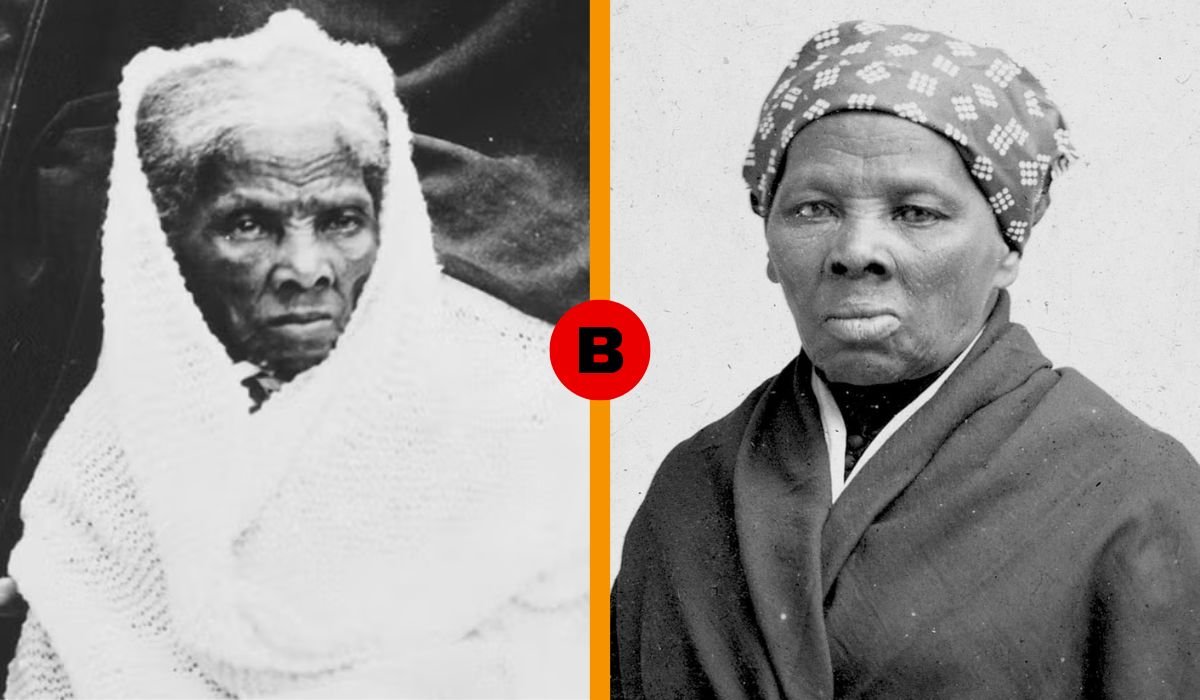
Harriet Tubman remains one of the most recognizable and courageous figures in American history. Born into slavery on Maryland’s Eastern Shore around 1822, she grew up in a world shaped by forced labor, family separation, violence, and the constant threat that loved ones could be sold away. In 1849, Tubman escaped slavery and reached freedom. But she didn’t simply leave her past behind.
Instead, she made the extraordinary decision to return to Maryland again and again, risking her own freedom to help relatives, friends, and other enslaved people escape. Her work with the Underground Railroad eventually made her one of the best-known abolitionists of the 19th century.
Tubman’s life took another remarkable turn during the Civil War. She worked for the Union as a nurse, cook, scout, and spy, using her knowledge of the South and her connections within Black communities to support military operations. In 1863, she helped plan and guide the Combahee River Raid, an operation that resulted in the liberation of more than 700 enslaved people.
Her activism didn’t end when the war was over. Tubman continued helping formerly enslaved people, supporting her community, caring for older people, and speaking in support of women’s suffrage. Her journey from slavery to freedom became a lifelong commitment to securing freedom and dignity for others.
Harriet Tubman Quick Bio Information
| Fact | Information |
|---|---|
| Full Name | Araminta Harriet Ross |
| Best Known As | Harriet Tubman |
| Childhood Nickname | Minty |
| Birth | Around 1822 |
| Birthplace | Dorchester County, Maryland |
| Parents | Ben Ross and Harriet “Rit” Green |
| Birth Status | Born Into Slavery |
| First Husband | John Tubman |
| Marriage | 1844 |
| Escape From Slavery | 1849 |
| Escape Destination | Philadelphia |
| Underground Railroad Missions | About 13 |
| People Personally Led to Freedom | About 70 |
| Additional People Assisted With Instructions | About 50–60 |
| Civil War Roles | Nurse, Cook, Scout, and Spy |
| Second Husband | Nelson Davis |
| Adopted Daughter | Gertie Davis |
| Auburn Home | New York |
| Home for the Aged | Opened in 1908 |
| Died | March 10, 1913 |
| Burial | Fort Hill Cemetery, Auburn, New York |
Harriet Tubman’s Early Life in Slavery
Harriet Tubman was born Araminta Ross to Ben Ross and Harriet “Rit” Green, who were enslaved in Dorchester County, Maryland. She was one of nine children, but growing up in a large family didn’t guarantee that the children would remain together. Under slavery, families could be separated at any time, and several of Tubman’s sisters were eventually sold away.
She was also known as “Minty” during her childhood. Like many enslaved children, Tubman was forced to work from a young age. She was hired out to different households and performed demanding jobs in fields, forests, waterways, and homes across Maryland’s Eastern Shore.
Those difficult years left a lasting impression on her. They also gave her an intimate understanding of the local landscape. Tubman learned how to move through the region, recognize waterways and roads, and understand the natural environment around her. Years later, that knowledge would become invaluable when she began helping other people escape slavery.
Her father’s circumstances also changed over time. Ben Ross was eventually freed, while her mother later secured her freedom. Even then, the family remained vulnerable because slavery continued to threaten relatives who weren’t legally free.
Tubman’s childhood taught her a harsh lesson that would shape much of her adult life: freedom for one person didn’t necessarily mean freedom for an entire family.
The Injury That Changed Her Life
One of the most traumatic moments of Tubman’s childhood came when she was struck in the head by a heavy iron weight.
Tubman had refused an overseer’s demand that she help restrain another enslaved person who was attempting to escape. The overseer threw the weight at the fleeing man, but it struck Tubman instead.
The injury was serious and affected her for the rest of her life. Historical accounts describe recurring headaches, seizures, and other physical problems. Tubman also experienced vivid dream states and visions, which she understood through the lens of her strong Christian faith.
It’s important, however, not to let the injury define her entire story. Tubman lived with its effects while carrying out physically demanding work and eventually undertaking some of the most dangerous missions of her life.
Her ability to continue despite chronic health problems became another example of the extraordinary resilience that characterized her life.
How Harriet Tubman Escaped Slavery
In 1849, Tubman escaped slavery at roughly 27 years old. The death of her enslaver, Edward Brodess, increased her fears about what might happen to her and her family. Like many enslaved people, she understood that a change in ownership could bring the threat of sale and permanent separation.
Tubman initially attempted to escape with her brothers. They eventually became frightened and returned, but she continued on her own.
Her journey took her through Maryland and Delaware before she finally reached Pennsylvania and Philadelphia. The route was dangerous, and every stage of the journey carried the possibility of capture.
Reaching Philadelphia meant that Tubman had achieved something she had once been denied: legal freedom. Yet freedom didn’t feel complete while her family and friends remained enslaved in Maryland.
Rather than settling into a quiet life, Tubman decided to go back.
That decision changed the course of American history.
Harriet Tubman and the Underground Railroad
The Underground Railroad wasn’t an actual railroad or a single organized institution. It was a loose network of people, homes, churches, communities, routes, and other forms of assistance that helped enslaved people seek freedom.
Those involved often used railroad terminology as a form of secret language. Guides were known as “conductors,” while places where people could hide or receive assistance were sometimes called “stations.”
Tubman became one of the network’s most famous conductors. Over roughly a decade, she made about 13 trips into Maryland and personally led around 70 people to freedom. Many of those people were members of her own family or close friends.
Her success wasn’t based on courage alone. Tubman understood the terrain of Maryland’s Eastern Shore and knew how to use waterways, roads, forests, disguises, and trusted contacts. She had to make decisions quickly while keeping the people traveling with her safe and hidden.
Every return trip was a gamble. She was entering a slave state where discovery could have resulted in capture, imprisonment, or worse. Yet she continued returning.
That determination eventually earned her the nickname “Moses,” a reference to the biblical figure who led people out of bondage.
How Many People Did Harriet Tubman Help Escape?
The number of people Harriet Tubman helped has become one of the most frequently misunderstood parts of her story.
A 19th-century biography associated with Tubman claimed that she had personally led around 300 enslaved people to freedom during 19 missions. Modern historical research has produced a more cautious and better-supported figure.
The National Park Service estimates that Tubman personally led about 70 people to freedom during approximately 13 trips into Maryland. She also provided instructions that helped another estimated 50 to 60 people make their own way to freedom.
That distinction matters. Tubman’s documented achievements are already extraordinary without relying on inflated figures.
She repeatedly returned to dangerous territory to help people escape while knowing that capture could cost her her own freedom. Her missions also show that the Underground Railroad was not simply a system in which one famous conductor rescued everyone. Many freedom seekers made their own journeys, often relying on several people and networks along the way.
Tubman’s role was significant because she repeatedly placed herself in danger to guide and assist others.
The Fugitive Slave Law and Canada
The Fugitive Slave Act of 1850 created an even more dangerous environment for people escaping slavery.
Under the law, escaped enslaved people could be captured even after reaching free states and returned to slavery. Free Black people also faced serious dangers from kidnappers and people who sought financial rewards for capturing alleged fugitives.
As those risks grew, Tubman and other abolitionists increasingly directed freedom seekers toward Canada, where slavery had been abolished.
Tubman’s routes weren’t fixed. They changed according to circumstances, geography, weather, the presence of slave catchers, and the people involved. Her familiarity with Maryland remained especially valuable because she knew the area and understood how local communities were connected.
Her missions were also deeply personal. Tubman worked to reunite family members who had been separated by slavery, including her parents. She wasn’t able to save everyone she loved, but she continued trying despite the enormous risks.
Harriet Tubman and John Brown
Tubman met the abolitionist John Brown in Canada in 1858. Brown was committed to ending slavery and believed that armed resistance could play a role in destroying the institution.
Tubman shared his opposition to slavery and helped him with planning. Her knowledge of geography, local communities, and people connected to the anti-slavery movement made her a valuable source of information.
Brown reportedly called her “General Tubman,” reflecting the respect he had for her courage and abilities.
Tubman ultimately couldn’t take part in Brown’s 1859 raid on Harpers Ferry because she became ill. Brown’s attempt to seize the federal arsenal failed, and he was captured, tried, and executed.
Although Tubman wasn’t present during the raid, her association with Brown shows that her activism extended beyond the Underground Railroad. She was connected to a broader abolitionist movement that included people who advocated very different approaches to confronting slavery.
Harriet Tubman During the Civil War
When the Civil War began, Tubman once again put her experience to work for the cause of freedom.
She traveled to South Carolina and served the Union in several roles, including nurse, cook, scout, and spy. Her work wasn’t confined to one responsibility. She cared for sick and wounded people while also gathering information and helping Union forces understand the region.
Her knowledge of Southern geography was particularly useful. Tubman knew how to communicate with Black communities and could gather information from people who understood Confederate activity in their areas.
She also used traditional plant-based remedies while caring for people who were ill.
Her wartime work demonstrated a side of Tubman that is sometimes overshadowed by her Underground Railroad missions. She wasn’t simply a brave guide helping people escape. She had developed into a skilled organizer, intelligence operative, and leader.
The Combahee River Raid
Tubman’s most significant military contribution came during the Combahee River Raid in South Carolina in June 1863.
Before the operation, intelligence was gathered through networks that included formerly enslaved people and local boat pilots. Tubman contributed valuable information about the area and helped Union forces navigate the waterways.
The raid disrupted Confederate activity along the river and led to the liberation of more than 700 enslaved people. Many of the Black men who escaped during the operation later joined the Union Army.
The raid also gave Tubman a place in military history. She helped guide an operation that directly challenged slavery while putting her own life at risk.
Her role is especially significant because women, and Black women in particular, were rarely recognized as military leaders during this period. Tubman’s contribution demonstrates that her leadership extended far beyond the Underground Railroad.
Harriet Tubman’s Husbands and Family
Tubman’s family life was complicated by slavery and the different circumstances surrounding freedom.
She married John Tubman, a free Black man, in 1844. Their relationship was affected by the realities of slavery. When Harriet escaped, John remained in Maryland. He later married another woman.
In 1869, Tubman married Nelson Davis, a Civil War veteran. The couple later adopted a daughter, Gertie.
Family remained one of the strongest motivations behind Tubman’s work. Her early experiences with family separation had shown her how devastating slavery could be, and many of her Underground Railroad missions involved people she knew personally.
Her story also highlights the way slavery disrupted marriage and parenthood. Enslaved people lacked control over many of the most basic aspects of family life, and children born to enslaved mothers inherited their mother’s enslaved status.
For Tubman, helping people reach freedom was therefore not an abstract political cause. It was deeply connected to the family members she had seen taken away.
Harriet Tubman’s Life in Auburn
After years of traveling and activism, Tubman established a permanent home in Auburn, New York.
In 1859, she acquired property there from the family of William H. Seward. Auburn eventually became the center of her later life and a place where she could live with family members while continuing her humanitarian work.
Her financial situation, however, was often difficult. Tubman’s reputation grew, but she didn’t become wealthy simply because she was famous. She frequently relied on supporters and continued giving time and resources to other people.
Auburn gave her the opportunity to create something lasting. It became a place where formerly enslaved people, relatives, older people, and others in need could find support.
Her work there shows that Tubman’s commitment to freedom didn’t disappear when the Civil War ended. Instead, it evolved into a broader commitment to community and care.
Harriet Tubman’s Work After the Civil War
Tubman’s activism continued long after slavery was abolished.
She supported formerly enslaved people and remained involved in efforts to improve the lives of Black Americans. She also became increasingly connected to the women’s suffrage movement, speaking in support of women’s right to participate in the political process.
Her later years are sometimes overshadowed by stories of the Underground Railroad, but this period is essential to understanding the full scope of her life.
In 1903, Tubman transferred land to the African Methodist Episcopal Zion Church so that a home could be established for elderly and disadvantaged people. The Harriet Tubman Home for the Aged opened in 1908.
The project reflected something fundamental about Tubman’s character. Even after spending decades fighting slavery, she remained focused on people who were vulnerable and in need of help.
Her later activism wasn’t simply about preserving her own legacy. It was about creating a place where others could live with greater security and dignity.
How Did Harriet Tubman Die?
Harriet Tubman died on March 10, 1913, in Auburn, New York.
Her exact birth date remains uncertain, so historians can’t determine her precise age with complete certainty. She was generally believed to have been around 90 years old.
The effects of the head injury she suffered as a young woman continued throughout her life. In her later years, she underwent brain surgery intended to relieve symptoms associated with the injury.
Tubman eventually died of pneumonia. She was surrounded by people who knew and cared for her, bringing an extraordinary life to a close.
She was buried at Fort Hill Cemetery in Auburn and received military honors.
By the time of her death, Tubman’s life had crossed several defining periods in American history, including slavery, abolition, the Civil War, emancipation, Reconstruction, and the early struggle for women’s voting rights.
Harriet Tubman’s Legacy
Harriet Tubman’s legacy reaches far beyond the familiar image of an abolitionist guiding people through the night.
She was an abolitionist, freedom seeker, Underground Railroad conductor, Union intelligence operative, military leader, humanitarian, and women’s suffrage advocate.
What makes her story particularly powerful is the consistency of her purpose. She escaped slavery but refused to regard her own freedom as the end of the journey. Instead, she repeatedly put herself in danger to help other people obtain the same freedom.
Her legacy is preserved at historic sites in Maryland and New York, including the Harriet Tubman Underground Railroad National Historical Park and the Harriet Tubman National Historical Park in Auburn.
Her story also offers an important lesson about historical accuracy. Popular accounts have sometimes exaggerated the number of people she personally rescued or presented later legends as established facts. The documented record doesn’t need embellishment. Tubman’s actual achievements are extraordinary enough.
She escaped slavery, returned repeatedly to Maryland, helped dozens of people reach freedom, served the Union during the Civil War, contributed to an operation that liberated hundreds, and spent her later years helping her community.
Harriet Tubman and the $20 Bill
Harriet Tubman’s connection to the $20 bill began with a 2016 announcement from the U.S. Treasury.
The department announced plans to place Tubman’s portrait on the front of a redesigned $20 bill, replacing former President Andrew Jackson. The proposal followed years of public discussion about increasing the representation of women on U.S. currency.
The redesign process was subsequently delayed, however, and the proposed note never entered circulation.
By 2026, the situation had changed again. Treasury Secretary Scott Bessent said the department was not moving forward with the Tubman $20 redesign at that time.
As a result, Harriet Tubman is not currently featured on the circulating $20 bill. Andrew Jackson remains on the note, and the previously discussed 2030 timeline shouldn’t be treated as a guaranteed release date.
The currency proposal remains an important part of Tubman’s modern legacy, but it shouldn’t be confused with an actual change to the money Americans use today.
Harriet Tubman in Movies and Television
Tubman’s life has inspired generations of writers, filmmakers, historians, and performers.
One of the best-known early portrayals came in the 1978 television miniseries A Woman Called Moses, in which Cicely Tyson played Tubman.
More than four decades later, Cynthia Erivo portrayed Tubman in the 2019 feature film Harriet. The film focused particularly on Tubman’s escape from slavery and her early work helping others reach freedom.
Movies and television have played an important role in introducing Tubman’s story to wider audiences. Still, dramatic productions inevitably make choices for storytelling purposes. A scene shown on screen isn’t necessarily a documented historical event.
For readers interested in Tubman’s actual life, it remains useful to distinguish between established historical evidence and material created or adapted for dramatic effect.
Final Thoughts
Harriet Tubman’s journey from slavery to freedom was extraordinary in its own right. What made her legacy even more remarkable, however, was what she chose to do after escaping.
She could have remained in the North and built a life away from the dangers of slavery. Instead, she returned to Maryland repeatedly, knowing that every journey could end in capture. Later, she carried that same determination into the Civil War, humanitarian work, and the fight for women’s rights.
That’s why Harriet Tubman’s story is much larger than the Underground Railroad. It is a story about family, faith, courage, leadership, sacrifice, and an unwavering belief that freedom should not belong to only a few.
Perhaps the most enduring lesson from Harriet Tubman’s life is that she never treated her own escape as the finish line. Freedom gave her a new responsibility, and she spent the rest of her life helping others move closer to the same goal.
FAQs About Harriet Tubman
When Did Harriet Tubman Escape Slavery?
Harriet Tubman escaped slavery in 1849, traveling from Maryland through Delaware before reaching Pennsylvania. She was approximately 27 years old.
How Many People Did Harriet Tubman Help Escape?
Tubman personally led about 70 people to freedom during approximately 13 trips into Maryland. She also provided instructions that helped another estimated 50 to 60 people make their own way to freedom.
Why Was Harriet Tubman Called Moses?
Tubman became known as “Moses” because of the comparison between her work guiding enslaved people toward freedom and the biblical Moses leading people out of bondage.
Did Harriet Tubman Serve in the Civil War?
Yes. Tubman served the Union as a nurse, cook, scout, and spy. Her knowledge of the region and her connections with Black communities made her especially useful to Union operations.
What Was the Combahee River Raid?
The Combahee River Raid was a Union military operation in South Carolina in June 1863. Tubman provided intelligence and helped with navigation and planning. The operation resulted in the liberation of more than 700 enslaved people.
Who Was Harriet Tubman Married To?
Tubman first married John Tubman in 1844. She later married Nelson Davis in 1869. Tubman and Davis adopted a daughter named Gertie.
Where Is Harriet Tubman Buried?
Harriet Tubman is buried at Fort Hill Cemetery in Auburn, New York. Her funeral took place at Thompson A.M.E. Zion Church, and she received military honors.
Is Harriet Tubman on the $20 Bill?
No. As of 2026, Harriet Tubman isn’t featured on the circulating $20 bill. The earlier Treasury proposal to place her portrait on the note hasn’t resulted in an issued redesign, and Andrew Jackson remains on the current $20 bill.
Learn more and explore exciting content on: Mark Kerr: The Rise, Struggles, and Legacy of MMA’s Smashing Machine