

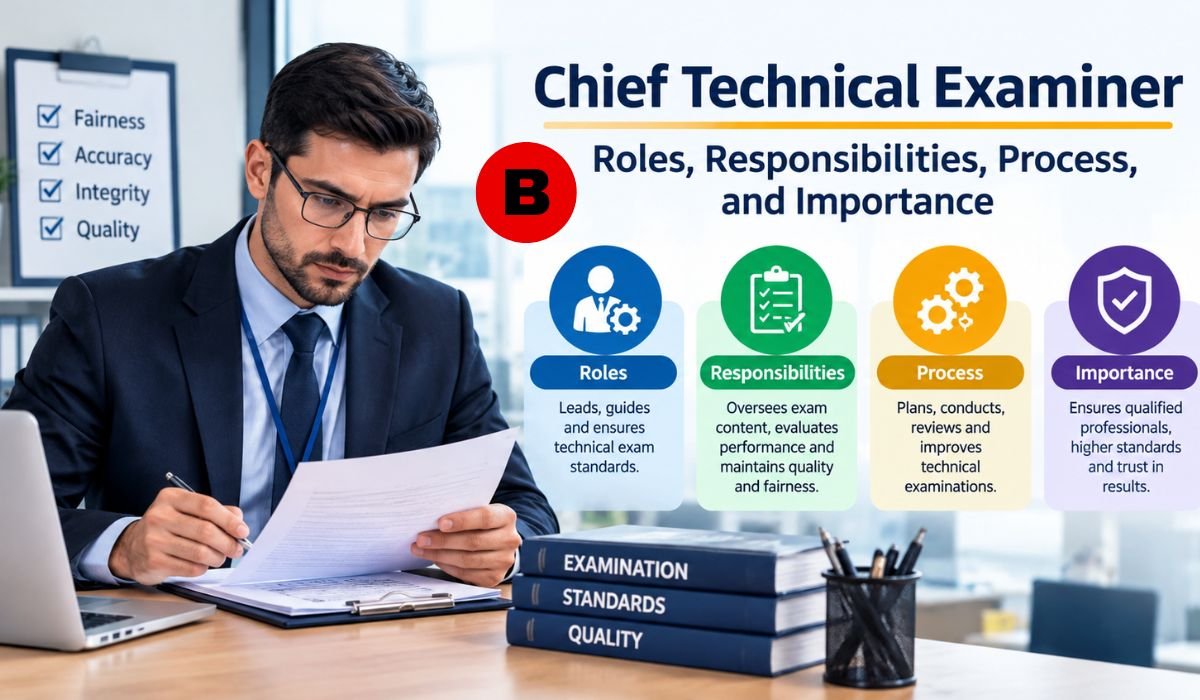
Government infrastructure projects involve much more than construction. Behind every road, bridge, public building, water project, or other major development are detailed estimates, engineering decisions, contracts, inspections, measurements, and payments. Because these projects use public money, each stage needs appropriate technical and financial oversight.
That’s where the Chief Technical Examiner comes in.
In India, the Chief Technical Examiner, commonly known as the CTE, is associated with the Chief Technical Examiners’ Organisation (CTEO), the technical wing of the Central Vigilance Commission. The organisation carries out independent technical examinations of selected government works and contracts and can provide technical advice on procurement and related matters. Its work is intended to strengthen technical and financial controls while identifying irregularities and weaknesses in existing systems.
The CTEO has a long history. It was established in 1957 under the then Ministry of Works, Housing & Supply and later became part of the Central Vigilance Commission when the Commission was established in 1964. Its original purpose included strengthening technical and financial control over public works and promoting economy in expenditure.
For contractors, engineers, government departments, and anyone researching the Chief Technical Examiner, the role is about far more than a site inspection. To understand what a CTE does, it helps to follow a project from its original estimate and tender through construction, measurement, payment, and completion.
Quick Bio Information: Chief Technical Examiner
| Fact | Information |
|---|---|
| Full Name | Chief Technical Examiner |
| Common Abbreviation | CTE |
| Organisation | Chief Technical Examiners’ Organisation |
| Common Organisation Abbreviation | CTEO |
| Institutional Context | Central Vigilance Commission |
| Country Associated With This Framework | India |
| CTEO Established | 1957 |
| Original Administrative Context | Ministry Of Works, Housing & Supply |
| CVC Connection | Became Part Of The CVC In 1964 |
| Primary Function | Independent Technical Examination |
| Main Areas | Government Works And Contracts |
| Examination Focus | Technical, Financial, Contractual, And Procedural Matters |
| Important Records | Estimates, Contracts, Measurements, Bills, Quality Records, And Completion Documents |
| Site Examination | Physical Verification And Technical Review |
| Procurement Function | Technical Advice And Examination Of Relevant Matters |
| Vigilance Connection | Supports Technical Aspects Of Vigilance Work |
| Preventive Purpose | Identifying System Weaknesses And Reducing Recurring Irregularities |
| Technology | Increasing Use Of Digital Records And Data-Based Tools |
| Overall Objective | Stronger Technical And Financial Control Of Public Works |
The historical details above are based on government-published vigilance material describing the creation and development of the CTEO.
What Is A Chief Technical Examiner?
A Chief Technical Examiner is a senior technical function within the CTEO framework of the Central Vigilance Commission. The CTEO conducts independent technical examinations of selected works and contracts that fall within the Commission’s jurisdiction.
The word “examination” is important. The CTE isn’t simply carrying out the same routine supervision handled by the engineering department responsible for a project. Instead, the technical examination provides an additional layer of scrutiny.
Depending on the project, an examination may involve estimates, tender documents, specifications, contracts, measurements, quality records, physical work, bills, and other relevant documents. The purpose is to determine whether the work and related transactions are consistent with approved requirements and applicable procedures.
That makes the Chief Technical Examiner Role particularly relevant to public works, where engineering decisions and financial expenditure are closely connected.
What Is The Chief Technical Examiners’ Organisation?
The Chief Technical Examiners’ Organisation, or CTEO, is the technical wing associated with the Central Vigilance Commission. Government vigilance guidance describes the organisation as responsible for independent technical examinations of works and contracts, along with providing technical advice on procurement matters referred to the Commission.
The organisation dates back to 1957. It was originally established under the Ministry of Works, Housing & Supply to introduce internal, concurrent, and continuous administrative and technical examination of Central Public Works Department works. Its early focus included economy in expenditure and stronger technical and financial control.
Following recommendations of the Santhanam Committee, the organisation was strengthened, with its intended jurisdiction extending beyond the original department. It became part of the Central Vigilance Commission in 1964.
That history helps explain why the CTEO isn’t simply another construction-quality unit. Its role developed from the need for specialized technical scrutiny of public works and has remained connected to the wider vigilance framework.
Why Is The Chief Technical Examiner Role Important?
Public construction projects involve decisions that can affect both the quality of an asset and the amount of public money spent on it. An inaccurate measurement, weak quality-control process, poorly supported estimate, or inadequately documented change can create problems that follow a project from one stage to the next.
Technical examination provides an additional opportunity to identify those issues.
The value of the Chief Technical Examiner function isn’t limited to finding individual discrepancies. Government vigilance guidance also describes the CTEO’s role in improving systems and preventing similar irregularities from recurring.
That preventive element matters. If an examination identifies a weakness in documentation, contract administration, or technical control, the lesson can potentially be applied to future projects. In that sense, technical examination supports both accountability and better project management.
What Does A Chief Technical Examiner Do?
The responsibilities of a Chief Technical Examiner can extend across several stages of a government work or contract. The precise scope depends on the project selected for examination and the issues that require technical review.
An examination may cover the project estimate, procurement documents, technical specifications, contract conditions, physical execution, measurements, quality records, bills, and completion documentation.
One practical way to understand the process is to follow the chain of information through a project. What was originally approved should connect with what was put out to tender. The tender should correspond with the contract. The executed work should match the contract and properly approved changes. Measurements should support the quantities claimed, and payments should be supported by those measurements.
When those records don’t line up, the difference may require closer examination.
Chief Technical Examiner Responsibilities Before The Tender
Technical control starts well before construction begins. The project estimate, scope of work, design, and technical specifications establish the foundation for the eventual contract.
That’s why pre-tender scrutiny can be so important. A weakness at this stage may become more difficult and expensive to correct once construction is underway. An unclear scope can lead to disputes, unsupported quantities can affect estimated costs, and poorly defined specifications can make quality harder to assess.
The CTE examination framework doesn’t mean every engineering judgment that differs from another judgment should be treated as an irregularity. Projects can legitimately vary because of site conditions, design requirements, technical considerations, and approved policies.
The key issue is whether the estimate and technical decisions are properly supported and handled in accordance with the applicable requirements.
CTE Role In Tender And Procurement Examination
The tendering stage connects a project’s design and requirements with the contractor who will eventually carry out the work. As a result, procurement documentation can become an important part of technical and contractual scrutiny.
A technical examination may consider the relationship between the scope of work, specifications, quantities, tender conditions, contract provisions, and the work ultimately performed.
The CTEO also has a documented role in providing technical advice on procurement matters referred to the Central Vigilance Commission. Government vigilance guidance emphasizes appropriate transparency, competition, and fairness in procurement while recognizing the management responsibilities of the organization making the procurement decision.
That distinction is important. The CTE isn’t simply deciding which contractor should receive a tender. Rather, the examination looks at whether relevant technical and contractual arrangements were handled appropriately and whether identified issues require further attention.
Chief Technical Examiner During Construction
Construction is the point at which technical documentation meets physical reality.
During an examination, the actual work can be compared with approved drawings, specifications, quantities, quality requirements, and recorded measurements. Site records and supporting documents can also help establish how the work was carried out.
This comparison can be particularly valuable because a project record may state that a certain quantity or type of work has been completed, while physical verification can provide another source of evidence.
Quality-control records are equally important. Government guidance for works management emphasizes accurate measurement, appropriate testing, material reconciliation, recording the location of executed work, and suitable action when substandard materials are identified.
A technical examination can therefore bring together physical evidence, engineering records, contractual documents, and financial information rather than relying on a single record or statement.
What Does A CTE Check At A Construction Site?
A CTE Site Examination can cover several aspects of a project at once.
The examiner may consider whether construction matches approved specifications and drawings, whether recorded quantities appear consistent with the physical work, and whether relevant materials and workmanship meet the required standards.
Material documentation can be especially important. Test reports, quality-control records, inspection documents, and information about how materials were used can help establish whether the required quality procedures were followed.
The examination may also consider deviations from the original contract. Such changes aren’t automatically improper. Construction projects sometimes require legitimate modifications because of site conditions or technical requirements. What matters is whether the change was properly considered, approved, documented, and handled under the applicable contractual and administrative procedures.
CTE Examination Of Measurement Books And Project Quantities
The Measurement Book, commonly called an MB, is an important record in government works because measurements of executed work are linked to the financial settlement of contracts. Where an organisation uses them, electronic Measurement Books, or e-MBs, provide a digital method for recording and processing measurement information.
During a technical examination, recorded quantities can be compared with physical work and supporting records.
For example, if project records show that a particular quantity of work was completed, the examination may consider whether that quantity is supported by measurements, site conditions, drawings, and other relevant evidence.
The underlying principle is straightforward: quantities used for payment should be traceable to work that was authorized, executed, measured, and accepted under the applicable contractual arrangements.
That’s why accurate measurement records matter so much. They’re not simply administrative paperwork. They provide an important link between physical construction and financial payment.
How The CTE Examines Project Quality And Materials
Quality examination involves more than checking whether a test report exists.
A proper review may consider the applicable material specification, testing requirements, test results, quality-control records, inspection arrangements, and evidence of corrective action where testing identifies a problem.
For project teams, this means quality documentation should be maintained throughout construction. Creating or reconstructing records only when an examination is expected can weaken the reliability of the project file.
Good documentation should allow a reviewer to understand what material was supplied, how it was tested, where it was used, and whether the relevant requirements were met.
The same principle applies to workmanship. A project may have extensive paperwork and still require physical examination if the actual construction doesn’t correspond with the approved requirements.
Post-Completion Examination By The Chief Technical Examiner
Technical scrutiny doesn’t necessarily end when construction is finished. At this stage, an examination can compare the completed project with the approved scope, contractual requirements, final measurements, quality records, and payment documents.
Final measurements and bills deserve particular attention because they represent the financial conclusion of the work. Supporting records should make it possible to understand how final quantities and payments were established.
Completion documentation can also help determine whether the required deliverables were actually provided.
A completed project is therefore more than a finished physical structure. From an examination perspective, it should have a traceable record connecting approval, procurement, execution, measurement, quality control, payment, and completion.
CTE Examination Checklist: What Documents Are Reviewed?
The exact records reviewed depend on the project, but a technical examination can involve documents covering the entire contract lifecycle.
These may include administrative and financial approvals, technical sanctions, detailed project reports, estimates, tender documents, agreements, work orders, drawings, specifications, Measurement Books or e-MBs, running bills, material test reports, quality-control records, inspection notes, deviation statements, extension-related documents, completion records, and final bills.
The purpose isn’t to collect paperwork for its own sake. Each document should help establish how a particular decision was made or how a specific quantity, quality requirement, or payment was determined.
The strongest project records are consistent with one another. The estimate should connect to the tender, the tender to the contract, the contract to the executed work, and the measurements to the payments.
Common Issues Found During CTE Examinations
Technical examinations can identify different types of irregularities and weaknesses. Government technical-vigilance material discusses issues involving works and contracts, including technical deficiencies, financial concerns, and weaknesses in procedures and controls.
Potential areas of concern include inaccurate measurements, inadequate quality control, unsupported deviations, incomplete documentation, weaknesses in contract administration, and discrepancies between physical work and financial records.
Careful language is important here. A technical observation doesn’t automatically establish corruption or intentional wrongdoing. A deficiency may result from poor documentation, an engineering error, inadequate supervision, or a procedural weakness.
When an observation has a vigilance dimension, the matter can be considered through the appropriate vigilance and administrative processes.
What Happens When A CTE Finds An Irregularity?
A CTE observation is generally a finding that requires examination and response. It shouldn’t automatically be treated as a final determination of misconduct.
Government vigilance guidance explains that matters involving technical or financial irregularities and related concerns can be processed through the appropriate vigilance framework. The CTEO can also recommend improvements intended to prevent similar problems from recurring.
Follow-up may involve examining available evidence, obtaining explanations from the concerned organization, reviewing supporting records, and determining whether corrective, financial, administrative, or disciplinary action is appropriate under the applicable rules.
This distinction is important for the credibility of the process. A technical finding should be supported by evidence, while any conclusion about responsibility should follow the relevant administrative or vigilance procedure.
Chief Technical Examiner Vs CVC, CAG, Internal Audit, And Quality Control
The Chief Technical Examiner, the Central Vigilance Commission, the Comptroller and Auditor General, departmental engineering teams, internal audit, and quality-control units all have different responsibilities.
The CTEO is the technical wing associated with the CVC and focuses on technical examination of selected works and contracts. The CVC has a much broader vigilance mandate. The CAG has a constitutional audit role concerning government accounts and public expenditure.
A departmental engineering team, by contrast, is generally involved in planning, execution, supervision, and routine project management. A quality-control unit focuses on whether applicable technical and quality requirements are being met. Internal audit may examine an organization’s internal controls, procedures, and financial systems.
These functions can involve some of the same documents, but they aren’t interchangeable.
How Contractors And Government Departments Can Prepare For A CTE Examination
The best preparation starts at the beginning of a project, not shortly before an examination.
Contractors and project departments should maintain accurate measurements, preserve test records, follow approved drawings and specifications, document site decisions, and obtain the necessary approvals for changes. Records should be maintained as work progresses rather than reconstructed afterward.
Project teams should also be able to explain the connection between physical work and financial claims. If a quantity appears in a bill, the supporting measurement and related records should be easy to trace.
Digital systems can make information easier to organize, but they can’t replace professional responsibility. An electronic file is still unreliable if the underlying measurement or entry is wrong.
The practical lesson is simple: good project management is the best CTE preparation.
How Technology Is Changing Technical Examination
Technology is creating new possibilities for technical examination. Electronic records can make project information easier to store, search, compare, and review. e-MBs can support digital measurement processes where those systems have been implemented. Geographic information and geo-tagged photographs can also provide useful evidence about the location and status of physical work.
Data analysis can help identify unusual patterns that deserve human attention. Artificial intelligence may increasingly assist with document comparison, anomaly detection, and large-scale examination of project records.
Technology, however, shouldn’t be treated as a substitute for engineering expertise. A digital record can still contain an incorrect entry, while an automated system can identify an unusual pattern without understanding the technical reason behind it.
The most reliable approach is therefore likely to combine digital evidence with professional engineering judgment.
The Future Of The Chief Technical Examiner Role
The future of the Chief Technical Examiner function is likely to involve greater use of digital information and more risk-focused examination.
Project databases can make it easier to compare estimates, contracts, measurements, progress information, and payments. Analytical tools could help identify projects or transactions that deserve closer human review.
This could gradually move technical oversight toward earlier risk identification instead of relying entirely on examination after a problem has already developed.
At the same time, newer infrastructure creates new technical challenges. Public investment increasingly involves sophisticated transportation systems, renewable-energy projects, digital infrastructure, smart-city technology, and specialized facilities.
The CTE function may therefore need to keep adapting its technical expertise while maintaining its fundamental focus on evidence, compliance, accountability, and sound project controls.
Why Independent Technical Examination Benefits Public Infrastructure
Public infrastructure ultimately has to deliver something tangible: a functioning road, bridge, building, water system, transport facility, or another public asset.
Technical examination helps connect that physical result with the decisions and expenditure behind it. When project records are accurate, measurements are reliable, materials are properly tested, changes are authorized, and payments are supported by evidence, the project becomes easier to monitor and manage.
The CTEO’s preventive function is particularly valuable because an examination can reveal not only an individual problem but also a weakness in the system that allowed it to occur. Government vigilance guidance specifically connects the organisation’s work with improving systems and preventing the recurrence of irregularities.
That makes the Chief Technical Examiner more than an inspection role. It’s part of a broader accountability framework in which engineering expertise is used to strengthen the management of public works and contracts.
Final Thoughts
The Chief Technical Examiner occupies a specialized position in India’s public-sector vigilance and technical-examination framework. The role is closely connected with the Chief Technical Examiners’ Organisation and the Central Vigilance Commission, and its history reflects a long-standing effort to strengthen technical and financial control over public works.
The simplest way to understand a CTE examination is to follow the project from beginning to end: What was approved? What was tendered? What was contracted? What was actually constructed? What was measured? What was tested? What was paid?
When those answers are supported by consistent technical and documentary evidence, the project has a stronger accountability trail.
For contractors and government departments, the practical lesson is just as clear. CTE readiness shouldn’t be a last-minute exercise. Accurate measurements, proper quality control, complete records, authorized changes, and sound contract administration should be part of everyday project management.
As government projects become more complex and increasingly digital, the methods used for technical examination may continue to change. The underlying purpose, however, remains consistent: use technical expertise, evidence, and independent scrutiny to strengthen the quality, accountability, and financial control of public works.
FAQs About Chief Technical Examiner
What Is The Full Form Of CTE?
CTE stands for Chief Technical Examiner. In the Indian Central Vigilance Commission framework, the Chief Technical Examiners’ Organisation performs technical examination of selected works and contracts and provides technical assistance on relevant procurement matters.
What Does A Chief Technical Examiner Do?
A Chief Technical Examiner is involved in the technical examination of selected government works and contracts. The examination can cover estimates, tender documents, specifications, physical execution, measurements, quality records, bills, and completion-related documents.
When Was The CTEO Established?
The Chief Technical Examiners’ Organisation was established in 1957 under the then Ministry of Works, Housing & Supply. It became part of the Central Vigilance Commission when the CVC came into existence in 1964.
What Does A CTE Examine At A Construction Site?
A CTE examination can involve physical verification of executed work, quantities, materials, workmanship, drawings, specifications, quality records, measurements, and other relevant project documentation. The precise scope depends on the project and the matters selected for examination.
What Documents Are Reviewed During A CTE Examination?
Depending on the project, records can include approvals, estimates, tender documents, contracts, drawings, specifications, Measurement Books or e-MBs, bills, material test reports, quality-control records, inspection documents, deviation records, and completion documents.
Does A CTE Finding Automatically Mean Corruption?
No. A technical observation can identify an irregularity, deficiency, documentation problem, financial discrepancy, or procedural weakness without automatically establishing corruption or intentional misconduct. Any question of responsibility is handled through the relevant administrative or vigilance process.
How Can Contractors Prepare For A CTE Examination?
The strongest preparation is continuous compliance. Contractors should maintain accurate measurements, preserve testing and quality records, follow approved specifications, document authorized changes, and keep supporting project records current. Good records should reflect the actual work rather than being reconstructed for an examination.
Why Is The Chief Technical Examiner Important?
The Chief Technical Examiner function provides specialized technical scrutiny of selected government works and contracts. Its importance lies both in identifying project-level irregularities and in helping strengthen systems, technical controls, and preventive vigilance across public works.
Learn more and explore exciting content on: Ferdinand Kingsley: Biography, Career, Family, and Life Beyond Acting