

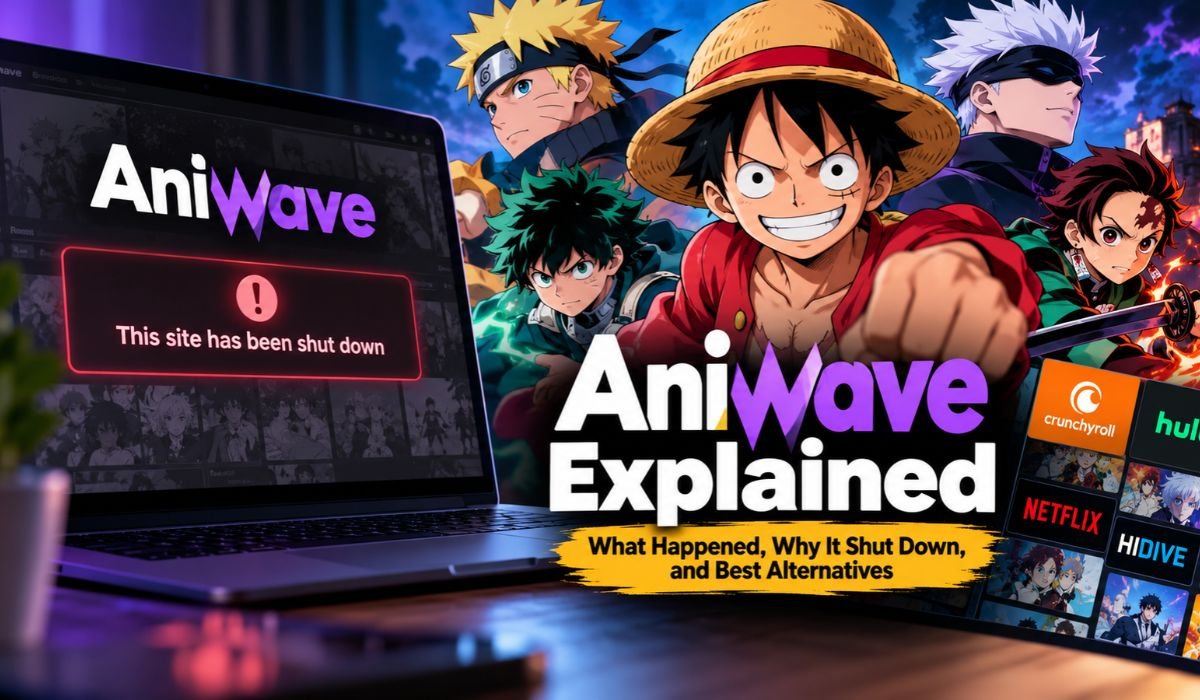
Introduction to Aniwave
For years, Aniwave was a familiar name among anime fans looking for a convenient way to watch their favorite Japanese animated series and movies online. With its extensive collection, English subtitles, dubbed episodes, and simple interface, the website attracted viewers from different parts of the world.
What made Aniwave especially appealing was its accessibility. Visitors could explore a wide range of anime without paying subscription fees or navigating complicated registration processes. For many fans, it became a regular destination for discovering new shows and revisiting old favorites.
That changed in August 2024, when Aniwave unexpectedly shut down. The closure surprised its audience and raised questions about the website’s future, the reasons behind its disappearance, and whether another version would eventually take its place.
Even in 2026, people continue searching for Aniwave, hoping to understand what happened or find a reliable replacement.
This article explores the platform’s history, its connection to 9anime, the circumstances surrounding its shutdown, potential security concerns, and the best legal alternatives for watching anime today.
Quick Information About Aniwave
| Information | Details |
|---|---|
| Platform Name | Aniwave |
| Former Name | 9anime |
| Website Category | Unofficial Anime Streaming |
| Original Launch | 2016, Under 9anime |
| Rebranding Period | August 2023 |
| Shutdown Date | August 2024 |
| Current Status | Original Service Closed |
| Primary Content | Anime Series And Movies |
| Streaming Model | Free Access |
| Main Audience | International Anime Fans |
| Registration | Generally Not Required |
| Language Options | English Subtitles And Dubs |
| Popular Genres | Action, Romance, Fantasy, Comedy |
| Access Method | Web Browsers |
| Licensing Status | Unauthorized Distribution |
| Shutdown Context | Anti-Piracy Enforcement |
| Official Mobile App | No Verified Official App |
| Popular Alternatives | Crunchyroll, Netflix, HIDIVE |
| Current Reference Year | 2026 |
What Is Aniwave?
Aniwave was an unofficial anime streaming website that allowed visitors to watch Japanese animated television shows and movies through their web browsers. Before adopting the Aniwave name, the platform operated as 9anime, which had already established a strong following among international anime enthusiasts.
The website offered content across numerous genres, including action, romance, fantasy, adventure, comedy, and supernatural stories. Its collection appealed to casual viewers as well as dedicated fans searching for particular titles.
One of its most recognizable features was the ability to watch anime without creating an account or providing payment details. Visitors could search for a series, choose an episode, and begin watching with relatively little effort.
However, there was an important distinction between Aniwave and established subscription platforms. Aniwave wasn’t an authorized anime distributor, and its content was made available outside the licensing arrangements used by legitimate streaming services.
That distinction eventually became central to the challenges surrounding the website.
The History of Aniwave and Its Connection to 9anime
The story of Aniwave began in 2016, when 9anime emerged as an alternative destination for people interested in watching Japanese animation online.
At the time, international anime streaming was still developing. Although legitimate services were expanding, viewers in many countries faced limited catalogs, regional restrictions, and inconsistent access to popular titles.
Websites such as 9anime attracted attention by bringing numerous anime series together in one place. Its straightforward approach helped it develop a loyal audience over the following years.
In August 2023, the platform changed its name from 9anime to Aniwave. The rebranding followed ongoing difficulties involving copyright complaints and restrictions affecting access to the service.
For existing visitors, much of the experience remained familiar. The website continued focusing on free anime streaming, offering recognizable browsing features and a broad selection of content.
The new identity, however, couldn’t eliminate the legal concerns associated with unauthorized distribution.
Just one year later, Aniwave closed, bringing an end to a website that had operated under two well-known names.
Why Was Aniwave So Popular Among Anime Fans?
Aniwave’s popularity wasn’t difficult to understand. It offered something many viewers were looking for: a convenient way to explore anime without managing multiple subscriptions.
For students, younger audiences, and casual fans, the absence of subscription fees was particularly attractive. Visitors could browse shows without worrying about monthly payments or complicated account requirements.
The variety of available content also played an important role. While licensed streaming services sometimes carried different catalogs depending on location, Aniwave attracted viewers searching for both mainstream hits and less widely available productions.
Language options helped broaden its appeal.
Some fans prefer hearing the original Japanese performances while reading English subtitles. Others enjoy English-dubbed episodes, especially when watching casually or sharing anime with family members.
Aniwave offered options that appealed to both groups.
Its familiar navigation and episode organization added to the convenience. Still, these advantages came with an important drawback: the platform operated without the official licensing arrangements that support legitimate streaming services.
Key Features That Made Aniwave Stand Out
Aniwave became recognizable for combining a broad anime selection with an interface that was relatively easy to navigate.
Visitors could search for titles, explore different genres, and move between episodes without dealing with particularly complicated menus. This made the website approachable for people who were new to anime streaming.
The platform also offered subtitled and dubbed content, giving international viewers more flexibility in how they enjoyed Japanese animation.
Another attraction was browser-based access. Users could visit the website from desktop computers, smartphones, or tablets without necessarily installing separate applications.
Historical accounts also describe features such as multiple playback sources and adjustable video quality. These options could help viewers manage different internet speeds or playback difficulties.
However, not every reported feature was consistently available. Claims about universal 4K streaming, guaranteed downloads, or constant hourly updates aren’t supported well enough to present as established facts.
Ultimately, Aniwave’s appeal came from convenience and content accessibility rather than any single technical innovation.
What Happened to Aniwave?
In late August 2024, Aniwave stopped operating during a broader series of shutdowns affecting unauthorized entertainment streaming websites.
Visitors who attempted to access the platform encountered a farewell message instead of the familiar anime catalog.
For regular users, the disappearance was abrupt. A website they had relied on for discovering and watching anime was suddenly unavailable.
The closure attracted attention across online anime communities, where people discussed what had happened and began searching for alternative platforms.
Contemporary reporting connected Aniwave’s disappearance with a wider enforcement effort involving several prominent piracy websites, including services associated with the FMovies network.
The shutdown also highlighted a practical weakness of unofficial streaming platforms. Even websites with substantial audiences can disappear quickly when they face legal action or operational difficulties.
As of October 2026, the original Aniwave operation has not been verified as returning.
Why Did Aniwave Shut Down?
Aniwave’s closure took place against the backdrop of increasing international efforts to combat online copyright infringement.
In August 2024, the Alliance for Creativity and Entertainment announced action against a major piracy operation associated with numerous unauthorized streaming websites.
Aniwave was among the services discussed in reporting about the wider shutdown.
The central issue was copyright licensing.
Anime productions involve creative teams, animation studios, producers, distributors, and other rights holders. These parties determine how their work can be distributed, including which companies may stream particular titles in different regions.
Licensed services obtain permission through formal agreements. Unauthorized websites, by contrast, may provide access to copyrighted productions without those permissions.
This creates legal and commercial challenges for the entertainment industry.
Although Aniwave disappeared during the broader enforcement campaign, the precise technical circumstances of its individual closure haven’t been fully documented publicly.
What is clear is that its shutdown reflected the growing pressure facing large unauthorized streaming platforms.
Is Aniwave Still Available in 2026?
The original Aniwave service remains closed in 2026, despite the continued appearance of websites using similar names.
This can be confusing for people who remember the original platform.
A website might display familiar branding, use a similar layout, or claim to be the new official Aniwave. None of those details alone proves that it is connected to the original operators.
Imitation websites can take advantage of recognizable names to attract visitors. Some may simply reproduce the appearance of discontinued services, while others could use misleading advertisements or questionable download prompts.
It’s also worth remembering that ordinary troubleshooting won’t restore a website that has permanently shut down.
Clearing browser cookies, changing internet settings, or switching devices cannot bring back the original Aniwave operation.
Anyone searching for Aniwave today should approach claims about an official return carefully and look for credible confirmation rather than relying on branding alone.
Is Aniwave Safe to Use?
Questions about Aniwave’s safety remain common, particularly because websites using its former name continue appearing online.
Since the original service is no longer operating, current security concerns mainly involve imitation websites and unrelated platforms using similar branding.
Unofficial streaming websites can expose visitors to deceptive advertisements, suspicious redirects, and fake download buttons. Some may encourage users to install unfamiliar software or grant browser notification permissions.
These requests deserve caution.
A website displaying a secure connection symbol isn’t automatically trustworthy. HTTPS protects data during transmission, but it doesn’t establish whether a website’s operators or advertising partners are reliable.
Visitors should avoid entering sensitive personal information on websites they cannot verify.
Keeping browsers updated, using reputable security tools, and avoiding unknown downloads can help reduce exposure to common online threats.
For regular viewing, licensed streaming services generally provide clearer accountability and more predictable security practices.
Is Aniwave Legal? Understanding Copyright Issues
Aniwave operated outside the official licensing arrangements used by authorized anime streaming platforms.
Copyright law gives creators and rights holders control over how their work is reproduced, distributed, and made available to audiences.
In the anime industry, these rights are often licensed separately across different countries. A distributor might have permission to stream a particular series in one region but not another.
This explains why anime catalogs can vary significantly between streaming services and locations.
Unauthorized streaming platforms may make copyrighted material available without obtaining the necessary permissions.
The legal consequences depend on the jurisdiction and the activity involved. Hosting or distributing copyrighted content without authorization can carry substantial legal risks, while the treatment of individual viewers varies between countries.
Using a VPN doesn’t automatically make unauthorized streaming lawful.
For viewers seeking dependable access, licensed platforms offer a clearer legal framework while helping support the businesses and creators involved in anime production.
Best Aniwave Alternatives for Watching Anime Online
The disappearance of Aniwave doesn’t mean anime fans have run out of viewing options. Several licensed platforms offer extensive collections, language options, and reliable streaming experiences.
Crunchyroll is one of the best-known services dedicated primarily to anime. Its catalog includes popular series, seasonal releases, subtitled episodes, and English-dubbed productions. It’s particularly appealing to viewers who enjoy following new anime as episodes become available.
Netflix provides another option, especially for people who watch anime alongside movies, documentaries, and other television programs. Its anime collection includes licensed Japanese series and original productions, although availability differs by country.
HIDIVE focuses on anime and offers selected titles that may not be available through competing services. Its geographic reach is more limited, so viewers should check whether subscriptions are supported in their region.
Official YouTube channels can also provide legal access to anime. Distributors such as Muse Asia and Ani-One Asia make selected episodes and series available to viewers in supported territories.
Depending on location, services such as Hulu, Tubi, and other regional platforms may offer additional licensed anime.
The best alternative isn’t necessarily the service with the largest advertised library. It’s the one that offers the shows you want, in your preferred language, at a price that suits your budget.
Aniwave vs. Legal Anime Streaming Platforms
At first glance, Aniwave and licensed streaming services appeared to serve a similar purpose: helping people watch anime online.
The difference lay in how they obtained and distributed content.
Aniwave offered free access through an unofficial model. Although that made the platform attractive to viewers, it also created uncertainty about copyright compliance and long-term availability.
Licensed services operate through agreements with rights holders. These arrangements establish which titles can be streamed, where they can be offered, and under what conditions.
Official platforms also tend to provide dedicated applications, account management tools, customer support, and more consistent subscription policies.
That doesn’t mean legitimate streaming services are perfect.
Regional restrictions, subscription costs, and fragmented catalogs can frustrate viewers. Someone may discover that a favorite series is available on one platform in another country but unavailable locally.
Even with these limitations, licensed streaming remains the more dependable choice for viewers who want predictable access and clearer consumer protections.
How to Choose the Best Aniwave Alternative
Finding the right Aniwave replacement starts with considering how you actually watch anime.
If you enjoy keeping up with newly released series, an anime-focused platform with seasonal programming and simulcasts may be the most suitable choice.
If you prefer watching anime alongside international dramas, films, and documentaries, a broader entertainment service could offer better overall value.
Language preferences deserve attention, too.
Not every anime title includes the same subtitle or dubbing options. Some productions are available only with Japanese audio and subtitles, while others provide several language tracks.
Before paying for a subscription, check whether your favorite shows are included in the local catalog.
It’s also useful to compare supported devices, offline viewing features, subscription conditions, and available video quality.
A smaller catalog containing your favorite titles may ultimately provide a better experience than a much larger library filled with shows you aren’t interested in watching.
How to Watch Anime Safely and Legally Online
Enjoying anime online shouldn’t require unnecessary risks.
The simplest starting point is choosing established streaming services or official distributor channels. These platforms generally provide clearer information about content rights, subscriptions, and application publishers.
When downloading an app, check that it comes from a recognized store and a legitimate developer.
Be cautious of websites that ask you to install unfamiliar software before playing a video. Unexpected browser extensions, suspicious security warnings, and requests for excessive permissions are also reasons to leave a website.
Protecting account information is equally important.
Use strong passwords, enable multifactor authentication when available, and avoid entering payment information into unverified websites.
Fans looking for free anime should explore official ad-supported services and licensed YouTube releases where available.
These options may not carry every title, but they offer a more transparent way to enjoy anime without relying on questionable streaming sources.
The Future of Anime Streaming After Aniwave
Aniwave’s closure offers an interesting perspective on how the anime streaming industry is changing.
Japanese animation has become a major part of international entertainment. Viewers across different countries now follow seasonal releases, discuss favorite characters, and discover new series through online communities.
Licensed streaming companies have responded by expanding their anime catalogs and investing in international distribution.
Subtitles, dubbing, and simultaneous releases have become increasingly important as audiences grow beyond Japan.
Still, the industry faces challenges.
Regional licensing restrictions can make certain titles difficult to find, while subscribing to several services can become expensive.
These frustrations help explain why unofficial streaming platforms attracted audiences in the first place.
The long-term opportunity for legitimate services lies in improving accessibility while maintaining the licensing arrangements that support anime production.
Aniwave may be gone, but the demand for convenient, affordable, and reliable anime streaming remains stronger than ever.
Final Thoughts on Aniwave
Aniwave became popular because it made anime easy to discover and accessible to a wide international audience. Its large collection, language options, and simple viewing experience helped it establish a recognizable place in online anime culture.
The platform’s journey from 9anime to Aniwave, followed by its shutdown in August 2024, also reveals the challenges facing websites that distribute copyrighted entertainment without authorization.
For anime fans in 2026, the practical question is no longer how to access the original Aniwave website. It’s where to find a reliable streaming service that offers the right combination of content, affordability, language options, and security.
Crunchyroll, Netflix, HIDIVE, and official anime distributors provide alternatives worth exploring, depending on regional availability.
Ultimately, Aniwave’s story reflects a larger issue within digital entertainment. Viewers want convenient access to the content they love, while creators and distributors need sustainable ways to bring that content to audiences.
The future of anime streaming will depend on how successfully the industry brings those priorities together.
FAQs About Aniwave
What Happened to Aniwave?
Aniwave shut down in August 2024 during a broader wave of closures involving unauthorized streaming websites. Visitors encountered a farewell announcement, and the original service has not been verified as returning.
Why Did Aniwave Shut Down?
Its closure occurred amid major anti-piracy enforcement efforts targeting unauthorized entertainment streaming platforms. Copyright concerns formed part of the wider circumstances, although every detail of Aniwave’s individual shutdown process hasn’t been publicly documented.
Is Aniwave Still Working in 2026?
The original Aniwave platform remains closed. Websites using similar names or branding may exist, but they shouldn’t automatically be considered official successors.
Is Aniwave the Same as 9anime?
Yes. The original 9anime website rebranded as Aniwave in August 2023. It continued operating under that name until its closure in August 2024.
Is Aniwave Safe to Use?
The original platform is no longer available. Unverified websites using the Aniwave name may carry risks involving misleading advertisements, suspicious downloads, or requests for personal information.
What Is the Best Alternative to Aniwave?
Crunchyroll is a strong option for dedicated anime viewers. Netflix, HIDIVE, and official anime channels on YouTube also provide licensed content, although availability depends on location.
Can I Watch Anime Online for Free Legally?
Yes. Some authorized distributors publish selected anime episodes through official YouTube channels or licensed ad-supported services. The available content varies by region and licensing agreements.
Will Aniwave Ever Come Back?
There has been no verified announcement confirming a return by the original Aniwave operators. Any website claiming to be an official revival should be approached cautiously unless reliable evidence supports that claim.
Learn more and explore exciting content on: Who Is Bruce Bruce Wife? Inside His Private Life