

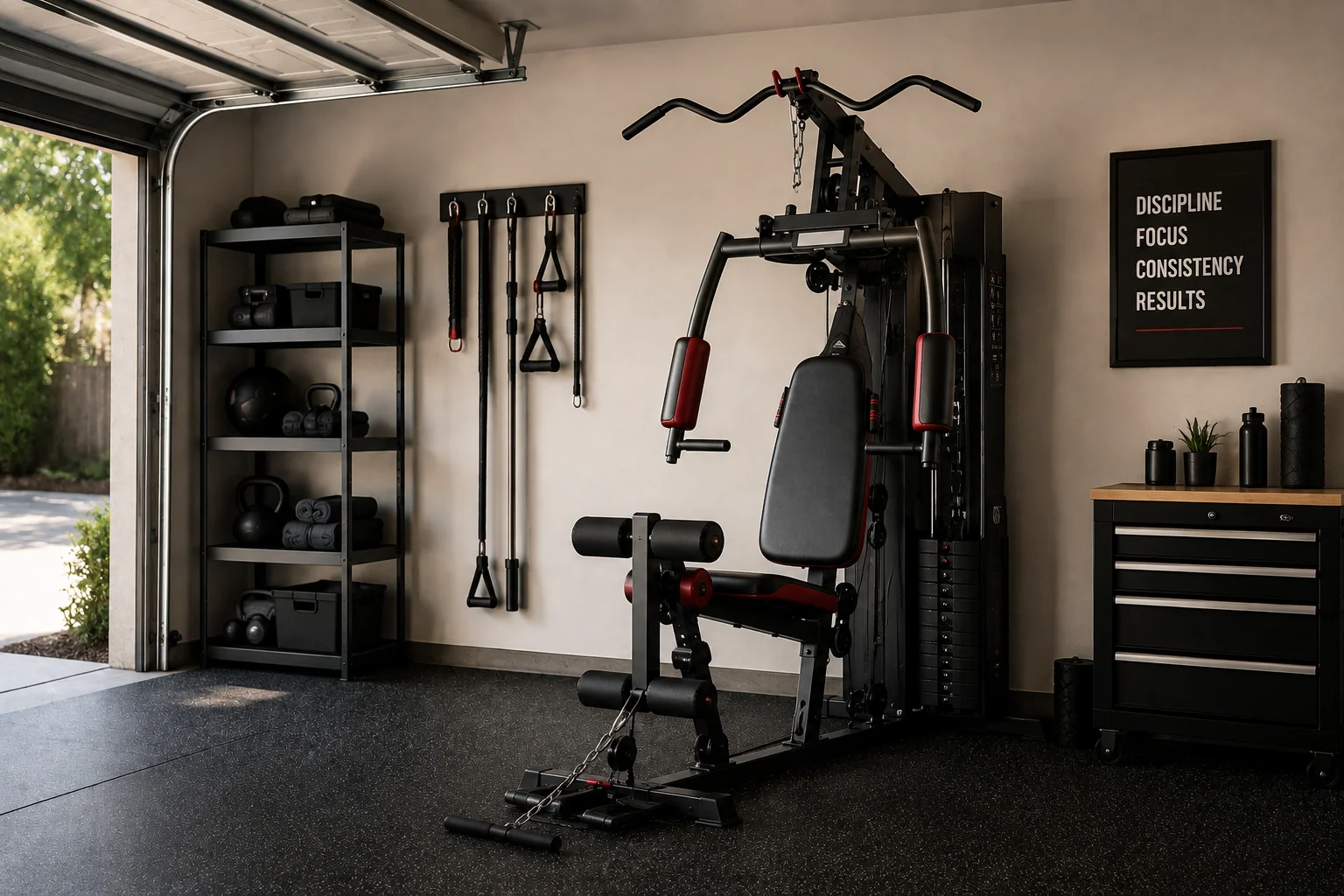
Building a home gym sounds simple until you start shopping. Suddenly, every machine looks useful, every accessory seems essential, and that empty corner of your garage starts feeling much smaller than you remembered.
The smarter approach isn’t to recreate a commercial gym at home. It’s to choose equipment that matches the way you actually train. A few versatile pieces can cover dozens of exercises, while a bulky machine with one purpose may spend most of its life collecting dust.
So, before filling your cart, think about what deserves a permanent place in your workout space.
Start With the Exercises You Actually Do
It’s tempting to buy equipment based on the workouts you imagine yourself doing six months from now. That’s how people end up with specialty machines they barely touch.
Instead, write down the exercises that already appear regularly in your routine.
If you enjoy strength training, your list might include squats, presses, rows, deadlifts, lunges and curls. Someone focused on general fitness may want resistance exercises plus cycling, walking or rowing.
This gives you a much better shopping list.
When comparing the Best Gym Equipment for Home Use, focus on pieces that support several exercises you genuinely plan to perform rather than equipment that looks impressive in a dedicated gym.
The goal is simple: every major purchase should earn the space it occupies.
Adjustable Dumbbells Are Hard to Beat
For many home gyms, dumbbells are one of the easiest places to start.
You can use them for presses, rows, squats, lunges, curls, lateral raises, Romanian deadlifts and dozens of other movements. They’re also approachable for beginners because you don’t need a rack or complicated setup to start training.
Traditional fixed dumbbells work well when you have plenty of storage space. If you’re working with a spare bedroom or small garage, adjustable dumbbells can replace an entire rack of individual weights.
Think about progression when choosing your weight range. Buying a set that’s perfect for you today but too light in three months can mean purchasing everything twice.
A Good Bench Multiplies Your Options
A bench isn’t particularly exciting on its own, but pair one with dumbbells or a barbell and it becomes far more useful.
A flat bench covers basic pressing, seated exercises, split squats, step-ups and supported rows. An adjustable bench adds incline and, depending on the design, decline positions.
Pay attention to stability rather than features alone. A bench that rocks or shifts under load quickly becomes frustrating.
Also check its dimensions. Some benches are surprisingly long once assembled. Measure the space where you’ll train, including enough clearance to move comfortably around the bench.
If storage matters, look at whether the bench can be moved easily or stored upright when you’re finished.
Consider a Rack When You’re Ready to Lift Heavier
A rack can become the centre of a serious home strength setup.
It opens the door to barbell squats, rack pulls, bench presses and overhead work. Many racks also include pull-up bars or accept attachments that expand what you can do without adding another large machine.
But don’t automatically assume you need one.
A rack makes the most sense when barbell training is already an important part of your routine. If you mainly use dumbbells and bodyweight exercises, it may consume valuable floor space without adding much to your workouts.
Measure ceiling height as well as floor dimensions. You need enough room for the rack itself, the barbell, weight plates and your body to move safely around it.
Barbells and Plates Offer Simple Long-Term Progression
There’s a reason barbells remain a staple of strength training. They’re simple, adaptable and easy to progressively load.
A barbell and plates can support deadlifts, squats, presses, rows and many variations of those movements. If your rack has suitable attachments, your options expand further.
Storage deserves some thought here.
Weight plates scattered across the floor are annoying and can become a tripping hazard. A vertical plate tree, wall-mounted storage or rack-mounted plate holders can keep the training area organised.
You’ll also want enough open space to load and unload the bar comfortably. A barbell may only look like one piece of equipment, but it requires considerably more working width than a pair of dumbbells.
Kettlebells Give You More Training Variety
Kettlebells are another good option when you want a lot of exercise possibilities without filling an entire room.
They work well for goblet squats, carries, rows, presses and traditional kettlebell movements such as swings.
You don’t necessarily need a huge collection.
One or two carefully chosen weights may be enough when kettlebells supplement your main training. If they’re going to be the foundation of your workouts, a wider weight range or adjustable option makes more sense.
The key is knowing their role before buying them.
Cardio Equipment Needs More Careful Planning
Cardio machines can be excellent additions to a home gym, but they’re usually among the biggest pieces of equipment you’ll purchase.
Before choosing a treadmill, bike or rower, ask yourself which activity you’re most likely to do consistently.
If you hate indoor cycling, buying an exercise bike because it’s compact won’t magically make cycling enjoyable. The machine you’ll use three or four times each week is more valuable than the theoretically perfect option you avoid.
Noise matters too, particularly in apartments or shared homes. Consider vibration, impact and where the machine will sit relative to bedrooms or neighbours.
Don’t forget access. A machine that technically fits through the room door may not fit around the hallway corner leading to it.
Measure the entire route before delivery day.
Flooring Is More Important Than It Looks
Flooring tends to be one of those purchases people postpone because it doesn’t directly make a workout better.
Then a dropped dumbbell damages the floor.
Proper gym flooring can protect the surface underneath your equipment, reduce noise and provide a more suitable training area. It’s especially useful around racks, free weights and areas where equipment gets moved frequently.
You don’t necessarily have to cover an entire garage. Start with the section where most lifting happens and expand later if necessary.
Think about cleaning as well. Home gyms collect dust, sweat and chalk surprisingly quickly, so flooring that’s easy to maintain is a practical advantage.
Don’t Fill Every Empty Space Immediately
One of the best things you can leave in a home gym is an empty floor.
Open space gives you room for mobility work, push-ups, stretching, lunges, carries and other exercises that don’t require a machine at all.
It also gives your gym room to change.
After a few months of consistent training, you’ll have a much clearer idea of what’s missing. Maybe you constantly wish you had a cable station. Maybe you discover that you prefer dumbbell training and don’t need another large machine.
Buying slowly lets your training habits determine what comes next.
Build Around Use, Not Appearance
A great home gym doesn’t need to look like a commercial facility. It needs to make exercising convenient enough that you keep using it.
Start with equipment that supports your most common movements. Add a bench or rack when it expands exercises you’ll genuinely perform. Choose cardio equipment based on the activity you enjoy, and protect the space with sensible flooring and storage.
Most importantly, don’t judge your setup by how much equipment fits inside it.
A small room containing five pieces you use every week is a better gym than a packed garage containing fifteen machines you have to climb over to start your workout.
 Admin