

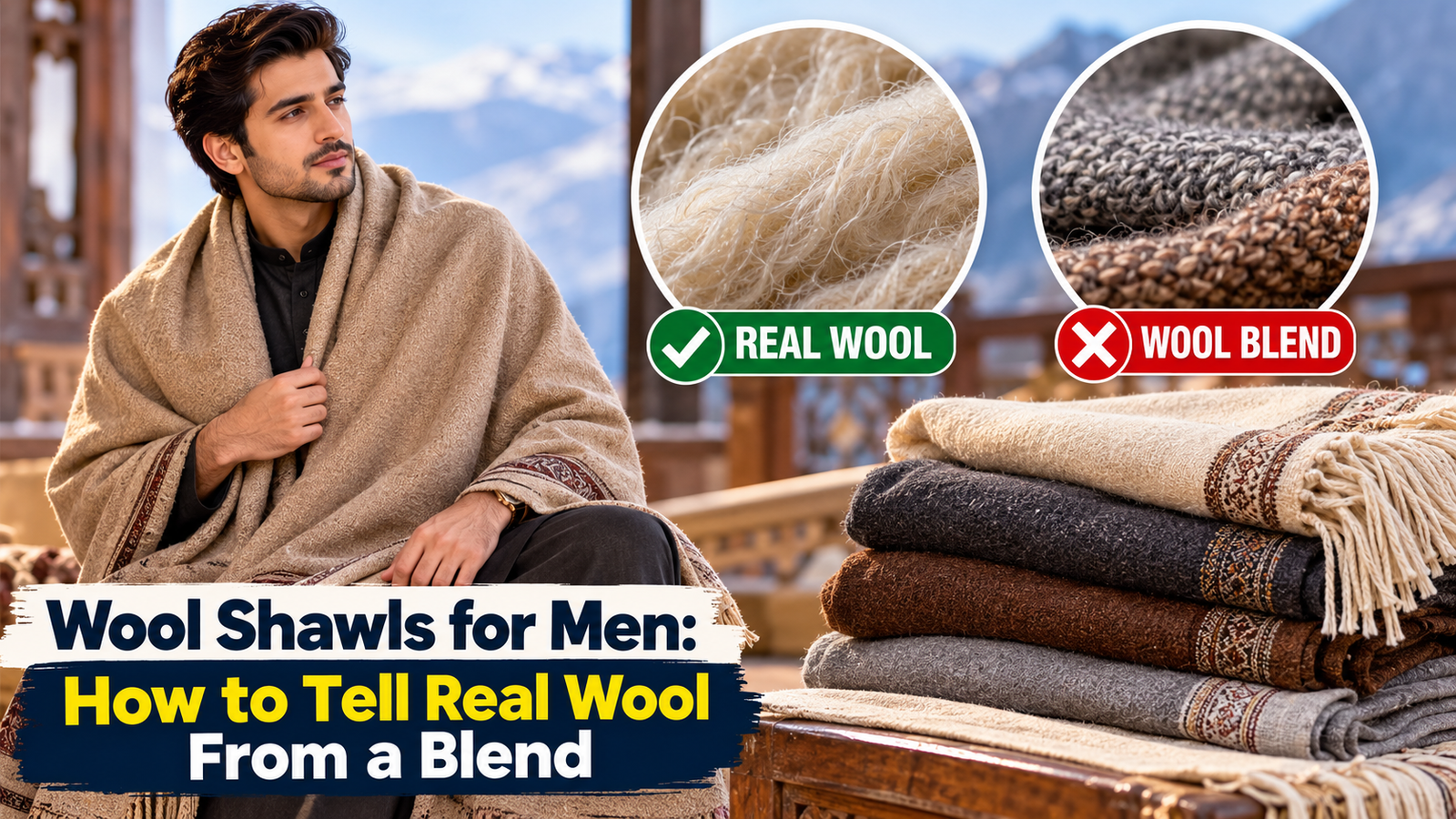
A warm shawl is a useful part of a man’s winter wardrobe, especially in Pakistan, where traditional clothing remains popular during colder months. However, when shopping for a shawl, one question often comes up: is it made from real wool or a blend of different fibres?
Both options have advantages, but they differ in warmth, softness, durability, price, and care requirements. Some sellers advertise a shawl as woollen without clearly explaining its fabric composition. Learning how to check the material can help you make a more informed purchase.
1. Check the Fabric Label First
The fabric label is the best place to start when buying a wool shawl. It should tell you which fibres the manufacturer used and, where applicable, their percentages.
A shawl labelled 100% wool should contain wool as its stated fibre content. A product labelled 70% wool and 30% acrylic, for example, is a blend.
Here are some common descriptions you may find:
- 100% wool: The fabric uses wool fibres without other textile fibres listed in its composition.
- Wool blend: The fabric combines wool with fibres such as acrylic, polyester, or nylon.
- Merino wool: A type of wool from Merino sheep, commonly valued for its fine fibres and softness.
- Cashmere: A luxury fibre obtained from cashmere goats. It is not sheep’s wool, although both are animal fibres.
- Acrylic: A synthetic fibre often used to create warm, wool-like fabrics.
2. Feel the Fabric Without Relying on Touch Alone
Touch can offer useful clues about fabric quality, but it cannot confirm whether a shawl contains real wool.
Natural wool can feel soft, slightly textured, or somewhat coarse, depending on the fibre type and finishing process. Fine wool varieties often feel smoother against the skin, while some traditional wool fabrics have a more noticeable texture.
Synthetic blends can also feel soft. Manufacturers can process acrylic and other fibres to resemble natural wool, making the difference difficult to identify by hand.
When comparing two shawls, consider these points:
- Softness: Does the fabric feel comfortable against your neck and shoulders?
- Texture: Does it feel smooth, fuzzy, coarse, or tightly woven?
- Flexibility: Does the shawl drape naturally when you hold it?
- Surface quality: Does it have loose fibres, uneven patches, or poorly finished edges?
3. Compare Warmth and Breathability
Warmth is one of the main reasons people choose wool shawls for winter. Wool fibres can trap air, helping reduce heat loss while allowing some moisture vapour to move through the fabric.
Synthetic blends can also provide good insulation. Their performance depends on the fibre mixture, fabric thickness, weave, and construction.
A thick acrylic blend may feel warmer than a thin wool shawl simply because it contains more material. Therefore, fibre content is important, but it is not the only factor that determines comfort.
Which Material Is Better for Winter?
Pure wool is worth considering if you want natural insulation and a traditional fabric. A wool blend may suit you better if you prefer a lower price, easier care, or a particular texture.
Think about the conditions in which you will wear the shawl. For everyday use in a moderately cold climate, a lighter blend may be sufficient. For colder mornings and outdoor activities, you may prefer a thicker shawl with suitable insulating properties.
4. Understand the Difference in Appearance
Real wool and wool blends can look remarkably similar, particularly when manufacturers use modern spinning and weaving techniques. Still, examining the fabric can help you assess its overall quality.
Natural wool may have slight variations in fibre texture or appearance. Some woollen shawls have a soft, slightly fuzzy surface, while others have a smooth, tightly woven finish.
Instead of judging a shawl only by its appearance, check the following:
- Look for consistent weaving across the entire surface.
- Examine the borders and fringes for loose threads.
- Check whether the colour appears even.
- Inspect the fabric for thin patches or visible defects.
- Compare the advertised material with the manufacturer’s specifications.
5. Consider Price, but Avoid Assumptions
Pure wool shawls often cost more than comparable synthetic products because natural fibres can involve higher material and processing costs. However, price alone does not establish authenticity.
For example, a fine Merino wool shawl may cost more than a basic wool blend. A traditional handwoven shawl may also command a higher price because of the time and skill involved in making it.
Before paying a premium, ask the seller:
- What percentage of the fabric is wool?
- Which type of wool does the product use?
- Where is the shawl manufactured?
- What care instructions does the manufacturer recommend?
- Is there a return policy if the product does not match its description?
These questions help you compare products more than appearance alone.
6. Should You Buy Pure Wool or a Wool Blend?
The right choice depends on your priorities. Neither option is automatically best for every buyer.
| Feature | Pure Wool | Wool Blend |
| Fibre content | Wool as the stated textile fibre | Wool combined with other fibres |
| Warmth | Generally good, depending on construction | Can also provide excellent warmth |
| Feel | Varies by wool type and finishing | Varies by fibre mixture |
| Price | Often higher | Often more affordable |
| Care | May require gentle washing or specialist cleaning | Depends on the blend and care label |
| Durability | Depends on wool quality and construction | Some blends improve strength and shape retention |
| Best for | Buyers who prioritise natural wool | Buyers seeking a balance of cost and performance |
Always compare the actual fibre percentages rather than assuming every blend has the same qualities. A blend containing 80% wool will perform differently from one containing only 10% wool, and the other fibres also affect its feel and durability.
When Pure Wool Makes Sense
Pure wool may suit you if you value natural fibres, traditional craftsmanship, and warmth. It can be a worthwhile long-term purchase when the shawl is well made and properly maintained.
When a Blend Makes Sense
A blend may be a practical choice if you want a budget-friendly shawl for regular use. Depending on its composition, it may also offer easier maintenance or better resistance to stretching.
For many shoppers, the best choice is the shawl that meets their warmth, comfort, budget, and care requirements.
7. Buying a Men’s Wool Shawl Online
Shopping online gives you access to different colours, patterns, and traditional designs. However, you cannot inspect the fabric directly before placing your order, so product research becomes especially important.
If you are looking for a men’s wool shawl, review the product details carefully before making a decision.
Use This Quick Buying Checklist
- Read the fibre composition: Confirm whether the shawl contains pure wool or a blend.
- Check the measurements: Make sure the dimensions suit your preferred way of wearing it.
- Review product images: Look closely at the weave, borders, colour, and finishing.
- Read customer reviews: Look for comments about warmth, softness, thickness, and whether the product matches its description.
- Check the return policy: Understand the conditions for returns or exchanges.
- Compare prices: Evaluate similar products with comparable fibre content and construction.
For Pakistani shoppers, traditional checks, stripes, and neutral shades can pair well with shalwar kameez and other winter outfits. Choose a design that fits your usual clothing rather than buying solely because a pattern looks attractive in a photograph.
8. A Note for Buyers Exploring Pakistani Shawl Styles
Traditional Pakistani shawls come in different designs, textures, and weaving styles. Their appearance may reflect regional preferences, local craftsmanship, and the intended use of the garment.
If you are comparing a men shawl pakistani style with a modern winter wrap, look at more than its traditional name. Check whether the fabric suits your climate, whether the size provides enough coverage, and whether the construction meets your expectations.
Frequently Asked Questions
Can you identify real wool by burning a thread?
A burn test may offer clues about fibre composition, but it is not a reliable way for an ordinary buyer to authenticate a finished shawl. Blended fibres can produce mixed results, and burning fabric can create flames, hot residue, and harmful fumes. Avoid testing a shawl this way, especially when you can request a material specification instead.
Does 100% wool mean the shawl will be soft?
No. Softness depends on the wool type, fibre diameter, processing, and finishing. Some genuine wool fabrics feel coarse, while others feel very soft.
Are wool blends suitable for Pakistani winters?
Yes. A wool blend can provide sufficient warmth for many winter conditions. Check its wool percentage, thickness, and construction to determine whether it suits your needs.
Does pure wool last longer than a blend?
Not necessarily. Longevity depends on fibre quality, weaving, construction, how frequently you wear the shawl, and how you care for it. Some blends offer good resistance to wear, while high-quality wool can remain in good condition for years with proper care.
Final Thoughts
Telling real wool from a blend requires more than touching the fabric or judging its price. Start with the fibre label, check the manufacturer’s specifications, examine the construction, and compare the product with similar options.
Pure wool can be an excellent choice for buyers who value natural fibres and traditional winter clothing. Wool blends can offer warmth and practicality at different price points.
When comparing wool shawls for men, focus on fibre composition, comfort, construction, and care requirements. These details will help you choose a shawl that fits your needs and offers good value for money.
 Wild Rise
  Admin
Admin