

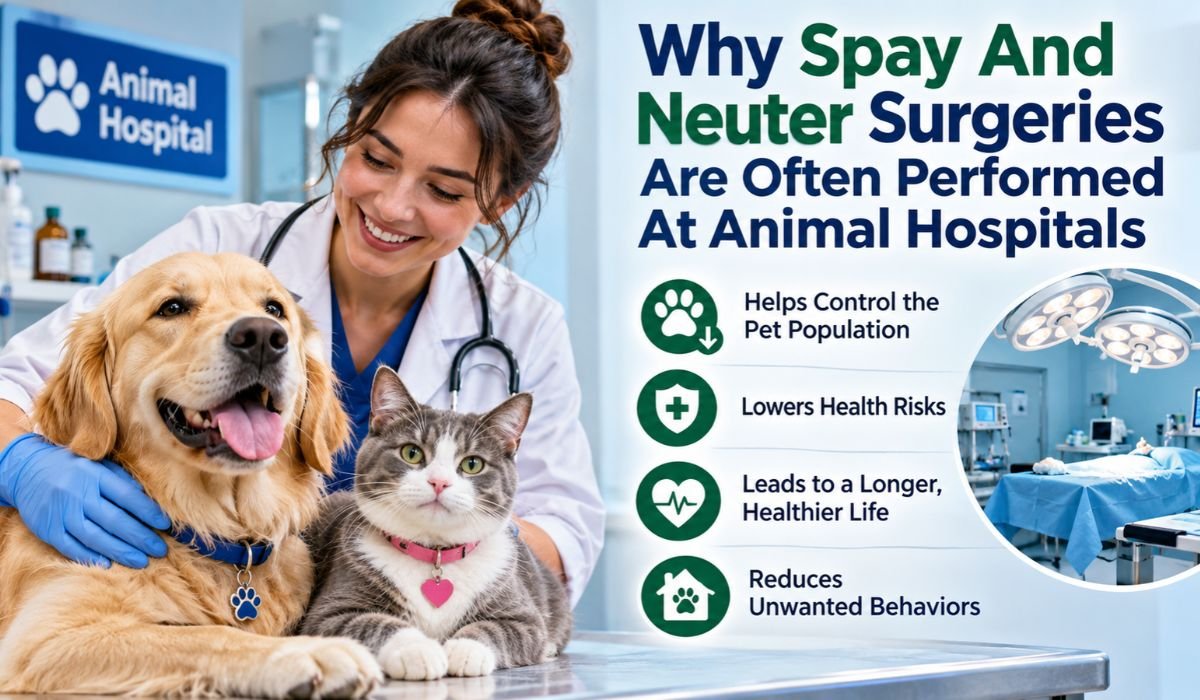
You may already know you want to have your pet fixed, but the setting matters more than many people expect. When you hand over a dog or cat for surgery, you are trusting someone with anesthesia, pain control, sterile technique, and the first hours of recovery. That is a lot to carry, especially if your pet is young, nervous, older, or has a health issue you are still trying to understand. That is why many families look for comprehensive surgical care for pets in Ogden.
Why spay and neuter surgeries are often performed at animal hospitals comes down to safety, monitoring, and access to trained medical teams. These procedures are common, but they are still surgeries. An animal hospital can evaluate your pet before surgery, adjust anesthesia to fit age and health status, respond fast if something changes, and support recovery with the right equipment and staff.
Animal hospitals are built for surgery, anesthesia, and recovery
Spaying and neutering are routine procedures, but routine does not mean casual. A spay is abdominal surgery. A neuter is less invasive, but it still involves anesthesia, sterile handling, pain management, and close observation after the procedure. If your pet has an unexpected reaction to anesthesia, low blood pressure, trouble waking up, or hidden health concerns, the difference between a basic setup and a full medical setting becomes very clear.
An animal hospital usually has preoperative exams, bloodwork, surgical monitoring equipment, trained technicians, and veterinarians who can tailor care to the pet in front of them. A healthy six month old kitten and a seven year old dog with a heart murmur do not need the exact same plan. Hospitals can adjust for that.
This is one reason many owners choose spay and neuter surgery at an animal hospital instead of a setting with fewer medical resources. The goal is not just to complete the procedure. The goal is to get your pet through surgery safely and comfortably.
Pre surgery screening lowers the chance of avoidable problems
A lot of stress around surgery starts with the unknown. You might be wondering whether your pet is healthy enough for anesthesia, whether fasting was done correctly, or whether a mild cough, loose stool, or recent medication changes the plan. Those are not small details. They can affect timing, drug choice, and recovery.
Animal hospitals are often the place where those details get caught before they turn into complications. A veterinarian can listen to the heart and lungs, check hydration, review vaccine and medication history, and recommend bloodwork when needed. That screening helps identify pets who need extra support, delayed surgery, or a different anesthetic approach.
Virginia Tech’s overview of pet spay and neuter care explains that these surgeries offer health and behavior benefits while still requiring proper medical oversight. That balance matters. You want the long term benefits without cutting corners on the day of surgery.
Animal hospitals can respond when a routine surgery stops being routine
Most spay and neuter procedures go smoothly. The hard part is that no one knows in advance which pet will be the exception. A pet may have a retained testicle, be pregnant, be in heat, have unusual anatomy, or react differently to anesthesia than expected. A simple neuter can take longer if one testicle has not descended. A standard spay can become more complex if there is infection or bleeding.
That is where an animal hospital earns its role. If a problem shows up during surgery, the team already has sterile instruments, monitoring devices, medications, oxygen support, and recovery staff in place. Oregon State University’s information on reproductive medicine procedures reflects how broad reproductive care can be, especially when a pet’s case is not completely straightforward.
For owners, this often eases a quiet fear that sits in the background. If something changes, your pet is already where help is available.
The benefits of spay and neuter surgery are strongest when paired with medical oversight
People often focus on population control first, and that matters. There are also health and household reasons owners move forward with surgery. Spaying can prevent uterine infection and lower the risk of some reproductive cancers. Neutering can reduce the risk of testicular disease and may help with some hormone driven behaviors. It can also reduce the strain of living with spraying, roaming, or heat cycles.
Those benefits do not erase the fact that your pet still needs anesthesia, pain relief, and a clean surgical environment. A proper pet sterilization procedure depends on more than the operation itself. It depends on what happens before the first incision and after the last stitch.
Comparing the value of animal hospital spay and neuter care
| Factor | Animal Hospital | Lower resource setting |
|---|---|---|
| Pre surgery exam | Usually includes a full veterinary assessment and review of risks | May be limited or brief |
| Anesthesia planning | Can be adjusted for age, breed, weight, and medical history | Often more standardized |
| Monitoring during surgery | Typically includes trained staff and monitoring equipment | May have fewer monitoring resources |
| Response to complications | Immediate access to medical support, medications, and surgical tools | May require transfer or have limited options |
| Recovery support | Pain control, temperature support, and close observation | Can be more basic |
Three steps to take before scheduling spay or neuter surgery
Ask what monitoring and pain control are used. You do not need to know every drug name. You do need to know whether your pet will be monitored during anesthesia, how pain will be managed, and who watches recovery.
Share every detail about your pet’s health. Mention coughing, vomiting, diarrhea, past reactions to medication, heat cycles, pregnancy risk, appetite changes, and any supplements or prescriptions. Small details can change the plan in a good way.
Get the aftercare instructions before surgery day. You will want to know about feeding, activity limits, incision checks, e collars, and when to call if something looks off. It is easier to absorb those instructions before you are tired and your pet is groggy at home.
Choosing an animal hospital often means choosing a wider safety net
If you have been weighing cost, convenience, and timing, that is normal. Most people are trying to make a responsible choice without adding risk they do not fully see. The reason why spay and neuter surgeries are often performed at animal hospitals is simple. These are medical procedures, and medical settings are designed to protect pets before, during, and after surgery.
When you are ready, schedule your pet’s spay or neuter consultation with an animal hospital and ask direct questions about anesthesia, monitoring, and recovery. Clear answers will help you move forward with more confidence and a lot less guesswork.
 Wild Rise