

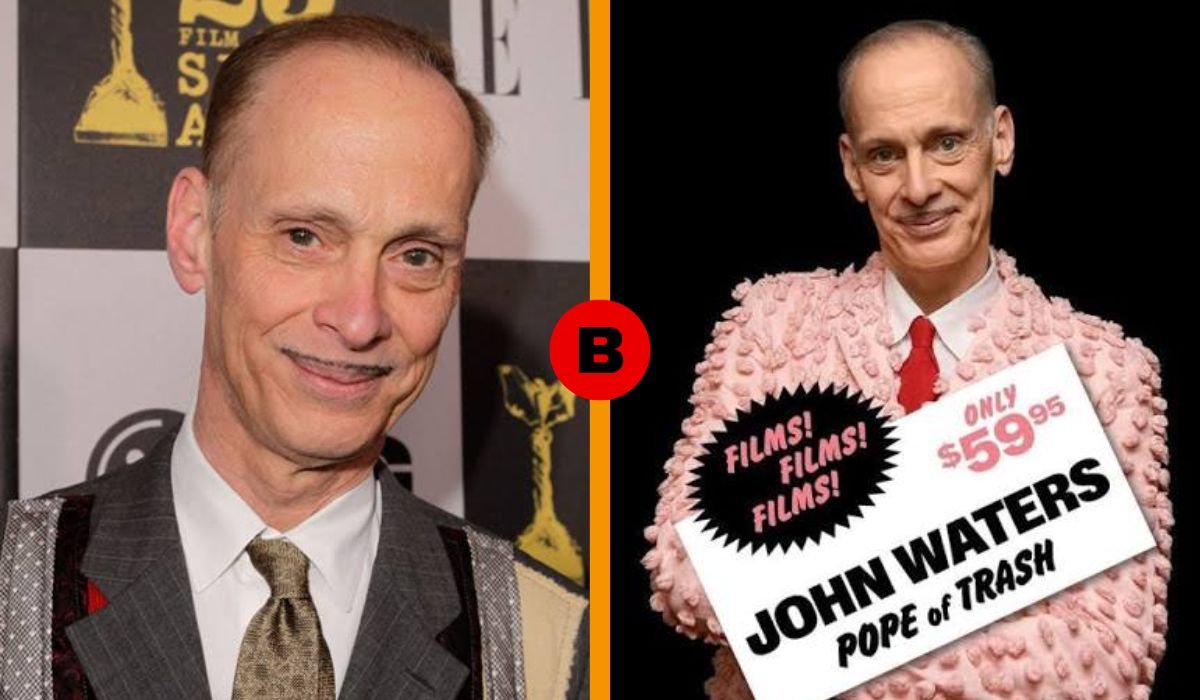
John Waters has never been interested in making the kind of films that fit neatly into Hollywood’s idea of good taste. Instead, he built his career by embracing outrageous humor, unconventional characters, shocking stories, and the strange corners of American culture that many filmmakers would rather leave alone. Born and raised in Baltimore, Maryland, Waters started out as an underground filmmaker with small budgets and a circle of counterculture friends. Over time, that outsider became one of America’s most recognizable directors, writers, actors, authors, and visual artists.
His famous nickname, the “Pope of Trash,” certainly captures his provocative side. Still, it doesn’t fully explain why his work has lasted. Waters is also a devoted student of movies, literature, popular culture, and American life. From Pink Flamingos and Female Trouble to Hairspray and Serial Mom, his work has repeatedly made audiences laugh, recoil, and reconsider their ideas about entertainment and respectability.
His career is, in many ways, a story about persistence. Waters began by showing unconventional films in rented Baltimore spaces and eventually reached major festivals, Hollywood, the National Film Registry, and the Hollywood Walk of Fame. Through it all, he remained closely connected to the city that shaped his imagination.
Quick Bio Information
| Fact | Details |
|---|---|
| Full Name | John Samuel Waters Jr. |
| Birth Date | April 22, 1946 |
| Birthplace | Baltimore, Maryland, USA |
| Nationality | American |
| Profession | Filmmaker, Writer, Producer, Actor, Author, Visual Artist |
| Height | 6 Feet 1 Inch (1.85 m) |
| Famous Nickname | Pope Of Trash |
| Other Nickname | Prince Of Puke |
| Parents | John Waters Sr. And Pat Waters |
| Siblings | Steve Waters, Kathy Waters, And Trish Waters |
| High School | Calvert Hall College High School |
| Early Film Formats | 8mm And 16mm |
| Creative Company | Dreamland |
| Breakthrough Film | Pink Flamingos |
| Mainstream Breakthrough | Hairspray |
| Famous Collaborator | Divine |
| Recurring Performer | Mink Stole |
| National Film Registry | Pink Flamingos And Hairspray |
| Cannes Jury | 1995 |
| Sundance Jury | 2002 |
| Hollywood Walk Of Fame | September 18, 2023 |
Who Is John Waters?
John Waters, whose birth name is John Samuel Waters Jr., was born on April 22, 1946, in Baltimore, Maryland. Over the course of his career, he earned colorful nicknames such as the “Pope of Trash” and the “Prince of Puke,” labels that grew naturally out of the deliberately provocative nature of his early films.
Waters’ career, however, extends well beyond shock cinema. He’s worked as a filmmaker, writer, producer, actor, author, and visual artist, building an influence that reaches independent film, mainstream entertainment, literature, live performance, and visual art.
Baltimore has remained at the heart of his creative identity. The city appears repeatedly in his movies, and its neighborhoods, personalities, humor, and contradictions helped shape his storytelling. Waters didn’t leave his hometown behind when his career expanded. Instead, he turned Baltimore into a defining part of his artistic world.
John Waters’ Early Life And Baltimore Childhood
Growing up in Baltimore during the 1950s, Waters developed interests that were unusual for a child. He was fascinated by violence, gore, crime, and sensational stories, both in real life and on screen. Those early interests later became part of the visual and comedic language that audiences came to recognize as distinctly his.
His imagination was active from an early age. Waters staged puppet shows for neighborhood children and reportedly earned as much as $50 a week from them. He later connected those performances with his admiration for filmmaker William Castle, whose movies were famous for theatrical gimmicks and audience participation.
Those childhood experiences taught Waters something that would remain important throughout his career: audiences enjoy being surprised. Shock, exaggeration, discomfort, and spectacle could all become forms of entertainment when handled with intention.
Baltimore itself was just as influential. Waters didn’t simply use the city as a backdrop. He drew inspiration from its people, neighborhoods, humor, and social contrasts, eventually making the city one of the most recognizable elements of his filmmaking.
John Waters’ Family And Education
John Waters was the son of John Waters Sr. and Pat Waters, also identified as Patricia Ann Whitaker. He grew up with siblings including Steve Waters, Kathy Waters, and Trish Waters. The biographical material surrounding Waters also describes his ancestry as mostly Irish and English and notes a connection through his mother to the Whitaker family of Pennsylvania.
He attended Calvert Hall College High School in Towson, Maryland. Even though Waters would later become known for challenging conventional values, his creative identity wasn’t formed simply by rejecting his upbringing. Instead, he absorbed influences from family life, movies, television, advertising, celebrity culture, crime stories, and popular entertainment.
Those seemingly ordinary elements eventually became raw material for something much less ordinary. Waters learned how to take familiar pieces of American culture and rearrange them into worlds that were funny, uncomfortable, theatrical, and unmistakably his own.
How John Waters Started Making Movies
Waters began experimenting with filmmaking during the 1960s, working with 8mm and 16mm cameras and collaborating with friends from Baltimore’s counterculture. The films were far removed from the polished productions coming out of Hollywood. They were personal, provocative, and deliberately unconventional.
His earliest screenings were modest. Waters rented church halls in Baltimore and showed his movies to audiences he attracted through word of mouth and street leafleting. As his reputation grew, so did the crowds—and so did the controversy surrounding his work.
Eventually, his films found their way into midnight screenings at art cinemas, where audiences looking for something outside the mainstream discovered his distinctive style. Waters wasn’t waiting for Hollywood to give him permission to become a filmmaker. He built an audience on his own terms, and that independence became a defining feature of his career.
Dreamland And The Birth Of His Signature Style
One of the most important developments in Waters’ early career was Dreamland, his repertory company of performers and collaborators. Rather than starting from scratch with every production, Waters surrounded himself with a group of actors who understood his sense of humor and could inhabit his unusual fictional worlds.
Divine became the most recognizable member of the group, while Mink Stole and Mary Vivian Pearce also became closely linked with Waters’ films. Patricia Hearst appeared in several of his productions as well. Their repeated collaborations gave his movies a sense of continuity that helped distinguish them from conventional productions.
Waters also had an unmistakable gift for character names. Dawn Davenport, Francine Fishpaw, Tracy Turnblad, Penny Pingleton, and Sylvia Stickles are among the alliterative names associated with his films. The names may sound playful, but they’re part of a larger creative strategy. Waters’ worlds often feel chaotic, yet much of that chaos is carefully constructed.
Pink Flamingos And The Rise Of A Cult Filmmaker
Released in 1972, Pink Flamingos was the movie that permanently changed John Waters’ reputation. It was designed to push bad taste to an extreme and deliberately entered territory that conventional cinema had largely avoided.
The film became notorious in the early 1970s, especially because of Divine’s outrageous performance and the infamous dog-waste scene. Yet its significance goes beyond the moments that shocked audiences. Waters used excess as a way to challenge censorship, social conventions, and traditional expectations about what a movie should be.
Over time, Pink Flamingos moved from underground scandal to an acknowledged part of American film history. The Library of Congress selected it for the National Film Registry in 2021, recognizing its cultural, historical, and aesthetic significance.
That recognition is especially striking considering how far the movie was from the mainstream when it was released. What initially seemed outrageous and disposable to some viewers eventually became an important example of American underground filmmaking.
Why John Waters Became The “Pope Of Trash”
The title “Pope of Trash” is fitting because Waters took material that was often dismissed as lowbrow and transformed it into a deliberate artistic language. He loved exploitation movies, camp, melodrama, horror, celebrity culture, and forms of entertainment that traditional critics often treated as disposable.
But Waters wasn’t simply reproducing those influences. He understood the rules behind them and then enjoyed breaking or exaggerating them. One of his recurring ideas is that a person needs to understand good taste before truly appreciating the possibilities of bad taste.
That distinction matters. His movies aren’t simply shocking because they can be. The provocation is usually tied to comedy, character, social commentary, or an attempt to expose the absurdity of conventional standards.
For Waters, bad taste can be rebellious, funny, theatrical, and surprisingly sophisticated. That’s one reason his work has remained influential long after the initial shock wore off.
Hairspray And His Hollywood Breakthrough
When Hairspray arrived in 1988, it represented a significant turning point for John Waters. The movie brought his distinctive style to a much larger audience while retaining his affection for Baltimore, eccentric characters, humor, and social provocation.
The film centers on Baltimore’s 1962 teen dance scene and carries themes of racial integration. It also marked an important change in Waters’ filmmaking career: Hairspray was his first movie to receive a PG rating.
The film’s success eventually extended beyond the screen. Hairspray became a successful stage musical and found a second life in Broadway and theater productions. A 2010 production at Chicago’s Marriott Theatre was nominated for a Joseph Jefferson Award for Production of a Musical in the Large category.
Waters’ move toward a wider audience didn’t mean that he abandoned his identity. Instead, Hairspray showed that elements of his underground sensibility could work within a much more accessible story.
The film was later added to the National Film Registry in 2022. Together with Pink Flamingos, its inclusion demonstrates the remarkable range of Waters’ career—from provocative underground cinema to a widely embraced cultural favorite.
John Waters’ Film Style And Creative Identity
There are certain characteristics that immediately signal a John Waters film. Baltimore is frequently part of the setting, while outrageous characters, unconventional situations, dark humor, and deliberately transgressive subject matter drive the stories.
His recurring collaborators are another important part of the formula. Waters frequently cast Patricia Hearst and regularly worked with Mink Stole and Mary Vivian Pearce. His use of familiar performers created a kind of repertory theater on film.
His character names are equally memorable. The alliteration and exaggeration give his fictional personalities an almost comic-book quality, while the situations surrounding them can be intentionally disturbing or absurd.
Underneath all of this is Waters’ serious knowledge of film history. His influences range from exploitation filmmaker Russ Meyer and gimmick specialist William Castle to classic Hollywood director Otto Preminger, melodrama master Douglas Sirk, and European filmmakers Robert Bresson and Pier Paolo Pasolini.
That combination helps explain the unusual texture of his movies. They can be vulgar and sophisticated, silly and carefully constructed, all at the same time.
Divine, Mink Stole And The Dreamland Family
Any serious look at John Waters’ career has to include Divine. Their creative partnership became one of the defining relationships in Waters’ early filmmaking, and Divine’s larger-than-life performances helped establish the tone of movies such as Pink Flamingos and Female Trouble.
Mink Stole and Mary Vivian Pearce were also essential members of the Dreamland circle. Their repeated appearances gave Waters’ movies a familiar rhythm and made the audience feel as though they were returning to the same eccentric universe.
Waters’ approach to casting was different from the typical Hollywood model. His actors weren’t simply hired for one production and forgotten. Many became long-term creative partners whose personalities, performances, and history with Waters contributed to the identity of the films themselves.
That sense of creative family became one of the most recognizable features of his early work.
John Waters’ Cinematic Influences And Favorite Movies
Waters has never hidden his enthusiasm for the filmmakers and performers who shaped his imagination. Russ Meyer and William Castle were particularly important to his appreciation of exploitation cinema and movie gimmicks. Douglas Sirk influenced his understanding of melodrama, while figures such as Otto Preminger, Herschell Gordon Lewis, Liberace, Jayne Mansfield, Robert Bresson, and Pier Paolo Pasolini also became part of his creative vocabulary.
His taste in movies is just as revealing. Among the films associated with his favorites are The Wizard of Oz (1939), Faster, Pussycat! Kill! Kill! (1965), Boom! (1968), Beyond the Valley of the Dolls (1970), The Texas Chain Saw Massacre (1974), Salò, or the 120 Days of Sodom (1975), I Stand Alone (1998), and Maps to the Stars (2014).
His selections for the 2002 Sight & Sound Directors’ Poll offered an even clearer picture of his taste. His ten choices included All That Heaven Allows, Baby Doll, Boom!, Brink of Life, Chelsea Girls, 8½, Faster, Pussycat! Kill! Kill!, The Mother and the Whore, The Tingler, and The Wizard of Oz.
The list moves freely between classic Hollywood, experimental cinema, European art films, exploitation, and fantasy. That’s very much in keeping with Waters’ own approach to filmmaking.
He was also a major admirer of Douglas Sirk and eventually met the director in Europe. His friendship with Russ Meyer further reflects how seriously he regarded filmmakers who operated outside conventional ideas of prestige cinema.
John Waters As A Writer, Reader And Bibliophile
Film is only one part of John Waters’ creative life. He’s also a writer, author, and enthusiastic collector with a reputation for reading widely and constantly.
The biographical material describes Waters as a bibliophile with more than 8,000 books and says he subscribed to more than 80 magazines. His interests stretch across movies, celebrity culture, literature, crime, art, and popular entertainment. His collection reportedly includes a special section devoted to Liberace.
Waters has also written books and screenplays, including a published collection featuring Hairspray, Female Trouble, and Multiple Maniacs. His writing career offers another view of the person behind the outrageous filmmaker persona.
He’s often described as someone who sees nearly every movie and rarely rents one. That appetite for cinema helps explain the breadth of references found throughout his work. Waters isn’t simply making movies from instinct; he’s drawing on decades of watching, reading, collecting, and observing.
True Crime, Teaching And Life Beyond Film
True crime has been one of Waters’ long-standing interests. He became fascinated with notorious cases and reportedly attended gory trials around the United States. His curiosity about crime and human behavior also influenced an unusual teaching experience.
Waters taught classes at Patuxent Institution, a correctional facility located between Baltimore and Washington, D.C. The work was connected to rehabilitation therapy for convicted killers, with participants encouraged to write about violent fantasies instead of acting them out.
His interest in crime wasn’t limited to the classroom. Waters has also spoken about his fascination with Charles Manson and the Manson family and attended parts of the legal proceedings surrounding the case. Pink Flamingos was dedicated to Susan Atkins, Patricia Krenwinkel, and Leslie Van Houten, while Female Trouble was dedicated to Charles “Tex” Watson. Waters later became friendly with Van Houten after her incarceration and publicly defended her release.
Away from film, his creative work has included writing, acting, visual art, public speaking, and live performance. He also developed stage work and other projects that allowed him to explore his interests outside traditional filmmaking.
His career has even included unusual opportunities in television and entertainment. Waters was considered for the role of Detective John Munch on Homicide: Life on the Street, although the role ultimately went elsewhere.
Recognition, National Film Registry And Hollywood Walk Of Fame
The path from underground filmmaker to respected cultural institution is one of the most remarkable parts of John Waters’ career. His work eventually took him far beyond Baltimore’s midnight movie scene.
Waters served on the Official Competition jury at the Cannes Film Festival in 1995 and later served on the dramatic jury at the Sundance Film Festival in 2002. These roles reflected the industry’s recognition of his knowledge of cinema and his standing as a filmmaker.
His movies have also received major preservation honors. Pink Flamingos was added to the National Film Registry in 2021, followed by Hairspray in 2022. Their inclusion places both films within the official historical record of American cinema.
In 2023, Waters received another significant honor when he was awarded the 2,763rd star on the Hollywood Walk of Fame in the Motion Pictures category. The ceremony took place on September 18, 2023, at 6644 Hollywood Boulevard. Among the guest speakers were Ricki Lake, Mink Stole, and Greg Gorman.
For a filmmaker who began by passing out leaflets and renting unconventional screening spaces, the Walk of Fame star represents quite a journey.
John Waters’ Legacy And Cultural Influence
John Waters changed perceptions of what an American filmmaker could be. He demonstrated that an artist didn’t need a large studio, a conventional cast, or an expensive production to build a recognizable creative identity.
His early films emerged from friendships, tiny budgets, underground screenings, and a willingness to provoke. Rather than abandoning those qualities after achieving mainstream recognition, Waters carried his unconventional sensibility into larger productions.
His influence can be found in independent cinema, alternative comedy, camp, drag performance, underground filmmaking, and the broader willingness to take supposedly “bad” entertainment seriously.
Yet shock alone doesn’t explain his longevity. Plenty of movies have tried to shock audiences and disappeared from public memory. Waters’ work endured because the provocation was paired with memorable characters, a distinctive visual and comic sensibility, a strong knowledge of film history, and an unusually clear artistic voice.
That’s why his career is more important than the “trash” label might suggest. He didn’t merely celebrate bad taste. He studied it, reshaped it, and turned it into a recognizable form of artistic expression.
Why John Waters Still Matters
John Waters remains relevant because his basic creative philosophy continues to resonate. He showed that artists don’t have to follow accepted rules in order to make work that connects with audiences.
Rather than preaching to viewers, Waters often used humor and absurdity to make them uncomfortable and curious at the same time. He understood that laughter could make people more willing to confront subjects they might otherwise avoid.
His career also offers a valuable lesson about independence. Waters developed an audience before the mainstream industry fully embraced him. By the time Hollywood became more interested, he already had a distinct identity and a loyal following.
That independence helped him maintain his voice as his productions became more polished. The contrast between his early underground films and later mainstream successes is therefore less a story of abandoning his roots and more a demonstration of how far those roots could reach.
Pink Flamingos remains a landmark of underground cinema, while Hairspray demonstrates how Waters’ sensibility could enter the mainstream without losing its personality.
Final Thoughts
John Waters’ story is far more interesting than the outrageous image suggested by his nickname, the “Pope of Trash.” Yes, he built his early reputation with provocative movies, shocking comedy, and a deliberate rejection of conventional good taste. But his lasting importance comes from much more than that.
Waters is a serious student of cinema, literature, celebrity culture, exploitation movies, melodrama, and American society. He has always been willing to transform personal obsessions into characters, stories, and images that audiences remember.
His career began with homemade films and improvised screenings in Baltimore and eventually reached Cannes, Sundance, the National Film Registry, and the Hollywood Walk of Fame. Along the way, he created a distinctive body of work that challenged conventional ideas about taste while proving that underground art could have a lasting cultural impact.
Perhaps the clearest lesson from John Waters’ career is that originality doesn’t require conventional approval. He didn’t become important by making the films everyone expected him to make. He became important because he developed a voice of his own—and refused to lose it.
FAQs About John Waters
Who Is John Waters?
John Waters is an American filmmaker, writer, actor, author, and visual artist from Baltimore, Maryland. He became famous for underground movies built around outrageous humor, unconventional characters, camp, and deliberately provocative subject matter. His career eventually expanded into mainstream film, literature, live performance, and visual art.
Why Is John Waters Called The “Pope Of Trash”?
The nickname reflects Waters’ fascination with exploitation cinema, camp, shock humor, and entertainment that traditional culture often dismissed as lowbrow. He turned those influences into a deliberate artistic style. The “Pope of Trash” label therefore describes both the shocking nature of his early movies and his ability to make bad taste part of a broader creative vision.
What Is John Waters Best Known For?
John Waters is best known for films such as Pink Flamingos, Female Trouble, Hairspray, and Serial Mom. Pink Flamingos established his reputation as an underground filmmaker, while Hairspray became his most mainstream film and later inspired a highly successful stage musical.
What Was John Waters’ Breakthrough Movie?
Pink Flamingos, released in 1972, was the film that established John Waters as a major name in underground cinema. Its extreme subject matter, memorable characters, and deliberately confrontational humor attracted attention and helped define the filmmaker’s public image.
Who Was Divine To John Waters?
Divine was one of John Waters’ most important creative collaborators and the star of several of his early films. Divine’s larger-than-life performances became closely associated with Waters’ cinema and played a major role in establishing the filmmaker’s reputation.
What Makes John Waters’ Films Different?
Waters combines outrageous stories with camp, dark humor, memorable characters, Baltimore settings, recurring performers, and a deep knowledge of film history. His movies often take familiar social conventions and push them to extremes, using comedy and provocation to question traditional ideas about taste and respectability.
Are John Waters’ Movies In The National Film Registry?
Yes. Pink Flamingos was added to the National Film Registry in 2021, and Hairspray followed in 2022. Their inclusion recognizes the films as culturally, historically, or aesthetically significant works of American cinema.
What Is John Waters’ Legacy?
John Waters’ legacy comes from his ability to turn underground filmmaking into a lasting cultural influence. He helped make independent and transgressive cinema more visible, inspired generations of artists, and demonstrated that unconventional work could eventually receive major institutional recognition. The National Film Registry selections for Pink Flamingos and Hairspray, along with his 2023 Hollywood Walk of Fame star, illustrate how far his career has traveled.
Learn more and explore exciting content on: Donatella Versace: Inside the Life of the Woman Behind the Versace Empire