

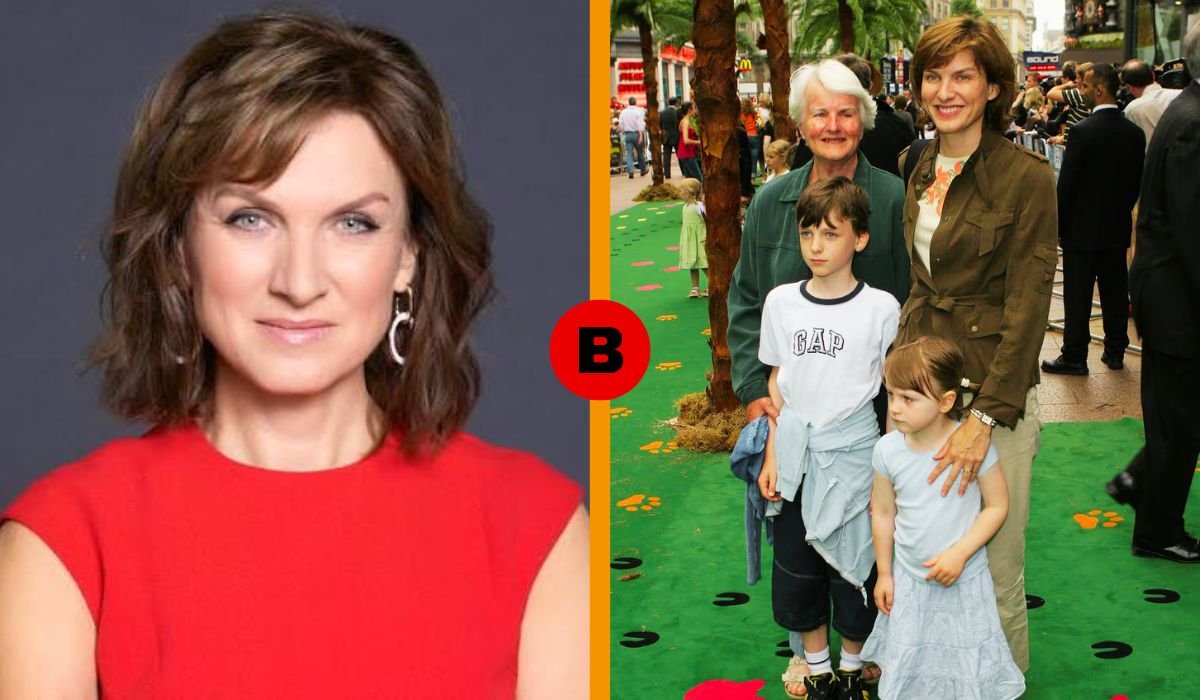
Fiona Bruce has been part of British television for more than three decades, building a career that stretches far beyond the traditional news desk. A journalist and presenter with deep experience in current affairs, she has appeared on some of the BBC’s most recognizable programs, from BBC News at Six and BBC News at Ten to Crimewatch, Antiques Roadshow, Fake or Fortune?, and Question Time.
Her route into broadcasting wasn’t particularly straightforward. Born in Singapore in 1964 and later educated at the University of Oxford, Bruce initially worked in management consultancy and advertising. Journalism remained an ambition, however, and around 1990 she joined the BBC as a researcher on Panorama. What began as a behind-the-scenes job gradually developed into reporting and, eventually, a highly visible presenting career.
By 2026, Fiona Bruce remains strongly associated with Antiques Roadshow and Question Time. Yet those programs tell only part of her story. Her career has also involved election coverage, investigative journalism, major interviews, arts documentaries, crime programming, and national news. Here’s a closer look at Fiona Bruce’s biography, age, husband, children, education, family life, and enduring BBC success.
Fiona Bruce Quick Bio
| Bio Detail | Information |
|---|---|
| Full Name | Fiona Elizabeth Bruce |
| Date Of Birth | April 25, 1964 |
| Age In 2026 | 62 Years Old |
| Birthplace | Singapore |
| Nationality | British |
| Profession | Journalist And Television Presenter |
| University | Hertford College, Oxford |
| Subjects Studied | French And Italian |
| BBC Career | Began Around 1990 |
| Early BBC Role | Researcher On Panorama |
| Husband | Nigel Sharrocks |
| Married | 1994 |
| Children | Two |
| Son | Sam |
| Daughter | Mia |
| Antiques Roadshow | Presenter Since 2008 |
| Question Time | Presenter Since 2019 |
| Fake Or Fortune? | Co-Presenter |
| Crimewatch | Former Co-Presenter |
| Known For | BBC News, Current Affairs And Factual Television |
Who Is Fiona Bruce?
Fiona Bruce is a British journalist and television presenter whose work has crossed several areas of broadcasting. Although she first became widely recognized through BBC journalism and national news, she has since established herself in political programming, investigative television, documentaries, arts coverage, and factual entertainment.
Her best-known credits include BBC News at Six, BBC News at Ten, Crimewatch, Real Story, Antiques Roadshow, Fake or Fortune?, and Question Time. Few British presenters have moved between such different formats for so long.
That versatility is central to Bruce’s career. Hosting a political discussion on Question Time demands a different rhythm from meeting members of the public on Antiques Roadshow. Investigative reporting presents another challenge altogether. Bruce’s ability to adapt her interviewing and presenting style to each format has helped her remain a prominent figure at the BBC for decades.
How Old Is Fiona Bruce?
Fiona Bruce was born on April 25, 1964, in Singapore. She celebrated her 62nd birthday in April 2026.
Her birthplace occasionally leads to confusion about her background, but Bruce is British. She was born in Singapore because of her father’s international work, and her family moved several times during her childhood.
One particularly important period was spent in Milan, Italy, where Bruce learned Italian. The experience would later connect with her academic interests, as she went on to study both French and Italian at university.
Living in different countries at a young age also gave Bruce an international element to her upbringing that isn’t immediately obvious from her later image as a familiar face of British broadcasting.
Fiona Bruce’s Early Life And Education
Bruce grew up with two older brothers. Her father worked for Unilever, and the international nature of his career meant the family spent periods living outside Britain.
After returning to the UK, Bruce attended Haberdashers’ Aske’s school in New Cross, south London. She later gained a place at Hertford College, University of Oxford, where she studied French and Italian.
Her student years weren’t quite as formal as viewers familiar with her BBC career might imagine. Bruce has spoken about being interested in women’s politics during her time at university, while profiles looking back at her younger years have described her briefly sporting blue hair and performing with a band.
Her education in languages nevertheless provided a useful foundation for a career built around communication. Bruce later became an Honorary Fellow of Hertford College, reconnecting her professional achievements with the university where she had studied decades earlier.
Perhaps most importantly, her education demonstrates that there is no single academic route into broadcasting. Bruce didn’t study journalism at university. She developed the skills that would define her television career through a combination of language study, professional experience, research, and years spent working inside news and current-affairs environments.
What Did Fiona Bruce Do Before The BBC?
Bruce didn’t walk out of Oxford and straight into a television studio. Her early professional life took several turns before journalism became her full-time career.
After university, she entered management consultancy. The experience was relatively short-lived, and Bruce later acknowledged that the profession wasn’t right for her. From there, she moved into advertising, where she spent several years gaining experience in a very different industry.
Advertising also had a lasting impact on her personal life. It was through this world that she met Nigel Sharrocks, the man who would later become her husband.
Professionally, though, Bruce remained interested in journalism. She eventually found an opportunity to move into television and joined the BBC around 1990.
Her early career is worth noting because it makes her eventual success less conventional than it may appear in hindsight. Bruce tried other professions before finding the field that suited her. What followed was not an overnight rise to fame but a gradual progression built on research, reporting, and increasingly demanding broadcasting responsibilities.
How Fiona Bruce Started Her BBC Career
Bruce began her BBC career around 1990 as a researcher on Panorama, one of the broadcaster’s longest-running current-affairs programs.
It wasn’t a glamorous presenting job. She worked behind the scenes, helping research stories and learning how serious television journalism was assembled before it reached viewers.
That experience gave her an understanding of evidence, fact-checking, interviews, and the editorial work involved in developing a current-affairs story. She subsequently moved into reporting and became associated with programs including Newsnight and Panorama.
The distinction matters. By the time Bruce became a recognizable television presenter, she had already spent years learning journalism away from the spotlight.
Her research background also provides a thread running through much of her later work. Whether she is questioning politicians, investigating the origins of a painting, or discussing the history of an object, evidence and careful questioning remain central to the job.
Fiona Bruce’s BBC News Career
As Bruce gained experience, her profile within BBC television news grew. By the end of the 1990s, she had moved into some of the broadcaster’s most prominent presenting positions.
From 1999, she became closely associated with BBC News at Six and BBC News at Ten. These flagship broadcasts placed her in front of millions of viewers and required her to handle major national and international stories, often in fast-moving circumstances.
A further milestone arrived during the 2001 UK general election. Bruce became the first woman to join the BBC’s general-election studio presenting team, an important moment both in her own career and in the history of the broadcaster’s election coverage.
Her years in BBC News gave her substantial experience in live broadcasting. They also strengthened the authority and composure that later became important when she moved into programs requiring longer interviews, unscripted exchanges, and political debate.
By this stage, Fiona Bruce was no longer simply an emerging journalist. She had become one of the BBC’s most familiar news presenters.
Fiona Bruce And Crimewatch
In 2000, Bruce added another major television program to her résumé when she began co-presenting Crimewatch. She remained associated with the show for around eight years.
The role presented challenges that were quite different from reading a conventional news bulletin. Crimewatch dealt with real criminal investigations, appeals for information, reconstructions, and cases involving victims and their families.
That meant the tone had to be carefully judged. Presenters needed to communicate facts clearly while recognizing that the people at the centre of the stories were dealing with real and often painful circumstances.
Bruce’s time on the program further expanded her reputation as a factual television presenter. Audiences had already seen her deliver the news; Crimewatch demonstrated that she could also lead a prime-time program requiring sensitivity, authority, and direct communication with viewers.
It became another important stage in her transition from news presenter to broadcaster capable of working across multiple television genres.
Fiona Bruce On Antiques Roadshow
One of the most significant changes in Bruce’s television career came in 2008, when she became presenter of Antiques Roadshow, succeeding Michael Aspel.
At first glance, the program seemed far removed from her background in hard news and current affairs. Instead of elections, crime, or international events, Bruce was now talking to members of the public about paintings, furniture, jewellery, collectibles, and family possessions.
Yet the role still relied on storytelling and curiosity.
A typical Antiques Roadshow visit can uncover an object that has spent generations in one family, an item purchased cheaply that turns out to have surprising significance, or something unusual that requires an expert to explain its history. Bruce has said that this unpredictability is one of the aspects she enjoys about making the program.
She has also recalled one particularly strange discovery: a desiccated caul. A caul is part of the fetal membrane that can sometimes cover a baby at birth. Historically, cauls became surrounded by folklore and were considered valuable in some communities. One old belief held that possessing a caul could protect a sailor or its owner from drowning.
Such discoveries capture part of the appeal of Antiques Roadshow. The program isn’t simply about monetary value; it often uses objects to reveal unexpected pieces of social and family history.
Bruce’s long tenure has made the series one of the roles most strongly associated with her name.
Fiona Bruce And Fake Or Fortune?
Bruce’s interest in investigation and history also comes together in Fake or Fortune?, which she co-presents with art dealer and specialist Philip Mould.
The program examines disputed or uncertain artworks and asks a deceptively simple question: is the painting really what its owner believes it to be?
Finding an answer can involve far more than looking at a canvas. Investigations may require scientific testing, archival research, provenance records, specialist analysis, and comparisons with established works by an artist. Even after extensive research, definitive answers aren’t always easy to obtain.
For Bruce, the format brings her journalism experience into the world of art. She helps guide viewers through evidence, asks questions, and follows developments as each investigation unfolds.
That makes Fake or Fortune? an interesting bridge between different stages of her career. The subject is art, but the underlying method—researching evidence and trying to establish what can reliably be proven—is closely connected to investigative journalism.
Fiona Bruce And Question Time
Bruce returned firmly to political current affairs when she took over Question Time from David Dimbleby in January 2019.
The long-running BBC program brings politicians and other public figures before a studio audience to discuss major political and social issues. Audience members put questions to the panel, while the presenter manages what can quickly become a heated conversation.
Chairing the program is a demanding job. Bruce has to give panelists opportunities to respond, bring audience members into the discussion, ask follow-up questions, challenge statements where appropriate, and keep the conversation moving.
Unlike a conventional news bulletin, much of the exchange is unpredictable.
Political broadcasting also attracts intense scrutiny. Viewers regularly debate questions of impartiality, balance, interruptions, and how strongly presenters challenge individual guests. That scrutiny comes with the territory when chairing one of the BBC’s best-known political programs.
As of 2026, Question Time remains an important part of Fiona Bruce’s television career and places her current-affairs experience at the centre of her work.
Documentaries, Royal Programs And Major Interviews
Bruce’s broadcasting résumé extends considerably beyond her regular presenting roles.
Over the years, she has made documentaries involving art, history, the British Royal Family, and prominent public figures. She interviewed Prince Philip for The Duke at 90 and worked on Victoria: A Royal Love Story, which involved the then Prince Charles.
She also wrote and presented The Royal Palaces and worked on television programming exploring Leonardo da Vinci.
Her interview subjects haven’t been limited to royalty. Bruce has conducted high-profile interviews involving figures such as Cherie Blair, Bill Gates, and Alan Sugar.
These projects reveal another side of her professional skill set. Extended interviews require preparation, careful listening, and an ability to follow unexpected answers rather than simply moving through a fixed list of questions.
That same ability has appeared repeatedly throughout Bruce’s career, from investigative current affairs to political discussion and arts programming.
Fiona Bruce’s Awards And Career Achievements
Bruce has received professional recognition at several stages of her broadcasting career.
She has won presenter or newscaster honors from the Television and Radio Industries Club on multiple occasions, while Real Story, the investigative current-affairs program she presented and reported for, also received recognition from the Royal Television Society.
Awards, however, tell only part of the story.
Her 2001 appearance as the first woman in the BBC’s general-election studio presenting team represented a notable broadcasting milestone. Taking over Antiques Roadshow in 2008 gave her responsibility for one of British television’s most established factual programs. Eleven years later, succeeding David Dimbleby on Question Time placed her at the helm of another long-running BBC institution.
By 2026, Bruce’s career at the broadcaster spans more than three decades. During that period, she has worked in investigative journalism, national news, election coverage, crime programming, documentaries, art, history, antiques, and political debate.
Few individual awards capture that breadth as effectively as the career itself.
Who Is Fiona Bruce’s Husband Nigel Sharrocks?
Away from television, Fiona Bruce has been married to Nigel Sharrocks since 1994.
The couple met through the advertising industry before Bruce became one of the BBC’s most recognizable presenters. Sharrocks went on to build his own senior career across advertising, media, and entertainment, including leadership positions connected with Warner Bros Pictures and Aegis Media.
Despite both having high-level professional careers, Bruce and Sharrocks have generally kept their marriage away from the celebrity spotlight. Bruce occasionally discusses aspects of family life in interviews, but their relationship has not been turned into a public brand.
There is also one piece of online misinformation worth correcting. In 2023, The Guardian published a correction stating that Sharrocks had never donated to the Conservative Party. An earlier opinion article had incorrectly described him as a Conservative donor.
That correction is important because claims about the political connections of prominent journalists and their families can spread quickly online. Where such claims are relevant, reliable biographies should distinguish documented information from inaccurate or unsupported assertions.
Fiona Bruce’s Children And Family Life
Fiona Bruce and Nigel Sharrocks have two children, a son named Sam and a daughter named Mia.
While Bruce has occasionally spoken about motherhood and the realities of combining family responsibilities with a demanding broadcasting career, she has largely kept her children out of the public eye.
That approach is significant when discussing Fiona Bruce’s family. Readers naturally search for information about her husband and children, but Sam and Mia haven’t pursued the same kind of public profile as their mother.
As a result, there is little value in speculating about their private lives simply to make a biography appear more detailed. The established facts are straightforward: Bruce and Sharrocks have two children and have generally maintained a clear boundary between family life and Bruce’s public television career.
Fiona Bruce’s Height, Languages And Personal Facts
Bruce is widely reported to stand around 5 feet 10 inches, or approximately 1.78 metres. Since that measurement is commonly drawn from entertainment databases rather than an official BBC biography, it is more accurate to describe it as a reported height rather than a confirmed measurement.
Her connection with languages is much better documented. She studied French and Italian at Oxford and had already gained experience with Italian after living in Milan during her childhood.
Some details from her younger years may also surprise viewers accustomed to her polished television image.
Published profiles have reported that Bruce appeared in photo stories for the teenage magazine Jackie. During her university years, she also reportedly experimented with blue hair and performed with a band.
Those details don’t define her career, but they add some useful context to the person behind the formal broadcasting image. Long before she was presenting election coverage or chairing Question Time, Bruce had interests and experiences far removed from the BBC newsroom.
Fiona Bruce’s BBC Salary
Fiona Bruce’s salary is a frequent subject of online searches, but the figures need context.
The BBC has published pay information for some of its highest-paid on-air talent, and Bruce has appeared in those disclosures. Her salary band has changed over time as her responsibilities and BBC work have evolved.
For example, the BBC’s 2021/22 annual report placed Bruce in the £410,000 to £414,999 band for work that included approximately 40 editions of Question Time and around 50 BBC One presentation days.
That figure is useful as a historical record, but it shouldn’t be described as Fiona Bruce’s salary in 2026. Presenter pay can change from year to year, and older disclosure figures are often repeated online without their original dates.
There is another important limitation. BBC disclosures relate to specified BBC work and don’t necessarily provide a complete picture of every possible source of a presenter’s income.
For the same reason, claims about Fiona Bruce’s net worth should be treated cautiously unless they are backed by reliable financial records. Celebrity wealth websites frequently publish estimates without explaining how those numbers were calculated. An unsupported estimate shouldn’t be presented as established fact.
Why Fiona Bruce’s BBC Career Has Lasted So Long
Fiona Bruce’s longevity in broadcasting becomes easier to understand when her career is viewed as a whole.
She started with research and current affairs, moved into reporting, became a national news presenter, and then expanded into Crimewatch, investigative television, documentaries, arts programming, Antiques Roadshow, Fake or Fortune?, and Question Time.
On paper, those programs appear remarkably different. An antiques valuation has little obvious connection with a political argument, and an art investigation may seem far removed from a national news bulletin.
Professionally, however, they share several requirements.
Each calls for preparation, careful listening, clear questions, an ability to understand evidence, and the confidence to communicate complicated information to a broad audience. Live television adds another challenge: presenters need to react when events don’t follow the expected script.
Bruce has spent decades developing those skills, then applying them in different settings. Rather than remaining tied to one television format, she has repeatedly adapted as her career has evolved.
That versatility, more than any single program, helps explain her lasting place in British broadcasting.
Final Thoughts
Fiona Bruce’s biography is ultimately the story of a broadcasting career built gradually rather than overnight.
After studying French and Italian at Oxford, she tried management consultancy and advertising before finding her way into journalism. Even then, she didn’t begin in front of the camera. Her first BBC work around 1990 involved researching Panorama, giving her an early grounding in the less visible side of television journalism.
Reporting followed. Then came national news, election coverage, Crimewatch, investigative current affairs, documentaries, and major interviews. Later, Bruce moved successfully into arts and factual television through Antiques Roadshow and Fake or Fortune?, before returning to the centre of political broadcasting as presenter of Question Time.
Her private life has remained comparatively low-key. Bruce has been married to Nigel Sharrocks since 1994, and they have two children, Sam and Mia. Although public interest in Fiona Bruce’s husband and children remains high, she has generally maintained a separation between her family and her professional profile.
That leaves her work as the central story.
By 2026, Bruce has spent more than three decades with the BBC and has presented programs covering subjects as varied as elections, crime, art, antiques, history, and politics. Few television careers maintain that kind of range for so long.
Perhaps the strongest explanation for her longevity is also the simplest. The subject may change, but the essential skills don’t. Research carefully, listen closely, ask useful questions, respond to what happens, and explain the story clearly.
Those principles were relevant when Fiona Bruce began behind the scenes at Panorama. Decades later, they remain just as relevant to the television career for which she is known today.
FAQs About Fiona Bruce
How Old Is Fiona Bruce?
Fiona Bruce was born on April 25, 1964, and turned 62 in April 2026. She was born in Singapore because of her father’s international work and later spent parts of her childhood in Britain and overseas, including a period in Milan.
Who Is Fiona Bruce’s Husband?
Fiona Bruce is married to Nigel Sharrocks, a British executive whose career has included senior positions in advertising, media, and entertainment. The couple met through the advertising industry and married in 1994.
How Many Children Does Fiona Bruce Have?
Fiona Bruce and Nigel Sharrocks have two children, a son named Sam and a daughter named Mia. Bruce has generally protected their privacy rather than making her family a regular part of her public television profile.
When Did Fiona Bruce Join The BBC?
Bruce joined the BBC around 1990. She initially worked behind the scenes as a researcher on Panorama before progressing into reporting and eventually becoming a prominent television presenter.
When Did Fiona Bruce Start Antiques Roadshow?
Fiona Bruce became presenter of Antiques Roadshow in 2008, succeeding Michael Aspel. Her long association with the program has made it one of the roles most closely connected with her television career.
Does Fiona Bruce Present Question Time?
Yes. Bruce succeeded David Dimbleby as presenter of Question Time in January 2019. The long-running political discussion program remains an important part of her BBC career in 2026.
Where Did Fiona Bruce Go To University?
Bruce attended Hertford College at the University of Oxford, where she studied French and Italian. She later became an Honorary Fellow of Hertford College.
What Is Fiona Bruce Best Known For?
Fiona Bruce is best known as a BBC journalist and television presenter. Her major credits include BBC News at Six, BBC News at Ten, Crimewatch, Antiques Roadshow, Fake or Fortune?, and Question Time, alongside documentaries, interviews, and election coverage.
Learn more and explore exciting content on: Ray J Net Worth in 2026: Music, Raycon, Business Ventures, and Earnings