

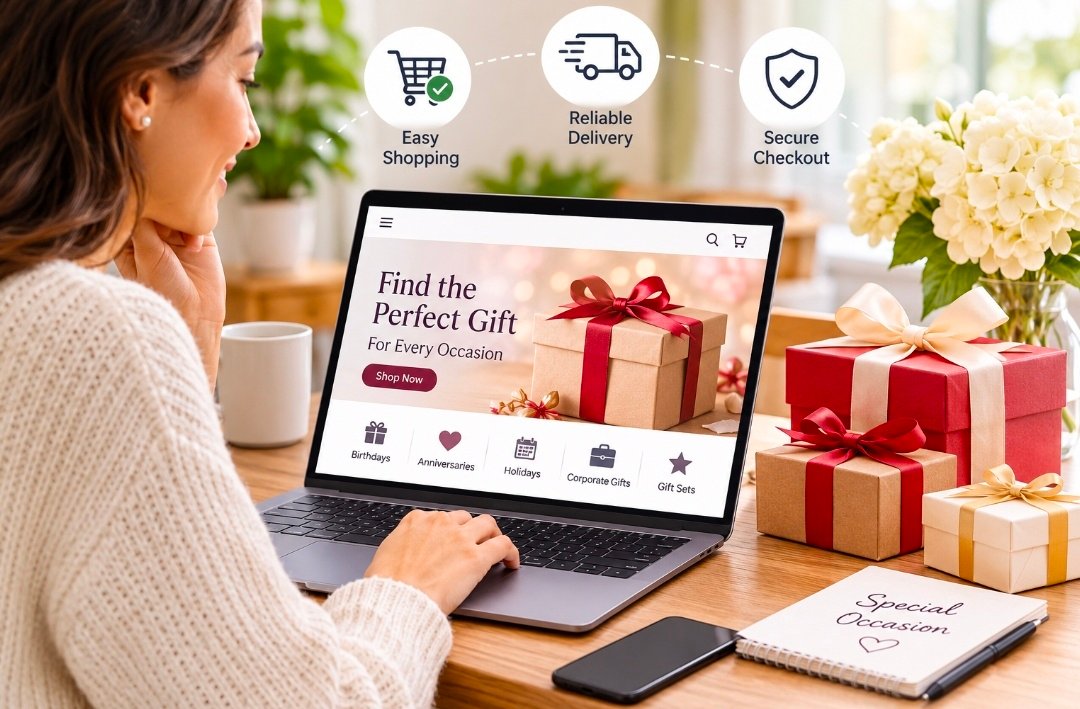
Online shopping has made gift-giving more convenient than ever. Customers can explore hundreds of products, compare options, and arrange deliveries without visiting a physical store. However, convenience alone does not guarantee a satisfying experience. When someone purchases a gift online, they are not simply looking for a product. They want something appropriate for the recipient, an attractive presentation, a straightforward ordering process, and confidence that the gift will arrive when expected.
For eCommerce businesses, this creates an opportunity to improve the entire customer journey. A well-organized website, informative product descriptions, high-quality images, and transparent delivery information can make a significant difference in how customers shop. These details are particularly important for businesses selling products intended for birthdays, holidays, anniversaries, corporate celebrations, and other special occasions.
By focusing on the needs of gift buyers, online retailers can build trust, encourage repeat purchases, and create a more memorable shopping experience.
Understanding What Gift Buyers Expect from Online Stores
Gift shopping is different from purchasing everyday household products. Customers often have a specific person and occasion in mind, which means they need help finding something suitable.
A shopper buying a birthday present may prioritize personalization, while someone ordering a corporate gift may care more about presentation and professional appeal. Another customer might be looking for a last-minute anniversary surprise and place greater importance on delivery options.
Online retailers should consider these different shopping situations when designing their websites.
Easy Product Discovery
Customers should not have to browse dozens of unrelated listings to find an appropriate gift. Clear navigation and organized categories make product discovery easier.
Useful category structures might include:
- Birthday and anniversary gifts
- Holiday and seasonal collections
- Corporate and business gifts
- Personalized gift options
- Gift sets and curated collections
- Gifts organized by recipient or budget
Filters can also help customers narrow their choices according to price, product type, occasion, and availability.
Clear Product Information
A product page should answer the questions customers are likely to have before making a purchase. Important information includes dimensions, included items, packaging details, available variations, and delivery conditions.
When customers understand exactly what they are purchasing, they are less likely to experience disappointment after receiving an order.
Building Product Pages That Support Confident Decisions
Product pages are among the most important parts of an eCommerce website. They connect customer interest with purchasing decisions, making clarity and presentation essential.
Use High-Quality Product Photography
Images help customers understand the appearance, size, and presentation of an item. For gift products, photography should communicate both the individual products and the overall arrangement.
Retailers should consider including:
- A clear main product image
- Close-up photographs of important details
- Images showing the complete gift arrangement
- Packaging and presentation photographs
- Additional angles where they help explain the product
Images should be optimized for performance without compromising visual quality. Descriptive alternative text can also improve accessibility and provide useful context for search engines.
Write Descriptions That Answer Real Questions
Effective product descriptions go beyond listing features. They explain what customers receive, who might appreciate the item, and which occasions it suits.
For example, a wine and wine glass set should clearly communicate whether the glasses are included, how many pieces are supplied, and whether the packaging is suitable for gifting.
Descriptions should remain accurate and avoid exaggerated claims. If a product has particular care requirements, customization limitations, or delivery restrictions, these should be explained before checkout.
Make Pricing and Availability Transparent
Unexpected costs can undermine customer confidence. Retailers should clearly communicate product prices, shipping charges, taxes where applicable, and any additional fees.
Stock information should also be updated regularly. If an item is unavailable, the website can suggest comparable alternatives or provide an option to receive a restock notification.
Why Delivery Information Is Essential to Gift Shopping
Delivery is not simply the final stage of an online transaction. For gift buyers, it can be one of the most important factors influencing the purchase.
A present arriving after a birthday or anniversary may lose much of its intended value. Retailers should therefore make shipping information easy to find throughout the shopping journey.
Display Realistic Delivery Estimates
Customers should be able to understand when an order is likely to arrive before completing payment.
Useful information includes:
- Estimated processing time
- Available shipping methods
- Delivery coverage by location
- Order cut-off times, where applicable
- Tracking availability
- Restrictions affecting certain products
Retailers should avoid promising guaranteed delivery dates unless their shipping arrangements genuinely support those commitments.
Offer Occasion-Based Shopping Guidance
A useful feature is a collection of products organized around upcoming occasions. For example, a seasonal gifting page can help customers discover suitable options for Christmas, Valentine’s Day, Mother’s Day, or professional celebrations.
These collections should be updated regularly so customers do not encounter expired promotions or unavailable products.
For customers shopping across different locations, wine gift baskets delivery information can be particularly important. Clear details about eligible destinations, delivery timelines, packaging, and applicable restrictions help buyers make informed decisions before placing an order.
Communicate After the Purchase
The customer experience should continue after checkout. Order confirmation emails, dispatch notifications, tracking updates, and delivery confirmations help reduce uncertainty.
If delays occur, retailers should communicate proactively rather than waiting for customers to contact support.
Improving the Mobile Shopping Experience
Many customers browse and purchase gifts using smartphones. A website that works well on desktop but performs poorly on mobile can lose potential sales.
A mobile-friendly shopping experience should prioritize simplicity.
Focus on Navigation and Readability
Mobile users should be able to find categories, search for products, and access important information without excessive scrolling.
Buttons should be easy to tap, product images should fit the screen, and descriptions should use readable typography.
Simplify the Checkout Process
A complicated checkout can discourage customers who are otherwise ready to purchase.
Retailers can improve this experience by:
- Offering guest checkout.
- Reducing unnecessary form fields.
- Supporting familiar payment methods.
- Displaying shipping costs early.
- Providing clear error messages.
- Allowing customers to review their orders before payment.
The goal is to remove unnecessary obstacles without sacrificing payment security or essential information.
Using SEO to Help Customers Discover Gift Collections
Search engine optimization helps online stores reach customers who are actively looking for relevant products.
However, successful eCommerce SEO involves more than adding popular keywords to product descriptions. It requires a clear website structure, useful content, and technically sound pages.
Create Helpful Category Content
Category pages should explain what shoppers can find within a collection. A short introduction can describe the product range, intended occasions, and useful selection considerations.
This content should be written for people rather than search engines. Repeating the same phrases excessively can make category pages difficult to read.
Optimize Titles and Meta Descriptions
Every important product and category page should have a unique SEO title and meta description.
A useful title identifies the product or collection clearly, while the meta description gives searchers a reason to visit the page.
Retailers should also use descriptive URLs, logical heading structures, and relevant internal links.
Publish Useful Supporting Content
Blog articles and buying guides can answer questions customers have before making a purchase.
Examples include:
- How to Choose a Thoughtful Anniversary Gift
- Corporate Gifting Ideas for Important Business Relationships
- What to Consider When Ordering Gifts Online
- How to Select a Gift Set for Different Occasions
These resources can link naturally to relevant product categories, helping visitors move from research to product discovery.
Choosing an eCommerce Platform That Can Grow with the Business
As an online store expands, its technical requirements often become more complicated. A growing product catalog, increased website traffic, additional payment options, and shipping integrations can place greater demands on the platform.
Businesses should choose technology that supports their current operations while allowing room for future development.
Platforms such as Magento and Adobe Commerce offer extensive customization possibilities for businesses with complex product catalogs and operational requirements. However, the right solution depends on the company’s budget, technical resources, product range, and growth plans.
Professional development support can help retailers improve important areas such as:
- Website speed and performance
- Product and category organization
- Mobile responsiveness
- Payment and shipping integrations
- Search engine optimization
- Website security and maintenance
Technical improvements should be guided by actual customer needs rather than unnecessary design changes or features.
Building Trust Through Better Customer Support
Trust is particularly important when customers purchase gifts for someone else. They want confidence that their payment is secure, their order details are correct, and assistance will be available if something goes wrong.
Retailers can strengthen customer confidence by providing accessible contact information, clear return policies, accurate product details, and helpful answers to common questions.
Customer reviews can also support purchasing decisions when they come from genuine buyers and reflect authentic experiences.
For products with delivery restrictions or special handling requirements, support teams should provide clear explanations before the customer places an order.
Measuring and Improving the Customer Journey
An effective eCommerce website should evolve according to customer behavior and business performance.
Retailers can use analytics tools to understand how visitors interact with product pages, where they leave the website, and which categories generate the most interest.
Useful performance indicators include:
- Product page engagement
- Add-to-cart rate
- Checkout abandonment rate
- Completed purchases
- Mobile conversion rate
- Repeat purchase rate
- Customer support inquiries
These figures can reveal opportunities for improvement. For example, a high checkout abandonment rate may indicate unclear shipping charges or an unnecessarily complicated payment process.
Testing changes gradually makes it easier to understand which improvements actually benefit customers.
Conclusion
Creating a better online gifting experience requires more than attractive products and a functional checkout page. Customers need helpful product information, intuitive navigation, reliable delivery details, mobile-friendly design, and accessible support.
For eCommerce businesses, improving these elements can make gift shopping easier while strengthening customer confidence and encouraging long-term loyalty.
The most successful online stores recognize that every stage matters, from the first product search to the moment an order reaches its recipient. By combining thoughtful website design with useful content and dependable operations, retailers can create a shopping experience that customers are comfortable returning to for their next special occasion.
READ MORE: VA magazine
 Wild Rise