

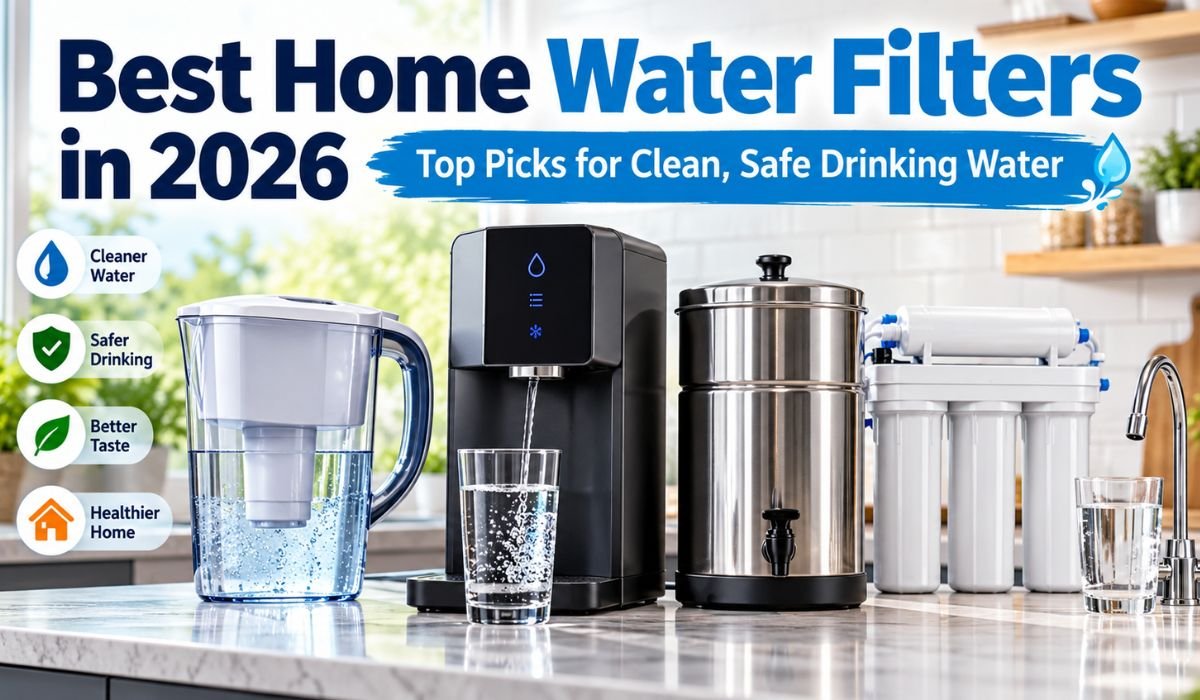
Clean drinking water is one of those everyday essentials we rarely think about until something seems wrong. Maybe your tap water has an unusual taste, smells strongly of chlorine, or leaves you wondering what’s flowing through the pipes. While most treated municipal water meets established safety standards, that doesn’t mean every household receives water of identical quality.
Older plumbing, agricultural runoff, industrial pollutants, and certain chemicals used during water treatment can all influence drinking water quality. That’s why more homeowners and renters are looking into the Best Home Water Filters in 2026.
Fortunately, finding a suitable filtration system doesn’t have to be complicated. Today’s options range from affordable water filter pitchers to sophisticated reverse osmosis systems capable of reducing a wide variety of contaminants.
Still, the most expensive filter isn’t necessarily the right one for your kitchen. A household dealing with chlorine taste has different needs from one concerned about lead or PFAS.
This guide takes a closer look at popular water filtration systems, explains the technologies behind them, and explores what really matters when choosing a filter. By the end, you’ll have a clearer understanding of which features are worth paying for and how to find a system that suits your home.
Quick Information About Home Water Filters
| Feature | Important Information |
|---|---|
| Product Category | Household Water Filtration |
| Primary Purpose | Reduce Selected Water Contaminants |
| Common Technologies | Activated Carbon, Ceramic, Reverse Osmosis |
| Popular Designs | Pitcher, Countertop, Under-Sink |
| Whole-House Systems | Treat Water Entering the Property |
| Budget-Friendly Option | Certified Water Filter Pitchers |
| Advanced Filtration | Reverse Osmosis |
| Chlorine Reduction | Suitable Activated Carbon Filters |
| Lead Reduction | Appropriately Certified Filters |
| PFAS Reduction | Selected Certified Carbon and RO Systems |
| Fluoride Reduction | Suitable Reverse Osmosis Systems |
| Mineral Retention | Depends on Filtration Technology |
| Electricity Requirements | Vary by System |
| Installation | Simple Setup or Professional Plumbing |
| Maintenance | Regular Cleaning and Filter Replacement |
| Relevant Standards | NSF/ANSI 42, 53, 58, and 401 |
| Water Testing | Helps Identify Specific Contaminants |
| Best Buying Strategy | Match Verified Performance to Water Quality |
What Are Home Water Filters?
Home Water Filters are devices that reduce selected impurities in household water before it’s used for drinking, cooking, or other daily activities. Although their purpose sounds straightforward, the technology inside these systems can vary considerably.
Some filters use activated carbon, a porous material that attracts and holds certain chemicals. Others rely on reverse osmosis, which forces water through a specialized membrane to separate many dissolved substances.
Ceramic filters work differently, capturing particles and certain microorganisms depending on their pore size. Ion exchange systems use specially designed materials to remove or exchange particular dissolved substances.
Each technology has its strengths. Activated carbon is especially useful for reducing chlorine taste and odor, while reverse osmosis can address a broader range of dissolved contaminants.
The important thing to remember is that a filter’s performance depends on its complete design, certification, and maintenance. Simply seeing the words “advanced filtration” on a package doesn’t guarantee cleaner or safer drinking water.
Why Home Water Filtration Matters in 2026
Water quality isn’t the same everywhere. It can vary between cities, neighborhoods, and even neighboring houses.
Public water suppliers generally monitor and treat drinking water according to applicable safety requirements. However, the journey from a treatment facility to your kitchen faucet introduces additional possibilities for contamination.
Older pipes and plumbing fixtures, for example, may contribute lead to drinking water. This is particularly concerning because lead exposure can affect children’s development and create serious health risks.
PFAS, often described as forever chemicals, have also become an important water quality concern. Certain PFAS compounds persist in the environment and have been associated with harmful health effects.
Microplastics are another emerging issue. Researchers continue to investigate their presence in drinking water and what long-term exposure might mean for human health.
None of this means every household needs an expensive filtration system. Instead, it highlights the value of understanding your local water quality and choosing appropriate treatment when necessary.
Best Home Water Filters in 2026: Our Top Picks
Shopping for a water filter can feel overwhelming when nearly every manufacturer promises cleaner, fresher water. The most useful approach is to look beyond advertising and examine filtration technology, independent certifications, maintenance requirements, and everyday convenience.
The following models stand out for different household priorities. These recommendations draw on available product documentation, certification information, and previously published comparative testing rather than original hands-on testing conducted for this article.
AquaTru Carafe: Best Overall Countertop Water Filter
The AquaTru Carafe is worth considering if you want extensive filtration without installing equipment beneath your kitchen sink.
Its reverse osmosis system is designed to reduce numerous dissolved contaminants, while the removable glass carafe makes it easy to serve water or store it in the refrigerator.
One of AquaTru’s strongest selling points is its published performance documentation, which details contaminant-reduction claims for the system. Buyers should always check that these claims apply to the exact model they’re considering.
The compact design is another advantage, particularly in kitchens where countertop space is limited.
There are trade-offs, though. The AquaTru Carafe requires electricity, costs more than basic carbon filters, and removes many naturally occurring minerals alongside unwanted substances.
For households seeking broad contaminant reduction in a countertop system, it remains a compelling option.
Culligan Gravity With MaxClear: Best Budget Gravity Filter
Not everyone wants a water filter that needs an electrical outlet. That’s where the Culligan Gravity System With MaxClear becomes appealing.
Instead of relying on a powered pump, the system allows water to pass naturally through ceramic and carbon filtration materials.
Its stainless-steel construction gives it a durable appearance, while the gravity-fed design makes it convenient for kitchens without easy access to electricity.
Culligan publishes certified reduction claims covering selected contaminants, including lead, certain PFAS, chlorine, and chloramine.
The biggest compromise is speed. Gravity filtration takes time, so it may not suit households that regularly need large quantities of filtered water immediately.
Replacement cartridges can also be relatively expensive. Even so, the straightforward operation makes this system attractive to buyers who value simplicity.
Brita Hub: Best for Fast Water Dispensing
The Brita Hub offers something traditional water pitchers often lack: convenience without a long wait.
Its powered dispensing system filters water as it’s delivered, making it useful for busy kitchens where people frequently refill glasses or reusable bottles.
The compact design also makes it easier to accommodate than some larger countertop filtration systems.
Brita publishes performance information identifying specific contaminant-reduction claims tested under applicable NSF/ANSI standards.
Another advantage is the comparatively manageable cost of replacement filters.
However, the Brita Hub requires electricity and isn’t designed to remove dissolved solids as extensively as a reverse osmosis system.
If quick access to better-tasting water matters more than comprehensive dissolved-solids reduction, it’s an option worth examining.
WaterDrop A2: Best for Hot and Cold Filtered Water
The WaterDrop A2 goes beyond ordinary water filtration by combining reverse osmosis technology with temperature-controlled dispensing.
That means you can use the same countertop appliance for chilled drinking water or hot water when preparing tea and other beverages.
For households that regularly use both, the convenience can be appealing.
Its reverse osmosis technology is designed to reduce a range of dissolved substances, and its countertop format avoids some of the plumbing work required by traditional under-sink systems.
However, additional features also mean additional complexity.
The WaterDrop A2 generally costs more than basic filtration systems, and its temperature-control components introduce maintenance considerations.
Before purchasing, review the exact model’s performance documentation, certification status, and replacement filter requirements.
Rorra: Best for Design and Mineral Retention
Water filters aren’t usually purchased for their appearance, but Rorra makes design part of the experience.
Its stainless-steel construction gives it a distinctive look that fits naturally into modern kitchens.
Beyond appearance, Rorra uses specialized filtration media designed to reduce selected contaminants while retaining more naturally occurring dissolved minerals than conventional reverse osmosis systems.
The removable reservoir simplifies refilling, while its filter replacement indicator helps users keep track of maintenance.
Still, attractive design shouldn’t overshadow filtration performance.
Buyers should carefully examine independent testing and certification records before relying on specific claims about lead, PFAS, or microplastic reduction.
Rorra is most appealing to households that appreciate thoughtful design, convenient operation, and mineral retention.
Santevia: Best for Remineralized Drinking Water
Santevia approaches water filtration from a slightly different direction.
Rather than focusing exclusively on removing unwanted substances, its systems also emphasize adding selected minerals to filtered water.
This remineralization process can influence the water’s taste and mineral composition.
Many Santevia systems use gravity-fed filtration, eliminating the need for electricity and making them relatively straightforward to operate.
However, mineral addition and contaminant removal are separate considerations.
A system that produces pleasant-tasting, mineral-rich water isn’t automatically more effective at reducing potentially harmful substances.
Before choosing Santevia, examine the specific product’s filtration claims, available certification information, and maintenance requirements.
Different Types of Home Water Filtration Systems
Before comparing individual products, it helps to understand the main types of filtration systems available.
Countertop Water Filters are popular because many require no permanent plumbing changes. They’re convenient for renters, apartment residents, and anyone who wants filtered drinking water without complicated installation.
Water Filter Pitchers are generally the most accessible starting point. They’re inexpensive, portable, and easy to use, although their smaller capacity means more frequent refilling.
Under-Sink Water Filters provide a more permanent solution. Installed beneath the kitchen sink, they deliver filtered water through a connected faucet while keeping equipment out of sight.
Whole-House Water Filtration Systems work at the point where water enters the property. They’re designed to address selected water quality issues throughout the home rather than only at one drinking water faucet.
Faucet-Mounted Filters offer another practical alternative. They attach directly to compatible faucets and can be useful when basic filtration and affordability are the main priorities.
The right format depends on your household’s needs, available space, and the contaminants you’re trying to reduce.
Reverse Osmosis vs. Carbon Water Filters
Reverse osmosis and activated carbon are two of the most widely used water filtration technologies, but they don’t work in the same way.
Reverse osmosis uses a semipermeable membrane to separate many dissolved substances from water. Properly designed systems can reduce contaminants such as lead, fluoride, certain PFAS compounds, and dissolved salts.
That broad filtration capability makes reverse osmosis attractive when multiple dissolved contaminants are a concern.
However, these systems also remove many naturally occurring minerals. They may require electricity, involve more maintenance, and produce wastewater during filtration.
Activated carbon takes a different approach. Its porous structure adsorbs selected chemicals, making it especially useful for reducing chlorine taste, odor, and certain organic compounds.
Carbon filters generally retain more dissolved minerals and are often simpler to maintain.
Neither technology is universally better. A certified carbon filter may be perfectly suitable for improving chlorine taste, while reverse osmosis may be more appropriate for certain dissolved contaminants.
What Contaminants Can Home Water Filters Remove?
A water filter is only as useful as the contaminants it’s capable of reducing.
Lead is one of the most important substances to consider, particularly in homes with older plumbing. Filters specifically certified for lead reduction can help lower exposure when installed and maintained correctly.
PFAS are another concern. Certain activated carbon, ion exchange, and reverse osmosis systems can reduce specific PFAS compounds, but performance varies between products.
Chlorine is commonly added during municipal water treatment to control harmful microorganisms. Although it serves an important purpose, it can affect drinking water’s taste and smell.
Some filters also target disinfection byproducts, pesticides, microplastics, and fluoride.
However, filtration claims should always be evaluated individually.
A filter designed to improve taste may not adequately reduce lead, and an ordinary carbon filter shouldn’t be assumed to make microbiologically unsafe water safe to drink.
Understanding Water Filter Certifications
Water filter certifications provide a useful way to separate verified performance from marketing promises.
NSF/ANSI 42 addresses aesthetic concerns, including chlorine taste and odor.
NSF/ANSI 53 covers specific health-related contaminant-reduction claims, while NSF/ANSI 58 applies to reverse osmosis drinking water treatment systems.
NSF/ANSI 401 addresses selected emerging contaminants that may occur in drinking water.
Organizations such as NSF, the Water Quality Association, and IAPMO provide independent product certification services.
There’s an important detail many buyers overlook: certification under a particular standard doesn’t mean a filter removes every contaminant associated with that standard.
Instead, consumers should review the exact substances listed in the product’s performance documentation.
That extra check can prevent expensive purchasing mistakes.
How to Choose the Best Home Water Filter
Finding the Best Home Water Filter starts with a question that’s easy to overlook: What’s actually in your water?
If you receive municipal water, begin with your local water quality report. It provides information about the water supplier’s testing and treatment results.
However, older household plumbing can introduce contaminants after water leaves the treatment facility. In those situations, additional testing may be worthwhile.
Once you understand your water quality, choose a filter with verified reduction claims for the substances that concern you.
Next, consider your household’s daily water consumption. A compact pitcher may be enough for one person, while a larger family may benefit from a higher-capacity system.
Kitchen space, installation requirements, dispensing speed, and electricity availability also matter.
Finally, calculate the likely maintenance costs. A reasonably priced system with expensive replacement cartridges may cost more over time than a premium model.
Home Water Filter Prices and Long-Term Costs
Home Water Filters come in a wide range of prices, and the differences aren’t always explained by filtration performance alone.
Basic pitchers and faucet-mounted systems are generally among the most affordable options.
Countertop models often cost more, especially when they include reverse osmosis technology, electronic controls, or temperature-adjustable dispensing.
Under-sink systems may involve plumbing expenses, while whole-house filtration usually requires a larger initial investment.
But the purchase price tells only part of the story.
Replacement cartridges, membranes, electricity, and maintenance all contribute to long-term ownership costs.
Consider a filter cartridge priced at $30 that needs replacing four times annually. That’s $120 per year before accounting for any additional expenses.
A system with a higher purchase price but longer-lasting cartridges may ultimately offer better value.
Comparing annual costs alongside verified filtration performance provides a clearer picture of affordability.
How to Install and Maintain Home Water Filters
One reason countertop filters and pitchers remain popular is their straightforward setup.
Most require users to assemble the components, prepare the filter cartridge, and complete an initial flushing process according to the manufacturer’s instructions.
Under-sink systems are more involved because they connect to household plumbing. Whole-house systems may require professional installation.
Whatever system you choose, regular maintenance is essential.
Filter cartridges should be replaced according to their rated capacity or recommended service interval. Water reservoirs and dispensing components also need routine cleaning.
Leaving a cartridge in place beyond its intended lifespan can reduce filtration effectiveness.
It’s worth remembering that water may continue to look and taste normal even when a filter is no longer performing as expected.
Following the manufacturer’s maintenance schedule is therefore more dependable than relying on appearance alone.
Benefits and Limitations of Home Water Filters
A properly selected water filter can make a meaningful difference to everyday drinking water quality.
Depending on its verified capabilities, it may reduce specific contaminants, improve unpleasant tastes, and make tap water more enjoyable.
Home filtration can also reduce reliance on bottled water, potentially lowering recurring household expenses and reducing plastic packaging waste.
However, filtration systems aren’t perfect.
Some require electricity or occupy valuable kitchen space. Others need frequent cartridge replacements or regular reservoir cleaning.
Reverse osmosis systems may produce wastewater, while simpler carbon filters may not adequately address certain dissolved contaminants.
These limitations don’t make home filtration a poor investment. They simply reinforce the importance of choosing a system suited to your circumstances.
Home Water Filters vs. Bottled Water
For many households, filtered tap water offers a practical alternative to buying bottled water regularly.
A suitable filtration system can provide convenient access to drinking water without requiring frequent trips to the store.
Over time, it may also reduce spending on disposable bottles.
Environmental considerations matter, too. Using reusable containers can help reduce plastic packaging waste.
Still, bottled water isn’t automatically unsafe, and filtered tap water isn’t automatically better in every situation.
Water quality depends on its source, treatment, storage, and handling.
The sensible approach is to compare verified water quality, convenience, and total costs rather than assuming one option is always superior.
How to Test Drinking Water Before Buying a Filter
Testing your water is one of the most useful steps you can take before purchasing a filtration system.
Municipal water customers can begin by reviewing their supplier’s water quality report.
However, these reports may not reveal contamination caused by plumbing inside individual properties.
If lead, nitrates, bacteria, or certain industrial chemicals are concerns, testing through a qualified laboratory can provide more specific information.
Private well owners should be particularly careful because their water isn’t routinely monitored by municipal treatment providers.
Regular testing for bacteria, nitrates, and locally relevant contaminants is important.
Although inexpensive home test strips can offer limited screening information, they aren’t substitutes for laboratory analysis when potentially harmful contamination is suspected.
Reliable test results make it easier to select appropriate filtration equipment and avoid unnecessary purchases.
Common Mistakes When Buying Home Water Filters
It’s easy to get distracted by impressive product descriptions when shopping for water filters.
One common mistake is assuming that a higher price automatically means better filtration.
Another is trusting claims about removing large numbers of contaminants without examining independent certifications.
Some buyers also rely heavily on total dissolved solids readings.
However, TDS measurements only indicate the concentration of dissolved substances. They don’t identify individual contaminants or establish whether water is safe.
Replacement costs are another frequently overlooked detail.
A seemingly inexpensive system can become costly when cartridges require regular replacement.
Perhaps the biggest mistake is purchasing a filter before understanding the household’s actual water quality.
A little research beforehand can prevent years of unnecessary spending.
Final Thoughts
Choosing the Best Home Water Filters in 2026 isn’t about finding the most expensive appliance or the one with the longest list of advertised features. It’s about understanding your water and selecting a filtration system that addresses your actual needs.
The AquaTru Carafe offers broad countertop filtration, while Culligan provides a straightforward gravity-fed alternative. Brita Hub focuses on convenience, WaterDrop A2 adds hot and cold dispensing, Rorra combines design with mineral retention, and Santevia emphasizes remineralization.
Each offers something different, and none is automatically the best choice for every household.
Before buying, review your local water quality, check independent contaminant-reduction certifications, and calculate ongoing maintenance expenses.
A good water filter should fit comfortably into your routine without creating unnecessary costs or complications.
Ultimately, cleaner drinking water begins with informed decisions. When you understand what needs filtering and choose equipment with reliable performance evidence, you’re in a much better position to find a system that serves your household well for years to come.
FAQs About Best Home Water Filters
What Is the Best Home Water Filter in 2026?
The AquaTru Carafe is a strong countertop option for households seeking broad contaminant reduction. However, the best choice depends on your water quality, household size, budget, and installation preferences. If chlorine taste is your main concern, a simpler certified carbon filter may be sufficient.
Which Water Filter Removes the Most Contaminants?
Reverse osmosis systems generally reduce a broad range of dissolved substances, including certain metals, salts, and chemicals. However, performance differs between products. Always review the exact contaminant-reduction claims and independent certifications before purchasing.
Do Home Water Filters Remove PFAS?
Certain activated carbon, ion exchange, and reverse osmosis systems can reduce specific PFAS compounds. Look for appropriate certification claims under standards such as NSF/ANSI 53 or NSF/ANSI 58. Remember that not every filter using these technologies provides the same level of reduction.
Are Reverse Osmosis Water Filters Safe?
Properly maintained reverse osmosis systems can provide safe drinking water when used with suitable source water. They remove many dissolved contaminants but also reduce naturally occurring minerals. Most people obtain essential minerals primarily through food, although individual dietary needs can vary.
How Often Should Home Water Filters Be Replaced?
Replacement frequency depends on the filtration technology, household water consumption, and source water quality. Some cartridges need changing after a few months, while others last considerably longer. Following the manufacturer’s replacement schedule is the most reliable approach.
Do Water Filters Remove Healthy Minerals?
Some do. Reverse osmosis systems remove many dissolved minerals, including calcium and magnesium. Most conventional activated carbon filters preserve more of these minerals. Certain systems also include remineralization stages that add selected minerals after filtration.
Are Home Water Filters Worth Buying?
Home water filters can be worthwhile when they address a verified water quality concern, improve unpleasant taste, or reduce dependence on bottled water. Their value depends on filtration performance, maintenance costs, and how well they fit your household’s everyday needs.
Learn more and explore exciting content on: FreeTaxUSA Review 2026: Features, Pricing, Pros, and Cons
 Backlinks Hub
 Sky News Agency