

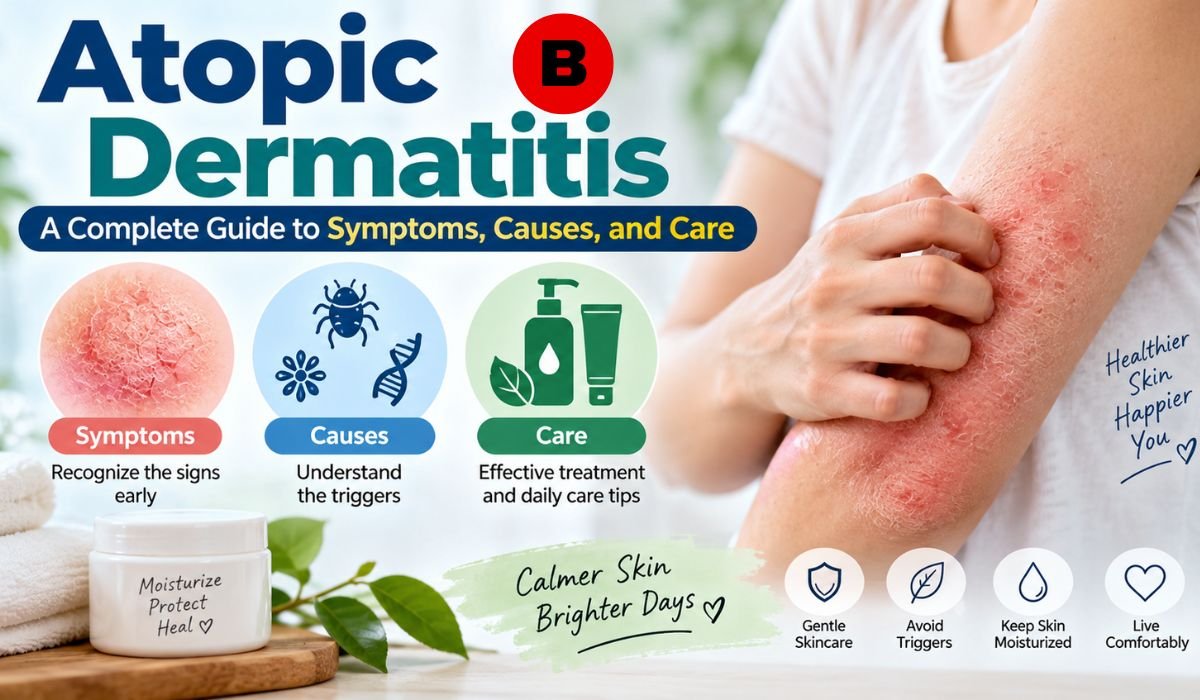
Atopic Dermatitis is a long-lasting inflammatory skin condition and the most common form of eczema. It can leave the skin dry, itchy, irritated, cracked, scaly, or discolored, with symptoms that may appear for a while and then settle before returning during another flare-up. Although it often begins during childhood, adults can develop it too.
Living with Atopic Dermatitis can be frustrating, particularly when itching interferes with sleep, work, school, exercise, or everyday activities. The good news is that the condition can usually be managed. There isn’t currently a permanent cure, but a combination of gentle skin care, trigger management, topical medicines, phototherapy, and, when appropriate, systemic treatments can help control symptoms and reduce flare-ups.
Because Atopic Dermatitis can look different from one person to another, understanding its symptoms, causes, triggers, and treatment options is an important first step toward better skin care.
Quick Bio Information
| Category | Details |
|---|---|
| Condition | Atopic Dermatitis |
| Also Known As | Atopic Eczema |
| Condition Type | Chronic Inflammatory Skin Disease |
| Main Body System | Skin And Immune System |
| Common Symptom | Intense Itching |
| Other Symptoms | Dryness, Rash, Scaling, Cracking, Discoloration |
| Typical Course | Chronic With Periodic Flare-Ups |
| Common Age Of Onset | Often Childhood, But Any Age Is Possible |
| Contagious | No |
| Skin Barrier | Often Impaired |
| Immune Response | Can Become Overactive |
| Common Triggers | Irritants, Allergens, Weather, Stress, Fragrances |
| Commonly Affected Areas | Face, Hands, Eyelids, Neck, Skin Folds And Other Areas |
| Diagnosis | Usually Based On Skin Examination And Medical History |
| Treatment Goal | Control Symptoms And Prevent Or Reduce Flare-Ups |
| Basic Skin Care | Regular Moisturizing And Gentle Skin Care |
| Prescription Options | Topical And Systemic Medicines |
| Advanced Treatment | Phototherapy And Certain Biologic Or JAK Medicines |
| Infection Risk | Increased When Scratching Damages The Skin |
| Medical Specialist | Dermatologist |
What Is Atopic Dermatitis?
Atopic Dermatitis is a chronic inflammatory skin disease that affects the way the skin functions as a protective barrier. When that barrier doesn’t work properly, the skin can lose moisture more easily and become more vulnerable to irritation.
The immune system also plays an important role. In people with Atopic Dermatitis, immune activity can contribute to inflammation, itching, and recurring skin changes. Genetics can influence a person’s susceptibility as well, which helps explain why the condition sometimes runs in families.
The disease doesn’t follow exactly the same pattern for everyone. Some people experience occasional mild patches, while others deal with frequent or more widespread flare-ups. Symptoms may also change with age.
The American Academy of Dermatology describes Atopic Dermatitis as a condition that can affect people at any age and notes that it can be controlled with appropriate treatment even though it cannot currently be cured permanently.
What Does Atopic Dermatitis Look Like?
Atopic Dermatitis doesn’t have one universal appearance. Depending on a person’s skin tone, age, and stage of a flare-up, the affected area may appear red, purple, brown, gray, darker, or lighter than the surrounding skin.
The skin may also become extremely dry and rough. Some people develop scaling or cracking, while others notice small bumps or fluid-filled areas. In more irritated cases, the skin can become swollen, crusted, or ooze fluid.
These changes aren’t always present at the same time. A person’s skin may look relatively calm between flare-ups and become much more inflamed when symptoms return.
Atopic Dermatitis On Different Skin Tones
Recognizing Atopic Dermatitis can sometimes be more difficult when people expect inflammation to look bright red. On darker skin tones, inflammation may appear brown, purple, gray, or darker than the surrounding skin.
The texture and sensation of the skin can provide important clues as well. Dryness, thickening, scaling, cracking, and persistent itching can all be significant symptoms even when redness isn’t obvious.
Understanding these differences matters because delayed recognition can sometimes mean delayed treatment.
Common Symptoms Of Atopic Dermatitis
Itching is often one of the most noticeable symptoms of Atopic Dermatitis. For some people, it can become intense enough to interfere with concentration or sleep.
Dry skin is another common feature. The affected skin may feel tight, rough, flaky, or cracked. During a flare-up, an itchy rash can develop, and repeated scratching may cause the skin to become thicker or more irritated.
Other possible symptoms include discoloration, swelling, small bumps, fluid-filled areas, crusting, and oozing. The exact combination varies from person to person.
The location of the rash can also change depending on age. Babies, children, and adults don’t always develop Atopic Dermatitis in the same places.
Where Does Atopic Dermatitis Usually Appear?
Atopic Dermatitis can develop almost anywhere on the skin or scalp. However, certain areas are more commonly affected.
The face, hands, eyelids, head, neck, and areas where the skin folds are common locations. The condition may also affect the lips, nipples, or other sensitive areas.
In children, the pattern can differ from what is seen in adults. Babies may develop eczema on the face and other exposed areas, while older children and adults often experience symptoms around the bends of the elbows and knees.
Because Atopic Dermatitis can appear in many different locations, the presence of a rash alone isn’t enough to determine the diagnosis. A healthcare professional may need to examine the skin and consider the person’s symptoms and medical history.
What Causes Atopic Dermatitis?
There isn’t one single cause of Atopic Dermatitis. Instead, the condition appears to develop through a combination of genetic, immune-system, and skin-barrier factors.
A weakened skin barrier can make it easier for moisture to escape and for irritants to enter. At the same time, changes in immune activity can contribute to inflammation and itching.
Family history may increase the likelihood of developing Atopic Dermatitis. People who have a personal or family history of conditions such as asthma, hay fever, or allergies may also be more likely to develop it.
Importantly, having a particular trigger doesn’t necessarily mean that trigger caused the disease. Causes and triggers are related, but they’re not the same thing.
What Triggers Atopic Dermatitis Flare-Ups?
A trigger is something that can worsen symptoms or bring on a flare-up. Triggers differ considerably between individuals, so something that bothers one person’s skin may have little effect on someone else’s.
Common possibilities include fragrances, soaps, detergents, certain skin-care products, plants, temperature changes, dry air, sweating, and other environmental irritants. Stress can also make symptoms harder to manage for some people.
Hormonal changes and infections may influence flare-ups as well. In certain individuals, foods or food allergies may be relevant, particularly when there is a clear and medically established connection.
It’s generally better to identify personal patterns than to avoid large numbers of foods or everyday activities without a reason. Unnecessary restrictions can create additional problems, especially for children.
Who Is More Likely To Develop Atopic Dermatitis?
Atopic Dermatitis can affect anyone, but certain factors can increase the likelihood of developing it.
A family history of Atopic Dermatitis, asthma, hay fever, or allergies can be relevant. The condition is particularly common during childhood, although it can persist into adulthood or begin later in life.
Environmental exposures and a person’s individual skin-barrier characteristics can also influence symptoms.
The condition can have a significant effect on quality of life. Persistent itching may interfere with sleep, while visible rashes can affect confidence, social activities, work, or school.
Atopic Dermatitis In Babies And Children
Atopic Dermatitis is especially common among children and is considered the most common pediatric skin disease. The American Academy of Dermatology’s first dedicated pediatric Atopic Dermatitis guidelines were published in 2026 and emphasize that children require treatment recommendations that take age, safety, dosing, and the role of parents or caregivers into account.
Symptoms in children can change as they grow. Babies may develop dry, itchy patches on the face and other areas, while older children may experience eczema around the elbows, knees, or other skin folds.
Treatment usually begins with basic skin care and appropriate moisturization. Depending on severity and age, doctors may also recommend topical corticosteroids, topical calcineurin inhibitors, PDE-4 inhibitors, topical JAK inhibitors, or other therapies.
The 2026 pediatric guidance also found insufficient evidence or no demonstrated benefit for several proposed dietary or environmental prevention strategies, including probiotics, vitamin D supplementation, water softening, dust-mite avoidance, and certain approaches to early food introduction.
Parents shouldn’t make major dietary or treatment changes based solely on online advice. A pediatrician or dermatologist can help determine what is appropriate for a particular child.
Atopic Dermatitis In Adults
Although Atopic Dermatitis often begins in childhood, it can remain active into adulthood or appear for the first time later in life.
Adults may experience extremely dry skin, hand eczema, scaly patches, itching, and inflammation. The face, eyelids, hands, neck, and other areas can be affected.
Adult Atopic Dermatitis can be particularly disruptive when symptoms involve the hands or face. Everyday activities may become uncomfortable, and persistent itching can affect sleep and concentration.
Treatment depends on the severity and location of the disease. Current dermatology guidance includes a range of topical options as well as phototherapy and systemic medicines for people whose condition requires more intensive treatment.
Is Atopic Dermatitis Contagious?
No. Atopic Dermatitis isn’t contagious.
You can’t catch it by touching someone else’s skin, sharing a household, hugging, or being close to someone who has the condition.
However, Atopic Dermatitis can increase the risk of skin infections when scratching creates breaks in the skin. An infection is different from the underlying eczema itself.
Signs such as increasing pain, swelling, warmth, pus, yellow crusting, or worsening drainage may indicate an infection and should be evaluated by a healthcare professional.
Atopic Dermatitis And The Itch-Scratch Cycle
Itching and scratching can become a difficult cycle. Atopic Dermatitis causes itching, scratching damages or irritates the skin, and the resulting inflammation can lead to even more itching.
Over time, repeated scratching can make the skin thicker and rougher. It can also create small breaks that allow bacteria and other microorganisms to enter.
Breaking this cycle is one reason moisturization and appropriate treatment matter. Keeping the skin hydrated and controlling inflammation can make it easier to resist the urge to scratch.
Keeping fingernails short can also reduce accidental skin damage. For children or people who scratch during sleep, a healthcare professional may recommend additional strategies.
How Is Atopic Dermatitis Diagnosed?
Atopic Dermatitis is generally diagnosed through a physical examination and a discussion about symptoms, medical history, and family history.
A dermatologist will look at the skin and consider factors such as the location and appearance of the rash, how long symptoms have been present, whether they come and go, and whether itching is a major feature.
A biopsy isn’t routinely required, but it may sometimes be considered when the diagnosis is unclear or another skin condition needs to be ruled out.
If possible, keeping photographs of the skin during a flare-up can also help describe how symptoms change over time, particularly if the rash improves before the medical appointment.
Atopic Dermatitis Treatment Options
There isn’t one treatment that works best for every person. The right approach depends on the severity of the disease, the affected areas, age, previous treatments, other medical considerations, and individual response.
Moisturizers remain a cornerstone of Atopic Dermatitis care because they help restore hydration and support the skin barrier. Topical corticosteroids are commonly used to control flares, while topical calcineurin inhibitors can be useful in appropriate patients and locations.
Other topical options include phosphodiesterase-4 inhibitors, topical JAK inhibitors, and topical aryl hydrocarbon receptor agonists. These treatments can offer additional choices depending on the patient’s condition and local availability.
For moderate or severe disease that isn’t adequately controlled with topical therapy, dermatologists may consider phototherapy or systemic medicines. These can include biologic therapies and oral JAK inhibitors.
The treatment landscape continues to evolve. The AAD’s recent guidance includes newer options such as tapinarof cream, roflumilast cream, lebrikizumab, and nemolizumab with topical therapy, alongside established systemic treatments such as dupilumab, tralokinumab, and certain JAK inhibitors. Treatment availability and regulatory approvals can vary by country.
Systemic corticosteroids aren’t considered a routine long-term treatment for Atopic Dermatitis. Current guidance strongly favors other approaches, with systemic steroids generally reserved for very specific short-term circumstances under medical supervision.
How To Care For Atopic Dermatitis At Home
Daily skin care can make a meaningful difference, especially when it becomes part of a consistent routine.
Regularly applying a fragrance-free moisturizer helps reduce dryness and supports the skin barrier. Many people find it helpful to moisturize after bathing while the skin is still slightly damp.
Gentle bathing is another important part of care. Very hot water and harsh soaps can dry the skin, so a mild approach is generally preferable.
Some people may benefit from wet-wrap therapy during difficult flare-ups, but this should be used appropriately and, when needed, with guidance from a healthcare professional experienced in eczema care. The AAD gives wet-wrap therapy a conditional recommendation in appropriate situations.
Comfortable clothing, avoiding known irritants, maintaining a reasonable indoor humidity level, and keeping nails short can also help reduce irritation and scratching.
How To Calm An Atopic Dermatitis Flare-Up
When a flare-up begins, the first priority is usually to reduce irritation and restore moisture.
Continue using an appropriate moisturizer and avoid products or environmental factors that are known to worsen symptoms. If a prescribed topical medicine is part of the treatment plan, use it exactly as directed.
Scratching may provide temporary relief, but it can ultimately make inflammation worse and damage the skin. Keeping the affected area protected and finding ways to reduce nighttime scratching can therefore be helpful.
If symptoms suddenly become much worse, spread rapidly, become painful, or develop signs of infection, home care may not be enough. That’s a good time to contact a healthcare professional.
Foods And Atopic Dermatitis: What Should You Know?
Food and Atopic Dermatitis can be a complicated subject. Some people have both eczema and food allergies, but that doesn’t mean a particular food is automatically responsible for every flare-up.
Unnecessary elimination diets can be especially problematic for children because they may restrict important nutrients without improving eczema.
The 2026 AAD pediatric guidelines found insufficient evidence or no benefit for several dietary strategies aimed at preventing pediatric Atopic Dermatitis. That doesn’t mean food can never be relevant; rather, suspected food allergies should be evaluated appropriately instead of assumed from eczema symptoms alone.
If you notice a consistent relationship between a specific food and symptoms, discuss it with a qualified healthcare professional before making major dietary changes.
Stress, Weather, And Lifestyle Factors
Everyday circumstances can influence how Atopic Dermatitis behaves.
Cold or dry weather may leave the skin drier, while heat and sweating can aggravate itching for some people. Stress may also make symptoms more difficult to manage, although it isn’t considered the sole cause of the condition.
Fragranced products, harsh cleansers, detergents, and other irritants can be troublesome for sensitive skin. Identifying personal patterns can help people avoid unnecessary triggers without making their lives overly restrictive.
A practical routine often works better than trying to eliminate everything that might possibly cause a flare-up.
What Are The Possible Complications?
The most common problems associated with Atopic Dermatitis come from persistent inflammation and scratching.
Repeated scratching can damage the skin and increase the risk of bacterial, viral, or fungal infection. Severe disease can also interfere with sleep and affect emotional well-being and everyday quality of life.
In some cases, chronic inflammation can cause the skin to become thicker or change color. These changes may persist even after active inflammation improves.
Seeking medical care when symptoms become severe or show signs of infection can help prevent complications from becoming more serious.
How Long Does Atopic Dermatitis Last?
Atopic Dermatitis is a chronic condition, so its course can vary considerably.
Some children experience substantial improvement as they grow older, while others continue to have symptoms into adulthood. Some adults experience persistent disease, while others have periods of improvement followed by occasional flare-ups.
There isn’t a single timeline that applies to everyone. The condition can improve and return over time, which is why long-term management often focuses on keeping the skin healthy between flares as well as treating active symptoms.
Can Atopic Dermatitis Go Away?
Atopic Dermatitis can improve significantly, and some people experience long periods without noticeable symptoms. However, there isn’t currently a guaranteed permanent cure.
The goal of treatment is to control inflammation, relieve itching, strengthen the skin barrier, reduce flare-ups, and protect quality of life.
A treatment plan may need to change over time. What works during a severe flare may not be necessary once the skin is under control, while maintenance treatment can help some people reduce the frequency or severity of future flares.
When Should You See A Doctor?
It’s worth speaking with a healthcare professional if persistent itching or a recurring rash is affecting your daily life, sleep, work, or school.
Medical attention is especially important when the skin becomes painful, increasingly swollen, warm, or tender, or when you notice pus, yellow crusting, or significant drainage.
People with widespread or severe symptoms may also benefit from seeing a dermatologist. A specialist can confirm the diagnosis and discuss treatment options when basic skin care isn’t enough.
Final Thoughts
Atopic Dermatitis can be frustrating, but it doesn’t have to control your daily life. Understanding what causes inflammation, recognizing personal triggers, protecting the skin barrier, and using appropriate treatment can make the condition much easier to manage.
There isn’t a single solution for everyone. Some people may do well with consistent moisturization and topical treatment, while others may need phototherapy or systemic medicines. Modern dermatology offers more treatment choices than ever, and current guidelines continue to evolve as new evidence becomes available.
The most useful approach is one that is tailored to the individual. If symptoms are persistent, severe, or difficult to control, a dermatologist can help develop a treatment plan based on the person’s age, symptoms, medical history, and response to previous therapies.
Frequently Asked Questions
What Is Atopic Dermatitis?
Atopic Dermatitis is a chronic inflammatory skin condition that commonly causes itching, dryness, rashes, scaling, cracking, and changes in skin color. It often begins in childhood but can affect people at any age.
Is Atopic Dermatitis The Same As Eczema?
Atopic Dermatitis is the most common type of eczema. The terms are sometimes used interchangeably in everyday conversation, although eczema is a broader term that includes several different inflammatory skin conditions.
Can Atopic Dermatitis Be Cured?
There is currently no guaranteed permanent cure for Atopic Dermatitis. However, appropriate treatment and skin care can control symptoms, reduce flare-ups, and improve quality of life.
What Triggers Atopic Dermatitis?
Triggers vary from person to person. Common possibilities include fragrances, harsh soaps, detergents, dry weather, temperature changes, sweating, stress, and other irritants. Some people may also have specific allergy-related triggers.
Is Atopic Dermatitis Contagious?
No. Atopic Dermatitis isn’t contagious and cannot be passed from one person to another through touching or close contact.
What Is The Best Treatment For Atopic Dermatitis?
There isn’t one treatment that is best for everyone. Moisturizers are a foundation of care, while topical medicines, phototherapy, biologic therapies, JAK inhibitors, and other treatments may be considered depending on disease severity and individual circumstances.
Can Atopic Dermatitis Go Away?
Symptoms can improve substantially, and some people experience long periods of remission. However, the condition can return, so long-term skin care and appropriate management remain important.
When Should I See A Doctor For Atopic Dermatitis?
You should consider medical care when symptoms are persistent, severe, painful, interfering with daily activities, or difficult to control. You should also seek professional evaluation when the skin appears infected, particularly if there is increasing pain, swelling, warmth, pus, yellow crusting, or drainage.
Learn more and explore exciting content on: Who Is Jason Schanne? Inside His Life, Career, and Relationship With Bruno Tonioli
 IQ newswire
  ENGR NEWSWIRE