

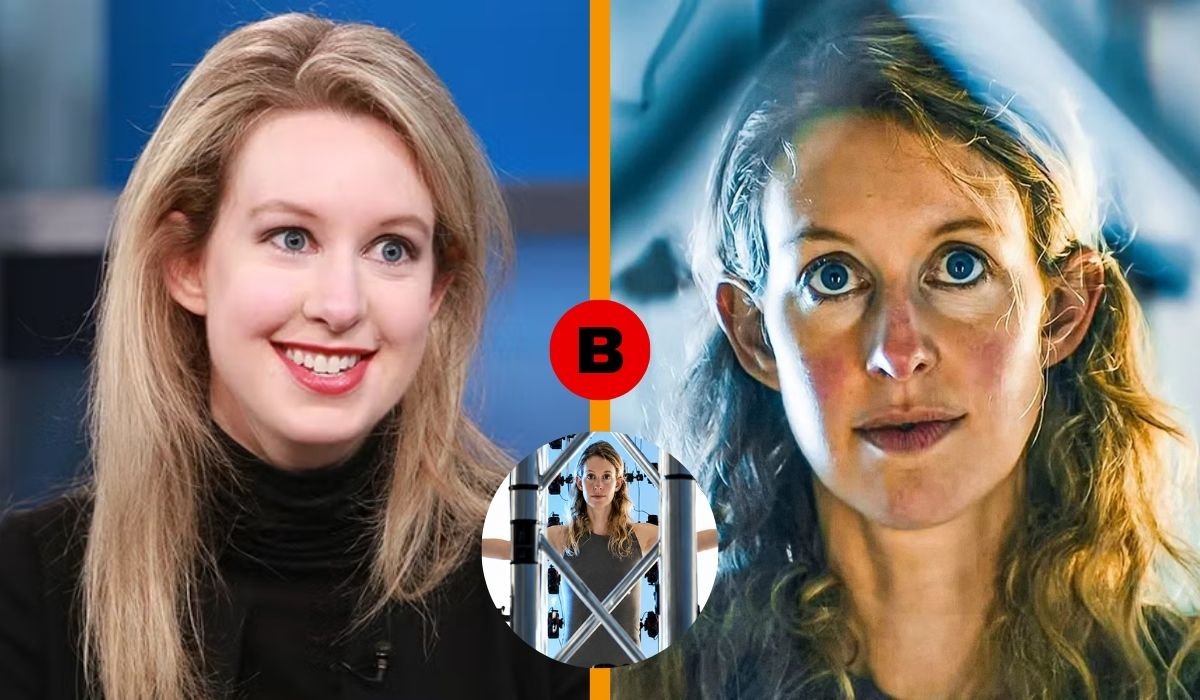
The Theranos scandal has already been examined from almost every imaginable angle. It has played out in courtrooms, investigative reports, books, podcasts, documentaries, and television dramas. Yet years after the company’s spectacular collapse, Elizabeth Holmes continues to fascinate the public.
You Can See Everything returns to that familiar story from a far more personal and unconventional perspective.
Directed by Nathan Fielder and Lance Oppenheim and released by A24 in 2026, the documentary begins shortly before Holmes enters federal prison. Rather than simply walking viewers through the rise and fall of Theranos once again, the filmmakers enter Holmes’ private world and examine something more difficult to define: how truth can become tangled with memory, personality, performance, and self-perception.
That approach has made the film both compelling and controversial.
Former Theranos research engineer and whistleblower Tyler Shultz has sharply questioned parts of its presentation. His criticism carries particular weight because he witnessed problems inside Theranos firsthand and became one of the people who helped bring those concerns into public view.
To understand You Can See Everything, viewers therefore need to keep several things separate: facts established through court proceedings and other reliable evidence, statements made by the people involved, and interpretations offered by Holmes, the filmmakers, Shultz, and critics.
That distinction sits at the heart of the entire documentary.
Quick Bio Information
| Quick Detail | Information |
|---|---|
| Documentary | You Can See Everything |
| Release Year | 2026 |
| U.S. Theatrical Release | October 16, 2026 |
| Distributor | A24 |
| Format | Feature Documentary |
| Main Subject | Elizabeth Holmes |
| Directors | Nathan Fielder And Lance Oppenheim |
| Country | United States |
| Language | English |
| Runtime | About 174 Minutes |
| Rating | R |
| Company At The Center | Theranos |
| Holmes’ Former Position | Theranos Founder And CEO |
| Major Whistleblower Discussing The Film | Tyler Shultz |
| Holmes’ Partner | Billy Evans |
| Former Theranos Executive | Ramesh “Sunny” Balwani |
| Filming Began | 34 Days Before Holmes Entered Prison |
| Holmes’ Conviction | Four Investor-Related Fraud Counts |
| Holmes’ Sentence | 135 Months |
| Major Themes | Truth, Perception, Accountability And Identity |
What Is You Can See Everything?
You Can See Everything is a 2026 feature documentary centered on Elizabeth Holmes, the founder and former CEO of Theranos. Nathan Fielder and Lance Oppenheim directed the project, while A24 handled its theatrical release.
The filmmakers received unusually intimate access to Holmes during the period before she reported to federal prison. Production began 34 days before her imprisonment and developed over roughly three years.
This isn’t a conventional documentary built around a straightforward chronology of Theranos. Instead, the film spends much of its time examining Holmes’ version of events and the filmmakers’ attempts to understand what she believes.
Fielder becomes an important presence in that process. Rather than remaining an invisible interviewer, he openly wrestles with his own reactions to Holmes. At times, the documentary becomes as much about the difficulty of determining truth as it is about Theranos itself.
That approach gives the title another layer of meaning. Cameras can reveal private conversations, body language, family interactions, and emotional reactions. But seeing more doesn’t necessarily mean understanding everything.
Inside The Elizabeth Holmes Documentary
What immediately separates You Can See Everything from earlier Theranos productions is its access.
Instead of constructing the story primarily through old news footage, expert interviews, and courtroom history, Fielder and Oppenheim spend considerable time around Holmes and her family. Viewers encounter a version of her that looks very different from the carefully constructed Silicon Valley executive who once appeared on magazine covers and conference stages.
That contrast is deliberate and important.
Holmes discusses her past and continues to maintain that she did not commit a crime. Fielder doesn’t simply accept that explanation. He presses her on the language surrounding Theranos and on what the company’s technology could actually do.
Their conversations become increasingly complicated because they aren’t always arguing about a single easily measurable fact. They are sometimes arguing about language, intention, interpretation, and what Holmes believed she was communicating at the time.
Still, viewers need to remember that a personal explanation isn’t the same thing as independent evidence.
Holmes’ interpretation of her actions exists alongside a federal criminal conviction, extensive investigative reporting, regulatory scrutiny, and testimony surrounding Theranos. The documentary becomes most useful when those different forms of evidence aren’t confused with one another.
The Theranos Story Behind The Film
To understand why these conversations matter, it’s necessary to return to Theranos itself.
Holmes founded the healthcare technology company around an ambitious idea. Theranos said it could transform laboratory testing by using very small quantities of blood, potentially making tests easier and more convenient than traditional blood draws.
It was an enormously attractive promise.
Theranos secured influential supporters, investors, business relationships, and widespread media coverage. Holmes became one of the most recognizable young founders in Silicon Valley and was frequently presented as an example of disruptive entrepreneurship.
Then the company’s carefully built image began to unravel.
Investigative reporting and accounts from people who had worked inside Theranos raised serious concerns about whether its technology could reliably perform the broad range of tests associated with the company’s claims. Regulatory scrutiny followed, and legal problems intensified.
Theranos eventually dissolved.
The scandal mattered for reasons that went far beyond startup culture or investor losses. Medical testing directly affects healthcare decisions. Inaccurate laboratory information can potentially influence diagnoses, medication choices, treatment decisions, and the way patients understand their own health.
That higher level of risk is one reason the Theranos story continues to resonate.
Elizabeth Holmes’ Criminal Case
Any serious discussion of You Can See Everything needs to keep Holmes’ criminal case clearly in view.
In January 2022, a federal jury convicted Holmes on four investor-related criminal counts. Those consisted of one conspiracy count and three wire-fraud counts involving individual investors.
The verdict, however, was more nuanced than the shorthand often used to describe the case.
Holmes was acquitted on several patient-related counts. Jurors also failed to reach verdicts on some additional investor-related charges.
In November 2022, U.S. District Judge Edward Davila sentenced Holmes to 135 months in federal prison, equivalent to 11 years and three months.
Those details are especially relevant when watching a documentary built partly around Holmes’ own interpretation of what happened.
People can debate her personality, motivations, intentions, or understanding of particular conversations. Her federal convictions, however, aren’t simply competing opinions. They are part of the established legal record.
Keeping that distinction clear allows viewers to engage with the documentary’s uncertainty without losing sight of what has already been determined in court.
Who Is Tyler Shultz?
Tyler Shultz occupies a unique place in the Theranos story because his connection to the company was both professional and deeply personal.
He is the grandson of George Shultz, the former U.S. Secretary of State who served on the Theranos board. That relationship helped bring Tyler into the company’s orbit.
Shultz initially joined Theranos as an intern and later worked there as a research engineer. During roughly eight months at the company, he became increasingly troubled by its testing practices and the performance of its technology.
Eventually, he became a whistleblower.
Speaking out wasn’t a simple professional decision. His grandfather was a prominent supporter of Holmes and Theranos, meaning Tyler’s concerns created painful tensions within his own family as well as conflict with a powerful company.
Over time, Shultz became one of the most recognizable figures associated with exposing problems inside Theranos.
That history doesn’t mean every interpretation he offers must automatically be accepted as fact. It does, however, make his firsthand knowledge especially relevant when he challenges the way Theranos technology is presented in You Can See Everything.
Why Tyler Shultz Criticized You Can See Everything
Shultz responded forcefully after seeing the documentary.
His concern isn’t merely that Holmes gets an opportunity to speak. Instead, he argues that You Can See Everything introduces ambiguity around aspects of the Theranos story that are already supported by substantial evidence.
Shultz has acknowledged the film’s effectiveness as a piece of art while questioning whether viewers receive enough factual context to evaluate what Holmes tells Fielder.
That distinction gets to the center of the debate surrounding the movie.
Allowing Holmes to explain herself can provide valuable insight into how she views her past. But viewers who aren’t already familiar with Theranos may not always recognize where those explanations sit alongside, or conflict with, information established through employee accounts, investigations, regulatory actions, journalism, and court proceedings.
Shultz’s perspective shouldn’t be treated as the final word on every scene. It should instead be understood as an important firsthand challenge to the documentary’s framing.
The Theranos Device Controversy
Perhaps Shultz’s most significant technical criticism involves a Theranos device shown in You Can See Everything.
The machine becomes part of a larger discussion between Holmes and Fielder about Theranos technology and what it could theoretically accomplish.
Shultz argues that the device viewers see shouldn’t be confused with the equipment involved in the Theranos operations he personally observed.
According to his account, the machine presented to Fielder represented a future version of Theranos technology rather than the device he worked with during the period when the company’s testing practices came under intense scrutiny.
That may sound like a small technical distinction, but it isn’t.
Theranos developed, proposed, and worked on different technologies over time. If separate devices or generations of technology are presented without enough context, viewers could come away with a distorted picture of what was actually being used for patient testing during the company’s troubled period.
Shultz’s description remains his firsthand account rather than a new court ruling. Even so, his direct technical experience inside Theranos makes the issue particularly relevant when evaluating the documentary.
Holmes, Billy Evans And Private Life
Another striking feature of You Can See Everything is the amount of attention given to Holmes’ domestic life with her partner, Billy Evans, and their family.
It’s a dramatic change in setting.
For years, the public image of Holmes was closely associated with black turtlenecks, carefully controlled public appearances, startup conferences, and the mythology surrounding Silicon Valley founders. The documentary presents something far more intimate.
That shift inevitably affects the way audiences perceive her.
Seeing Holmes in ordinary family situations may reveal aspects of her present life that weren’t visible during the Theranos years. But those scenes don’t alter the historical record or erase her criminal convictions.
Shultz has also raised questions about how Holmes’ living circumstances are presented. His observations add another perspective, though they shouldn’t be interpreted as proof that the filmmakers intentionally created a false impression.
The broader issue is more interesting than that. Documentary settings aren’t neutral. Where someone is filmed, how they’re presented, and which parts of daily life audiences see can influence emotional responses even when none of the underlying facts change.
Sunny Balwani And Theranos
Ramesh “Sunny” Balwani is another figure who can’t be separated from the Theranos story.
Balwani was Holmes’ former romantic partner and held a senior executive position at Theranos. He was prosecuted separately and convicted on fraud-related charges connected with the company.
Their personal relationship also became relevant during Holmes’ criminal trial.
Holmes testified about abuse within the relationship. Balwani denied those allegations.
Because those claims became part of Holmes’ explanation of her experiences at Theranos, the relationship continues to influence how people interpret responsibility inside the company.
Shultz has offered his own views about Holmes, Balwani, and what he believes may have motivated her behavior. Those interpretations deserve clear attribution. They aren’t established findings about what Holmes was thinking or planning.
This distinction is particularly important when discussing a film so concerned with truth.
Court records, sworn testimony, firsthand observations, allegations, and personal interpretations can all contribute to understanding an event, but they don’t carry the same evidentiary weight.
Nathan Fielder And Lance Oppenheim’s Approach
The unusual tone of You Can See Everything makes more sense when considering the filmmakers behind it.
Nathan Fielder has built a career around projects that blur the lines between reality, performance, social behavior, and uncomfortable experimentation. Lance Oppenheim brings a documentary background and an interest in complex real-world subjects.
Together, they don’t pretend to approach Holmes from a position of perfect certainty.
Fielder becomes part of the documentary’s central tension. Viewers watch him question Holmes, doubt her explanations, reconsider his reactions, and confront the limits of his own judgment.
That approach makes the film unusually self-aware.
It also comes with limitations.
Spending extensive time with a subject can reveal details that traditional reporting may never capture. At the same time, intimacy isn’t the same as verification. Knowing how someone behaves privately doesn’t automatically tell viewers whether their explanation of historical events is accurate.
The documentary becomes most interesting when it acknowledges that gap instead of pretending the camera can eliminate it.
How Accurate Is You Can See Everything?
Asking whether You Can See Everything is accurate sounds simple, but the answer depends on what kind of information is being discussed.
Some facts can be independently verified. Holmes founded Theranos. The company collapsed. She was prosecuted, convicted on four investor-related criminal counts, sentenced to federal prison, and incarcerated.
Other parts of the documentary involve Holmes discussing what she believed, intended, remembered, or experienced. Those are her accounts of events.
Then there are interpretations offered by Fielder, Shultz, film critics, and viewers.
Those categories shouldn’t be blended together.
A thoughtful viewer can appreciate the documentary while still comparing its claims with court records, regulatory history, investigative journalism, and accounts from people who worked inside Theranos.
In fact, doing so makes the film more interesting.
Instead of asking audiences to choose between believing everything or rejecting everything, You Can See Everything becomes an opportunity to examine how evidence, memory, storytelling, and personality interact.
Why Documentary Accuracy Matters
Documentaries often carry a special sense of authority because viewers know they’re watching real people rather than actors playing fictional characters.
But documentaries are still constructed works.
Someone decides where the camera goes. Editors decide which moments remain and which disappear. Interviews are shortened. Scenes are placed in a particular order. Music, pacing, framing, and context all influence how audiences understand what they’re seeing.
That doesn’t make documentaries dishonest. It simply means they’re interpretations of reality rather than reality in its entirety.
You Can See Everything puts this problem unusually close to the surface.
Shultz believes the film doesn’t provide enough external context to challenge Holmes’ version of events. Others may view the documentary’s uncertainty as precisely the point: understanding another person’s sincerity is far more difficult than simply watching them speak.
Both perspectives lead to the same useful conclusion.
Access isn’t objectivity.
A camera can capture Holmes’ facial expressions, pauses, family interactions, confidence, discomfort, and emotions. It can’t independently establish whether every statement she makes is accurate.
For that, viewers still need evidence outside the frame.
The Film’s 2026 Reception
Whatever disagreements surround its methods, You Can See Everything quickly proved that public fascination with Theranos remains remarkably strong.
The documentary’s domestic opening was reported at roughly $15.6 million from 855 theaters, an exceptional result for a nonfiction release.
That performance doesn’t tell audiences whether the documentary’s interpretation is correct. Commercial success and factual accuracy are entirely different measures.
What the numbers do show is that Holmes and Theranos remain culturally relevant.
Part of that fascination is undoubtedly personal. Holmes’ transformation from celebrated startup founder to convicted federal prisoner remains an extraordinary story.
But the continuing interest also reflects larger questions that haven’t disappeared.
Why do sophisticated investors believe extraordinary claims? How much trust should society place in charismatic founders? What happens when technological promises race ahead of independent verification? And how should journalists, employees, regulators, investors, and filmmakers respond when evidence begins to contradict a powerful narrative?
Those questions extend far beyond one failed company.
How The Film Changes The Theranos Conversation
Earlier productions generally focused on explaining what happened at Theranos.
The Inventor: Out for Blood in Silicon Valley approached the scandal through documentary investigation. The Dropout, starring Amanda Seyfried as Holmes, turned the story into a dramatized television series.
You Can See Everything arrives after much of the basic history has already been documented.
That changes the question.
Instead of simply asking what Holmes did, the film examines what happens when a person whose public identity has already been shaped by journalists, former employees, prosecutors, jurors, books, documentaries, and television receives another opportunity to explain herself directly.
In that sense, the film is as much about reputation as Theranos.
Can a person sincerely understand the past differently from everyone around them? Can public perception change while the underlying historical record stays the same? And how should viewers respond when someone’s emotional sincerity doesn’t necessarily settle factual questions?
Those tensions give You Can See Everything a different purpose from earlier Theranos productions.
What Viewers Should Know Before Watching
Anyone approaching You Can See Everything should remember that no single documentary can contain the entire Theranos story.
The film is particularly valuable as a close examination of Holmes’ current presentation of herself and the filmmakers’ response to her.
For a complete understanding of Theranos, however, viewers also need the broader record.
That includes investigative reporting, court proceedings, regulatory actions, documented testing problems, and testimony from people who worked inside the company.
Keeping that context in mind helps avoid two equally unhelpful assumptions.
The first is believing that every statement Holmes makes must automatically be false because she was convicted of fraud. A criminal conviction doesn’t logically make every future statement by a person untrue.
The opposite mistake is assuming that an intimate documentary somehow overturns established evidence because its subject appears convincing, vulnerable, or sincere.
Neither approach represents careful thinking.
The better standard is simple: evaluate important claims according to the quality of evidence supporting them.
Why The Theranos Scandal Still Matters
The lasting importance of Theranos has little to do with celebrity.
It matters because the company operated in healthcare.
A failed social app or entertainment product may waste money and disappoint customers. Medical testing carries much higher stakes. Laboratory results can influence diagnoses, medication, treatment decisions, and how people understand potentially serious health conditions.
That reality makes scientific validation essential.
The Theranos scandal also offers lasting lessons about corporate governance, investor due diligence, regulatory oversight, whistleblower protection, and the dangers of allowing a compelling founder narrative to outrun technical evidence.
Shultz’s continued involvement highlights another lesson. Employees with direct technical knowledge can sometimes recognize warning signs long before investors, board members, journalists, or the wider public understand what’s happening.
Ultimately, Theranos isn’t only a story about Elizabeth Holmes.
It’s a case study in what can happen when ambition, reputation, money, and technological optimism become more persuasive than independent evidence.
Final Thoughts
The title You Can See Everything contains the contradiction that makes the documentary so intriguing.
Fielder and Oppenheim gain extraordinary access to Elizabeth Holmes. Viewers see private conversations, family life, uncomfortable exchanges, and moments that earlier accounts of Theranos could never have captured.
Yet more access doesn’t automatically produce more certainty.
The documentary explores the uncomfortable space between what people say, what they believe, what others remember, and what evidence can establish. Tyler Shultz’s criticism adds an important counterweight by reminding audiences that uncertainty created inside a film shouldn’t erase facts established outside it.
Holmes may remain difficult to fully understand as a person. The historical record surrounding Theranos provides firmer ground.
That’s perhaps the most useful way to approach You Can See Everything.
Viewers don’t have to choose between treating Holmes as a one-dimensional villain and accepting her current explanation of the past. They can listen to what she says while comparing factual claims against independent evidence.
No documentary can literally allow us to see everything.
Learning how to distinguish observation from evidence, allegation from finding, and personal interpretation from established fact may be far more valuable.
FAQs About You Can See Everything
What Is You Can See Everything About?
You Can See Everything is a 2026 documentary centered on Elizabeth Holmes, the founder of Theranos. It follows Holmes during the period surrounding her entry into federal prison while examining her private life, her interpretation of the Theranos story, and the filmmakers’ difficulty deciding what to believe. Rather than functioning as a conventional history of Theranos, the film focuses heavily on truth, perception, and personal storytelling.
Who Directed You Can See Everything?
Nathan Fielder and Lance Oppenheim directed You Can See Everything. Their collaboration gives the documentary an unconventional style. Fielder’s interest in performance and human behavior combines with Oppenheim’s documentary experience to create a film that frequently questions its own ability to determine the truth.
Why Is You Can See Everything Controversial?
The controversy largely centers on how the documentary presents Holmes and certain aspects of Theranos history. Tyler Shultz, a former Theranos research engineer and whistleblower, argues that viewers aren’t given enough outside context to properly evaluate some of Holmes’ statements. He has been particularly critical of the way a Theranos device appears in the film.
Why Did Tyler Shultz Criticize The Theranos Device?
Shultz says the machine Holmes presents in the documentary wasn’t the device he worked with during the Theranos operations he personally witnessed. According to his account, it represented a different, future version of the technology. His comments are valuable because of his direct experience at Theranos, although they should still be presented as his firsthand account rather than as a new court finding.
Was Elizabeth Holmes Convicted Of Fraud?
Yes. In January 2022, a federal jury convicted Holmes on four investor-related criminal counts, including one conspiracy count and three wire-fraud counts. She was acquitted on several patient-related charges, while jurors couldn’t reach verdicts on some additional investor counts. Holmes was later sentenced to 135 months in federal prison.
Who Is Tyler Shultz?
Tyler Shultz is a former Theranos research engineer who became an important whistleblower. He is the grandson of former U.S. Secretary of State George Shultz, who served on the Theranos board. Tyler raised concerns about testing practices and technology inside the company despite significant professional and family pressure.
Is You Can See Everything A Real Documentary?
Yes. You Can See Everything is presented and distributed as a feature documentary. Its approach is intentionally unconventional, however, because Fielder and Oppenheim make their own uncertainty part of the film. That creative choice has prompted debate about the difference between intimate documentary access and investigative verification.
Why Does You Can See Everything Matter In 2026?
The documentary addresses issues that extend well beyond Elizabeth Holmes. It raises questions about how public figures rebuild their image, how audiences judge sincerity, how documentaries shape perceptions, and why extraordinary technology claims need independent verification. In an era filled with ambitious promises about rapidly developing technologies, those questions remain highly relevant.
Learn more and explore exciting content on: Fameimpact.com Explained: Backlinks, Guest Posts, and Advertising