

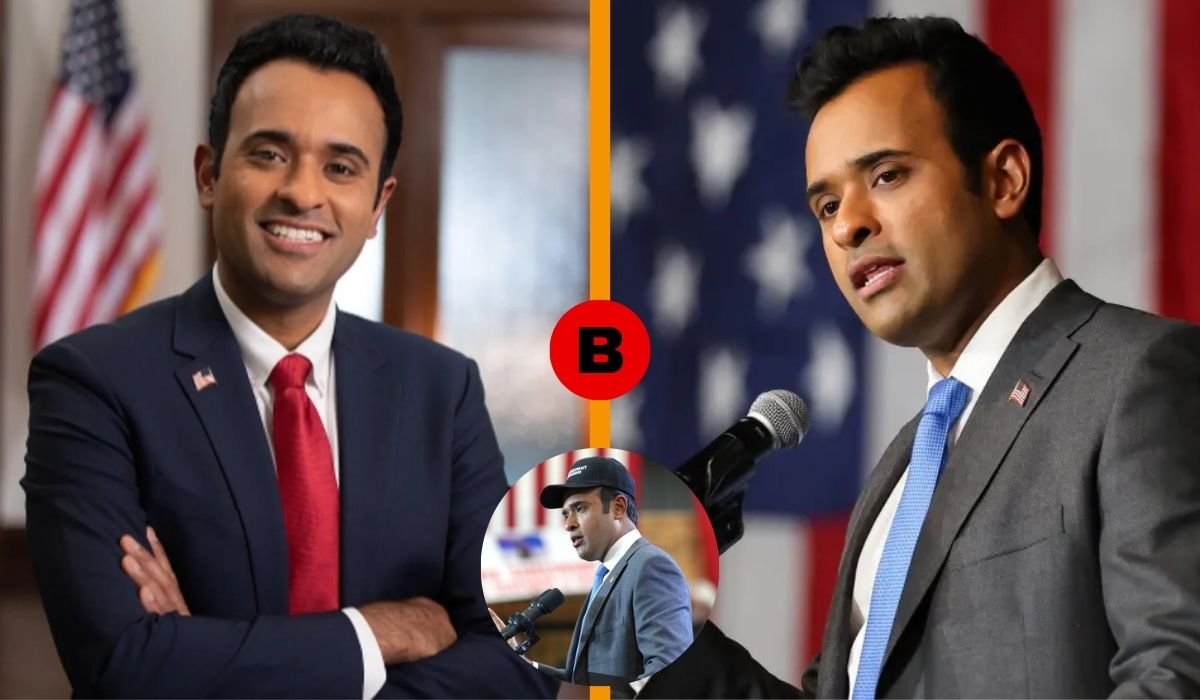
Vivek Ramaswamy’s rise in American politics has happened remarkably quickly. Long before he became a familiar face on debate stages and campaign trails, the Cincinnati-born entrepreneur built his reputation in biotechnology and investment management. He later stepped into the national political conversation by challenging corporate activism, criticizing powerful institutions, and eventually launching a campaign for the Republican Presidential Nomination.
His 2024 Presidential Campaign didn’t take him to the White House, but it transformed his public profile. Two years later, Ramaswamy is back on the ballot, this time much closer to home. As the Republican nominee for Ohio governor in 2026, he’s trying to turn national recognition into his first elected office.
That hasn’t proved to be a simple task. His Democratic opponent, physician and former Ohio Department of Health Director Amy Acton, entered the closing weeks of the campaign with a modest advantage in polling despite Ohio’s Republican lean in recent elections. The contest became even more heated in October when Ramaswamy’s campaign acknowledged producing a controversial advertisement featuring Acton’s estranged mother.
The controversy has attracted national attention, but it’s only one chapter in Ramaswamy’s story. His Ohio upbringing, elite education, biotechnology career, political philosophy, relationship with Donald Trump, policy agenda, and confrontational campaign style all help explain how he became one of the most closely watched figures in the 2026 Ohio Governor Race.
Quick Bio Information
| Quick Bio | Information |
|---|---|
| Full Name | Vivek Ganapathy Ramaswamy |
| Date Of Birth | August 9, 1985 |
| Birthplace | Cincinnati, Ohio |
| Age In 2026 | 41 |
| Nationality | American |
| Political Party | Republican |
| Profession | Entrepreneur, Investor, Author, And Politician |
| Education | Harvard College And Yale Law School |
| Harvard Field | Biology |
| Yale Degree | Juris Doctor |
| Major Company Founded | Roivant Sciences |
| Investment Firm Co-Founded | Strive Asset Management |
| Presidential Campaign | Republican Candidate In 2024 |
| 2026 Political Role | Republican Nominee For Ohio Governor |
| Democratic Opponent | Amy Acton |
| Running Mate | Robert McColley |
| Wife | Apoorva Ramaswamy |
| Religion | Hindu |
| Notable Book | Woke, Inc. |
| Political Base | Ohio |
Early Life And Ohio Roots
Vivek Ramaswamy was born in Cincinnati, Ohio, to Indian immigrant parents. His father worked as an engineer, while his mother was a physician. He grew up in a Hindu household but attended St. Xavier High School, a Catholic school in Cincinnati, where he distinguished himself academically and graduated as valedictorian.
Those Ohio roots have taken on greater political importance as Ramaswamy campaigns for governor. After years spent building companies and developing a national political identity, he now emphasizes his connection to the state where he was raised.
That personal history also fits naturally into the broader story Ramaswamy tells about America. As the son of immigrants who achieved considerable success in business, he frequently speaks about economic opportunity, merit, ambition, and national identity. Supporters see his background as evidence of what upward mobility can look like. His critics, meanwhile, argue that a compelling personal story doesn’t by itself answer questions about how he would govern.
For Ohio voters, that distinction matters. Ramaswamy is no longer simply presenting ideas on a national debate stage. He’s asking voters to place him in charge of their state government.
Education At Harvard And Yale
Academic achievement remained a major part of Ramaswamy’s early life. He attended Harvard College, studied biology, and graduated summa cum laude in 2007. That scientific background would later prove particularly relevant when he moved into biotechnology investing and pharmaceutical development.
He then attended Yale Law School, earning his Juris Doctor in 2013.
Rather than following the most obvious career path into medicine, academic science, or conventional legal practice, Ramaswamy combined his knowledge of biology with an interest in finance and business. That combination eventually became central to his professional success.
His education remains part of his political profile today. Supporters often point to his scientific, legal, and financial background as evidence that he can approach complicated problems analytically. Critics make a different argument: expertise in biotechnology and investment management isn’t the same as experience running a state government.
The 2026 election gives voters an opportunity to decide how much weight they place on each side of that argument.
Building His Business Career
Before politics made him nationally recognizable, Ramaswamy spent years working in finance and biotechnology. He joined hedge fund QVT Financial, where biotechnology investments became an important part of his work. That experience eventually helped set the stage for his biggest entrepreneurial venture.
In 2014, Ramaswamy founded Roivant Sciences.
The company pursued an unusual pharmaceutical strategy. Rather than starting every drug-development program from the earliest research stage, Roivant worked with pharmaceutical assets that other companies were no longer prioritizing or wanted developed through different corporate structures.
The approach helped turn Ramaswamy into a prominent biotechnology entrepreneur and contributed substantially to his wealth.
His business record, however, shouldn’t be reduced to a simple success story. Drug development is an inherently risky field, and projects associated with Roivant included both promising programs and unsuccessful clinical efforts. A balanced assessment needs to acknowledge both realities.
Ramaswamy eventually stepped away from day-to-day leadership as his interests expanded beyond biotechnology. By then, however, the business career that would later become a major part of his political pitch was firmly established.
From Business Leader To Conservative Commentator
Ramaswamy’s transition from entrepreneur to political personality accelerated with the publication of Woke, Inc. in 2021.
The book took aim at corporations that combine business activity with social and political advocacy. Ramaswamy argued that powerful companies and financial institutions were increasingly influencing cultural and political debates without being directly accountable to voters.
The argument arrived at a moment when Environmental, Social, And Governance policies, corporate activism, and Diversity, Equity, And Inclusion programs had become major subjects of conservative criticism.
Ramaswamy quickly became one of the most recognizable voices in that debate.
His supporters viewed him as someone willing to challenge powerful corporate institutions that they believed had moved beyond their proper role. Critics countered that businesses and investors have legitimate reasons to consider environmental, social, workforce, and governance risks when making decisions.
Whatever one’s view of that argument, the political effect was clear. Ramaswamy was no longer known mainly within biotechnology and financial circles.
In 2022, he co-founded Strive Asset Management, which positioned itself as an alternative to investment managers associated with ESG-oriented strategies. The move gave Ramaswamy another platform from which to develop ideas that would soon become central to his political career.
Vivek Ramaswamy’s 2024 Presidential Campaign
When Ramaswamy entered the 2024 Republican Presidential Primary, he had never held elected office. He also faced an obvious challenge: many Republican voters had little idea who he was.
He compensated with an unusually aggressive campaign schedule.
Ramaswamy appeared frequently on television, podcasts, social media, campaign stages, and Republican presidential debates. His fast-paced speaking style and willingness to engage opponents directly helped him attract attention in a crowded field.
His campaign promoted an America First agenda while calling for sweeping changes to federal agencies and the administrative state. Yet one feature of his candidacy made it particularly unusual. Although he was technically running against Donald Trump, Ramaswamy consistently defended the former president and aligned himself with many of the same political themes.
That approach helped him build support among some Republican voters who liked Trump but were also interested in a younger candidate. At the same time, it created a difficult strategic problem: voters who remained firmly committed to Trump had little reason to switch.
Ramaswamy finished fourth in the Iowa Republican caucuses in January 2024. He suspended his campaign afterward and endorsed Trump.
He didn’t win the nomination, but the campaign succeeded in one important respect. Vivek Ramaswamy had become a national political figure.
His Relationship With Donald Trump
Ramaswamy’s relationship with Donald Trump became even more important after he left the presidential race.
Once his own campaign ended, Ramaswamy endorsed Trump and campaigned on his behalf. He remained closely associated with the America First movement and emerged from the Republican primary as an ally rather than a lasting rival.
After Trump’s victory in the 2024 Presidential Election, Ramaswamy was initially selected alongside Elon Musk to participate in the planned Department of Government Efficiency initiative, widely known as DOGE.
His involvement didn’t last long. Ramaswamy soon turned his attention toward Ohio and a possible run for governor.
Trump’s subsequent support became a valuable political asset. It strengthened Ramaswamy’s position among Republican voters and reinforced his standing within the Trump-aligned wing of the party.
The evolution is notable. Ramaswamy began 2024 trying to defeat Trump for the Republican nomination. By 2026, Trump’s backing had become one of the strongest advantages behind Ramaswamy’s campaign for Ohio governor.
Why Ramaswamy Entered The Ohio Governor Race
Ohio’s 2026 election offered Ramaswamy something his presidential campaign couldn’t: a realistic route to executive office.
Republican Governor Mike DeWine could not seek another consecutive term because of Ohio’s term-limit rules, leaving an open race for governor. Ramaswamy pursued the Republican nomination and emerged as the party’s candidate, with Ohio Senate President Robert McColley as his running mate.
For Ramaswamy, the election represents a crucial transition.
It’s one thing to criticize bureaucracy, regulation, education policy, or government spending from outside government. It’s another to take responsibility for agencies, employees, budgets, laws, public services, and negotiations with legislators.
Supporters believe his outsider status is precisely the point. They argue that someone who hasn’t spent a career in government may be more willing to challenge systems that career politicians accept.
Critics see the same background as a vulnerability. Ramaswamy has extensive experience building businesses and campaigning nationally, but he has never held elected office.
That question of experience versus disruption sits at the heart of his 2026 candidacy.
Who Is Amy Acton?
Ramaswamy’s Democratic opponent comes from a very different professional world.
Amy Acton is a physician who became nationally known while serving as director of the Ohio Department of Health under Republican Governor Mike DeWine. Her tenure placed her at the center of Ohio’s response during the early months of the COVID-19 pandemic.
For many Ohioans, that period still shapes how they see her.
Supporters remember Acton as a calm public-health official trying to guide the state through an extraordinary crisis with limited information and rapidly changing circumstances. Critics remain strongly opposed to pandemic-era restrictions and government health measures.
Ramaswamy has made that record an important part of his case against her.
Acton, meanwhile, has tried to build a campaign that reaches beyond the pandemic. Her message has emphasized affordability, health care, families, and economic concerns. Her previous service under a Republican governor also gives her an opportunity to present herself as someone capable of working across party lines.
The contrast between the candidates couldn’t be much clearer. Ramaswamy comes from entrepreneurship and national conservative politics. Acton comes from medicine, public health, and state government.
Vivek Ramaswamy’s Plans For Ohio
Ramaswamy has built his Ohio campaign around themes that will sound familiar to anyone who followed his national political career.
Economic growth, lower taxes, reduced regulation, government efficiency, education reform, and expanded energy production all feature prominently in his message. He has argued that Ohio should become more attractive to entrepreneurs, employers, workers, and families while reducing bureaucratic barriers that he believes limit economic opportunity.
His broader political philosophy also emphasizes merit and skepticism toward large institutions.
Those ideas give voters a clear sense of Ramaswamy’s priorities. The more difficult questions concern implementation.
Cutting taxes can affect state revenue. Changing regulations requires dealing with existing laws, agencies, industries, and legal obligations. Education policy often involves state legislators, school districts, parents, teachers, universities, and local communities.
That’s why evaluating a gubernatorial platform requires more than reading campaign slogans. The important question isn’t simply what a candidate wants to change. It’s how those changes would work, what they would cost, who would be affected, and whether the governor could secure enough political support to put them into practice.
Why The Ohio Governor Race Is Competitive
Recent political history would appear to give Ramaswamy a strong starting position.
Ohio has shifted toward Republicans in presidential politics. Donald Trump carried the state in 2016, 2020, and 2024. Ohio also hasn’t elected a Democratic governor since Ted Strickland won in 2006.
Yet the 2026 Governor Race has been considerably more competitive than those trends alone might suggest.
As of October 21, the RealClearPolling average placed Amy Acton at roughly 48 percent and Vivek Ramaswamy near 44 percent, giving the Democrat an advantage of approximately four percentage points. Individual surveys showed considerable variation, with some giving Acton a larger advantage and others finding Ramaswamy slightly ahead.
Those numbers need context.
Polls don’t determine election results. They measure voter preferences at a particular moment using different samples, turnout models, and methodologies. Undecided voters, enthusiasm, early voting, late campaign events, and actual Election Day turnout can all affect the result.
The clearest conclusion in late October is therefore a cautious one: Acton held a modest polling advantage, but the race remained competitive heading toward the November 3 General Election.
The Latest Amy Acton Attack Ad Controversy
The campaign took a deeply personal turn in October when an advertisement appeared featuring Amy Acton’s estranged mother, Donna Arthur.
In the video, Arthur accused her daughter of lying about her childhood and urged voters not to support her.
At first, questions arose over who was responsible for the video because it didn’t carry the expected campaign disclosure. Ramaswamy later acknowledged that his campaign had produced it.
That revelation immediately intensified the controversy.
Acton has spoken publicly about a deeply troubled childhood involving instability, neglect, homelessness, and alleged sexual abuse. She has also said she has been estranged from her mother for more than five decades.
Against that background, the decision to place Arthur in a political advertisement went far beyond an ordinary disagreement about taxes, health care, or government policy.
It opened a much more uncomfortable debate about childhood trauma, family estrangement, political credibility, and how far campaigns should go when attacking an opponent.
What Is Verified About Amy Acton’s Childhood?
The allegations surrounding Acton’s childhood require careful reporting because not every claim has the same evidentiary status.
Acton has said that her stepfather sexually abused her when she was a child. She has also described severe family instability and periods without stable housing, including living in a tent during winter.
Historical court records reviewed by WOSU support important portions of that account. The records indicate that Acton and her younger brother lived in a tent and that their mother ultimately lost custody of the children.
Acton’s stepfather also faced a criminal charge related to the alleged sexual abuse. He left the state with Arthur before the case could be tried and has since died.
That legal history creates an important distinction.
Because there was no completed criminal trial resulting in a conviction, it would be inaccurate to describe the sexual abuse allegation as a legally established criminal finding. It should be attributed to Acton.
At the same time, it would also be misleading to suggest that her broader description of childhood hardship has no independent support. Historical records corroborate significant elements of what she has said about the family’s living conditions and the loss of her mother’s custody.
Keeping those facts separate is essential to understanding the controversy fairly.
Reaction To The Ramaswamy Campaign Ad
The advertisement drew criticism from people outside Acton’s Democratic political circle, demonstrating how quickly the issue crossed party lines.
Former Republican presidential candidate Nikki Haley publicly criticized Ramaswamy over the advertisement. Libertarian gubernatorial candidate Don Kissick went further, calling on Ramaswamy to leave the race.
Vice President JD Vance took the opposite position and defended Ramaswamy’s decision to run the advertisement.
That split showed that even among political figures outside the Democratic Party, there was no common interpretation of the campaign’s tactics.
Robert Alexander, a political science professor at Bowling Green State University, suggested that the advertisement could potentially backfire. Rather than damaging Acton, he argued, the story of her childhood could reinforce a perception of personal resilience.
Still, that remained political analysis rather than evidence of an actual shift in voter behavior.
Immediately after the controversy emerged, there wasn’t enough reliable information to conclude that the advertisement had materially changed the election. Any claim that it had decisively helped or hurt either candidate would therefore go beyond the available evidence.
Why The Controversy Matters Beyond One Advertisement
The argument surrounding the advertisement raises a broader question about modern political campaigns: how far should candidates go when challenging an opponent’s personal history?
Scrutinizing political biographies isn’t inherently inappropriate. Candidates seeking public office should expect claims about their education, careers, finances, public records, and past statements to be examined.
Childhood trauma and family estrangement present a more complicated situation.
Memories can be disputed. Family members can offer sharply different accounts. Court documents may confirm some parts of a story without resolving every allegation. Political campaigns, meanwhile, have a clear interest in presenting information in whatever way benefits their candidate.
For readers trying to understand the Acton controversy, the most useful approach is to separate three things: what Acton says happened, what her mother disputes, and what independent historical records actually establish.
That distinction protects against two equally serious mistakes. One is treating a campaign accusation as established fact. The other is dismissing documented evidence simply because the issue has become politically controversial.
Ramaswamy’s Strengths And Political Challenges
Ramaswamy enters the closing stage of the Ohio Governor Race with advantages that few first-time statewide candidates possess.
He already has national name recognition. He has demonstrated an ability to raise money, attract media attention, communicate through television and digital platforms, and energize supporters. His business background gives him a ready-made economic message, while Donald Trump’s support strengthens his position among Republican voters.
Ramaswamy also has something valuable in modern politics: a clearly recognizable identity. Voters may strongly agree or disagree with him, but relatively few people who have followed his career are uncertain about the type of political figure he wants to be.
That clarity comes with risks.
His confrontational style can generate attention, but General Election voters don’t always respond to political combat in the same way as primary voters. His lack of previous elected-office experience also gives Acton and other critics an opening to question whether business and media skills translate into effective public administration.
The controversy involving Acton’s mother adds another test of political judgment.
Taken together, these factors make the Ohio race about more than Republican and Democratic policy differences. Voters are also assessing Ramaswamy’s temperament, leadership style, experience, and approach to political conflict.
Why Vivek Ramaswamy Matters In 2026
Whatever happens in Ohio, Vivek Ramaswamy has already become part of a larger transformation within Republican politics.
His career reflects the rise of candidates who come from business rather than traditional political institutions. It also reflects conservative skepticism toward large corporations, universities, government agencies, ESG policies, DEI programs, and other institutions that have become central targets of the modern Republican movement.
Then there’s the Trump factor.
Ramaswamy’s political trajectory demonstrates the continuing influence of Donald Trump within the Republican Party while also raising questions about what the movement could look like in a younger generation of candidates.
A victory in Ohio would dramatically change Ramaswamy’s political résumé. Instead of being known primarily as an entrepreneur, author, presidential candidate, and commentator, he would gain responsibility for governing one of America’s largest states. He would also become the first Indian American elected governor of Ohio.
A defeat would produce a different conversation. It would raise questions about whether national fame, Trump’s endorsement, significant campaign resources, and a strong conservative brand are enough to win a competitive statewide General Election.
Either result would tell us something important about the direction of Republican politics after the 2024 Presidential Election.
What Voters Should Watch Before Election Day
With Election Day approaching, the final phase of the campaign could prove especially important.
One question is whether voters’ attention returns to economic policy, taxes, education, health care, energy, and government reform or whether the controversy surrounding Acton’s family continues to dominate political coverage.
Turnout is another major factor.
Ohio’s recent Republican advantage doesn’t guarantee the outcome of an open-seat Governor Election, particularly in a midterm year. The electorate that turns out for a gubernatorial contest can differ from the one that votes in a presidential election, and each campaign’s ability to motivate supporters matters.
Polling should also be interpreted with restraint.
Acton’s late-October polling advantage provides useful information about where the race stands, but an average isn’t a prediction carved in stone. Polling error, undecided voters, late movement, and differences between expected and actual turnout can all influence the final result.
For voters and readers following the contest, the most reliable approach is to watch several indicators rather than allowing one survey, one advertisement, or one controversy to define the entire race.
Final Thoughts
Vivek Ramaswamy’s journey from a Cincinnati student to biotechnology entrepreneur, conservative author, presidential candidate, and Republican nominee for Ohio governor has unfolded at unusual speed.
His supporters see an accomplished businessman willing to confront bureaucracy, challenge established institutions, and bring an outsider’s perspective to government. Critics see a polarizing political figure whose confrontational instincts and lack of elected experience raise questions about how he would govern.
The race against Amy Acton has now become the biggest electoral test of his career.
The controversial advertisement featuring Acton’s estranged mother has intensified that test by shifting attention toward Ramaswamy’s political judgment and campaign tactics. It has also forced Ohio voters to confront difficult questions about where legitimate scrutiny ends and deeply personal political warfare begins.
Yet the election shouldn’t be reduced to one advertisement.
Ohioans are choosing between candidates with fundamentally different professional histories, policy priorities, governing philosophies, and leadership styles. Economic conditions, education, health care, taxes, energy, state spending, and the future direction of Ohio government remain central to the decision.
For Ramaswamy, the stakes extend beyond a single election. Winning would give him the executive experience his résumé currently lacks and potentially strengthen his position as a major national Republican figure. Losing would test the limits of the political brand he built during the 2024 Presidential Campaign.
Either way, the 2026 Ohio Governor Race is answering a question that has followed Vivek Ramaswamy since he first entered presidential politics: can his remarkable ability to command national attention translate into the broad, durable voter support needed to govern?
FAQs About Vivek Ramaswamy
Who Is Vivek Ramaswamy?
Vivek Ramaswamy is an American entrepreneur, investor, author, and Republican politician from Ohio. Before entering politics, he built his career in biotechnology and founded Roivant Sciences. He later co-founded Strive Asset Management, became a prominent critic of corporate political activism, and competed for the 2024 Republican Presidential Nomination. In 2026, he is the Republican nominee for governor of Ohio.
How Old Is Vivek Ramaswamy?
Vivek Ramaswamy was born on August 9, 1985, in Cincinnati, Ohio. He turned 41 in August 2026. His relatively young age compared with many nationally prominent politicians has been part of his appeal to supporters who see him as representing a newer generation of Republican leadership.
Where Was Vivek Ramaswamy Born?
Ramaswamy was born and raised in Cincinnati, Ohio. His parents immigrated to the United States from India. His Ohio upbringing has become especially important during his 2026 Governor Campaign because Ramaswamy has emphasized his personal connection to the state while making the case that his national business and political experience can benefit Ohio.
What Company Did Vivek Ramaswamy Found?
Ramaswamy founded Roivant Sciences in 2014 after working in investment management. The biotechnology company focused on developing pharmaceutical assets, including drug candidates that other companies were no longer prioritizing. Roivant became the foundation of Ramaswamy’s reputation as an entrepreneur and contributed substantially to his wealth before he entered politics.
Did Vivek Ramaswamy Run For President?
Yes. Ramaswamy sought the Republican Presidential Nomination during the 2024 election cycle. His campaign attracted national attention through frequent media appearances, Republican debates, and an America First platform. He finished fourth in the Iowa Republican caucuses in January 2024, suspended his campaign, and endorsed Donald Trump.
Is Vivek Ramaswamy Running For Ohio Governor?
Yes. As of October 21, 2026, Vivek Ramaswamy is the Republican nominee for governor of Ohio. His principal opponent is Democratic nominee Amy Acton, a physician and former director of the Ohio Department of Health. The General Election is scheduled for November 3, 2026.
Who Is Leading The Ohio Governor Race?
Polling available on October 21 showed Amy Acton holding a modest overall advantage. The RealClearPolling average placed Acton at approximately 48 percent and Ramaswamy around 44 percent. Individual polls varied, however, and some showed a considerably closer contest. Polling averages are useful snapshots of voter opinion, but they shouldn’t be treated as guarantees of the final election result.
What Is The Amy Acton Attack Ad Controversy?
Ramaswamy’s campaign produced an advertisement featuring Amy Acton’s estranged mother, Donna Arthur, who accused Acton of lying about her childhood. The advertisement became highly controversial because Acton has described experiencing childhood abuse, neglect, homelessness, and family instability. Historical records reviewed by journalists corroborate important portions of her account, including aspects of the family’s living conditions and the loss of her mother’s custody. Acton’s allegation of sexual abuse should be described separately because the related criminal case did not result in a completed trial and conviction.
Learn more and explore exciting content on: You Can See Everything: The Truth Behind Elizabeth Holmes’ New Documentary