

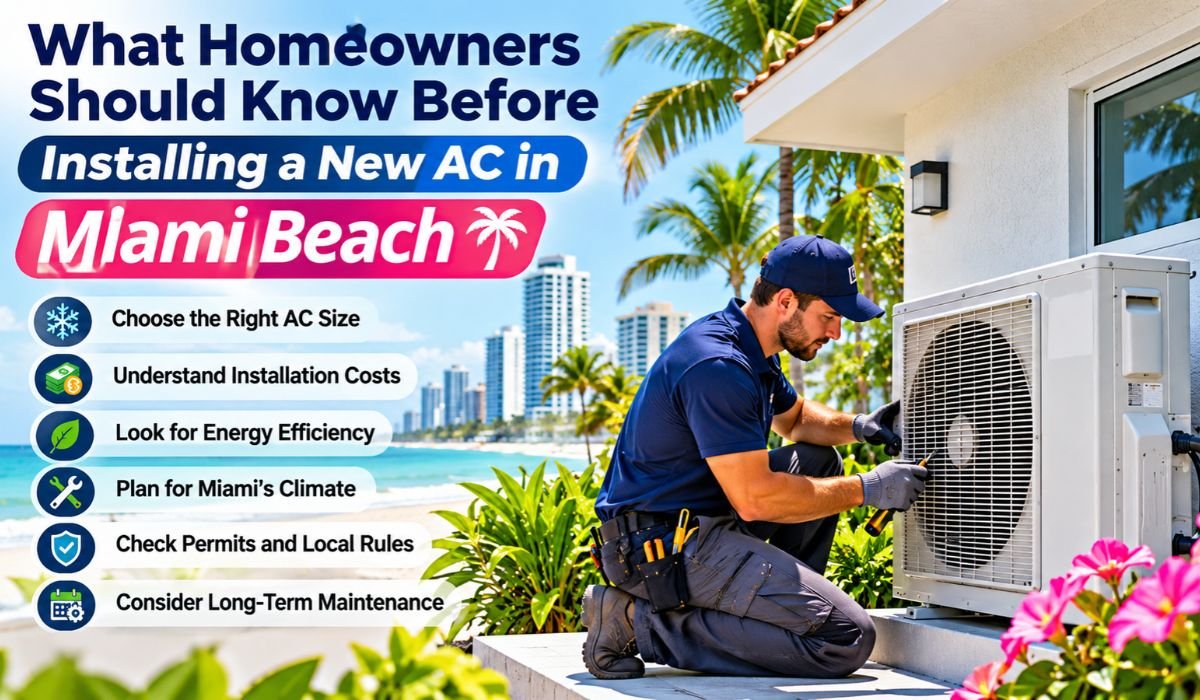
A new air conditioner is one of the larger purchases a homeowner makes, and in Miami Beach it carries more weight than it does in most places. The cooling season runs for most of the year, summer humidity is heavy, and the coastal air is hard on equipment. A system that is poorly chosen or poorly installed will cost more to run and will likely wear out sooner. Knowing what affects performance in this climate makes the process easier to manage. Homeowners who understand sizing, ductwork, efficiency ratings, and local rules are better prepared to compare quotes and ask useful questions.
How the Coastal Climate Affects Air Conditioners
Salt in the air is the first concern. Over time, it can settle on the outdoor unit and corrode the metal fins of the coil. Units close to the water are most exposed, though salt can travel several blocks inland. Corrosion-resistant coatings and coastal-rated equipment are worth asking about, and so is the placement of the outdoor unit. Humidity is the second concern. An air conditioner removes moisture while it cools, but it can only do that while it is running. A system that cycles on and off too quickly may lower the temperature without drying the air, which leaves rooms feeling cool but damp. Storms and flooding are the third. Outdoor units should be anchored to meet local wind requirements, and homeowners in low-lying areas may want the unit raised above the ground.
Choose the Right System Size
Bigger is not better when it comes to air conditioners. An oversized system reaches the thermostat setting quickly and shuts off before it has removed much moisture. It also starts and stops more often, which adds wear to the compressor. The standard method for sizing is a load calculation, commonly known as a Manual J. It takes into account the home’s square footage, ceiling height, insulation, window size and direction, and the number of people living there. Two homes of the same size can need very different equipment. A contractor who sizes a system by looking at the old unit or using a square-foot rule is skipping the step that matters most.
Do Not Overlook the Ductwork
New equipment connected to leaking or undersized ducts will not perform as intended. Leaks waste cooled air, and in a humid climate they can pull moist air into the system, which may lead to condensation and mold in hidden spaces. Ask whether the quote includes a duct inspection, sealing, and insulation checks. Older homes and buildings are more likely to have ducts that were designed for different equipment than what is available today. If the ducts need work, it is usually more practical to handle it during installation than afterward.
Plan for Permits and Building Rules
Replacing an air conditioner in Miami Beach requires a permit, and the work should be performed by a licensed contractor. The city then inspects the installation. Skipping this step can create problems when selling the property and may complicate an insurance claim. Condo and townhome owners have another layer to consider. Many associations have rules about where outdoor equipment can go, how loud it can be, and when work can take place. Properties in historic districts may also face design review for anything visible from the street. Checking these requirements early can prevent delays.
What a Good Quote Includes
Homeowners comparing options for Miami Beach AC installation will find that the total price alone says little. A useful quote lists the equipment brand, model number, and SEER2 rating, along with who pulls the permit and whether the fee is included. It should also state what happens with the old unit, whether duct repairs are part of the work, and how long the labor warranty lasts compared with the manufacturer’s parts warranty. A contractor’s state license number should appear on the paperwork, and it can be verified on the state’s licensing website. If one quote is far lower than the others, compare it line by line. The difference is often a missing permit, skipped duct work, or lower-grade equipment.
Time the Project Carefully
Contractors in South Florida are busiest from late spring through early fall, which is also when aging systems tend to fail. Replacing a unit during a breakdown leaves little time to compare options. A system that is more than ten years old, needs frequent repairs, or struggles to hold temperature on hot afternoons may be nearing replacement. Gathering quotes in the cooler months usually allows more scheduling flexibility and more time to ask questions.
Care for the New System After Installation
Routine upkeep helps a new system last. Filters should be changed or cleaned on the schedule the manufacturer recommends, which is often every one to three months. The outdoor unit needs clear space around it, so plants, fences, and stored items should stay at least two feet away. Rinsing the outdoor coil with fresh water a few times a year can remove salt buildup. The condensate drain line should be checked periodically, since a clog can cause water damage indoors. An annual inspection by a technician, ideally before summer, can catch small problems early.